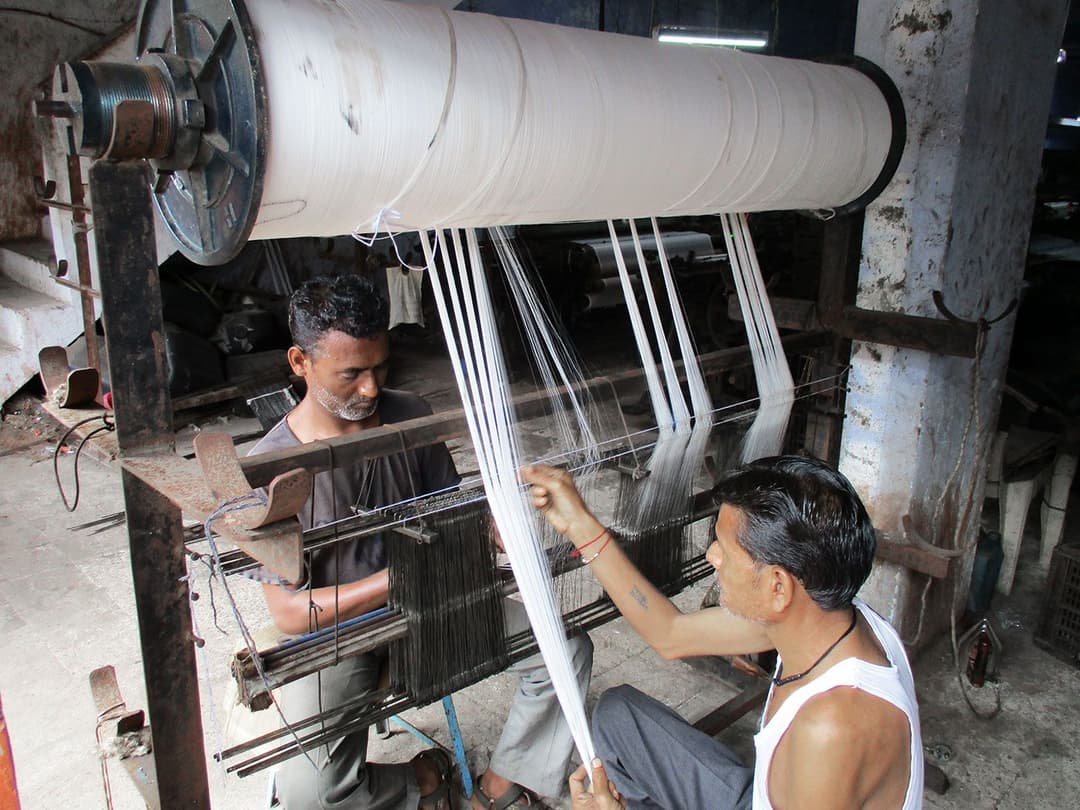
With no bargaining power, in cases involving accidents and deaths of migrant loom workers, very little progress is made, says J.K. Gamit, assistant sanitary inspector at the Surat Municipal Corporation. “The workers’ families are far away in their villages and their friends in the city are also workers employed in the looms. They are too busy to keep visiting the police station or following up," he says. “There is no official documentation of the number of injuries and deaths. The case gets closed almost immediately.”
Usually, if there is a death at the loom, a police case is registered. But this is a legal and medical formality, and arrests are very rare. To claim compensation, the family has to approach the labour department. If it’s for an injury, the worker’s job is at stake since this can antagonise the employer. Most resign to an out-of-court settlement.
So four days after young Bikash Gouda died, on April 29 his employer paid the family Rs. 2.10 lakhs as compensation, clearly stating that no further claim could be made. Usually, employers pay at most Rs. 50,000 only so that they can close the case – and the process can take months. In this instance, because the PSSM and Aajeevika Bureau intervened, the amount was increased and disbursed speedily.
Three jobs were at stake. The family agreed.
From Ganjam to Gujarat
Surat is home to at least 800,000 workers from Ganjam, estimates Rajesh Kumar Padhi, a member of the Surat Odia Welfare Association. Around 70 per cent of them work in the city’s powerloom sector. “The migration corridor between Odisha and Surat opened up around 40 years ago,” he says. “Although Ganjam is considered a developed district in Odisha,” the PTRC report states, “shrinking natural resources, decreasing agricultural land and regular floods and drought have impelled the migration.”
The Ganjam migrants though are not employed in Surat's other big industry – diamonds – points our Jagdish Patel. “Those jobs are usually reserved for local Gujarati workers because the employers recruit only people ‘of their confidence’. The Ganjam workers have remained at the lower-end of the loom units, undertaking the monotonous task of running the machines the same way every single day for years."
Still, this the workers say is better than the situation back home. Simanchala Sahu, who is also a member of the PSSM, says “The condition in Ganjam is very challenging. A few workers might have migrated in the beginning, and then they have been coming in large groups, some with family members and neighbours.”