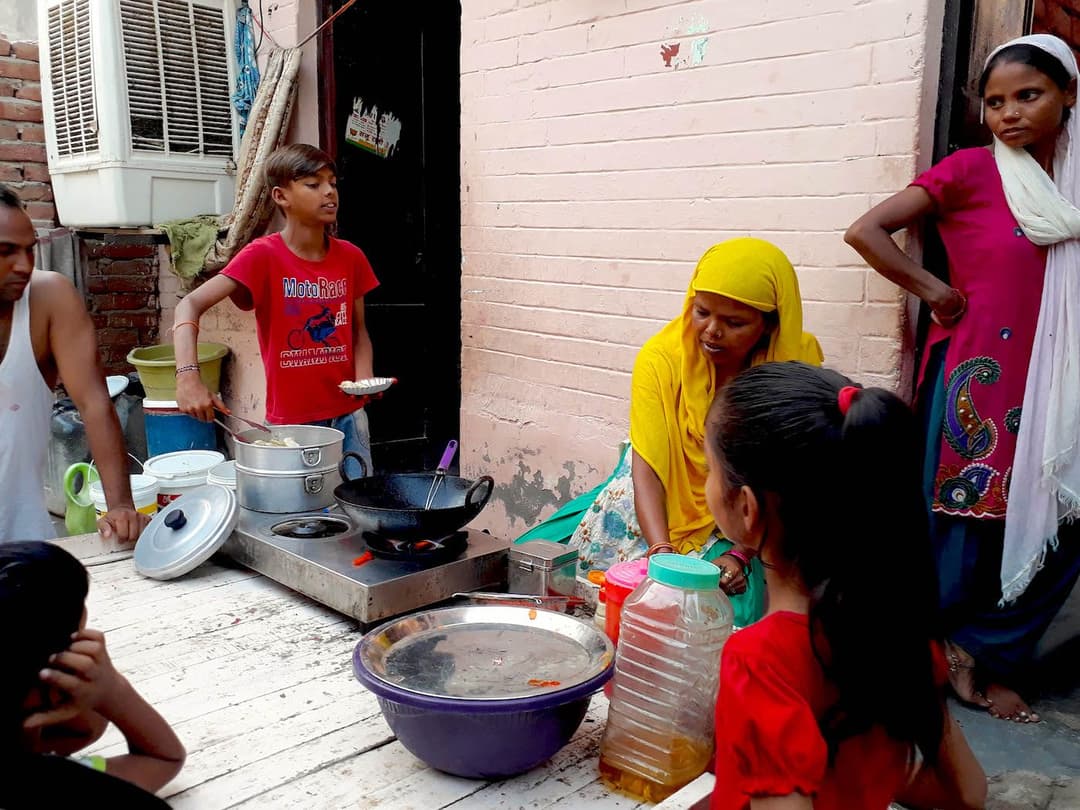

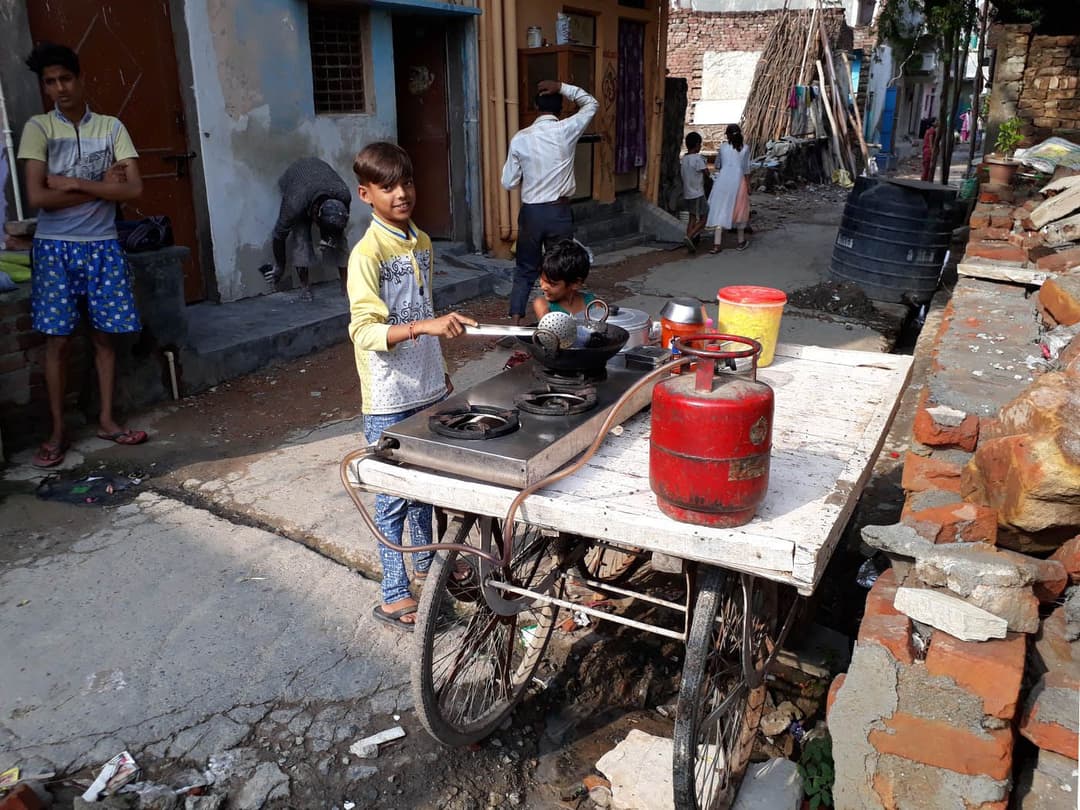
In the Pul Pehlad mohalla (settlement) of Lal Kuan in outer Delhi, everybody knows ‘the boy with the pushcart’ or the ‘chilli-potato boy’. He is the youngest pushcart vendor in the area.
I spot him running through a narrow lane in the slum settlement, bordered with open sewers, to the empty space where he parks his handcart. He rolls the cart to the end of the lane, wedges stones against its wheels to keep it immobile, and disappears into a room. For 14-year-old Arjun Singh, who will soon load his cart with potato chips and momos for sale, this is a daily routine.
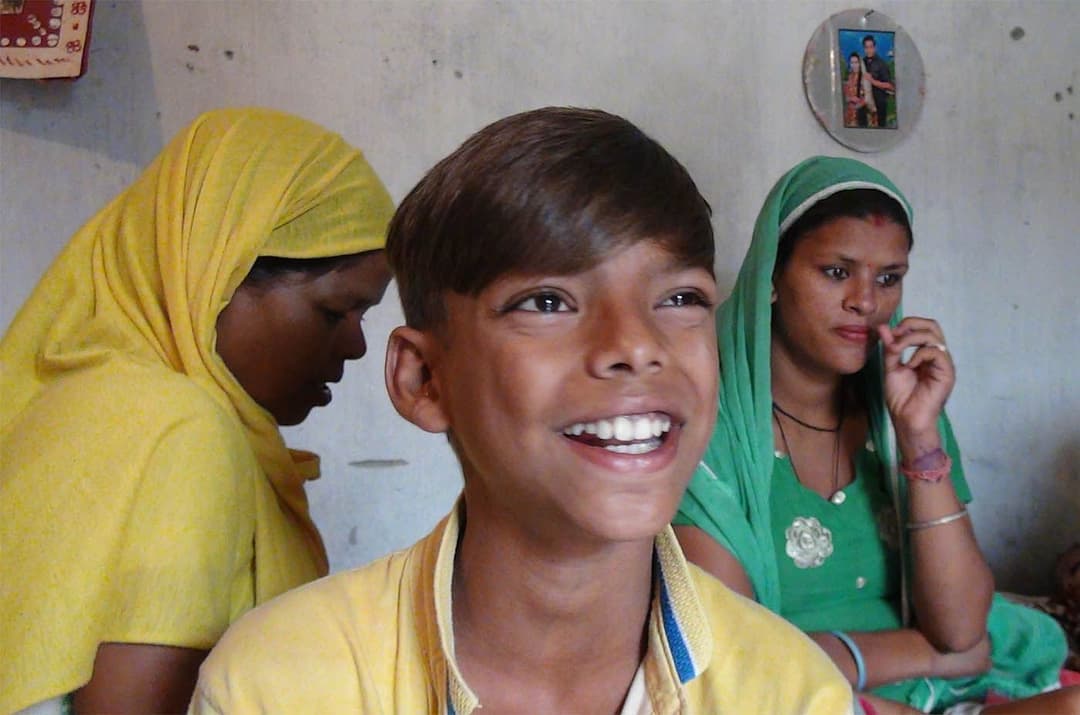
The shy but cheerful boy lives with his widowed mother, Laxmi Singh. Inside their small room, there is no furniture. A mirror adorns a wall, with a heart shaped out of brown tape stuck in a corner. ‘Laxmi+Arjun’, it declares. "I wrote that," says Arjun, "so whoever visits us can see our world in it."
It is an isolated and difficult world.
On July 14, 2013, Arjun’s father Rajeshwar Singh died while cleaning the sewers at the Indira Gandhi National Centre for the Arts. He had been employed there since 2011. He was one of three cleaners who inhaled toxic gases and died in the building's basement. The other two men were Ashok Kumar and Satish Singh; all of them were contractual workers at the government-run centre for the performing arts. All three belonged to the Valmiki Dalit community, and all of them lived with their families in the Valmiki basti of Trilokpuri (Laxmi later moved with Arjun to where her married daughter Minu lives, in Lal Kuan).