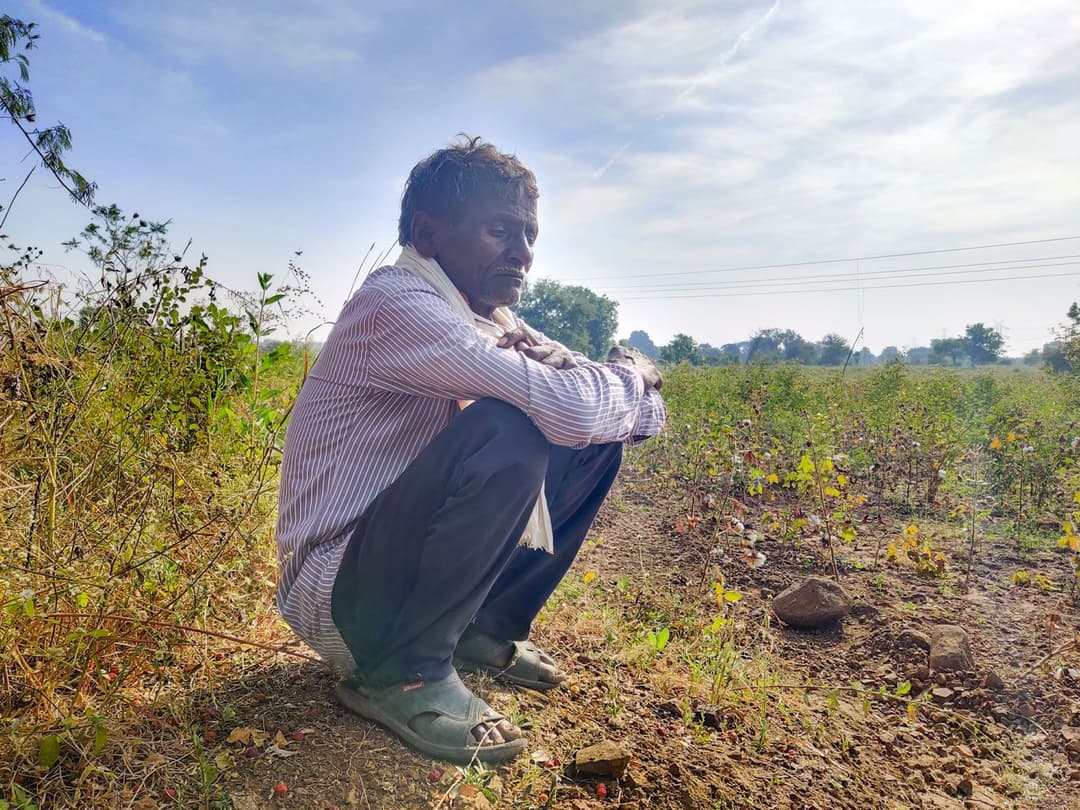
He stood at the edge of the farm, simply staring at his silver-white crop, now submerged in knee-high water after a heavy rainfall. Vijay Marottar’s cotton field in Vidarbha had been devastated. “I had invested nearly Rs. 1.25 lakh on the crop. I lost most of it,” says the 25-year-old. It was September 2022, Vijay’s first cropping season. And this time, he had nobody to share his problems with.
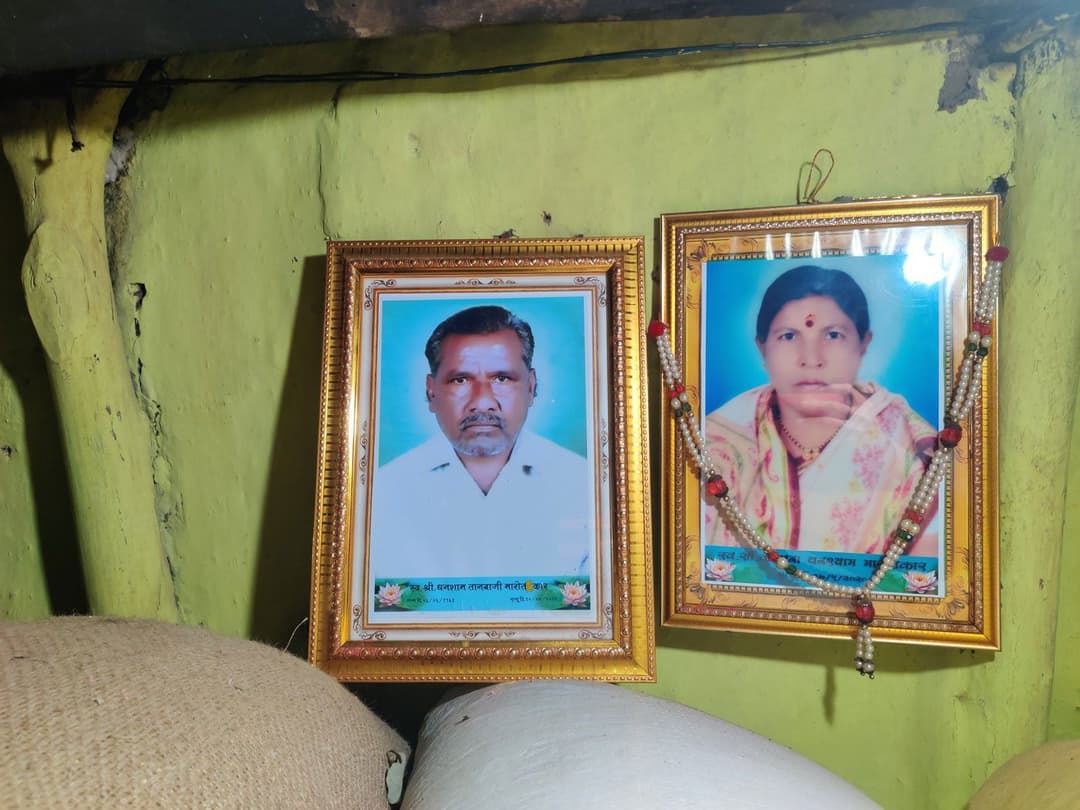
His father, Ghanshyam Marottar had died by suicide five months ago, and he had lost his mother to a sudden heart attack a little more than two years ago. Seasons of crop loss with erratic weather and mounting debts caused his parents severe anxiety and stress, as with many other farmers in the Vidarbha region. And there has been little help for them.
But Vijay knew he could not afford to break down like his father. He busied himself to draining the water from his field for the next two months. For two hours every day, with nothing but a bucket in hand, he ploughed barefoot through his sloughy farm, his track pants folded up to his knees, his t-shirt soaked in sweat. He broke his back, draining the water out manually. “My farmland is located on a slope,” Vijay explains. “I am, therefore, more affected by excess rains. Water from surrounding farms slides into mine and is difficult to get rid of.” The experience has scared him.
Even when adverse climatic conditions – excessive rainfall, prolonged dry spells, and hailstorms cause immense agrarian distress, leading to mental health issues, the state does very little to help farmers deal with this crisis. (Read In Vidarbha: agrarian distress, playing on the mind). No information about access to or provision of services for people with mental stress and disorder, available under the Mental Healthcare Act, 2017, ever reached Vijay or his father, Ghanshyam, while he was alive and struggling. Nor have they come across any outreach camps organised under the District Mental Health Programme of 1996.