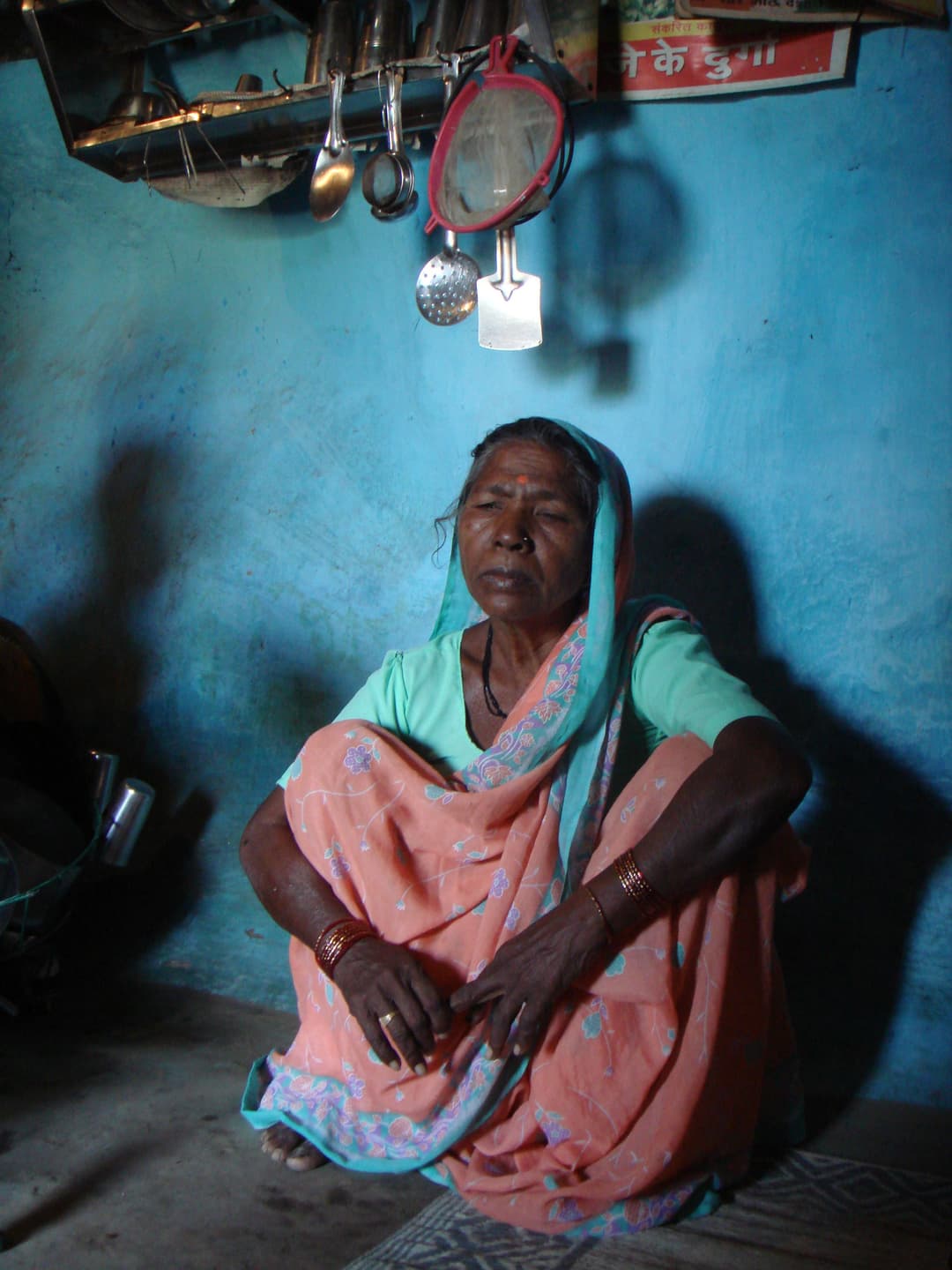
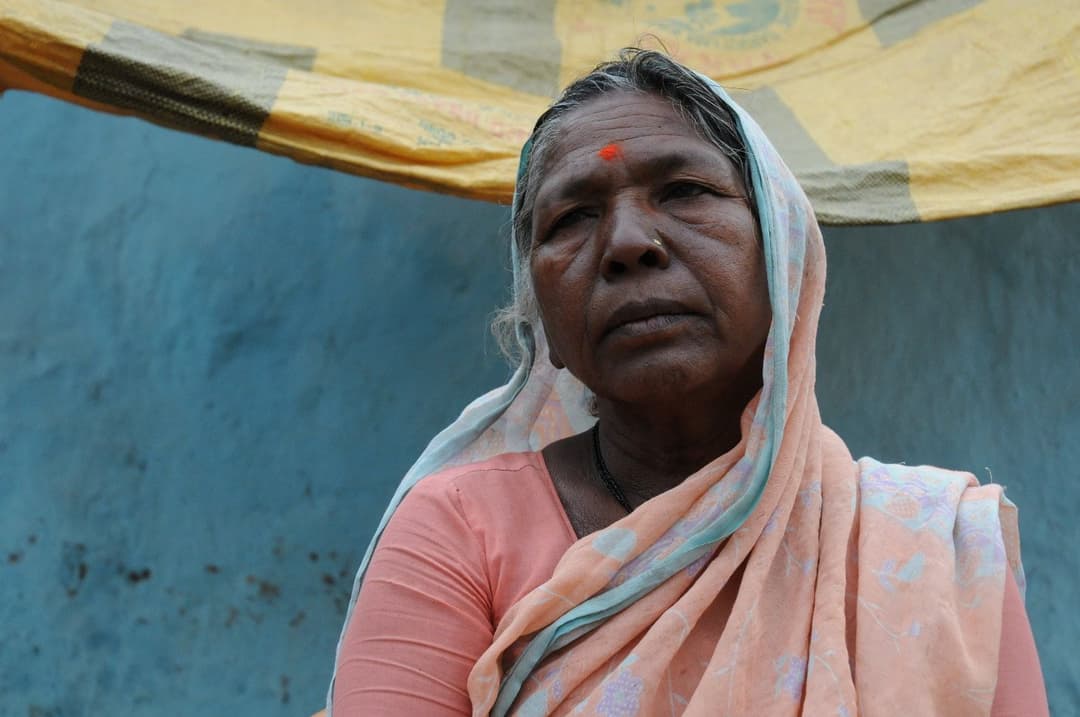
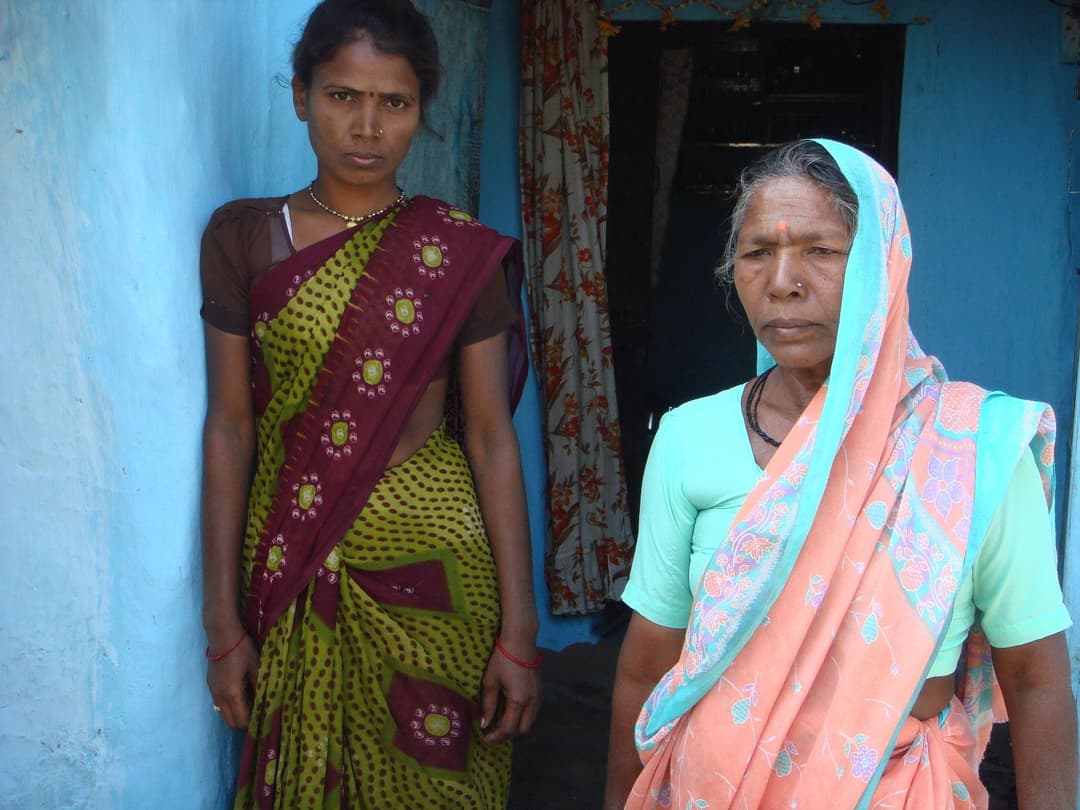
Between them, the family have nurtured the farm. It looks good and productive. "See this well," she points to a rather large one created by mostly family labour. "If only we could get it cleaned and repaired, we'd have much more water." But that would need Rs. 15,000 at least. And that's apart from the Rs.1 lakh that fencing the field would cost. They could convert one acre to a water body at the bottom of a slope on their land. That would mean even more money. Bank loans are now impossible. And proper repairs to her crumbling house would cost another Rs. 25,000. "My husband killed himself because of crop loss leading to debt of Rs.1.5 lakh," she says. They've paid off bits of that and the family has run through most of the Rs. 1 lakh compensation she got from the State. But creditors still trouble her. "We were doing alright. But then agriculture really failed for several years and we suffered big losses."
Like millions of others, her family was hit by the biggest agrarian crisis in decades. Rising input costs, falling output prices, lack of credit, withdrawal of State support. "It's the same with everyone else in the village," she says. Last year brought crop disaster as well. She lost hugely, with Bhaskar betting on Bt-cotton. "All we got was two quintals," she says.
The government then added to the damage. Late last year, it made her a "beneficiary" of a "relief package." Under this, Kamlabai was made to buy a costly "aadha Jersey" (half Jersey) cow she did not want. Though heavily subsidised, she still had to pay her share of Rs. 5,500 for it. "The brute ate more than all of us put together," she told us. ( The Hindu , 23 November 2006). And "it yielded very little milk."
Reverse rental
Since then, "I have twice given away the cow, but they always bring it back," she says with resignation. Those she gifts it to return the animal, saying "we cannot afford to feed it." So now "I am paying a neighbour Rs. 50 a month to look after the cow." A kind of reverse rental. The deal being that if the cow starts giving milk as it should, she will get a half-share. That belongs to an optimistic future. Right now, Kamlabai is paying to take care of a cow the government promised would take care of her.
But her spirit is as yet unbroken. She still makes that long walk to the farm every day that she does not find work. Today her tiny but energetic grandchildren make a slightly comical picture alongside her on the trail. Their survival and future is her biggest motivator. As always, her head is held high, but she can't hold back the tears when she looks at them. Kamlabai has decided that suicide is not about the dead. It's about the living. And for them she soldiers on.
This article was originally published in The Hindu on 21 May 2007:
https://www.thehindu.com/todays-paper/tp-opinion/Suicides-are-about-the-living-not-the-dead/article14766288.ece