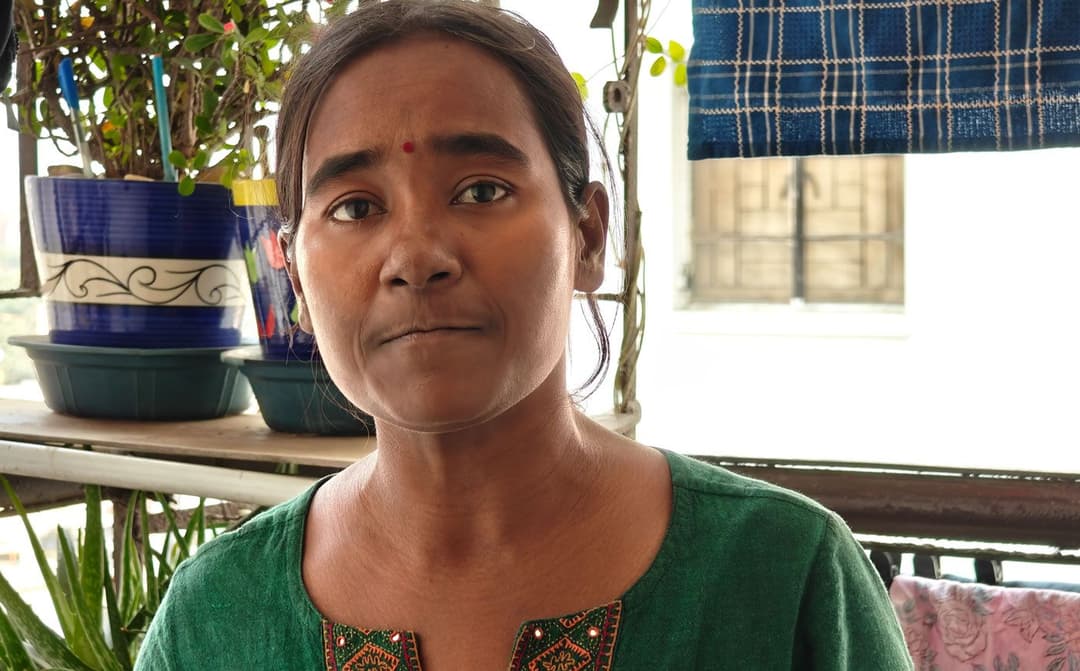

“I am always short of money,” Babita Mitra says of her struggles while planning a family budget. “I keep aside money for food and end up using it on medicines. Tuition money for my boys goes into buying rations. And every month, I have to borrow from my employers…”
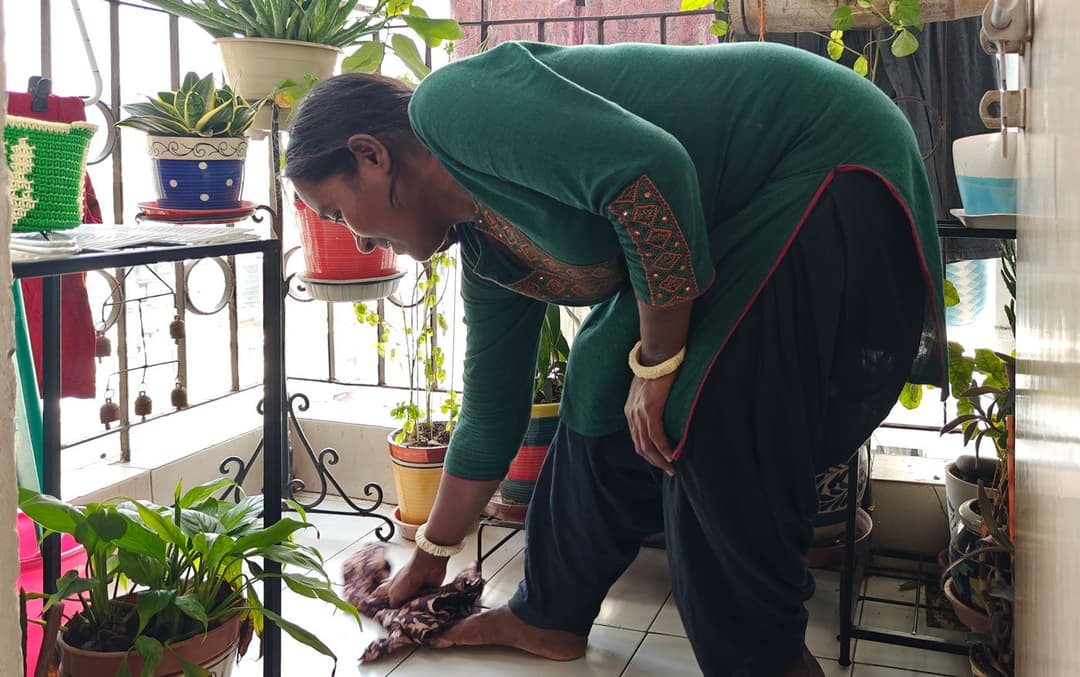
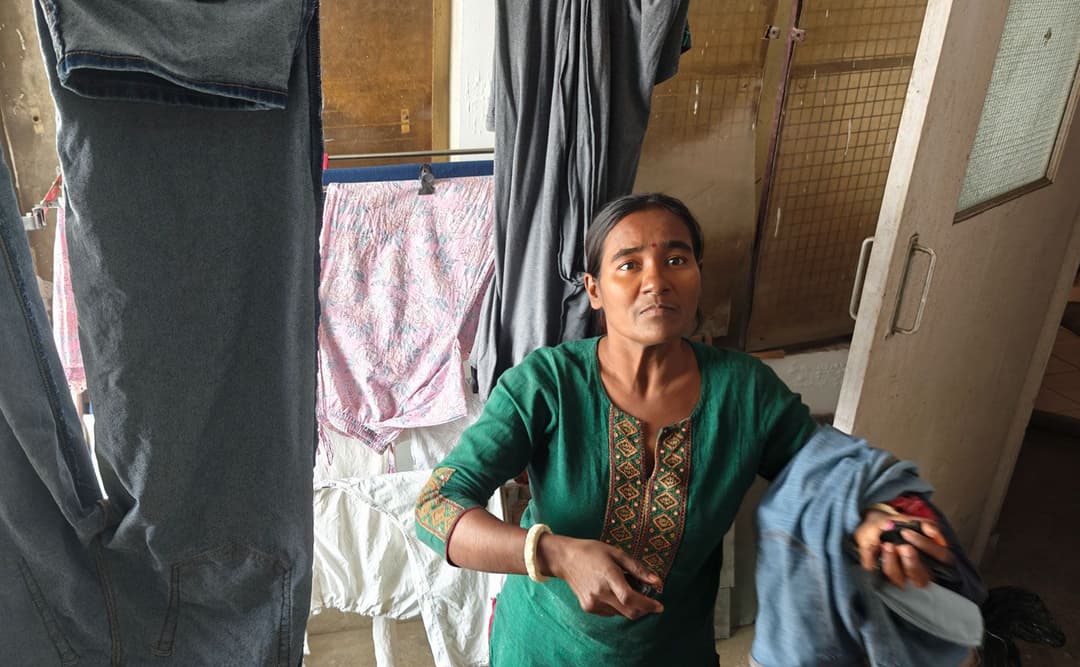
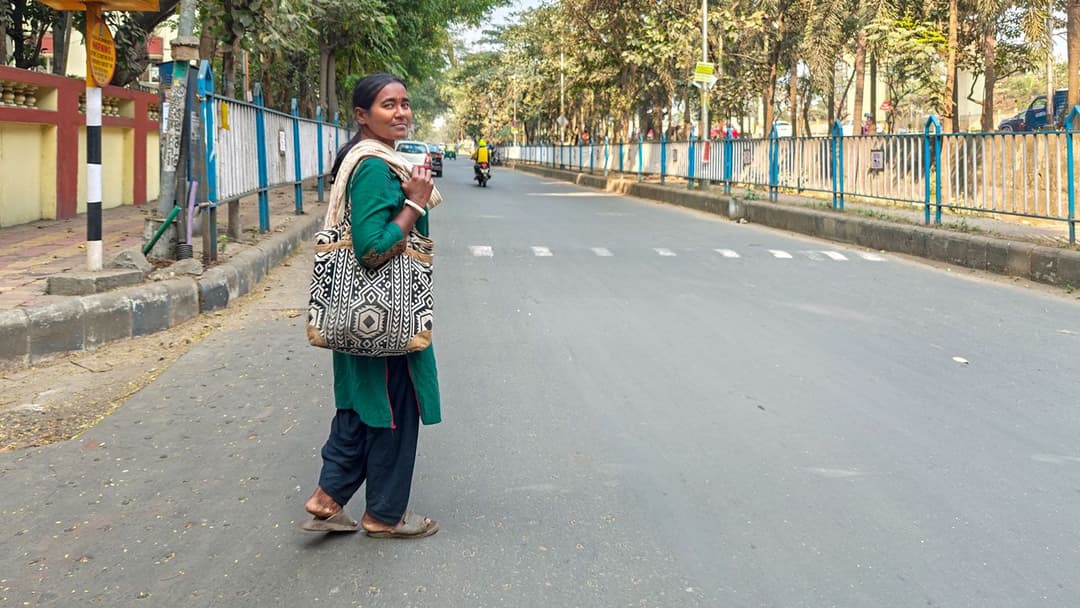
The 37-year-old domestic worker earns barely 1 lakh rupees a year, her combined income from two of her employers in Kolkata’s Kalikapur locality. She migrated to the city from Asannagar in West Bengal’s Nadia district when aged just 10. “My parents couldn’t afford raising three children. So, I was sent off to Kolkata to work in the household of a family originally from our village.”
Since then, Babita has been a domestic worker in many households. The 27 union budgets during her time in Kolkata have changed little for her or any of India’s over (officially) 4.2 million domestic workers. Independent estimates of their number cross 50 million.
In 2017 Babita married Amal Mitra, a man in his late 40s living in Uchhepota panchayat’s Bhagabanpur locality in South 24 Parganas. Her responsibilities multiplied because her husband, a wage labourer in a factory, contributed little to running the household. It is largely her income that keeps the family of six afloat – two sons aged 5 and 6, a stepdaughter in her 20s, her mother-in-law, besides Babita and Amal themselves.
A Class 4 school dropout, Babita knows little about the two decades of ‘gender budgeting’ in India. Or about Finance Minister Nirmala Sitharaman’s notion of women-led growth in her 2025-26 Budget. But Babita’s quotidian wisdom shines through her response: “What’s the use of this budget that boasts about doing so much for women, when they have nowhere to turn to during hard times?” The memories of her ordeal during the COVID-19 pandemic remain vivid and sharp.