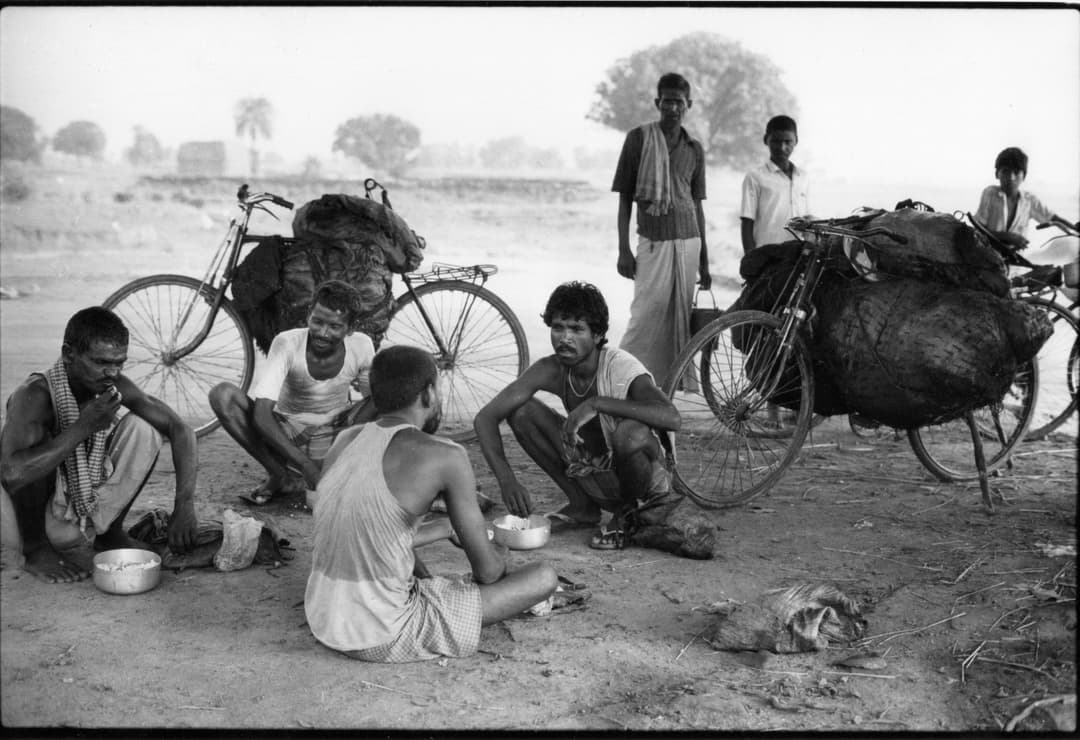

Kishan Yadav pays Rs. 1,200 for a bicycle with one pedal. This odd transaction concluded, he spends Rs.200 to reinforce its bars. Then, he either removes the chain or hangs it loose and tears the seat upwards, towards the sky.
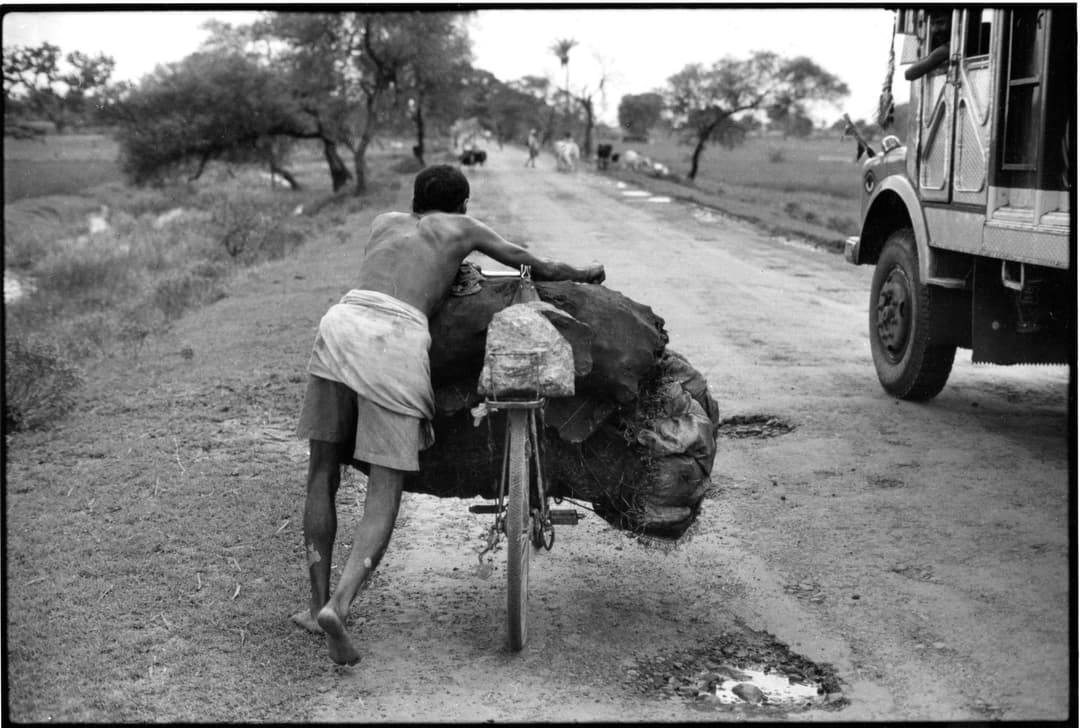
Yadav is now ready to use his bicycle. Not so much for cycling as yet – that can be difficult without a chain – but as a trolley for carrying up to 250 kilograms of coal across distances of 40 to 60 kilometres. For his hazardous labours, he earns up to Rs. 10 a day, barely a third of the minimum wage in Bihar.
Yadav will go from Lalmatiya to Godda and back, taking fully three days in walking, resting and hawking time. A more strenuous form of self-employment is hard to think up, yet nearly 3,000 families in Godda are dependent on it.
Not all the koilawallahs, or cyclewallahs as they are known, will remove one pedal or the chain, but they will reinforce the bars and tear the seat upwards. “They will learn,” says Yadav, a trifle contemptuously. “That right side pedal will break, and the chain, if not loosened, will cause obstruction.”
Only after he sells his coal can Yadav restore the pedal and chain and cycle back to Lalmatiya, where he buys his stuff. He cannot do this crushing trip more than twice a week. Sometimes, the koilawallahs journey up to Baunsi in Banka district, 60 kilometres away, or even up to Rajaun in Banka, 80 kilometres away, all the while pushing their huge loads on foot with muscle-tearing effort. Usually, the koilawallahs cart between 200 to 250 kilos, but some claim they occasionally pull even heavier loads. There are also adolescents in their early teens who drag smaller loads.
Officialdom terms their trade an “illegal” activity. Why? Because they purchase coal from scavengers who scour the waste dumps of the Rajmahal Coal Mining Project, Lalmatiya. The mountains of waste soil the project creates contain almost three per cent of low-grade coal.
“In fact,” admits a top Rajmahal project official, “were it not for the scavengers, that coal would remain unutilised in the waste dumps. And, but for the cyclewallahs, would never reach the people of Godda, mostly poor consumers, as an extremely cheap energy source. It is a national saving.”
Issues tend to get confused because there are so many unlawful activities relating to coal-mining. However, three main illegal forms stand out in the extraction and sale of coal:
- Theft from the depots of the Rajmahal project and piracy while the coal is in transit. But nobody has ever accused the cyclewallahs of that.
- Illegal mining controlled by the powerful coal mafia aided by corrupt officials. That is certainly not run by cyclewallahs like Yadav or Prahlad Prasad Sah earning less than Rs. 12 daily.
- The scavenging of coal from the waste dumps by very poor people. It is from them (or via the dadas controlling them) that the cyclewallahs mainly get their coal. These are the people, mostly women, largely responsible for what the official calls a “national saving”.
As a senior Rajmahal official admits: “About 1,000 cyclewallahs function on a given day. No one manages more than two trips a week. If we calculate all the coal ‘illegally’ sold by the koilawallahs in a whole year, it won’t equal two days production at Lalmatiya.”
Starting outside Lalmatiya, I tracked the cyclewallahs along the route to Godda, 40 kilometres away. Though the distance is not much, they need an overnight halt. A physically intolerable journey at the best of times, it seemed hellish in the wretchedly sultry September weather. They moved slowly along miserable roads where they often had to push their back-breaking loads up unyielding inclines.
The koilawallahs move in lines of up to 20. The “fellow travellers” are essential because, if one of them stumbles, he can’t get started without assistance. Besides, each needs help when fording long puddles or mounting steep inclines. I watched Yadav cross one such stretch aided by his friends. He then “parked” his cycle by planting a stout stick under the sacks and went back to help the next man across.