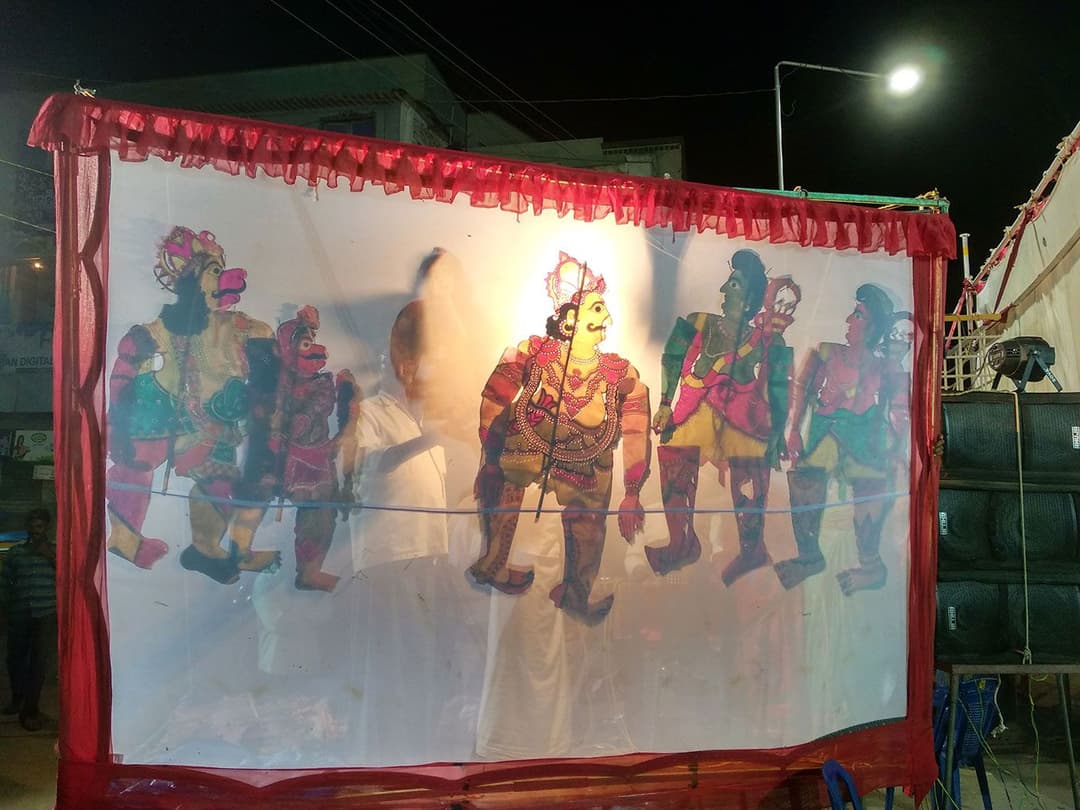
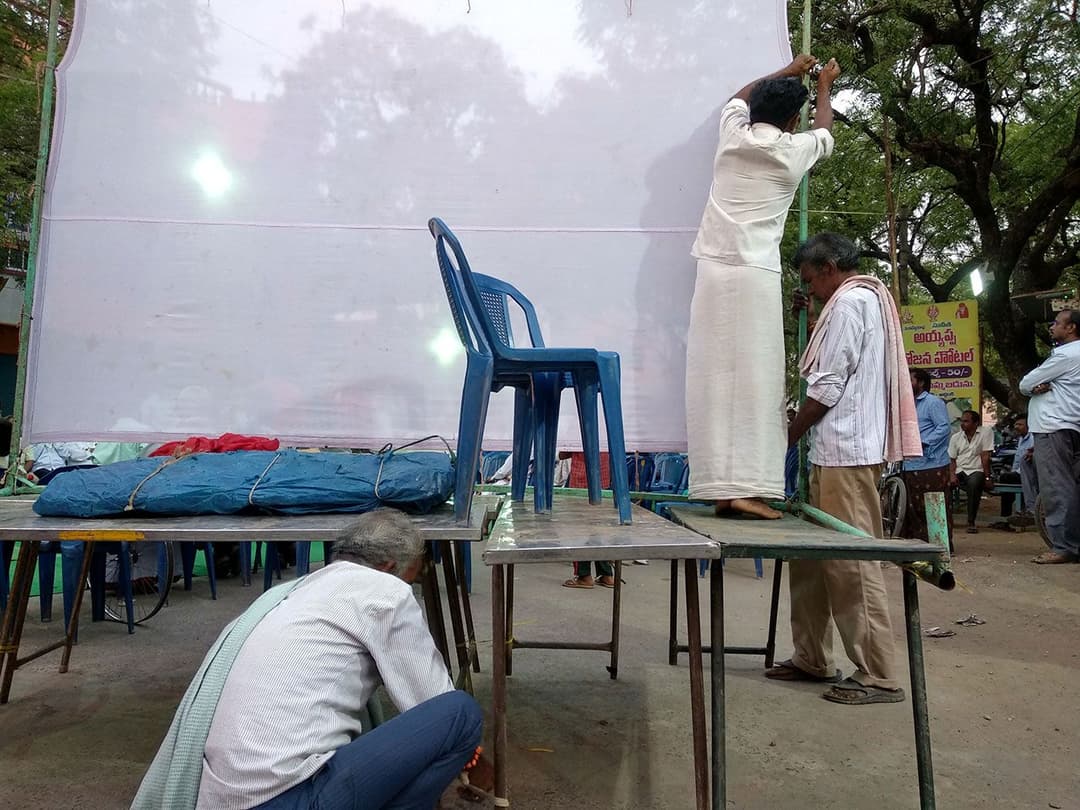
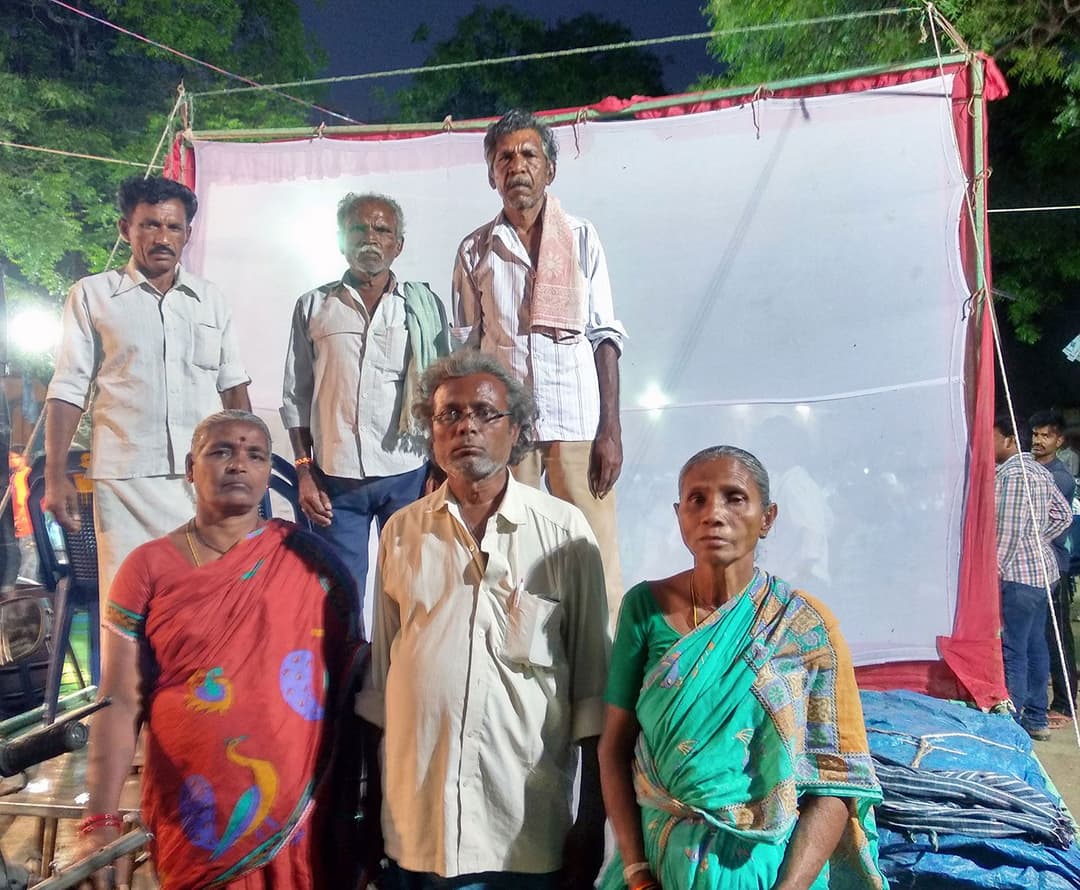
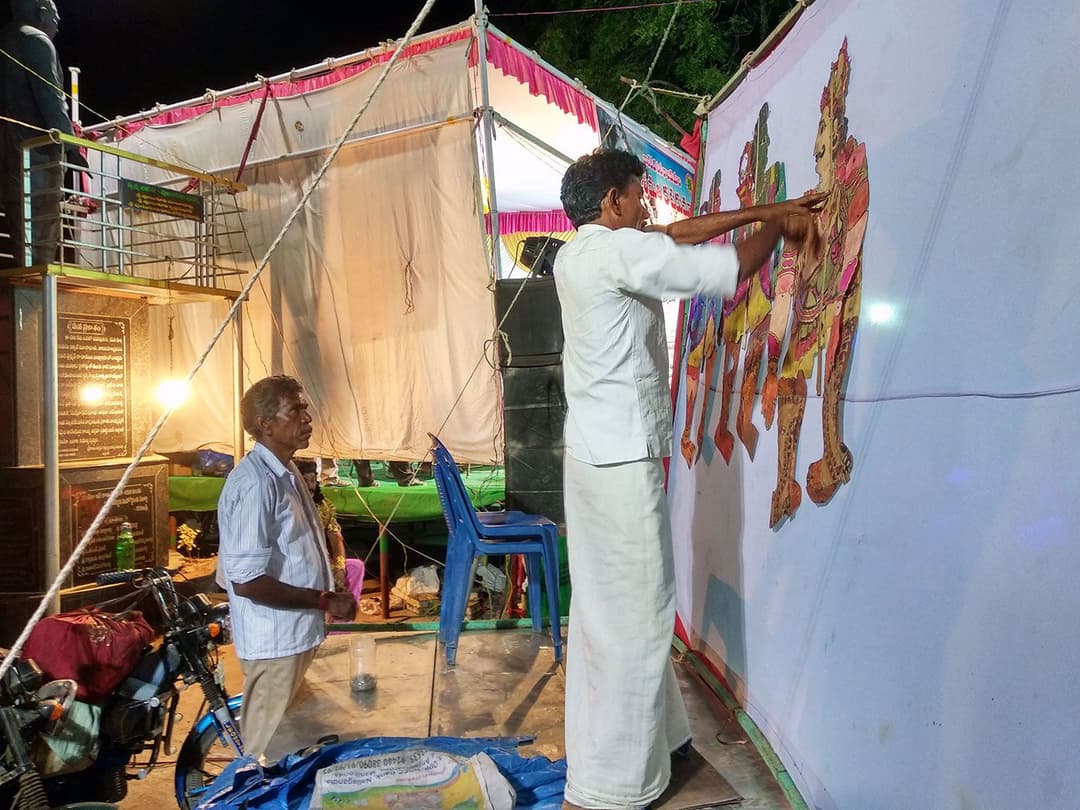
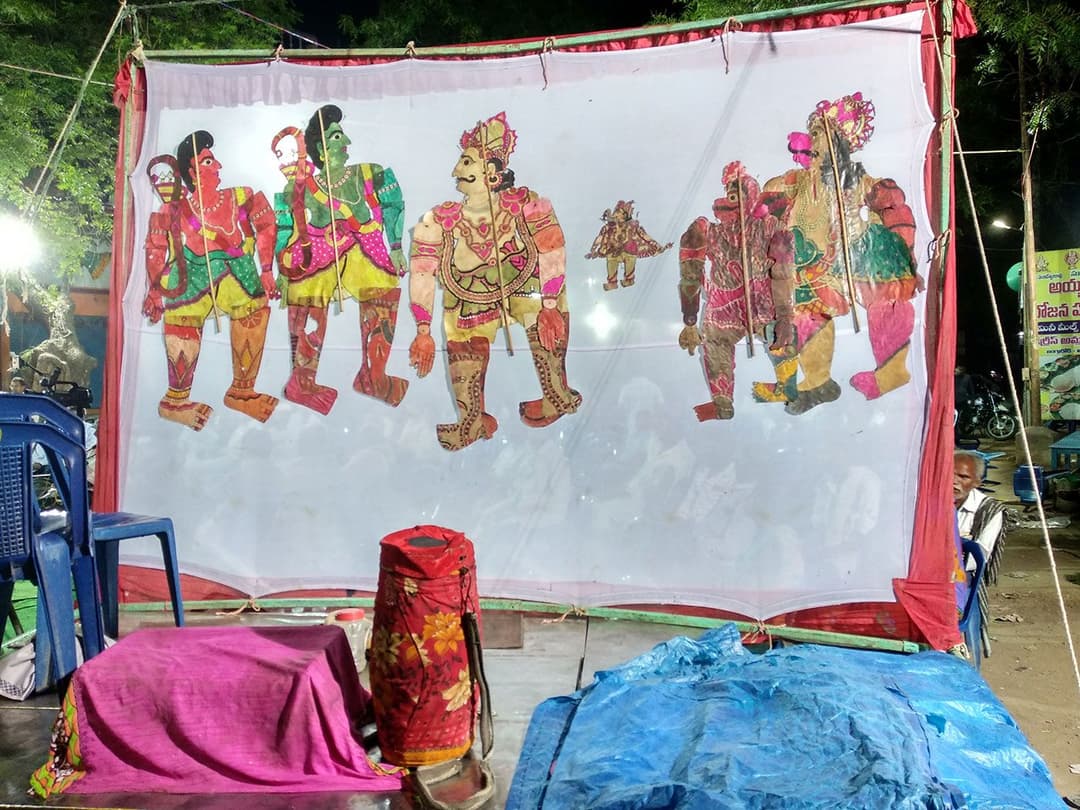
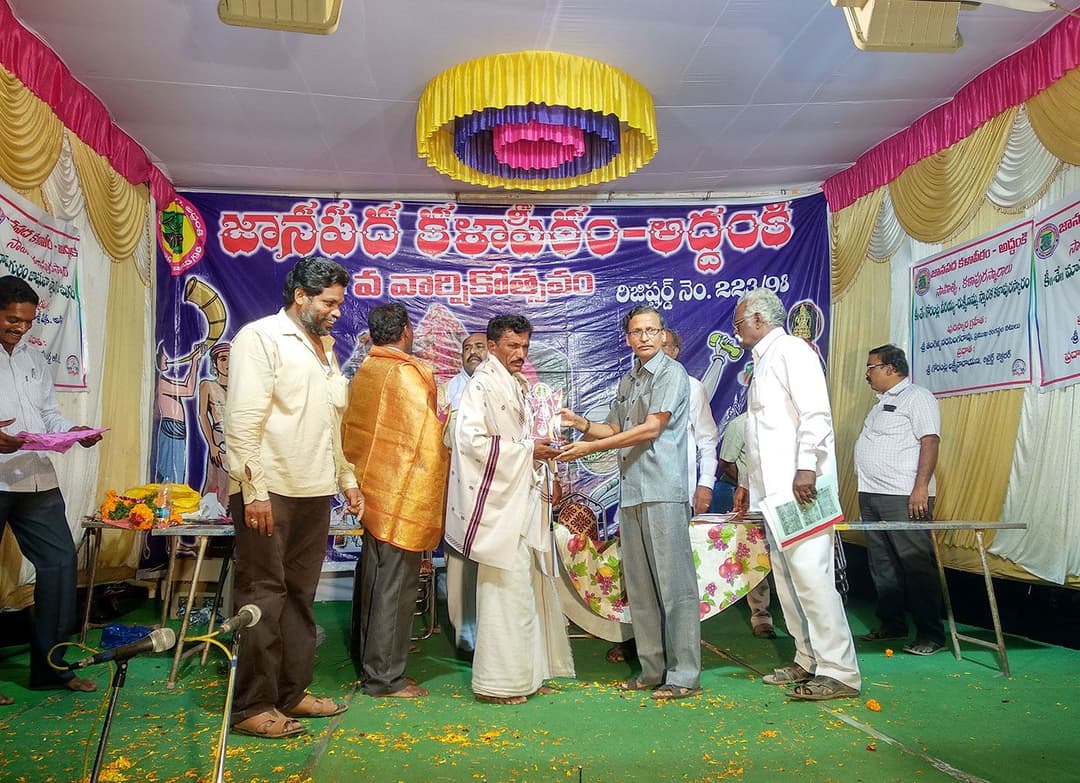
On March 10, 2018, they performed the play ‘Rama Ravana Yuddham’ in Addanki town. They were invited as part of the 20th anniversary events of the Addanki Kala Peetham, an organisation that promotes folk arts in Prakasam district. The play, about the war between Rama and Ravana, is depicted as a fight between good and evil. It was scheduled at the end of the programme, which forced the artists to cut short the two-hour play to an hour. Despite the late hour – 11 at night – both men and women stayed back. Manikyala Rao, 74, who was in the audience, yawned and said, with a beedi in his hand, “It’s been long since I watched a puppet show. That’s the reason why I am staying on despite it getting late.”
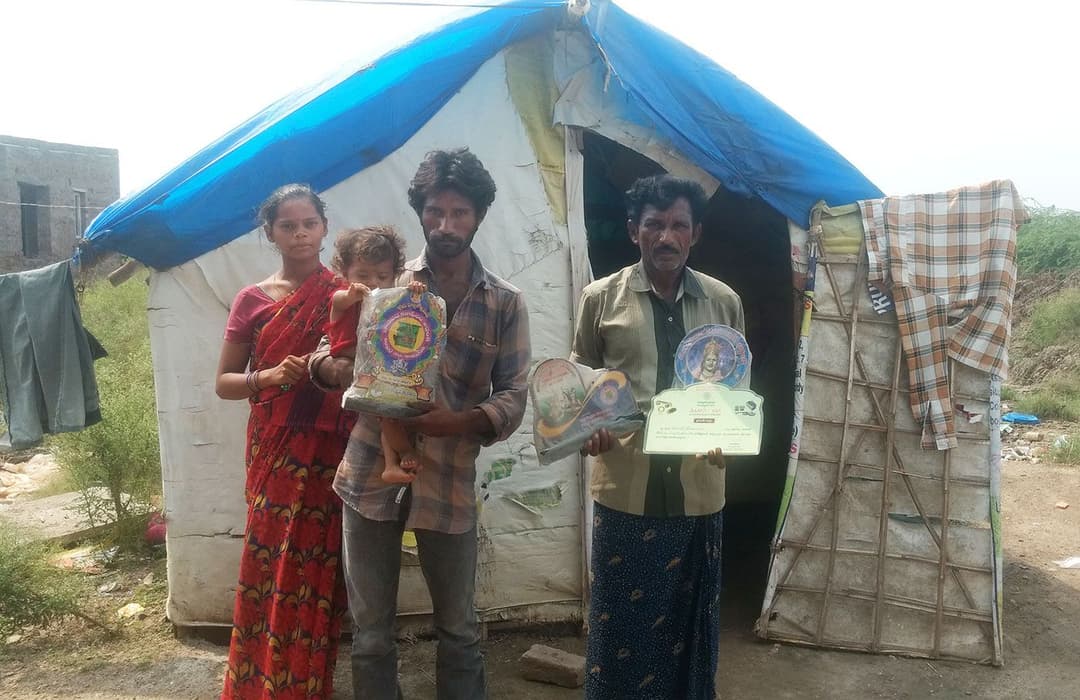
Kotilingam’s 10-member troupe is one of just a handful of surviving puppeteer groups in Andhra Pradesh. The member-artists, all from the Aryakshatriya community that originated in Maharashtra, are Kotilingam’s relatives. They live in different parts of Guntur and Prakasam districts of southern coastal Andhra, mostly working as hawkers or labourers in small towns like Addanki, Darsi and Ongole. They meet as a group only when hired for a performance – once every three or four months.
Linking their ancestral art form to the Maratha kingdom of Chhatrapati Shivaji, the female lead of the troupe, Vanaparthi Ramanjuneyamma, 45, says that Serfoji and Venkoji, Shivaji’s brothers, came to the Madurai-Thanjavur region in the 17th century and promoted various art forms, including puppetry, by the Aryakshatriya community.
Kotilingam and Ramanjuneyamma then take turns to narrate this origin story: “Once upon a time, a Brahman in the court of a Chola king hated the Kamsalu [caste; now listed as Kamsali in Andhra] and concocted a story to make the king believe that the Kamsalu were plotting against him. The king ordered a brutal beheading of the Kamsalu. The few who survived lost their livelihood and fled to the forests. There, they started making toys with the dead skin of animals, developed this folk art and started performing for the people as a means of livelihood. Intrigued, people from other castes learnt the art too. Performing
Ramayana over six months, they started digging a tunnel from the stage to the palace to kill the Brahman and the king as revenge. They killed both on the last day of the performance when Rama kills Ravana and left the art form to the people who had learnt it out of interest. Over time, this set of people who performed the art came to be known as the Aryakshatriya.”