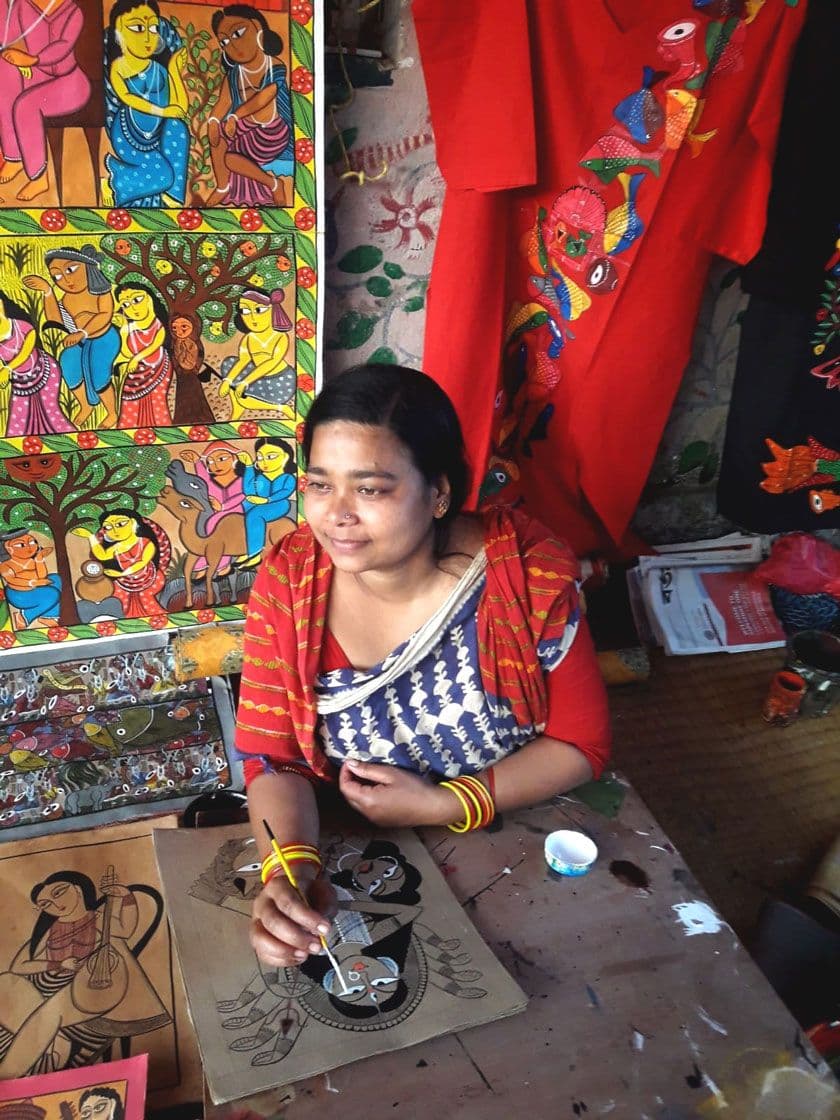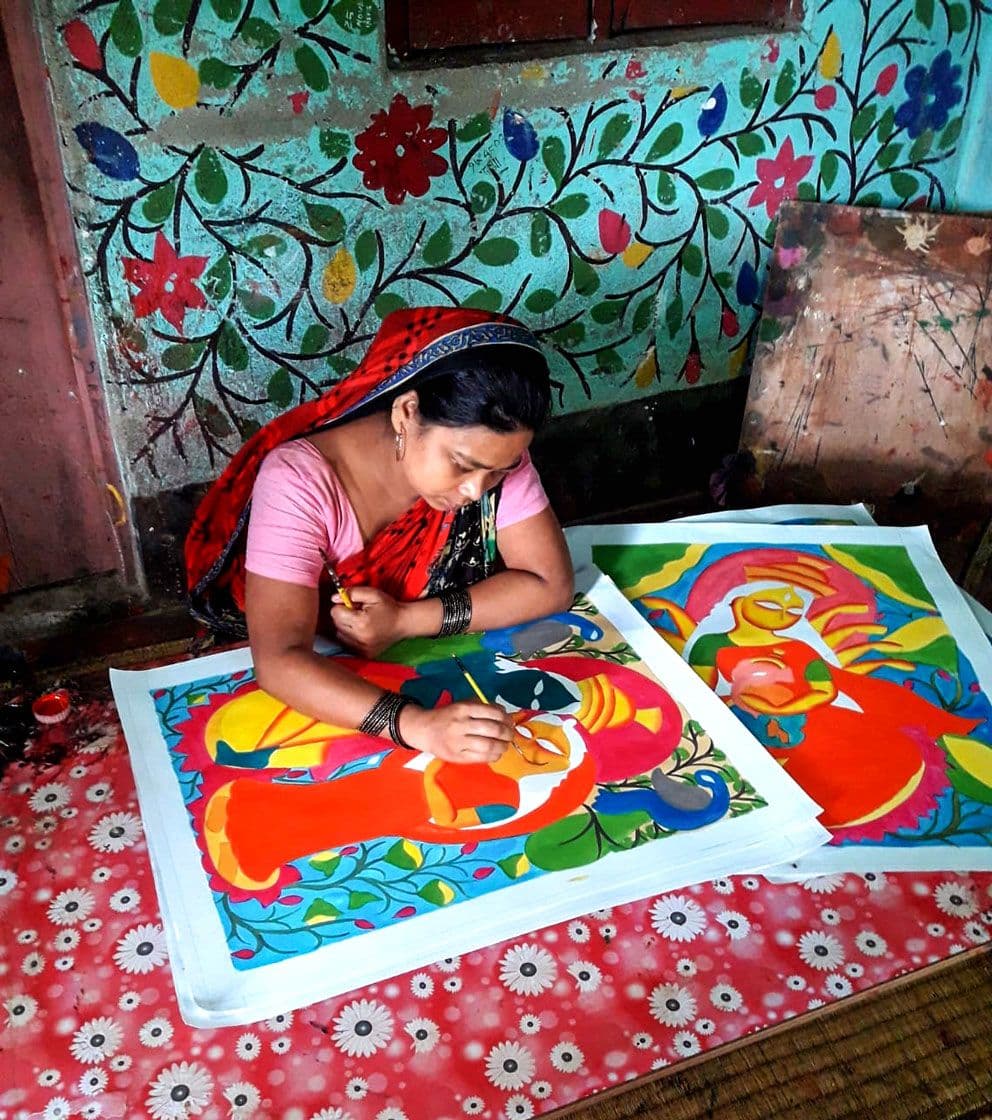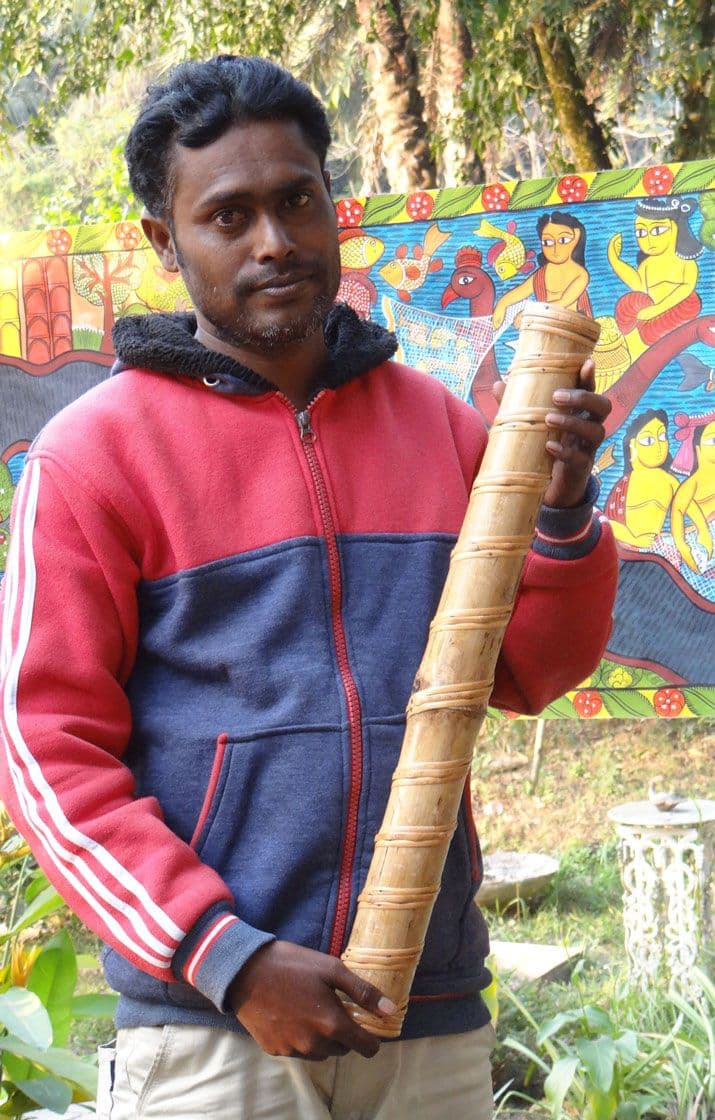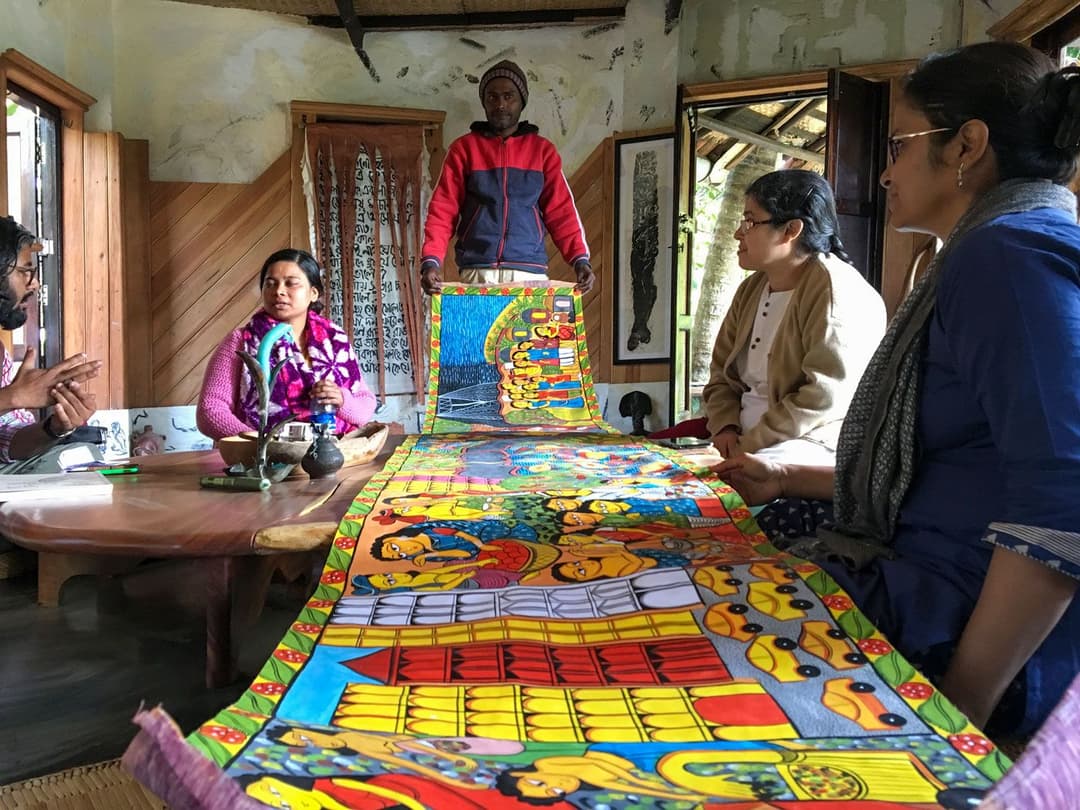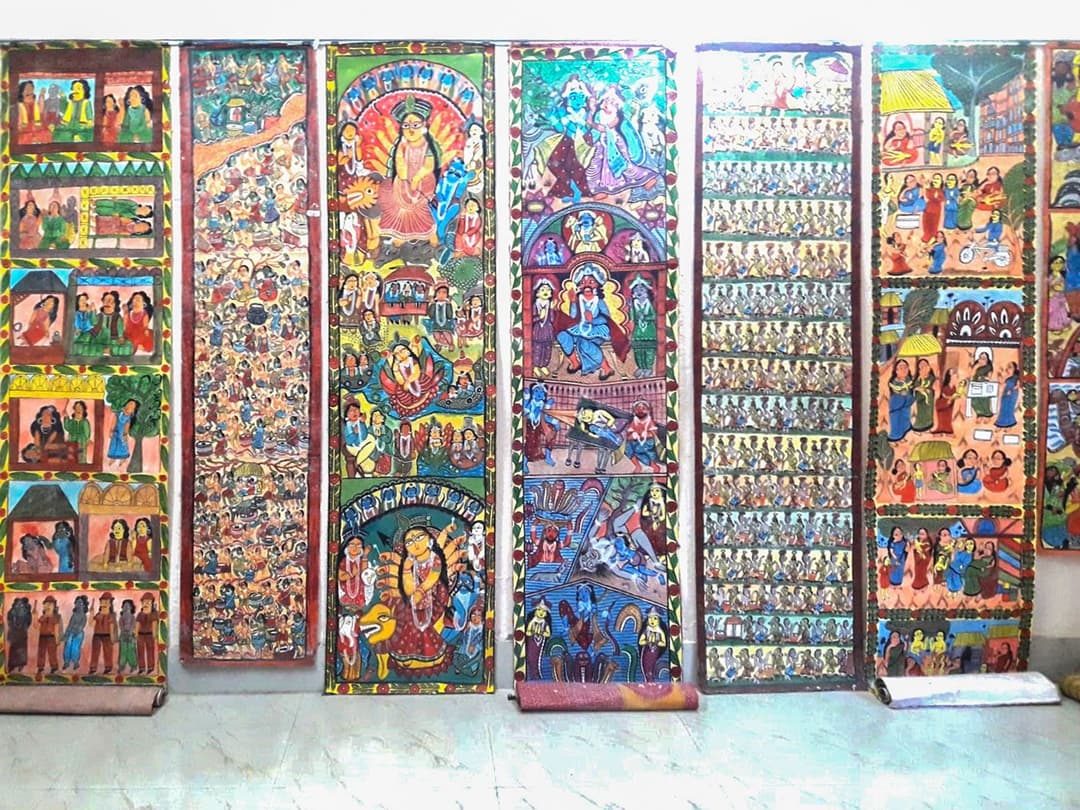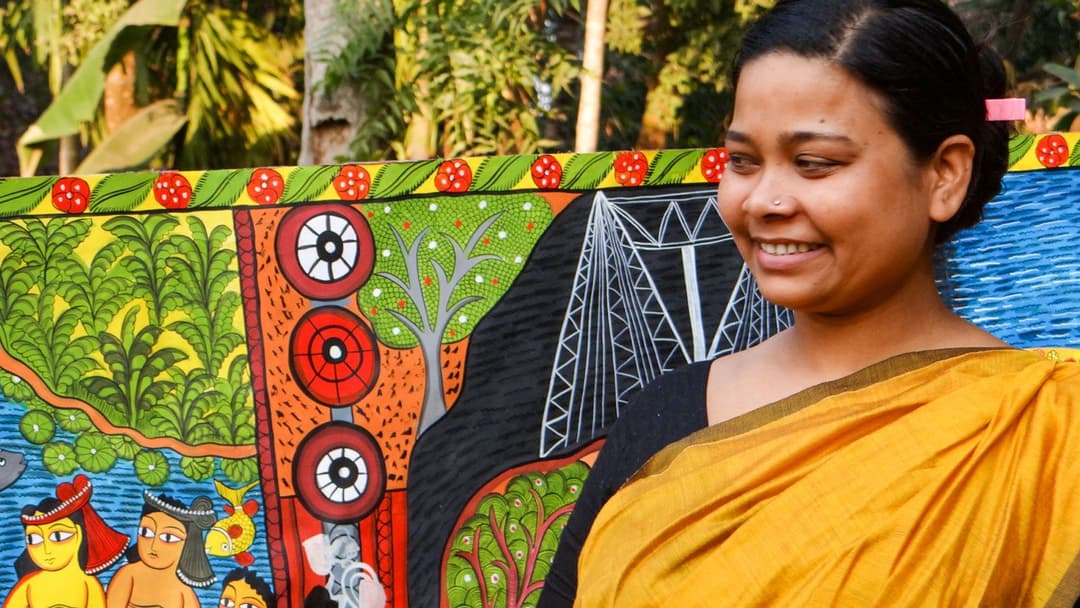

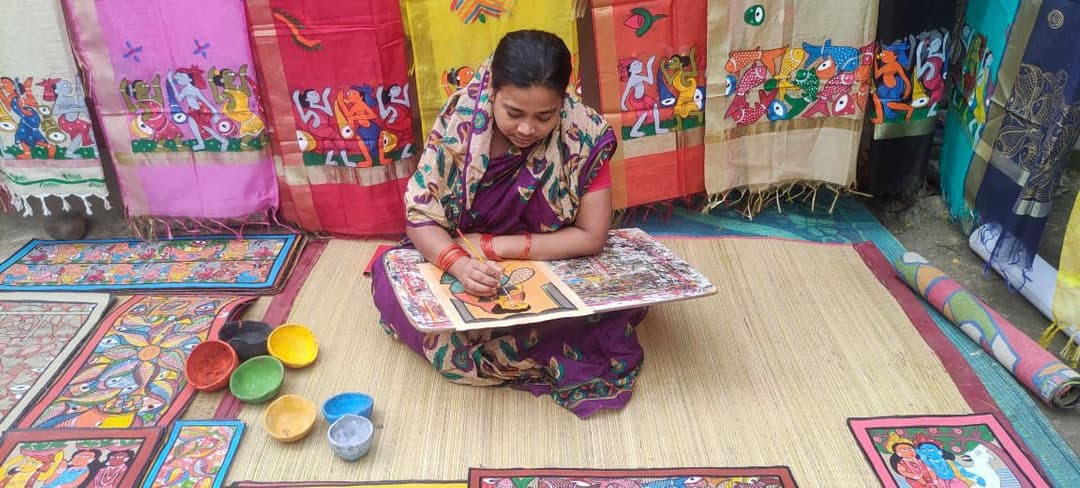
The first step to making a patachitra painting is composing a song – a patar gaan. “Before starting to paint, we need to create the stanzas of the song… its rhythm will provide a structure to the painting process,” says Mamoni Chitrakar. Seated in her home, the eighth-generation artist is creating a patachitra depicting the East Kolkata Wetlands in West Bengal.
The art derives its name from the Sanskrit word ‘patta’ or a piece of cloth and ‘chitra’ or painting. As Mamoni paints the intricate ecosystem nurtured by the Wetlands, she sings the patar gaan that will accompany the performance of the patachitra. This song, written and composed by Mamoni herself, begins with an invitation: “Listen, O listen all, listen in attention”.
The song goes on to explain the importance of the East Kolkata Wetlands that are the “lifeline of so many”. Fisherfolk, farmers and vivid fields are painted on a pata, which are paper scrolls mounted on cloth. When the final pata is unrolled during a performance, sections of the painting will correspond to the stanzas in the song. In this way, Mamoni’s art tells the story of the Wetlands through painting and music.
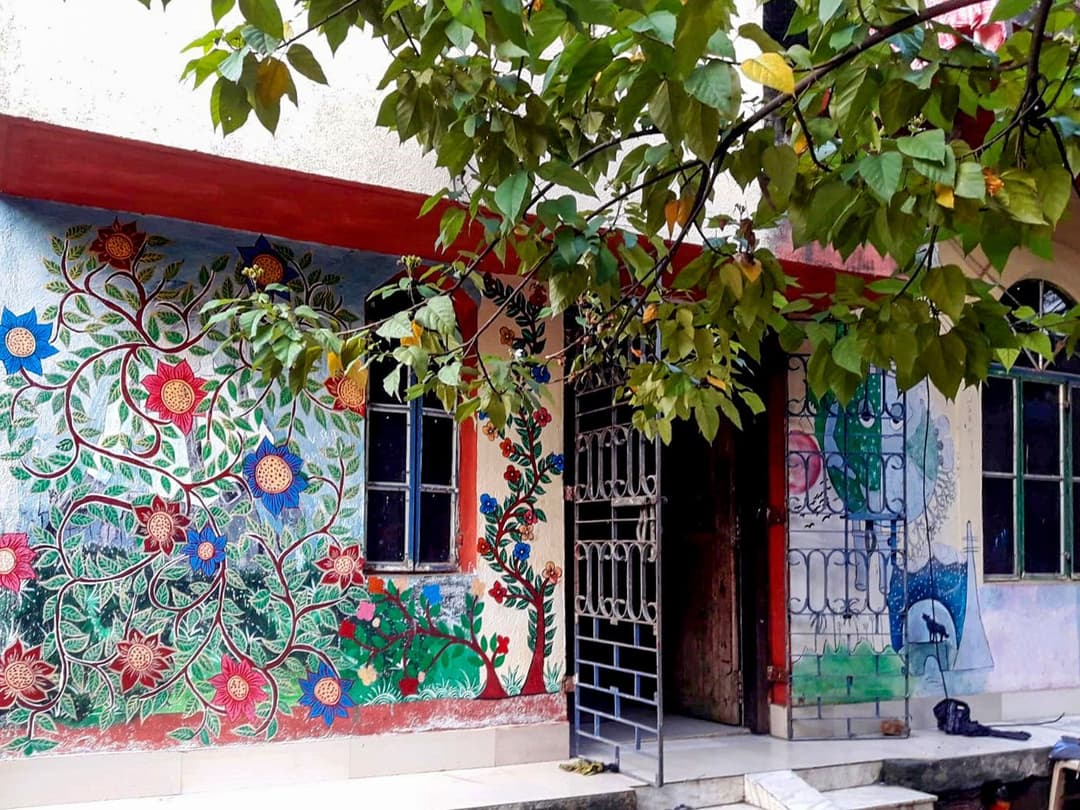
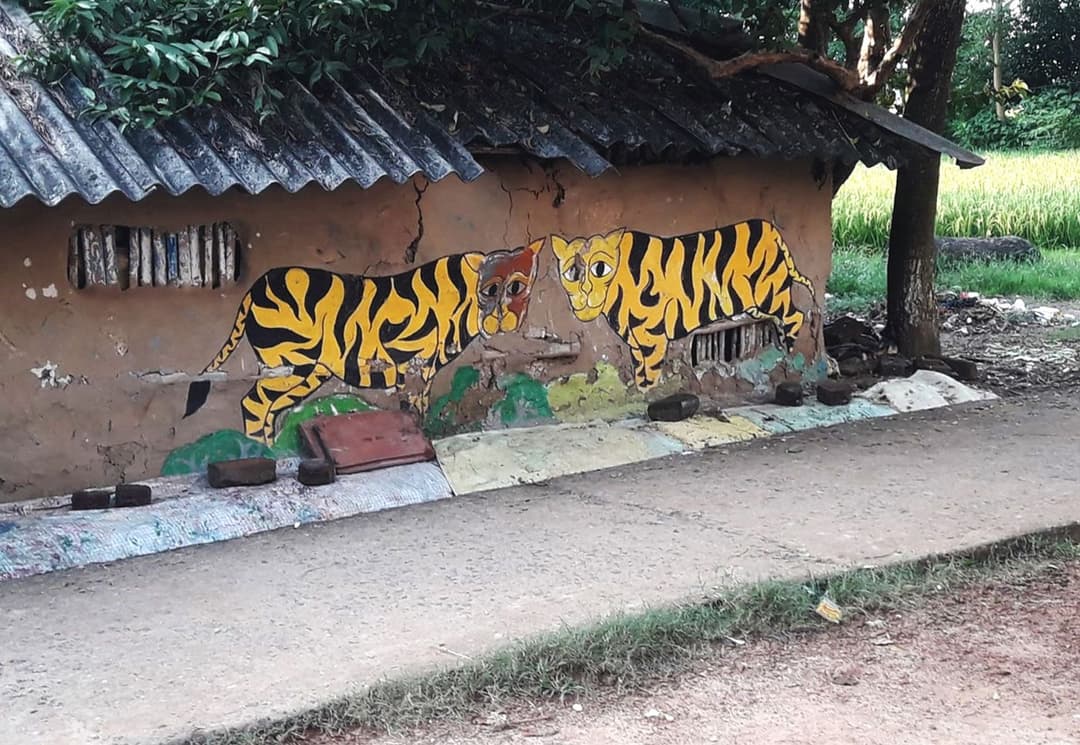
A resident of Naya village in Paschim Medinipur, Mamoni’s village in the Pingla taluka is home to around 400 craftspeople, she estimates. No other village in this taluka has such a high concentration of artists who practise patachitra-making. “Almost all the 85 houses in the village have murals on the walls,” says the 32-year-old resident and artist referring to the drawings of foliage, wild animals and flowers in vivid colours. “Our entire village looks beautiful,” she adds.