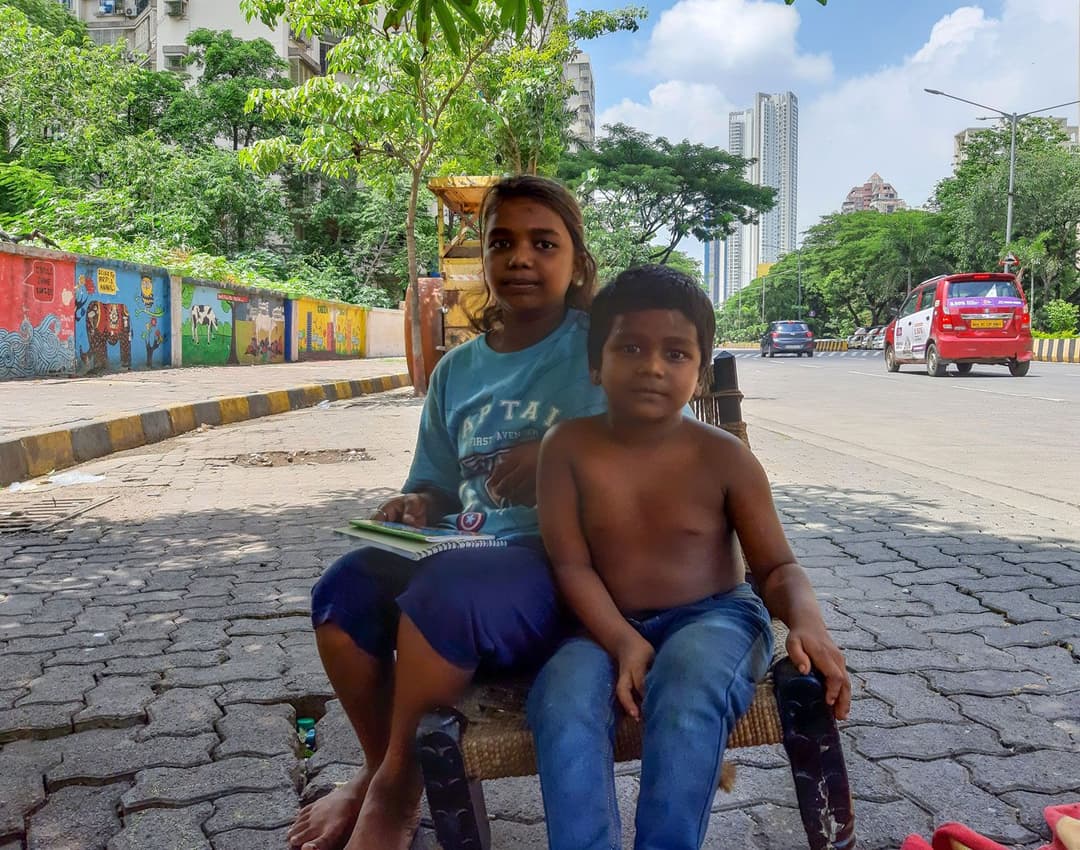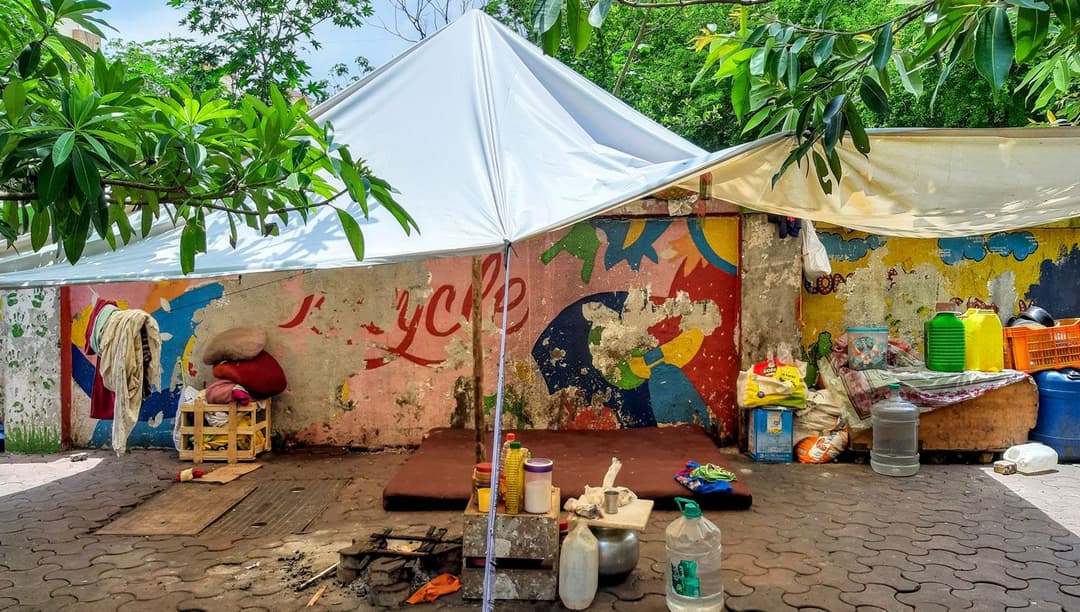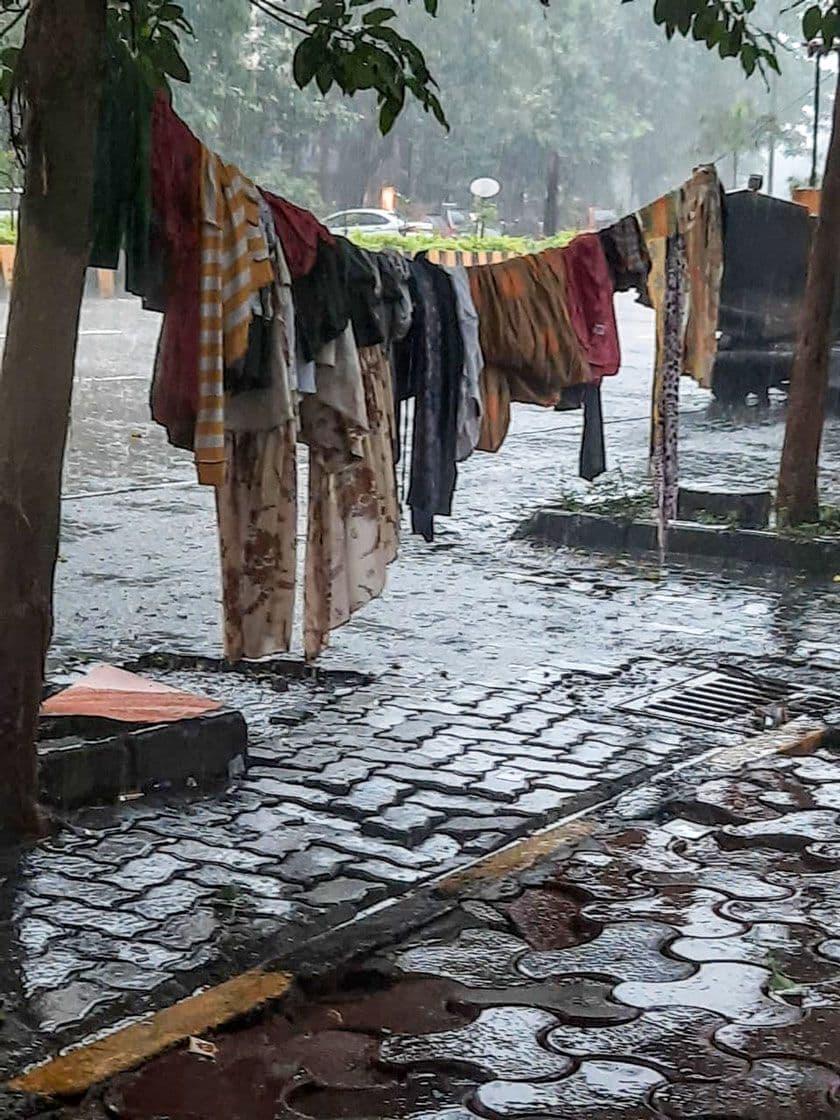

Meena did not sleep that night. The rain water had entered her home. The flimsy tarpaulin couldn’t hold the downpour and crashed in minutes. Meena and her family ran to take shelter in front of a closed shop.
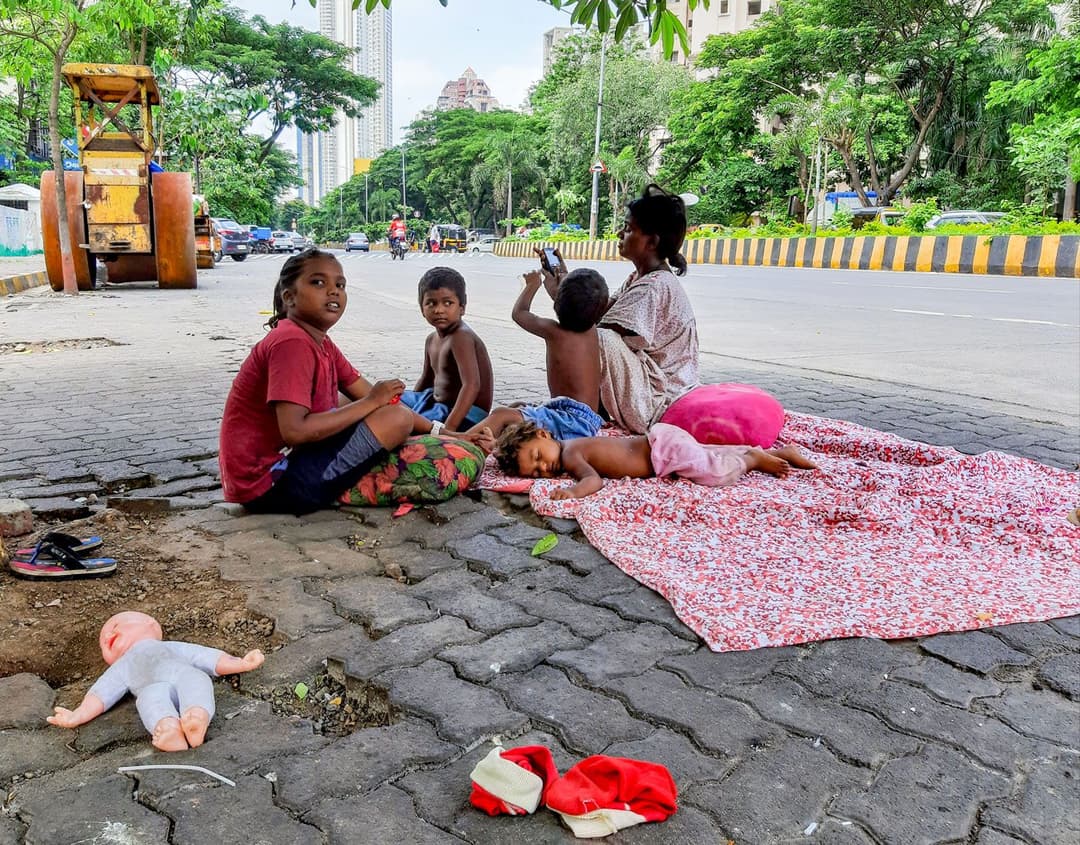
“We sat there the whole night [in early July] until the rain stopped,” she says, resting on a white printed sheet by the side of the main road one afternoon, her two-year-old daughter Shama sleeping next to her.
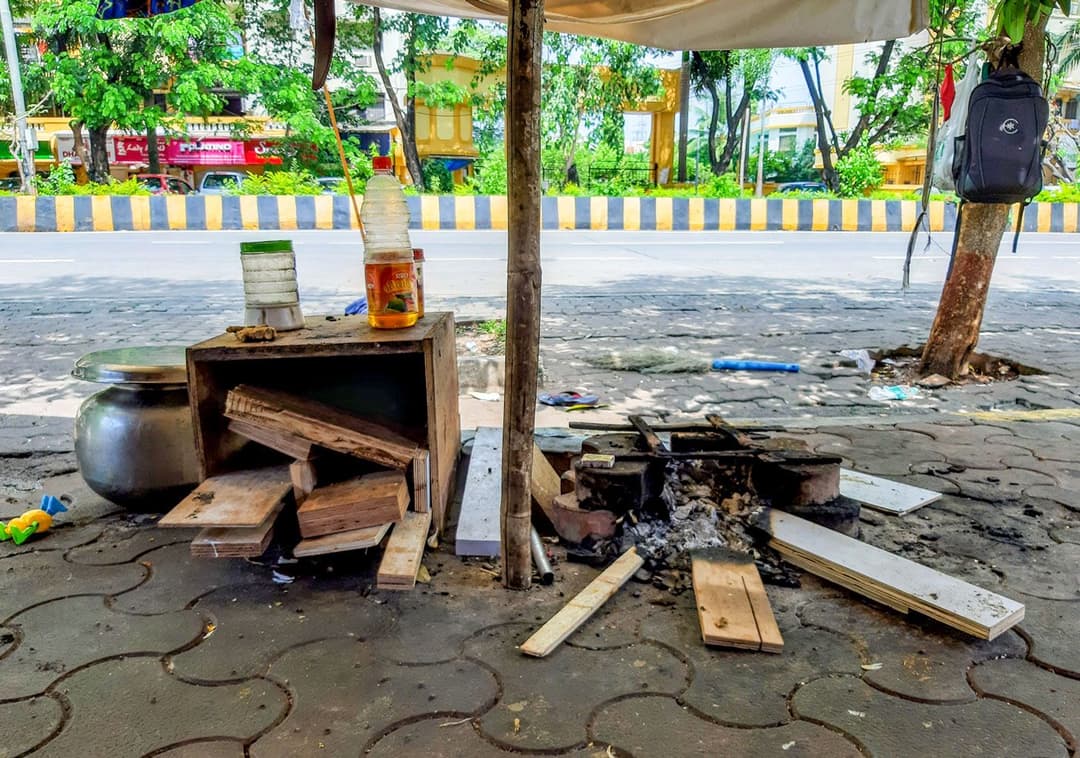
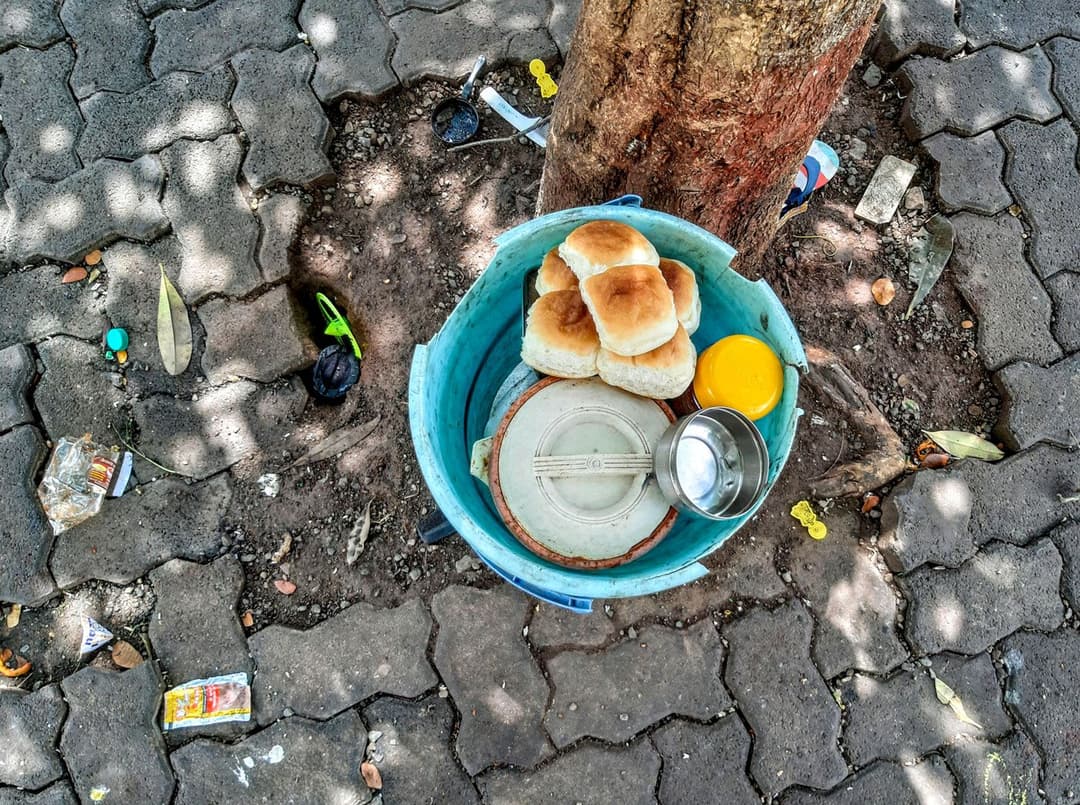
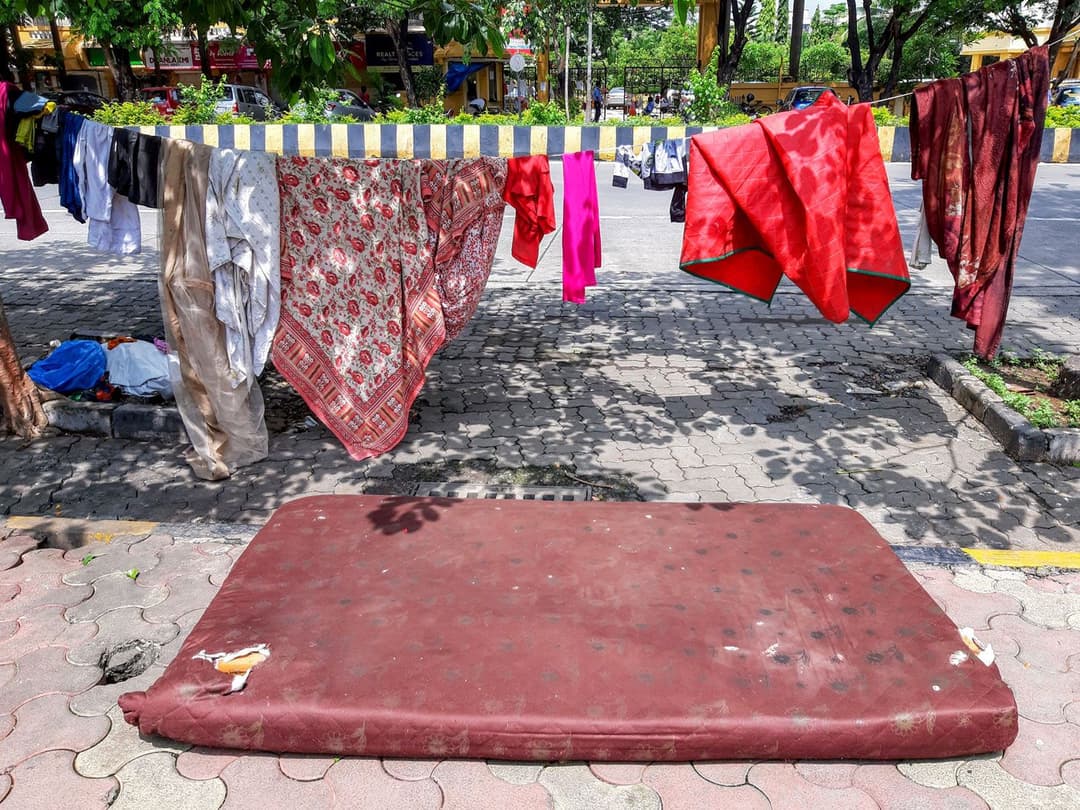
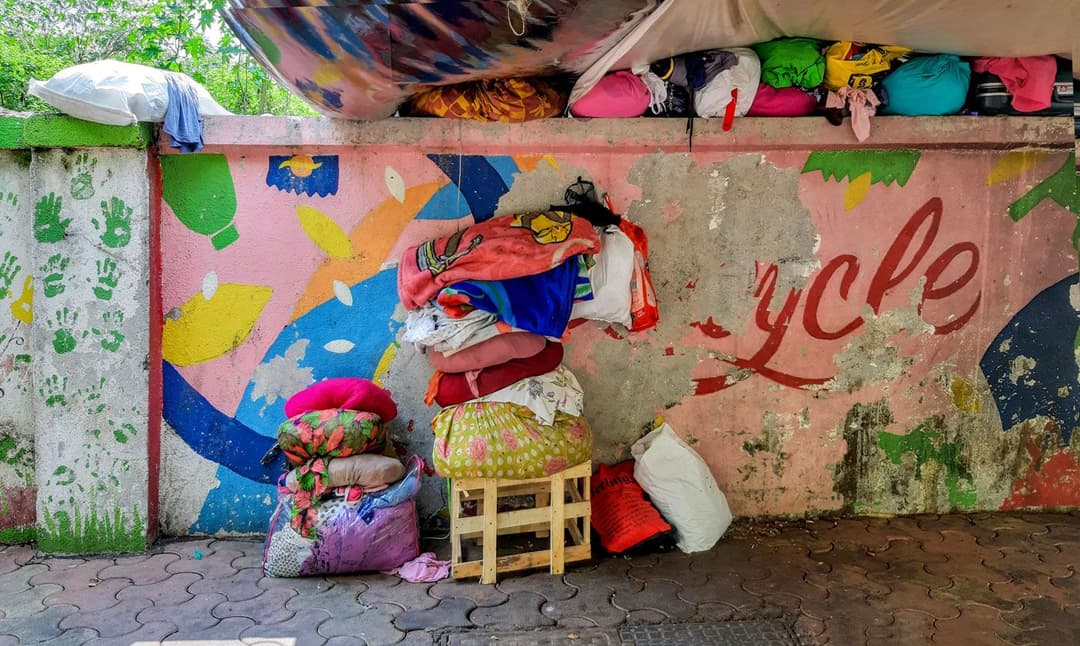
After that downpour, Meena had come back and put up their dwelling once again. By then many of their belongings – utensils, grains, school books – had floated away.
“The masks we had floated away too,” says Meena, green cloth masks given by volunteers during the early lockdown phase. “How does it matter if we wear a mask?” she adds. “We are already like dead humans, so who cares what corona does to us?”
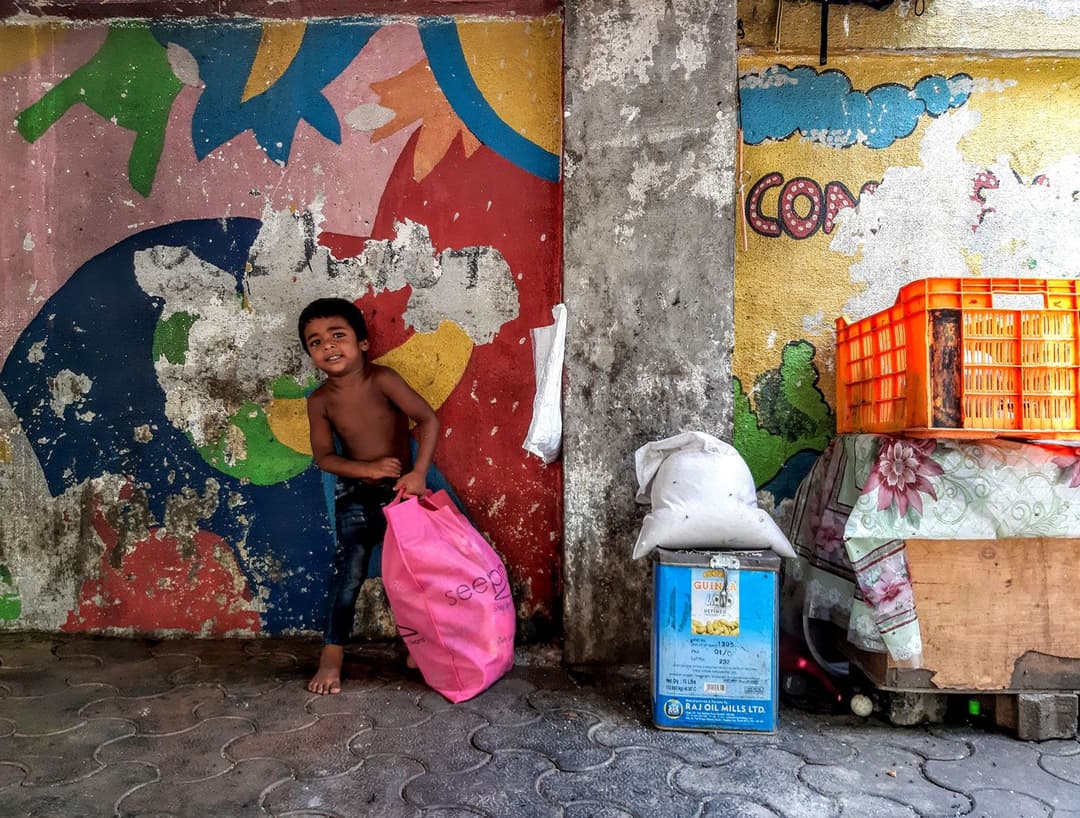
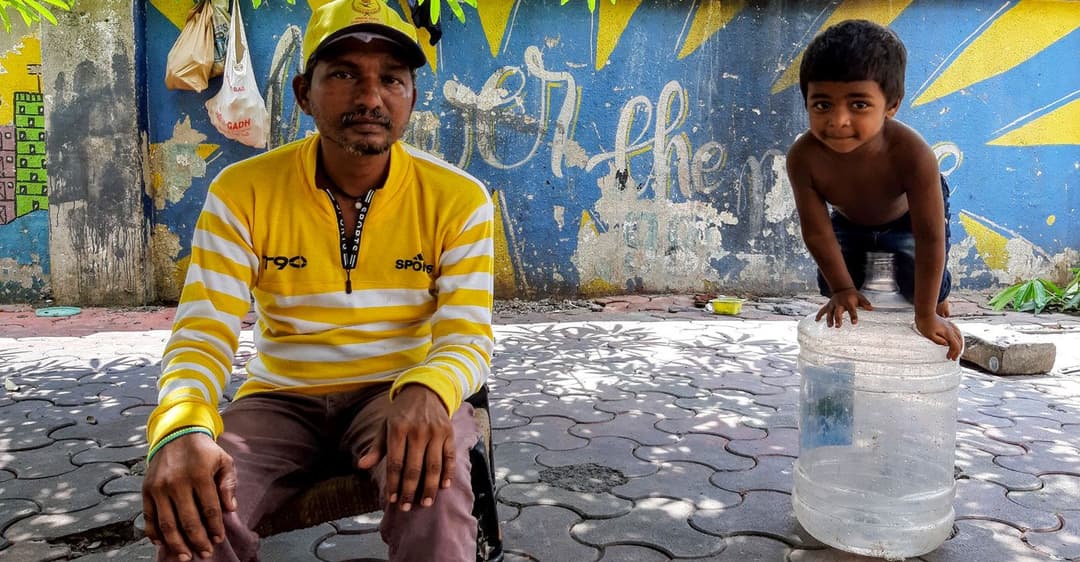
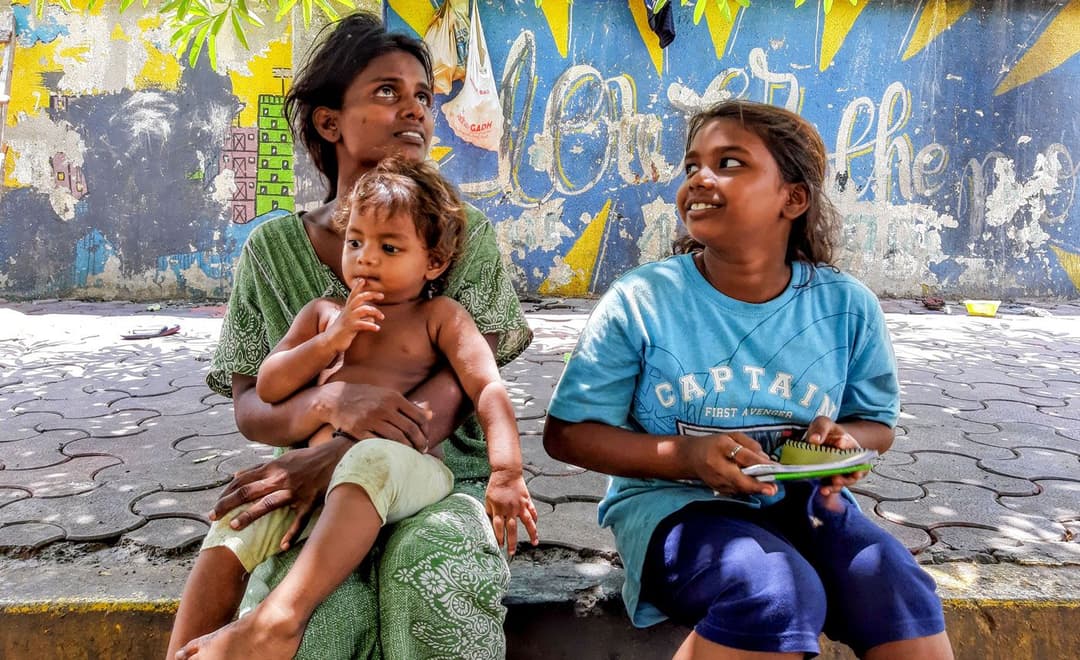
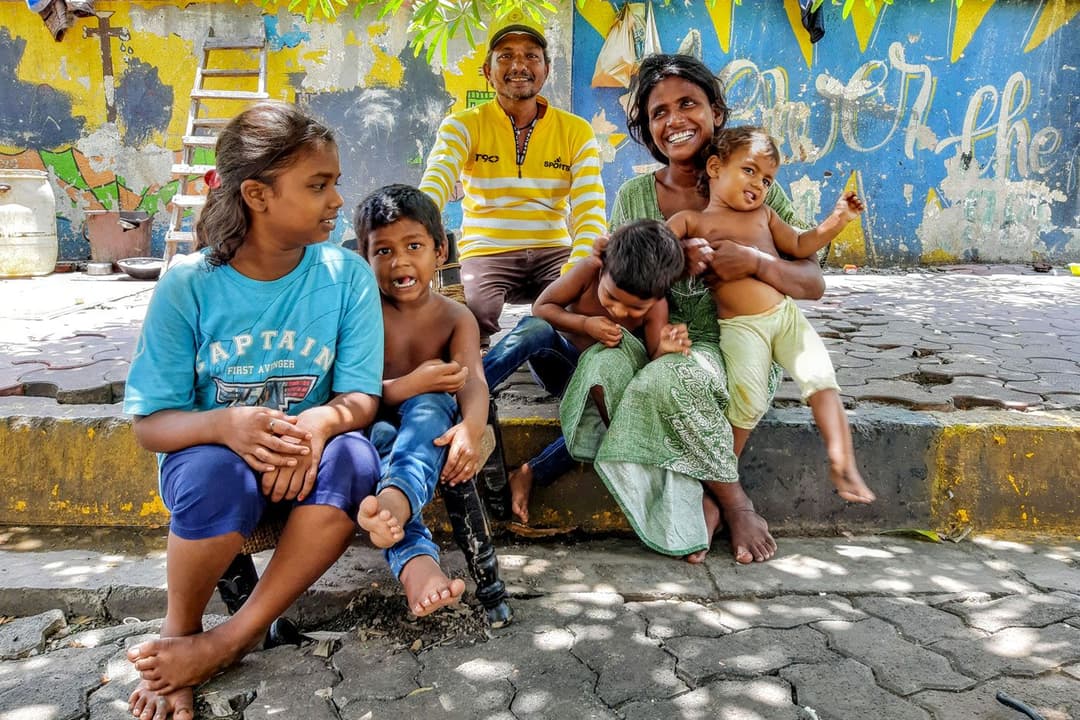
Meena (who uses only her first name) and her family – husband and four children – are used to seeing their sparse belongings floating away. It’s happened more than once since the beginning of this monsoon and repeats every year – heavy downpours batter their hut on a pavement in the Kandivali East suburb of north Mumbai.
But until last year, when it rained heavily, the family could run to nearby construction sites to take shelter. This has now stopped. Meena, who is around 30, says, “We are used to this rain, but this time, corona has made it difficult for us. We would go to those buildings and wait. The watchmen knew us. Even the shopkeepers let us sit just outside their shops in the afternoons. But now they do not let us even walk nearby.”