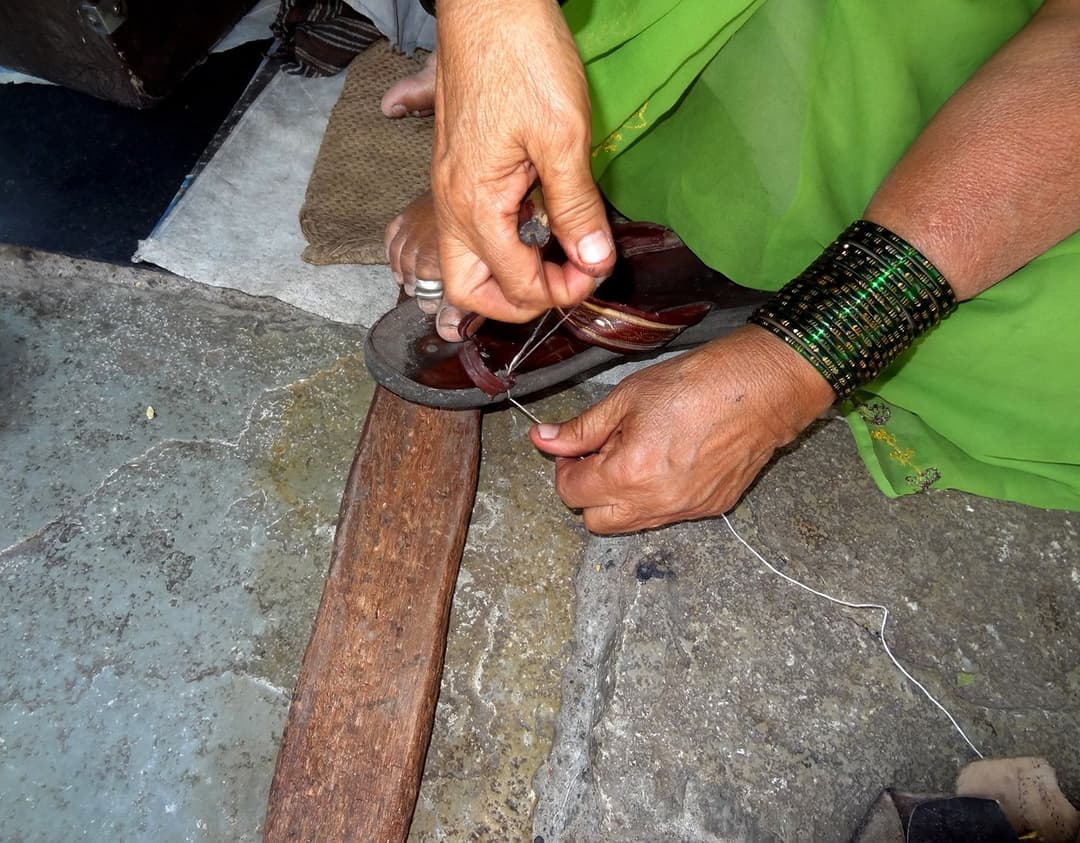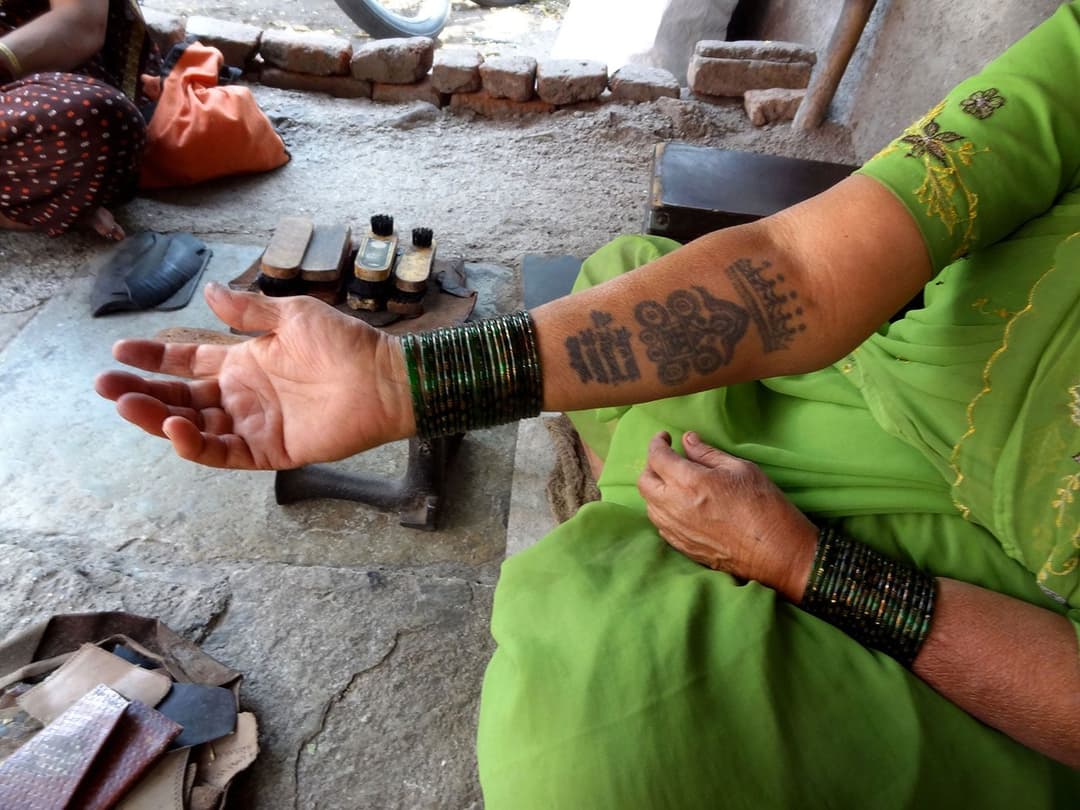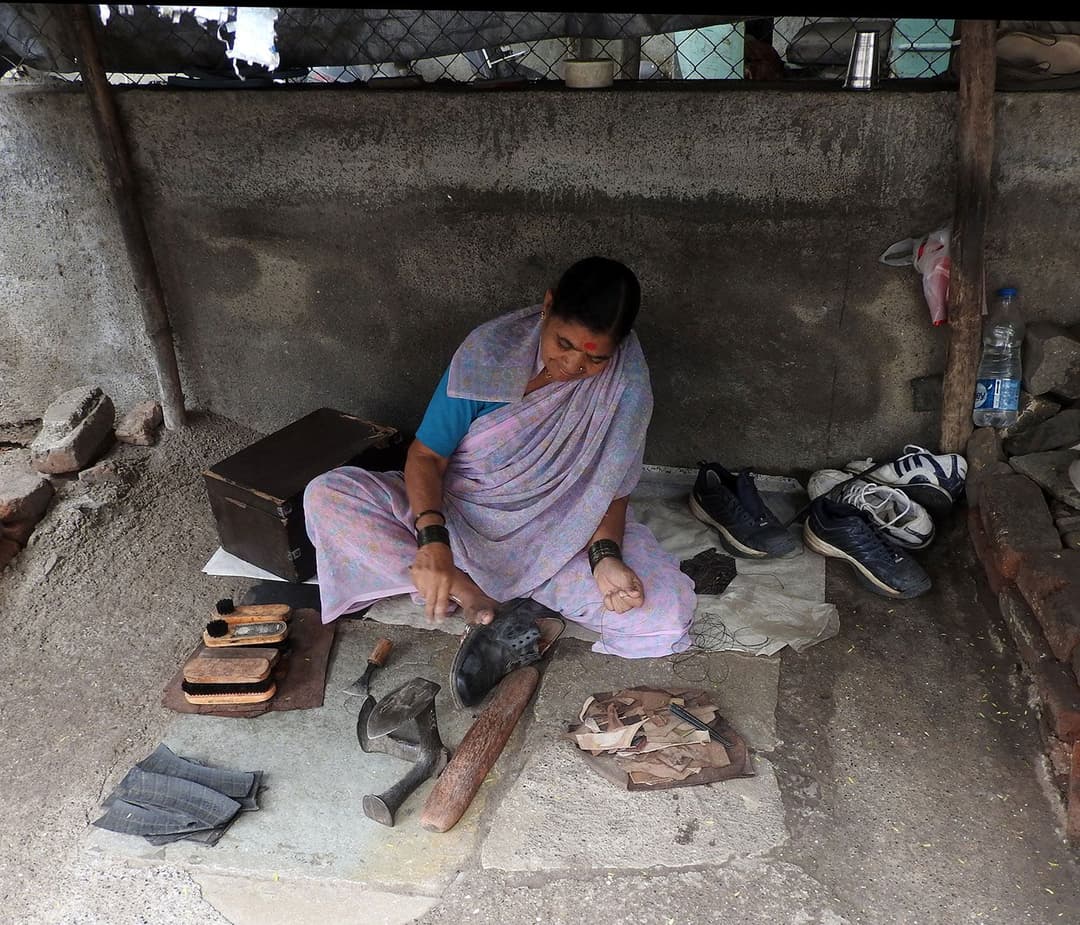

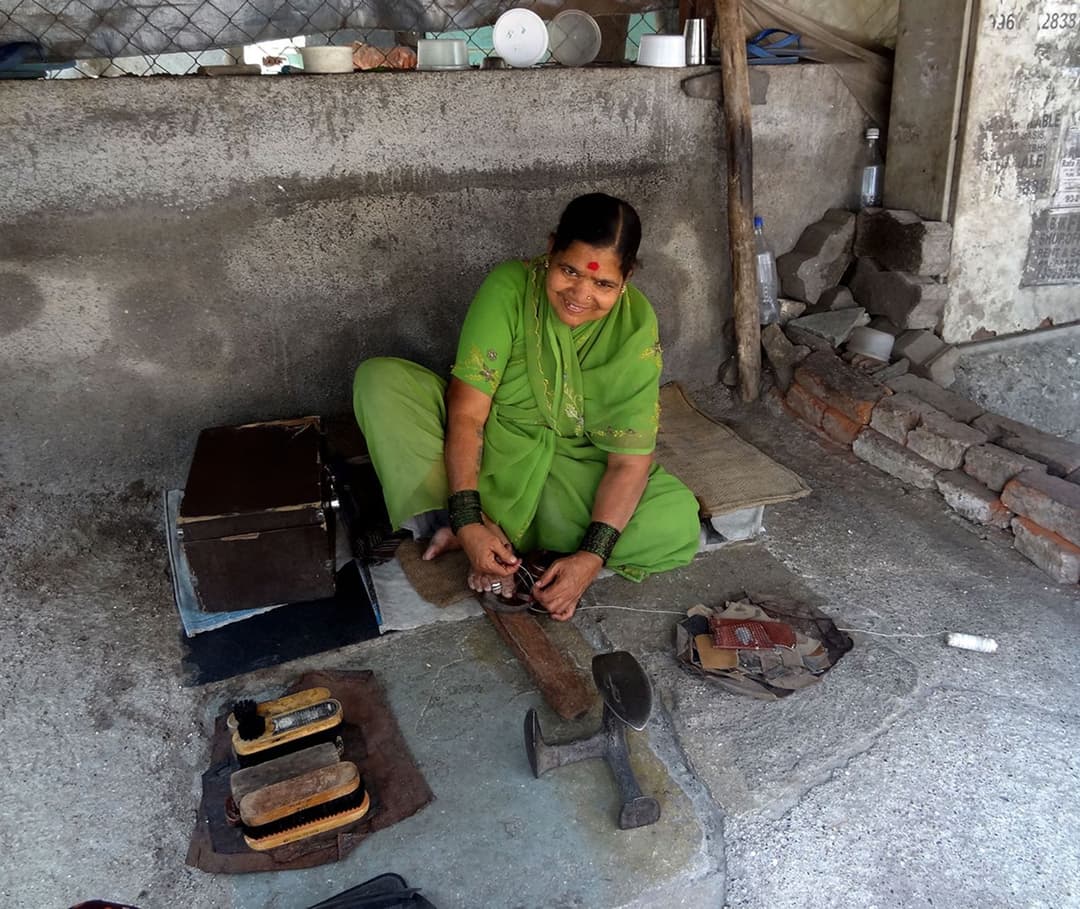
Bhamabai is sitting in her shop, repairing a chappal , the iron cobbler’s anvil before her on the floor. Using a rectangular block of wood as support, she holds down the open slipper at the edge with her big toe. She then pushes in the needle and, looping the thread, pulls it out. With six iterations, the broken strap is fixed – earning her five rupees.
Meet Bhamabai Mastood, a leather worker, commonly called a cobbler, living in near penury. Decades ago, she and her husband were landless labourers in Osmanabad district of the Marathwada region. When the great drought of 1972 ravaged Maharashtra, decimated agricultural work, and dried up their livelihoods, both came to Pune.
They took up any work that came their way, on roads or in building construction. A day’s labour brought two to five rupees during those times in Pune. “I gave all that I earned to my husband. He would drink and beat me up,” Bhamabai, now around 70, says. The husband eventually abandoned her, and now lives with his other wife and children near Pune. “For me, he is as good as dead. It has been 35 years since he left.” Bhamabai would have had two children herself had she not lost them at birth. “There is no one with me, I have no support,” she says.
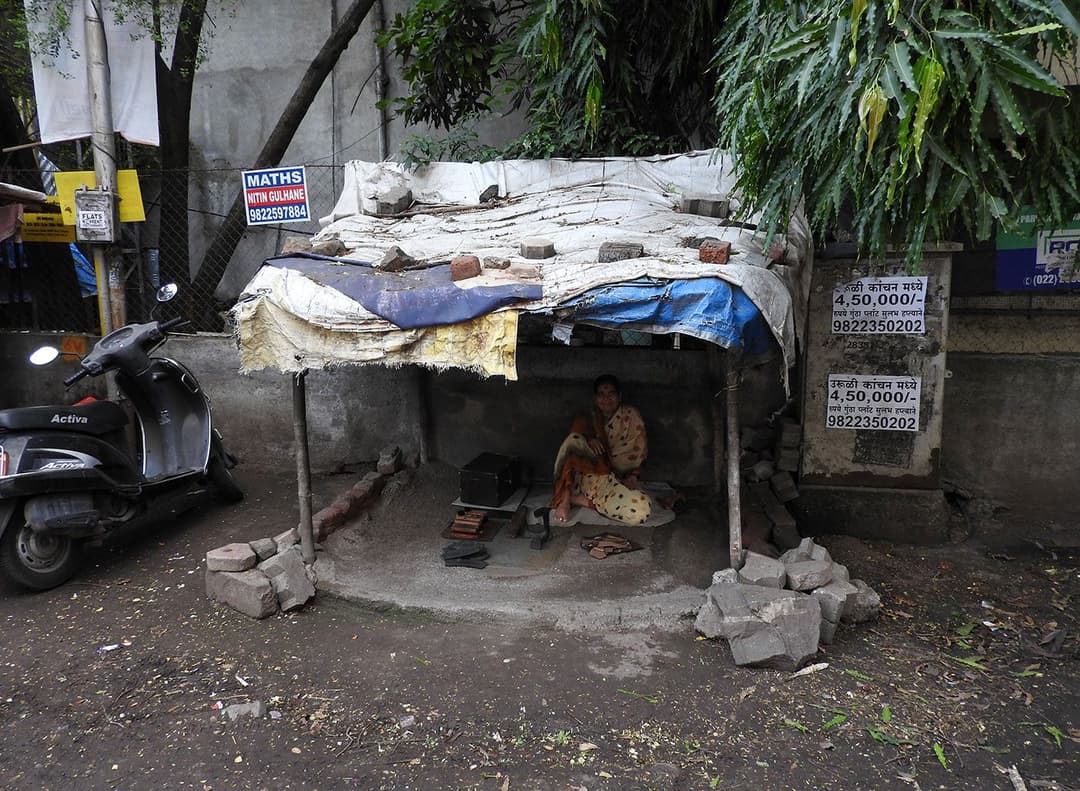
After her husband left, Bhamabai set up a small shanty shop for footwear repair, a skill she had learned from her father. The shop is in a small lane off Pune’s Karve Road, adjoining a housing colony. “It was demolished by municipal workers. So I rebuilt it. They broke it down again.”
In despair, Bhamabai asked the residents of the colony for help. “I told them I had nowhere else to go. Nothing else to do.” They stepped in, spoke to the municipal authorities, and she continues working there.