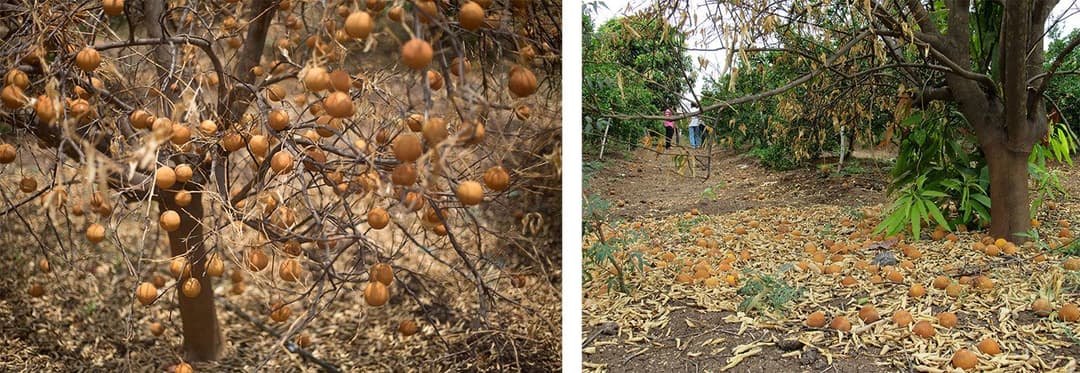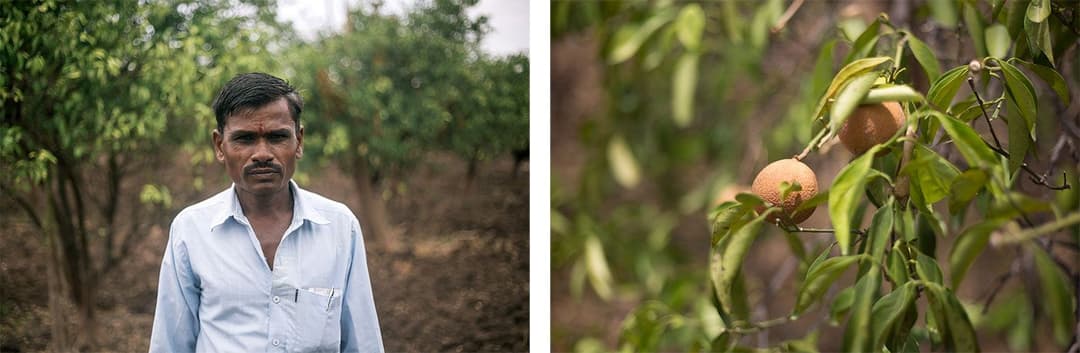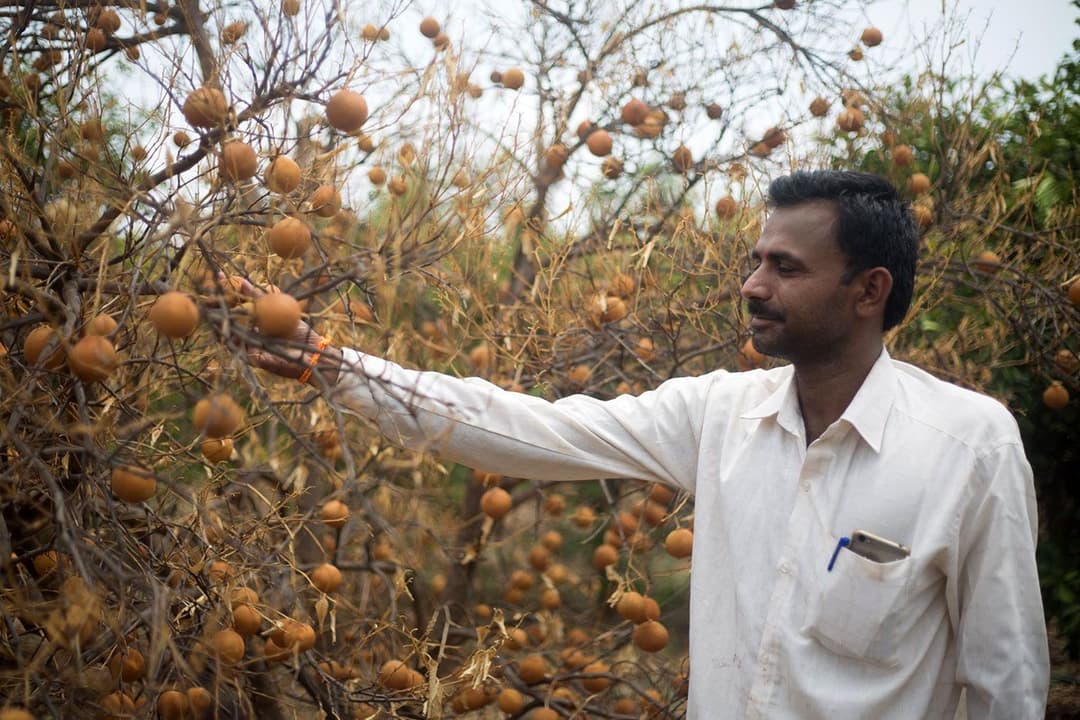
Shivaji Thomre has 13 acres of farmland. Meandering across his ploughed fields being readied for cotton, jowar and corn, we come upon a patch of dried trees under which round yellow fruits – akin to sucked-up lemons – lie scattered. “This is mosambi (sweet lime),” says Shivaji, picking one up. “It needs 60 litres of water per plant per day in ideal conditions. The mosambi have totally dried up.”
Thomre has 400 mosambi trees on two acres – that means 24,000 litres of water per day in summer, good rains in the monsoon, and nearly as many litres in the winter. Other fruit trees require much less –pomegranate, for example, requires around 20 liters per day per tree in summer.
Thomre's father had planted the trees in 2002 in Karajgaon, their village of around 1300 people on the outskirts of Aurangabad city in Marathwada. Shivaji was only 20 at the time. “Water was not an issue back then,” he recalls. Rainfall was relatively reliable, and he family’s private well had enough water. “Planting mosambi was a wise and lucrative option.”
Mosambi orchards are spread across every village in the 60-kilometre belt that begins from the Aurangabad highway and leads to Jalna. All of them were planted in the early-2000s, and all of the orchard owners are struggling today.
The fruit is not easy to cultivate. The trees must be nurtured for four to five years before they bear mosambi , but after that, a bi-annual yield is assured for 25-30 years. Shivaji’s orchard, however, bore fruit for only four years, from 2006 to 2010.