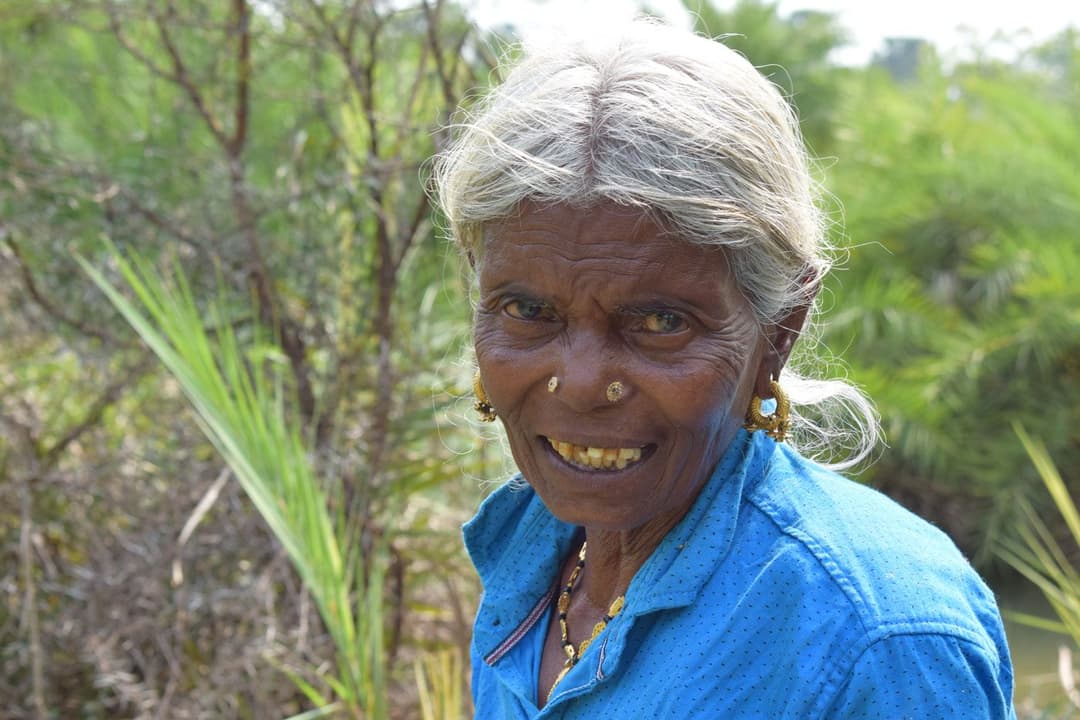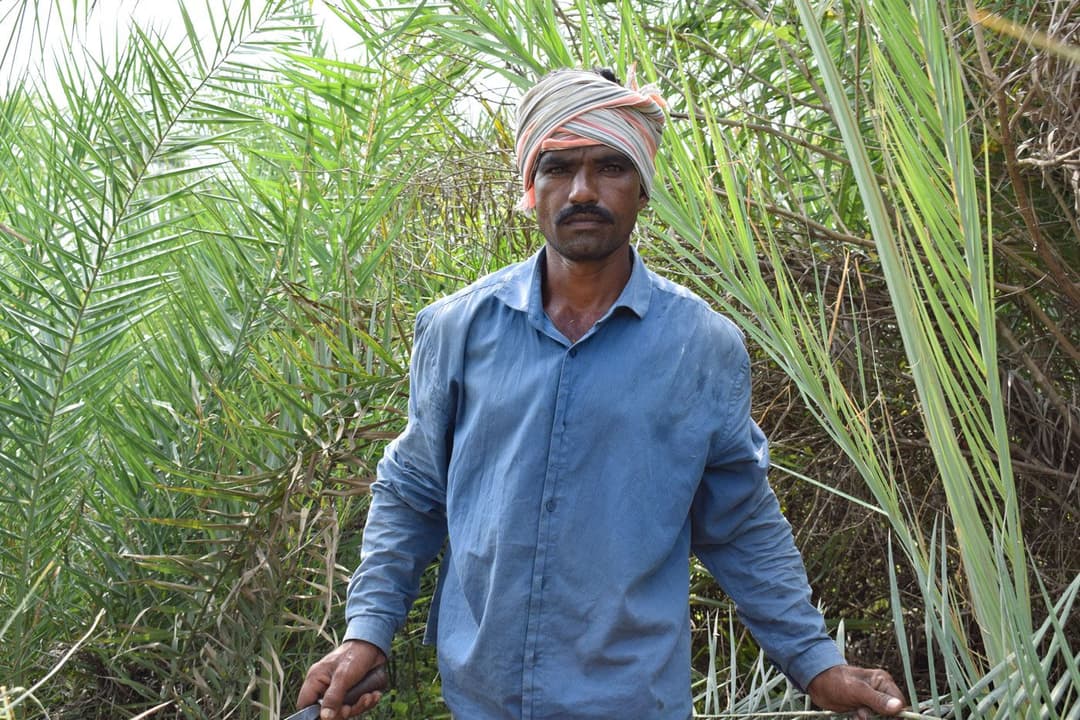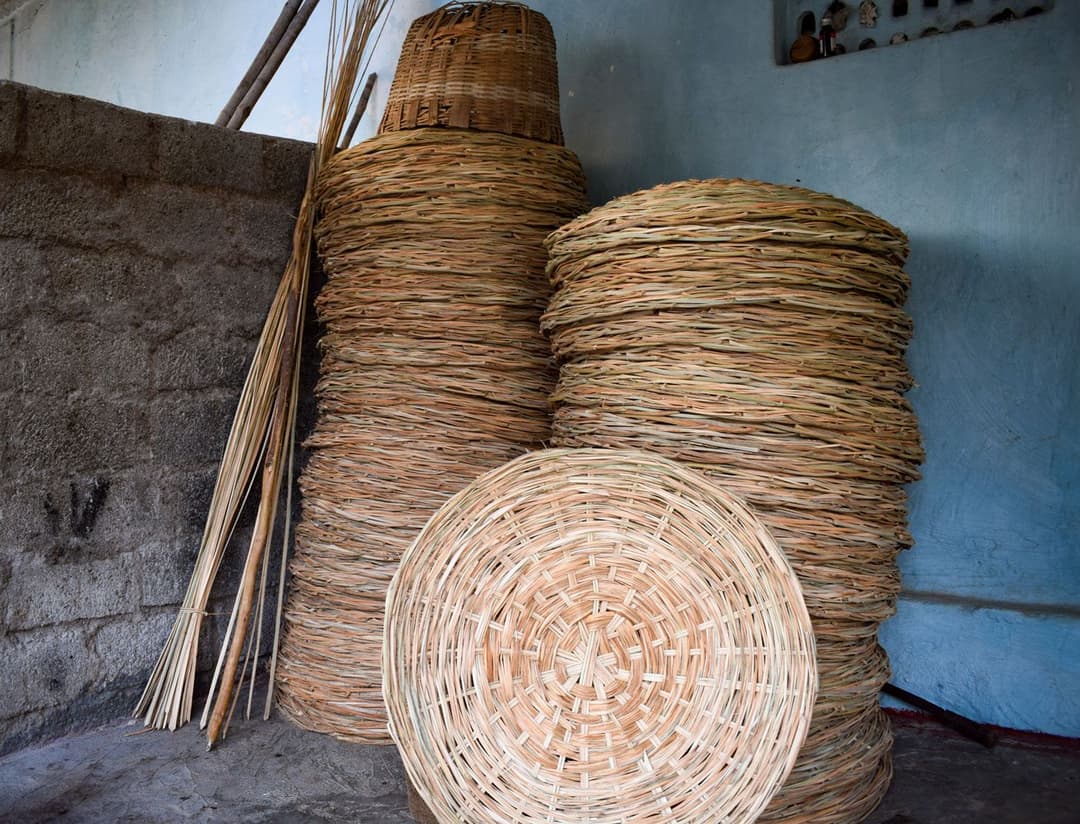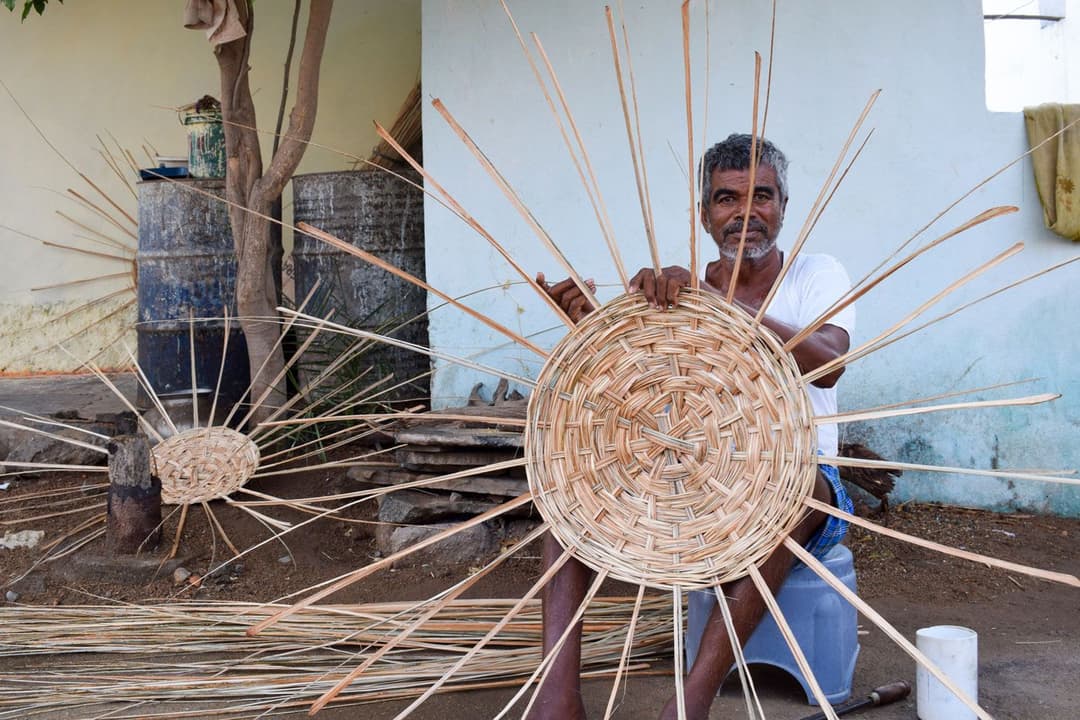
“We sneaked out by a secret route. But what can we do? At least if we have the material with us, we can sit at home, weave baskets and keep them ready,” said a group of basket makers from Kangal village in Telangana. Their secret route? One along which there are neither police barricades nor fences of thorny branches set up by villagers.
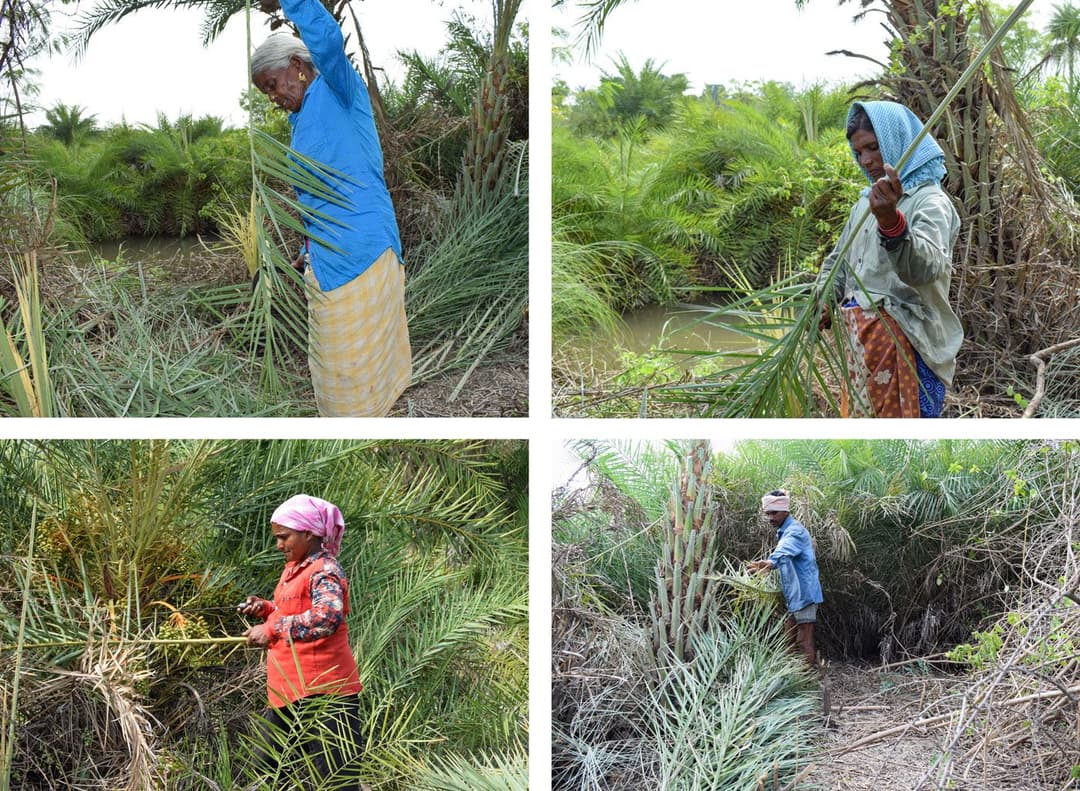
On April 4, Neligundharashi Ramulamma, along with four other women and one man, got into an autorickshaw around 9 a.m. to go to Vellidandupadu, a hamlet seven kilometers from Kangal, to collect fronds of the silver date palm. With these, they weave baskets. They usually collect these fronds from common land, or at times from farmland and give a few baskets in exchange to the farmer.
The March to May period is a crucial time for the baskets makers of Kangal – who belong to the Yerukula community, listed as a Scheduled tribe in Telangana – for selling baskets. The hot temperatures of these months are ideal for drying the fronds.
For the rest of the year, they usually work as agricultural labourers, earning daily wages of around Rs. 200. In the cotton harvesting season, from December to February, some manage to earn Rs. 700-800 a day, on and off, for around a month, depending on how much work is available.
This year, the Covid-19 lockdown has brought to a standstill their earnings from selling baskets. “Those who have money are eating. But we don’t. That’s why we came out [to collect fronds]. Otherwise why would we?” asks Ramulamma, who is around 70 years old.