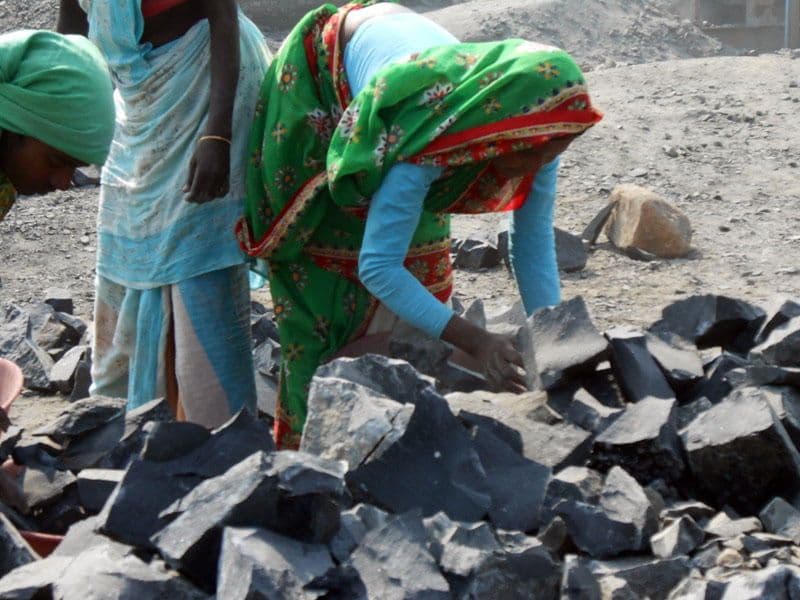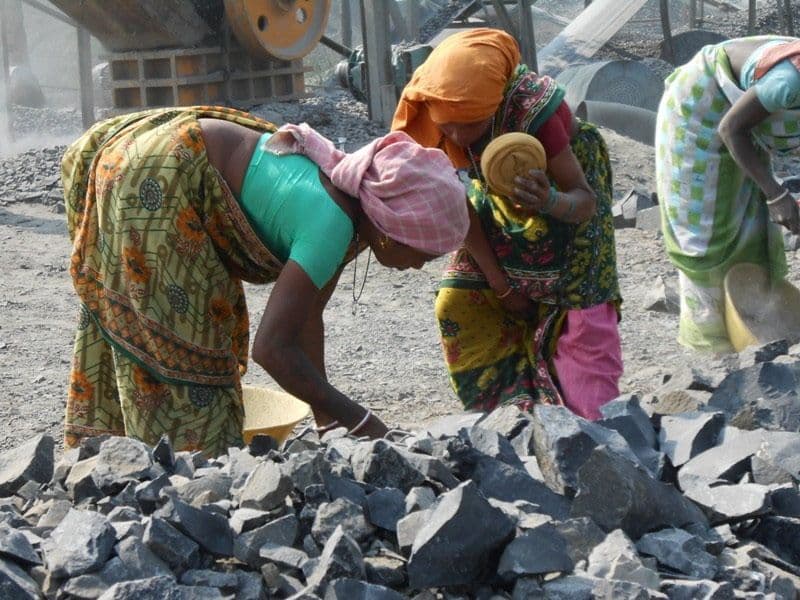

When you get down at Tarapith rail station of Birbhum district in West Bengal and take the Grand Trunk road, the dust is everywhere. Giant trucks loaded with stone chips choke the road, trailing clouds of dust and smoke. You cannot see anything through the dust, and have to cover your face with cloth to avoid the dust particles sneaking into your nose, eyes and mouth.
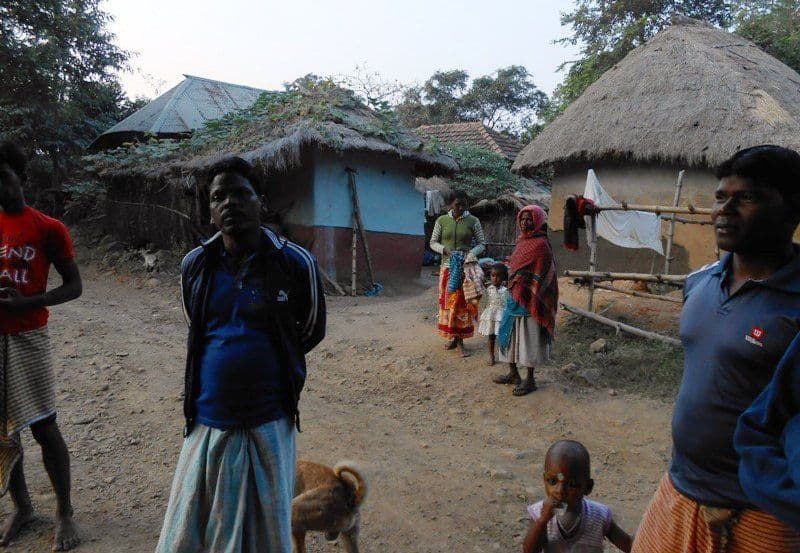
We are headed to the Adivasi village of Garia in the Mallarpur stone belt of Birbhum. There, an NGO named Uthnau gives primary education to the children of Adivasis in their mother tongue. I want to talk to labourers who work in the stone quarries and crushers in the region.
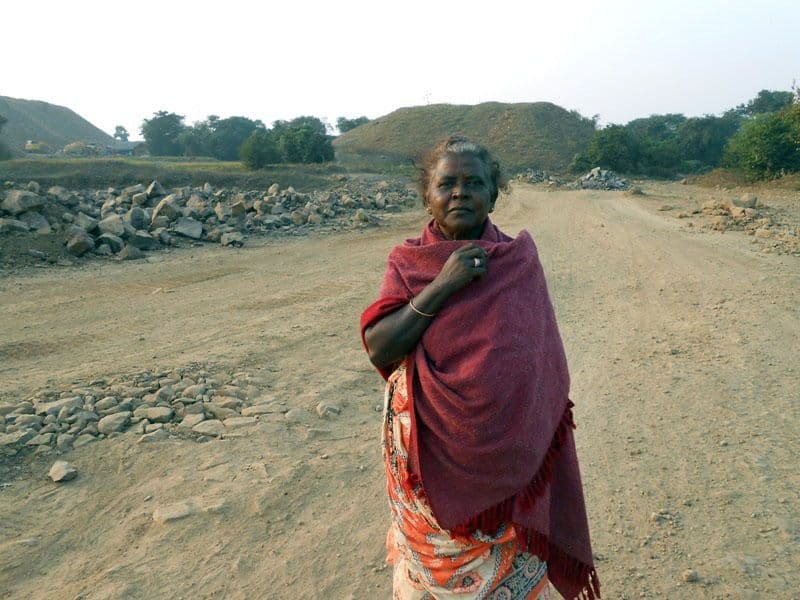
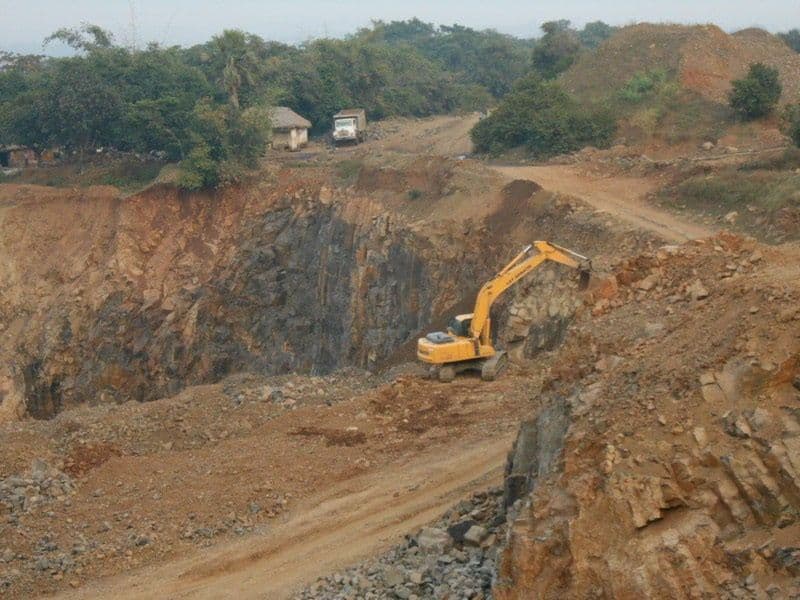
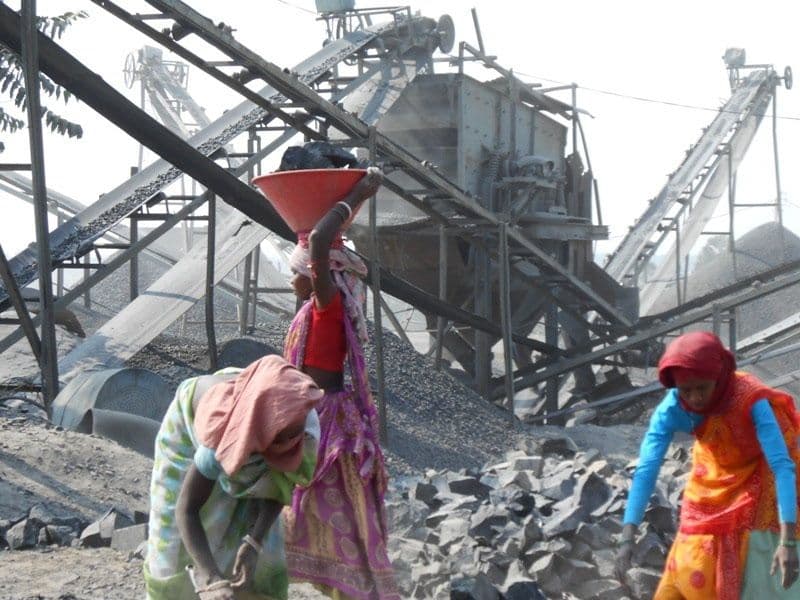
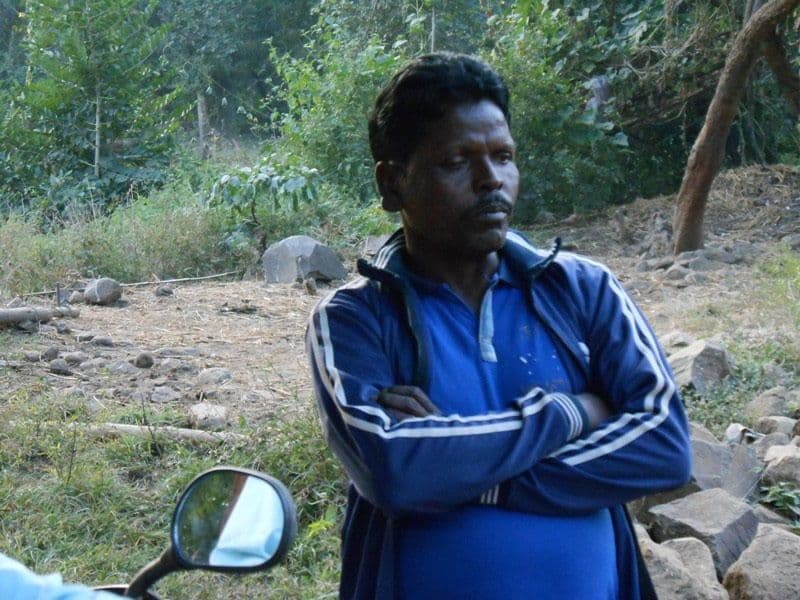
At Garia I meet Ghasiram Hembrom, a social worker with the Bharat Jakat Majhi Mandua, an association of Santal village and regional heads. He is to be my guide. On the way to Lipidi village, we come across an old woman, walking alone. Dark-skinned, with curly grey hair, bare feet, and no front teeth, she has on an old red shawl over a white saree. She lives alone, on the border with Jharkhand. Her sons and husband had left her, she says, after giving her ancestral land to a quarry owner for a few rupees. Now she stands to lose her home too. The wide-open mouth of the quarry is expanding; any day, it will swallow her hut. To survive, she works at a stone crusher, unloading boulders from trucks and hammering them into pieces.
Ghasiram is helping to organise people against the stone quarry industries. He asks the woman to tell her sons to move against the quarry owners. But a deserted woman can’t dictate to others; she walks on.