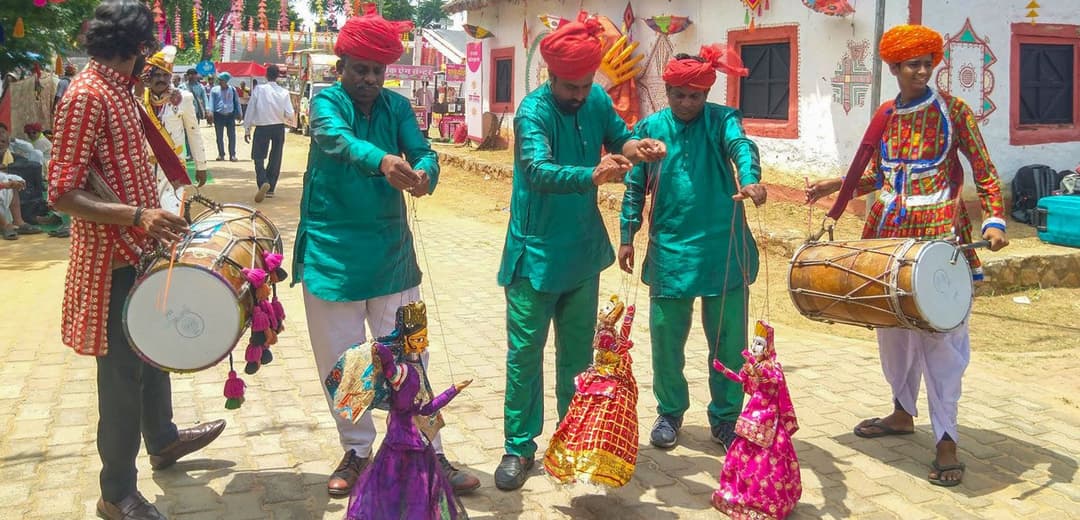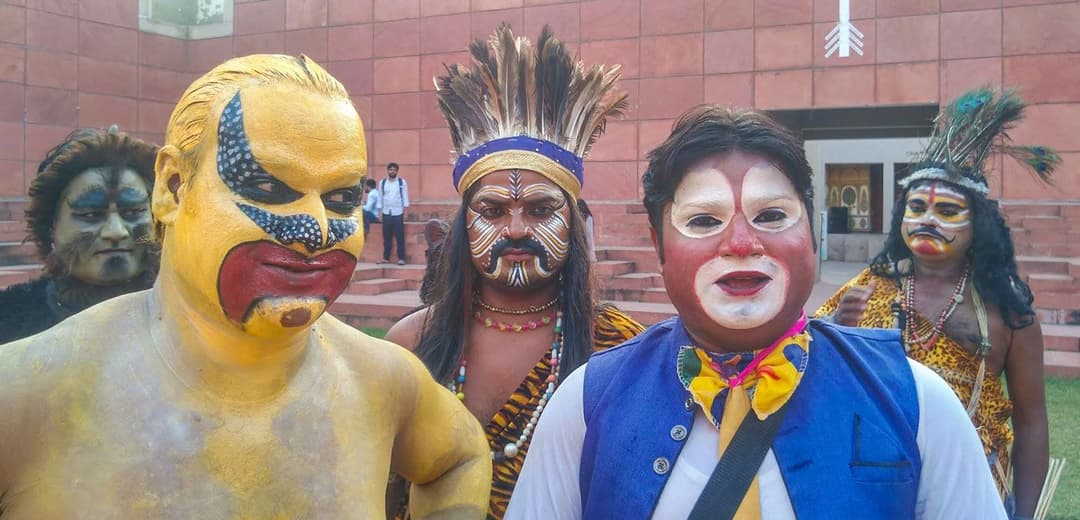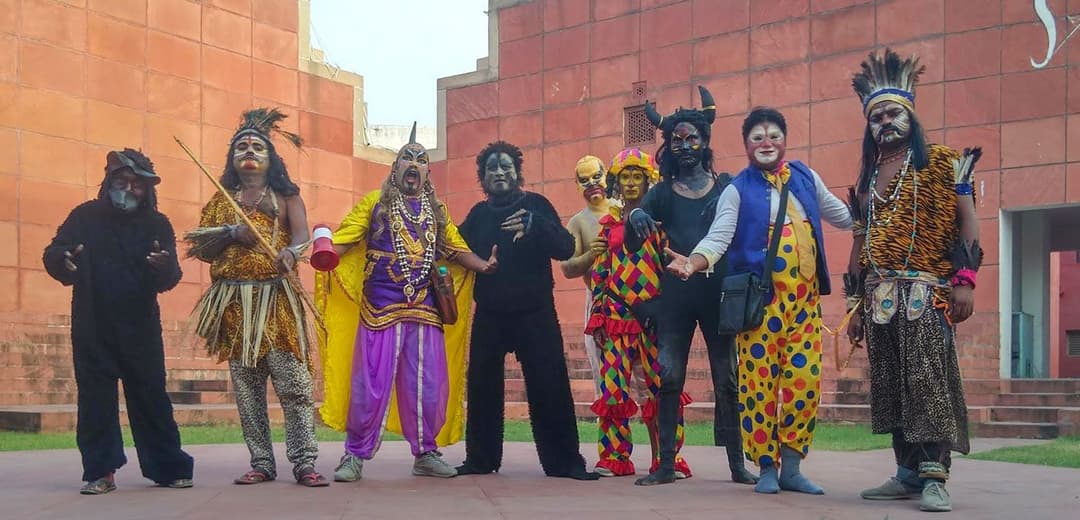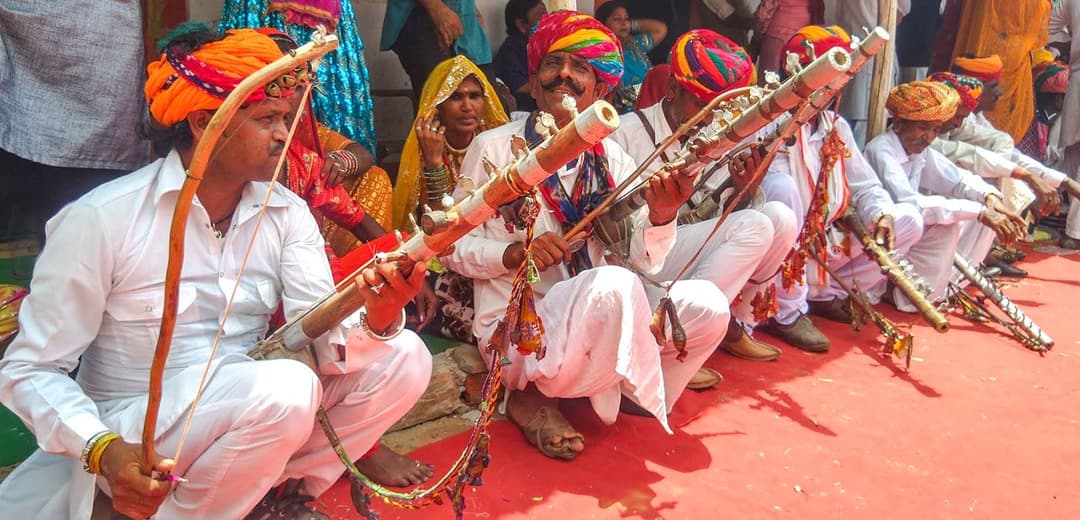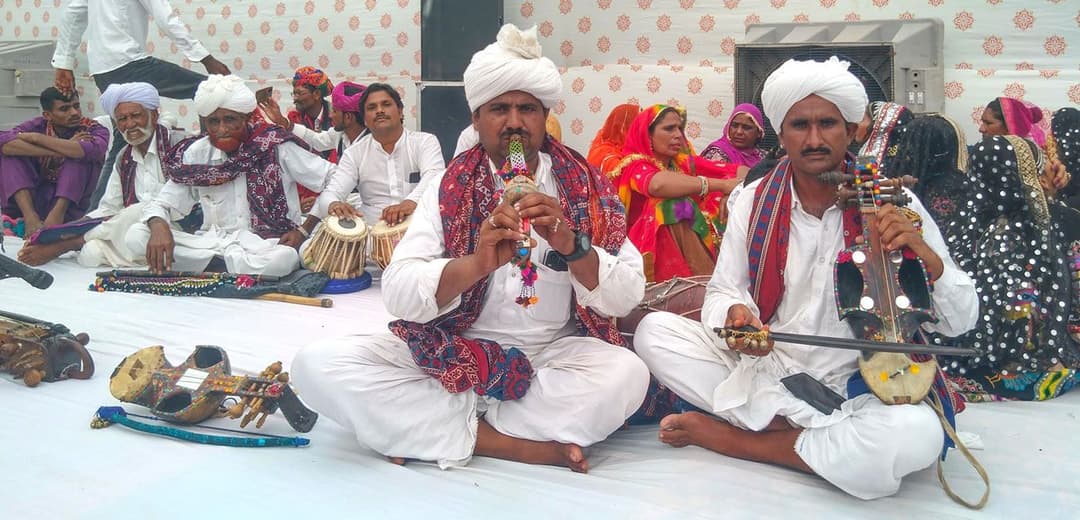
“Mobiles, TV, video games have come in and the historical tradition of puppetry and storytelling is being lost.” Pooran Bhat is a puppetry artist from Danta Ramgarh in Sikar district of Rajasthan. The 30-year-old recalls a time when they made their own puppets and performed skits at children’s parties, wedding occasions, and government functions.
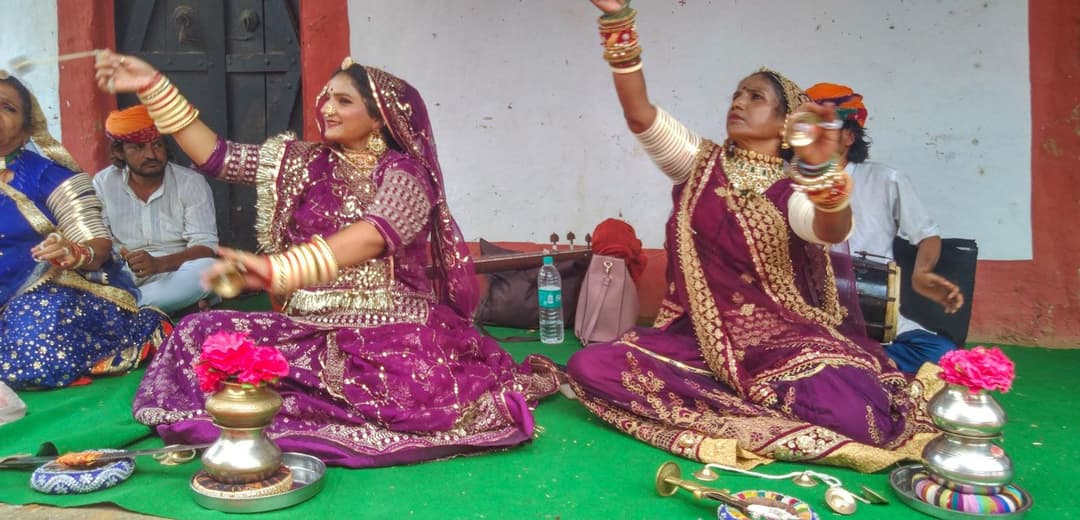
“Today people want different activities. Earlier, women used to sing on the dholak but now people want film songs on the harmonium. If we get patronage, we’ll be able to carry forward what our forefathers taught us,” he says.
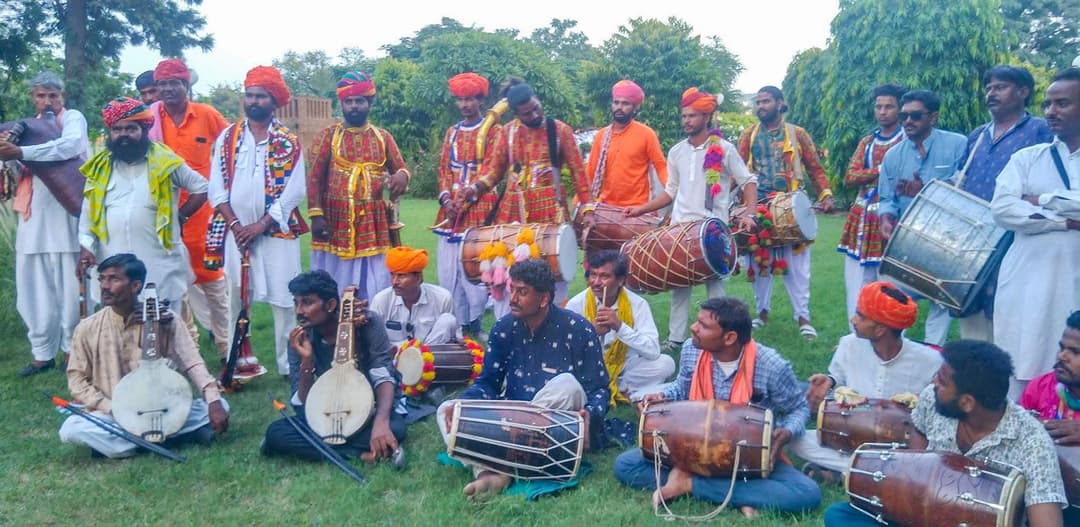
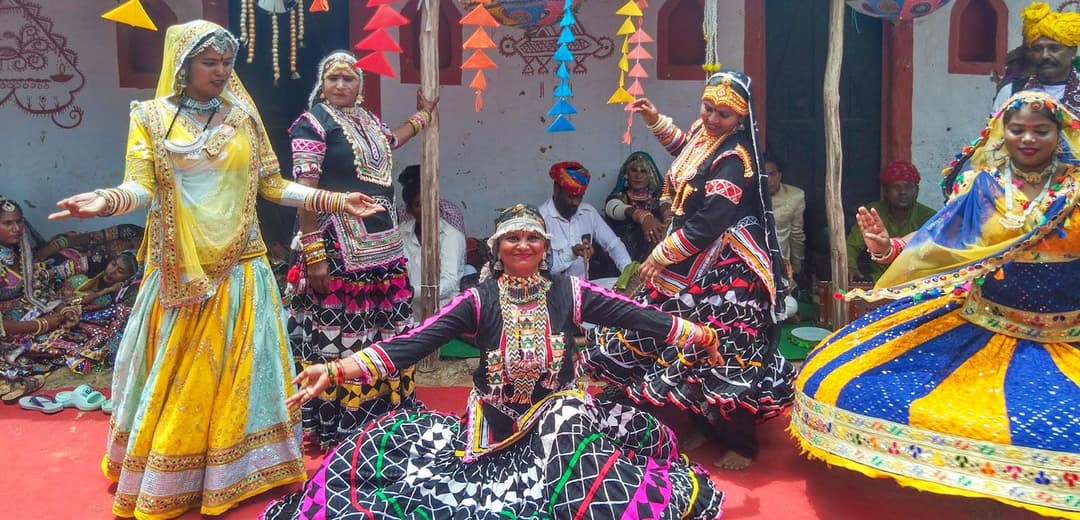
Bhat was at Jaipur’s Jawahar Kala Kendra – a three-decade old multi-arts centre – in August this year (2023). Several groups of folk artists from across Rajasthan had congregated for this state-sponsored festival where the state government announced a new scheme for performing artists struggling to hold on to their art and livelihood.
Called the Mukhyamantri Lok Kalakar Protsahan Yojana, it guarantees 100 days of annual work for every folk artist family in their location at Rs. 500 a day. The National Rural Employment Guarantee Act 2005, which ensured 100 days of employment to rural households, set a precedent for it.
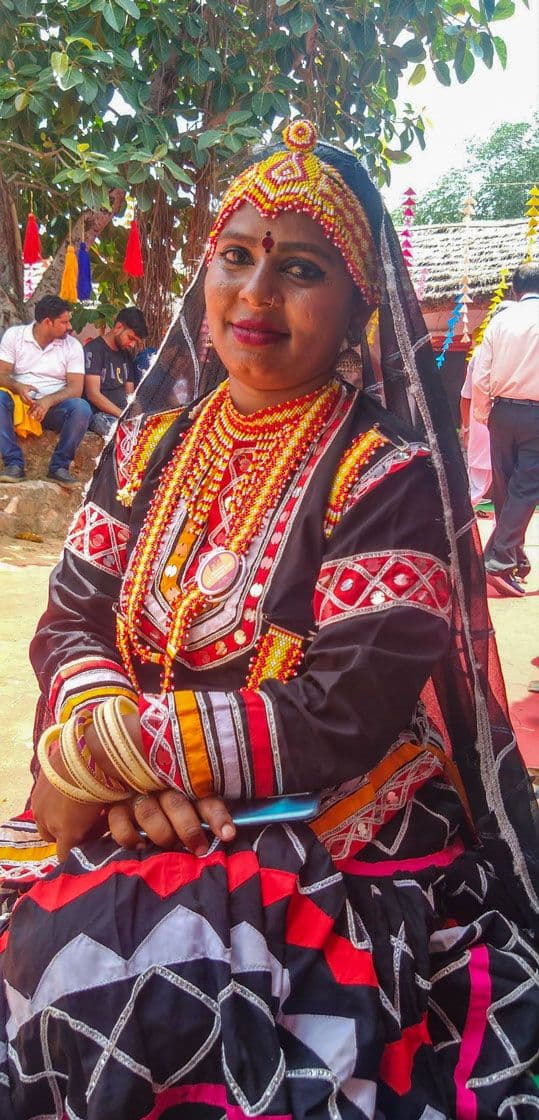
The central government’s Vishwakarma Yojana was announced in September 2023 for artisans and craftspeople, but this scheme – Kalakar Yojana – is a first for performing arts communities such as Kalbelia, Terah Tali, Bahrupia, and several others. Activists estimate there are about 1-2 lakh folk artists in Rajasthan and no one has ever done a total count. The scheme also brings gig workers (transport and delivery) and street vendors into the social security net.