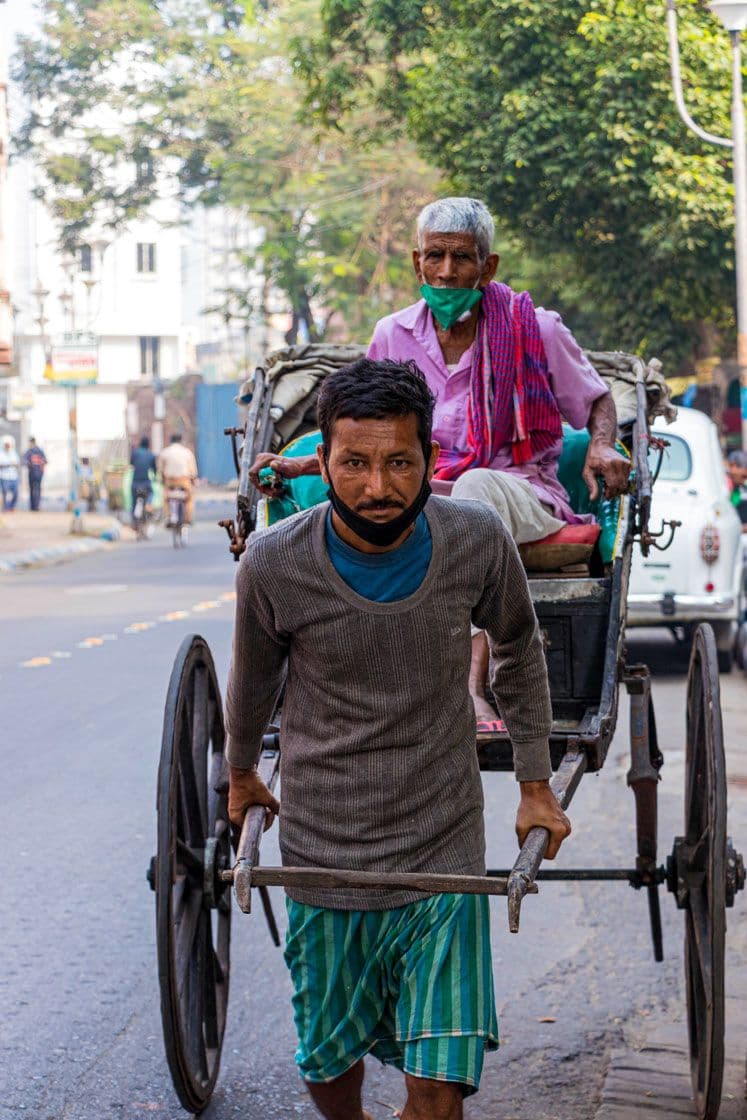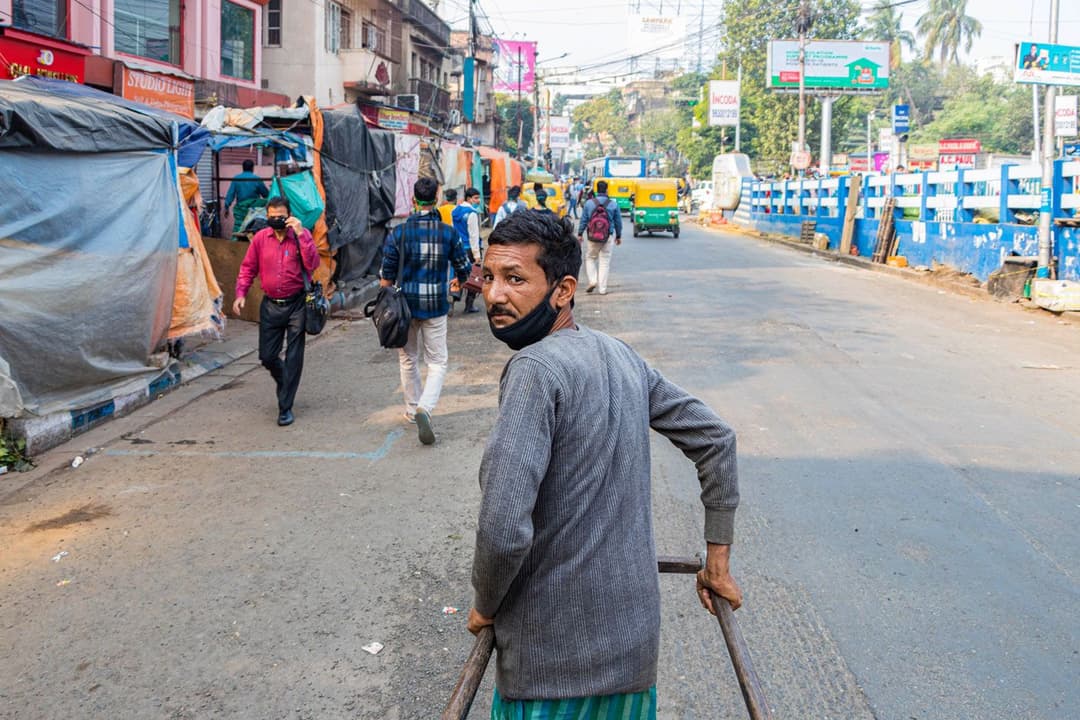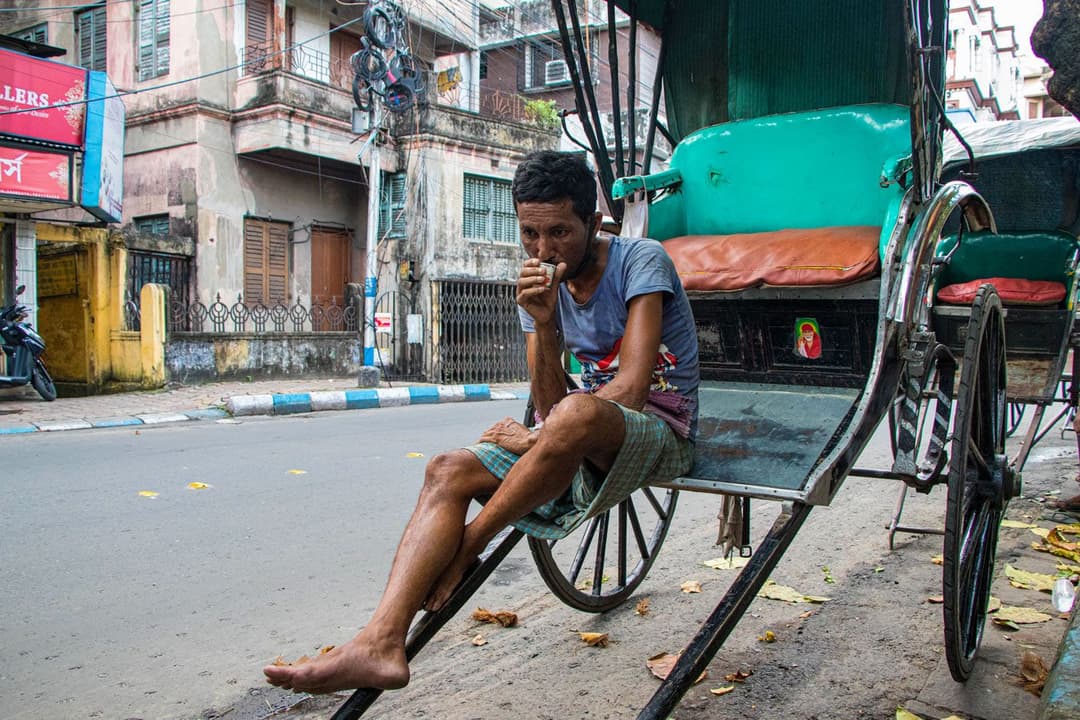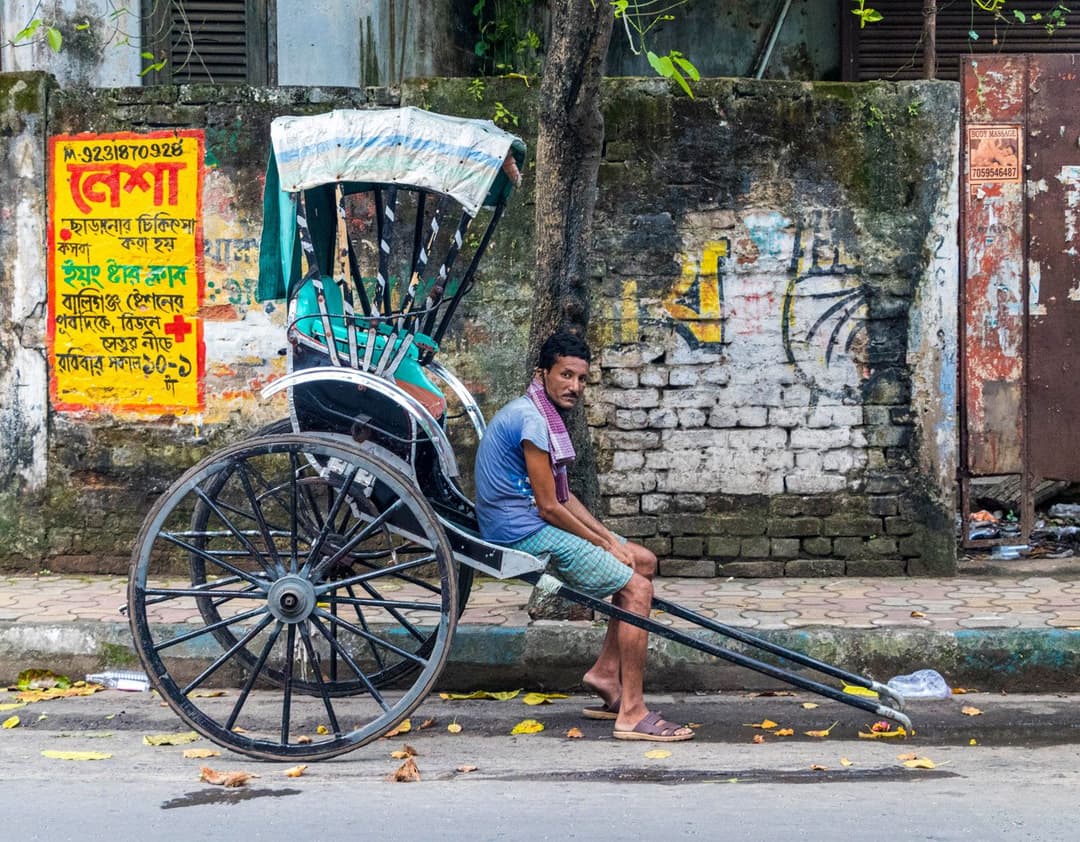

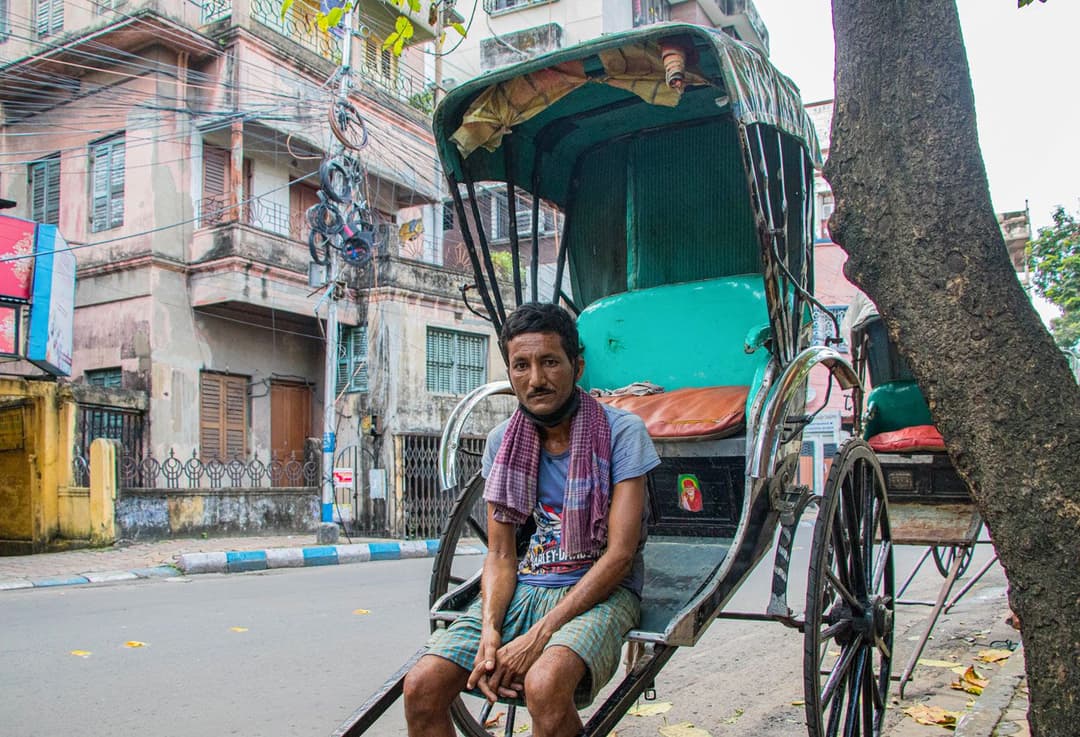
When Lallan Paswan first tried to learn how to manoeuvre a hand-pulled rickshaw, other rickshaw pullers sat in the back like passengers to help him practice. “When I lifted the [front end of the] rickshaw for the first time and tried to take it forward, I couldn’t do it,” he says. “It took me two to three days.”
Wiping sweat from his face with the chequered gamcha slung around his neck, he explains how he then also learnt to balance the rickshaw, making sure it never topples over. “If you hold the handles [at the front] as far away as possible from the passengers, the rickshaw will not overturn,” he says. It took him some time to not feel nervous about a toppling, but now, he adds, “I have become fearless. I can easily pull the rickshaw with two passengers, even three, if the third one is a child.”
It’s been roughly 15 years since those early attempts. When he took those first lessons, Lallan had just come to the city from Raghu Nathpur village in East Champaran district of Bihar. He had studied till Class 9, and worked for a while on the family’s one bigha of land (less than an acre), cultivating wheat and paddy. But farming didn’t bring enough returns, and Paswan came to Kolkata looking for work.
For some months, he tried to find a job in an office. “When I did not get any work, some rickshaw pullers from my village introduced me to this line of work,” he says.
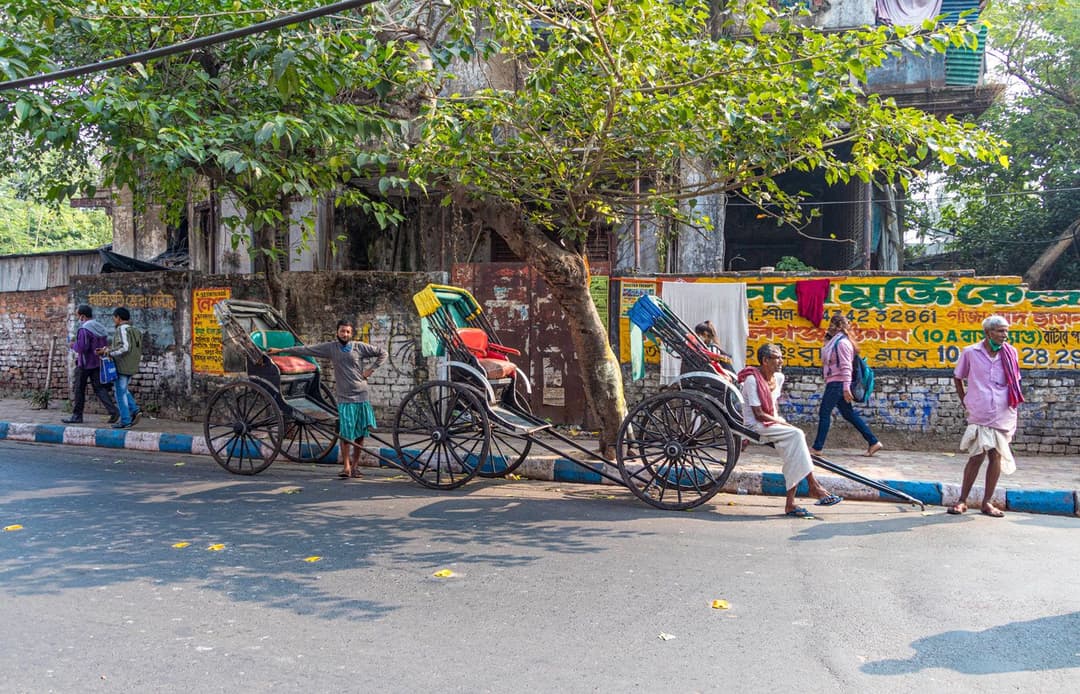
Paswan, who is around 40, now operates from a rickshaw stand at the intersection of Cornfield Road and Ekdalia Road in South Kolkata, where around 30 pullers wait with their rickshaws. Many of them returned to their villages during the nationwide Covid-19 lockdown that began in March, Paswan says. “Work was not going well because of corona. What will they do here? So they went home.”
Lallan though stayed on in Kolkata because he had borrowed Rs. 1 lakh from a mahajan in his village to build a pucca house. If he went back, the moneylender would have demanded Paswan pay up – which he is just not in a position to manage.