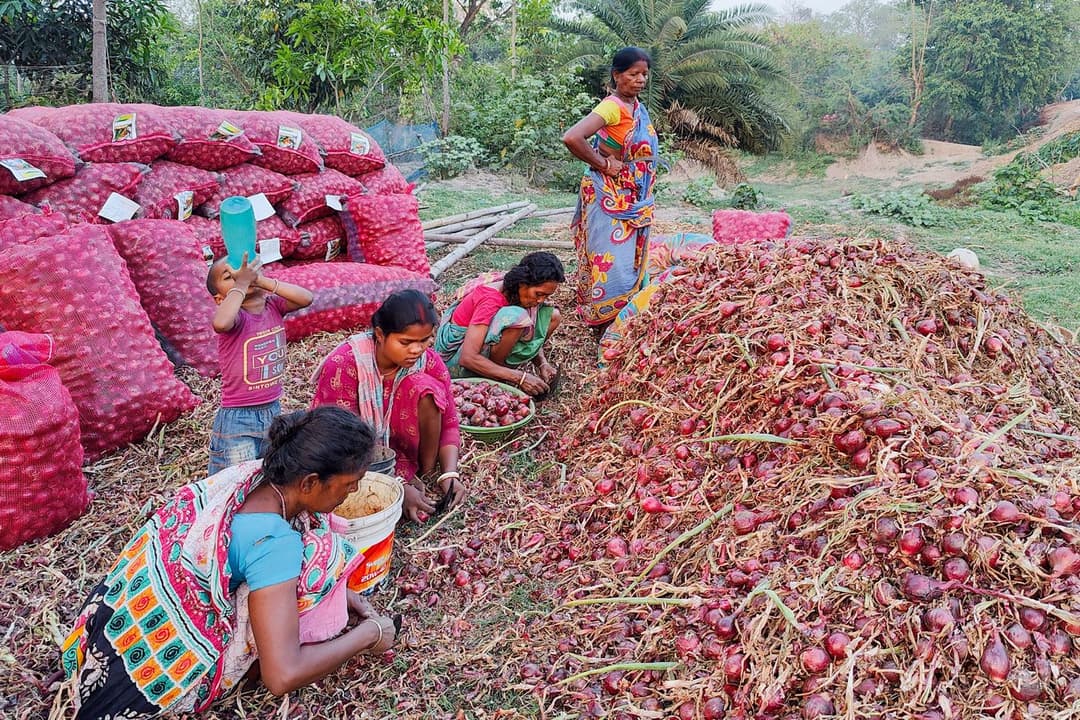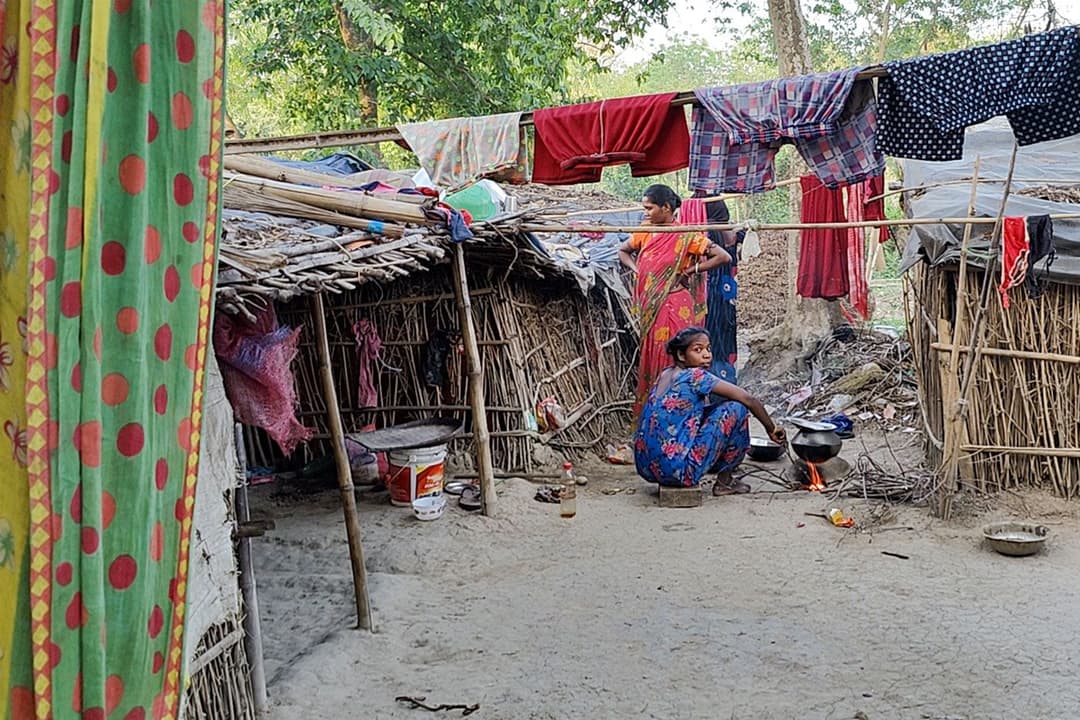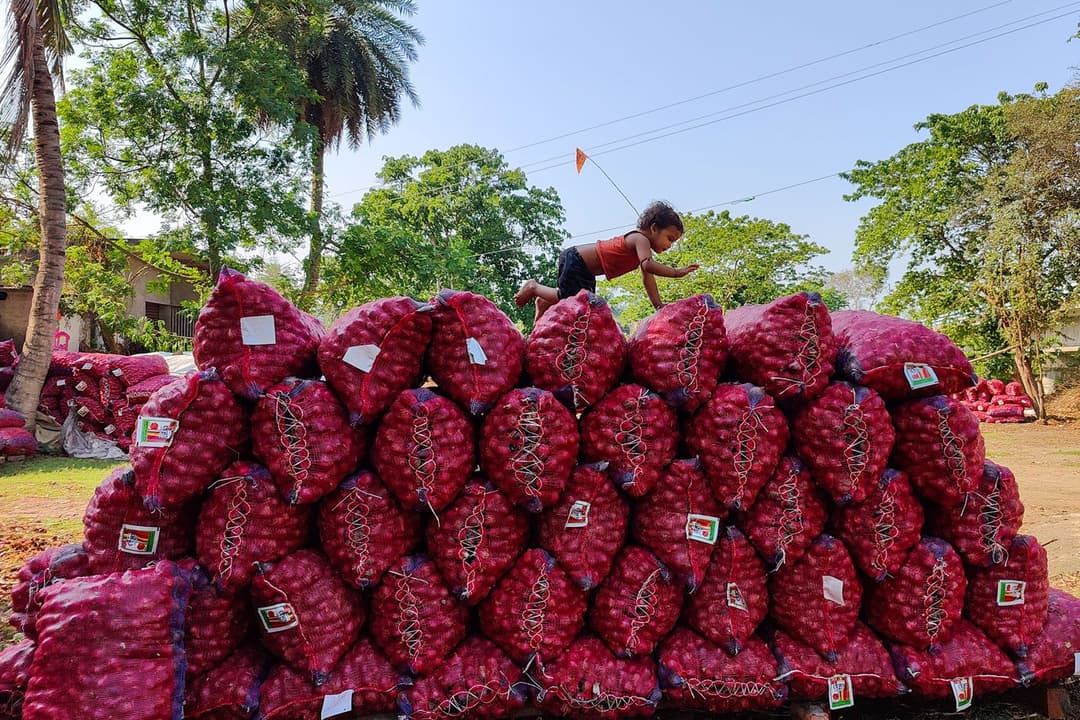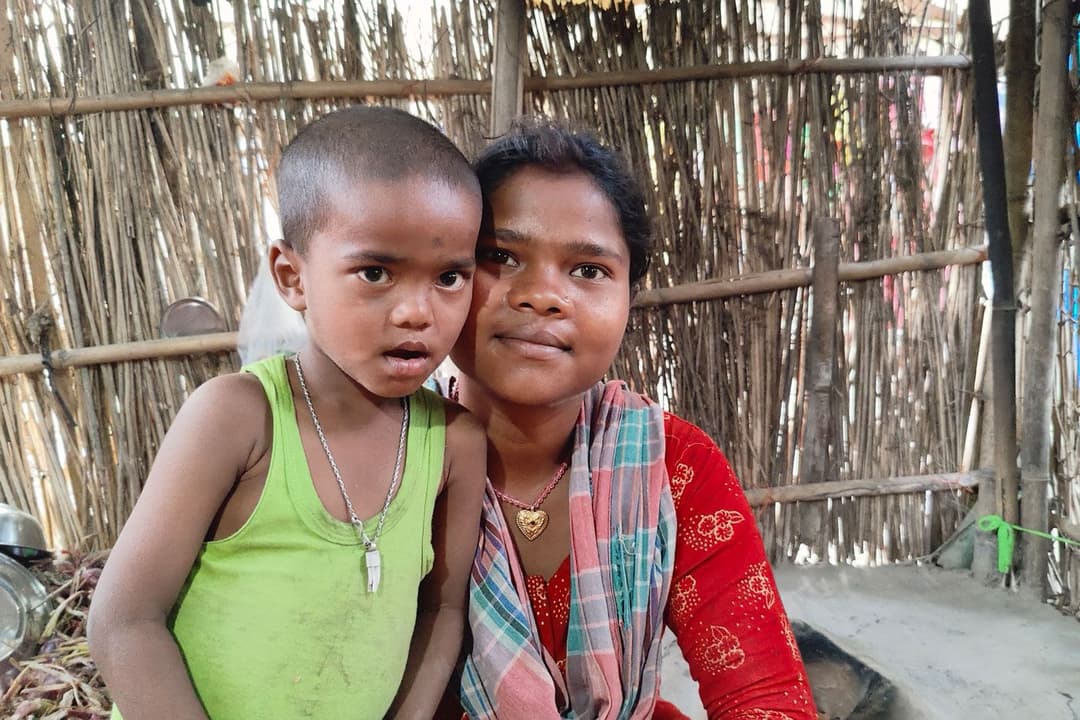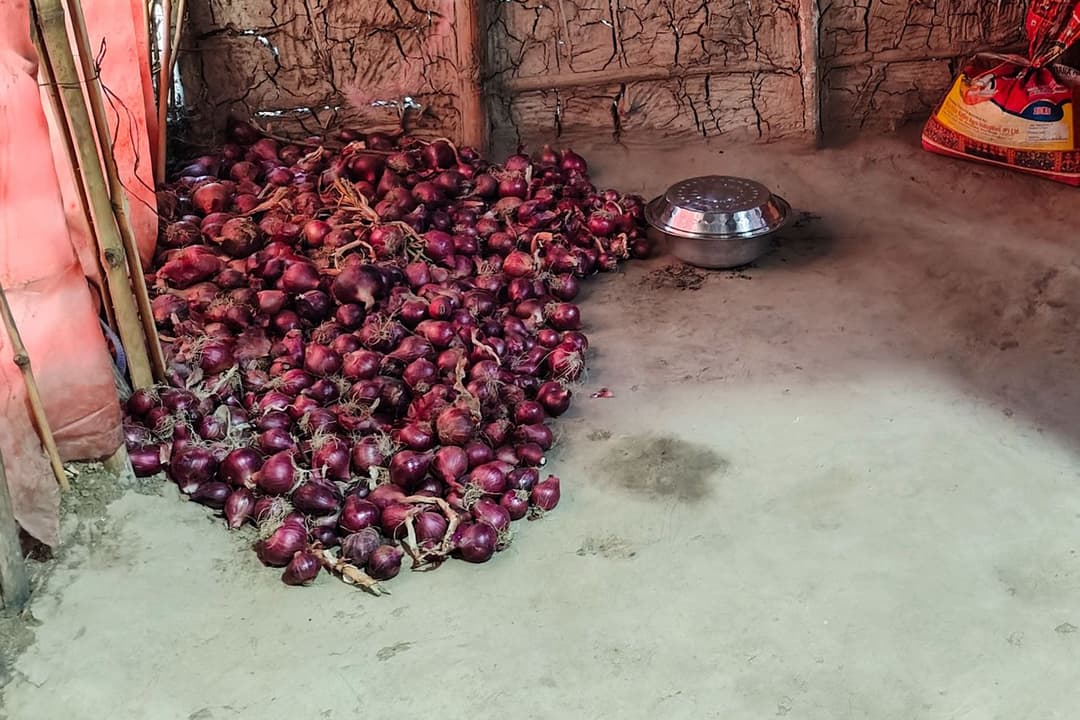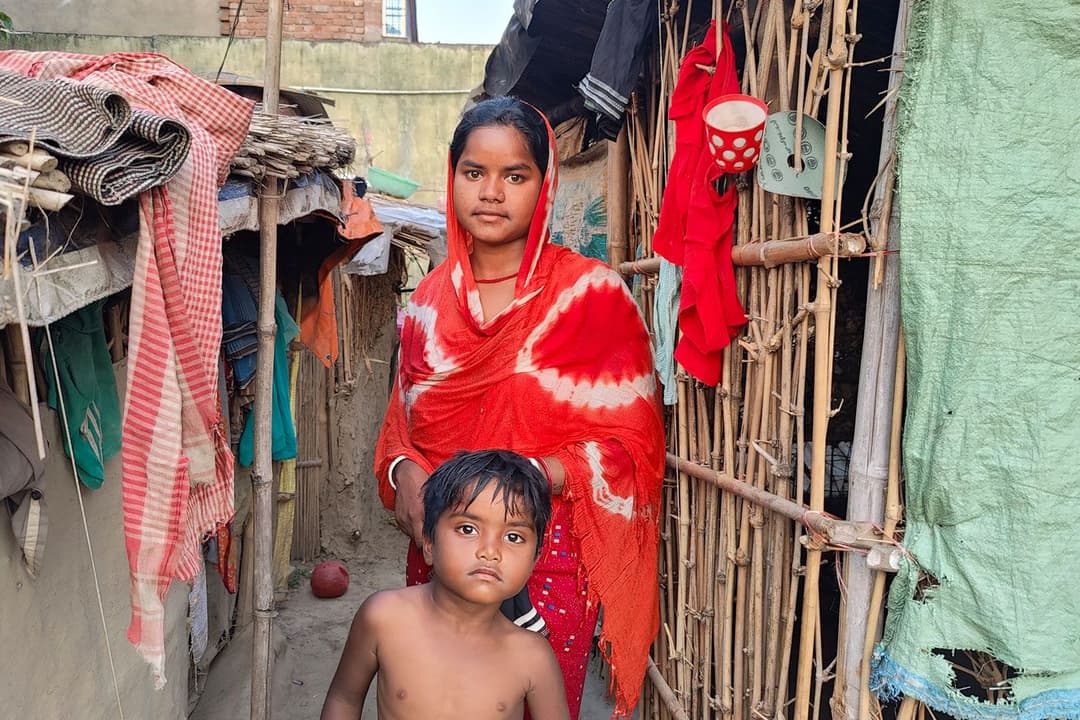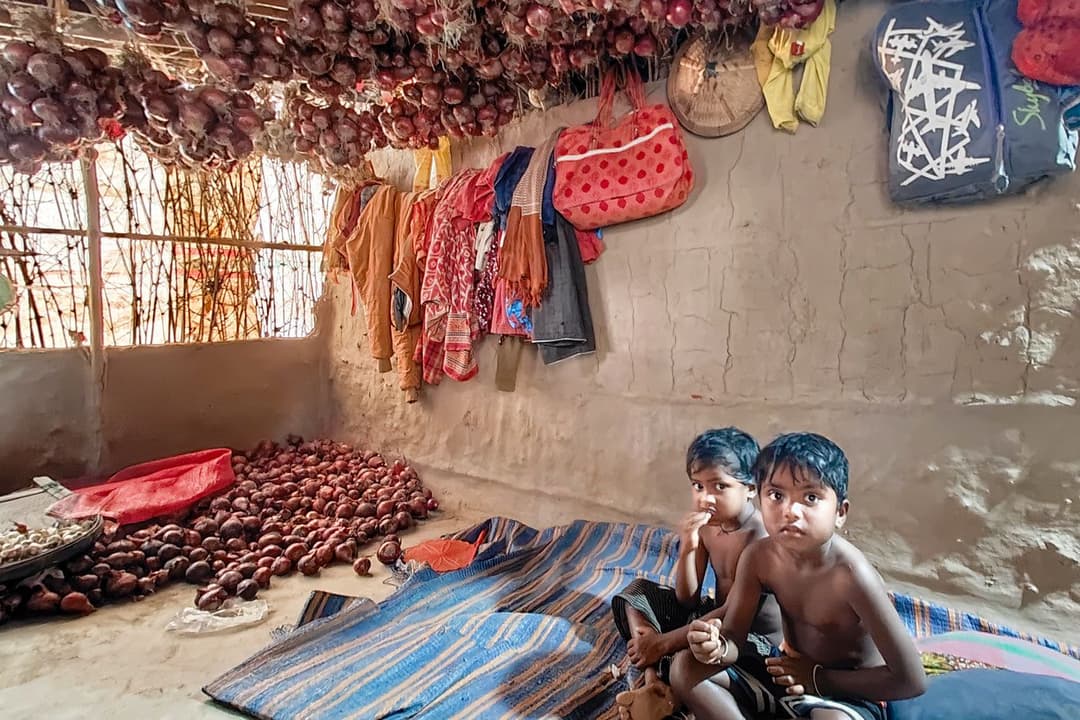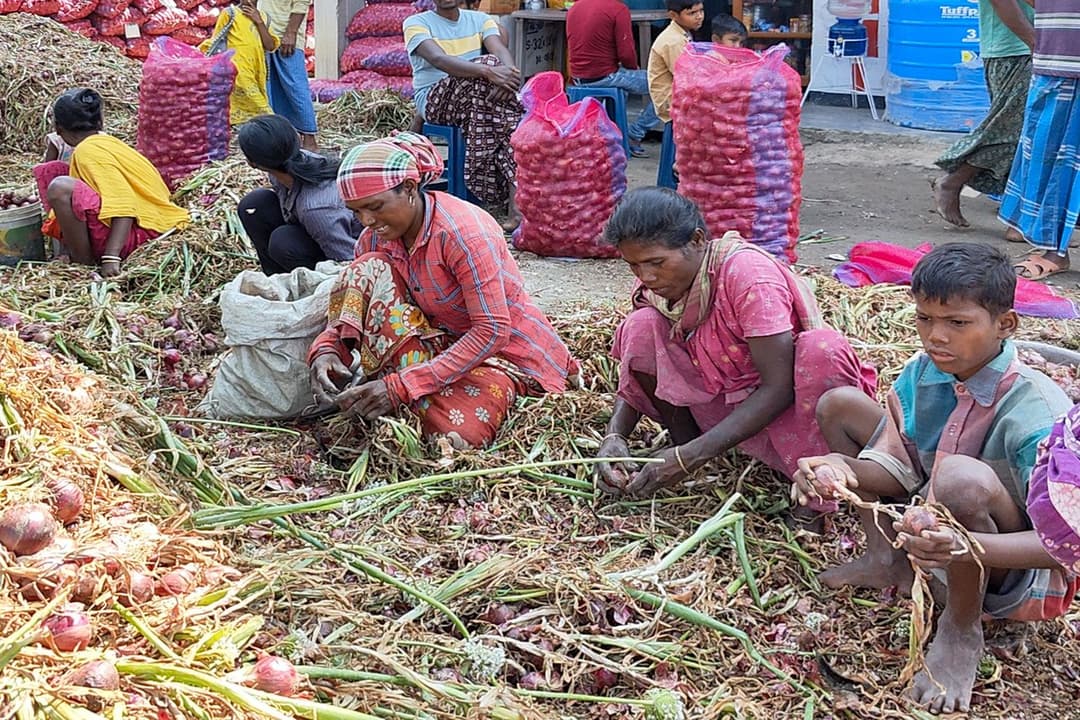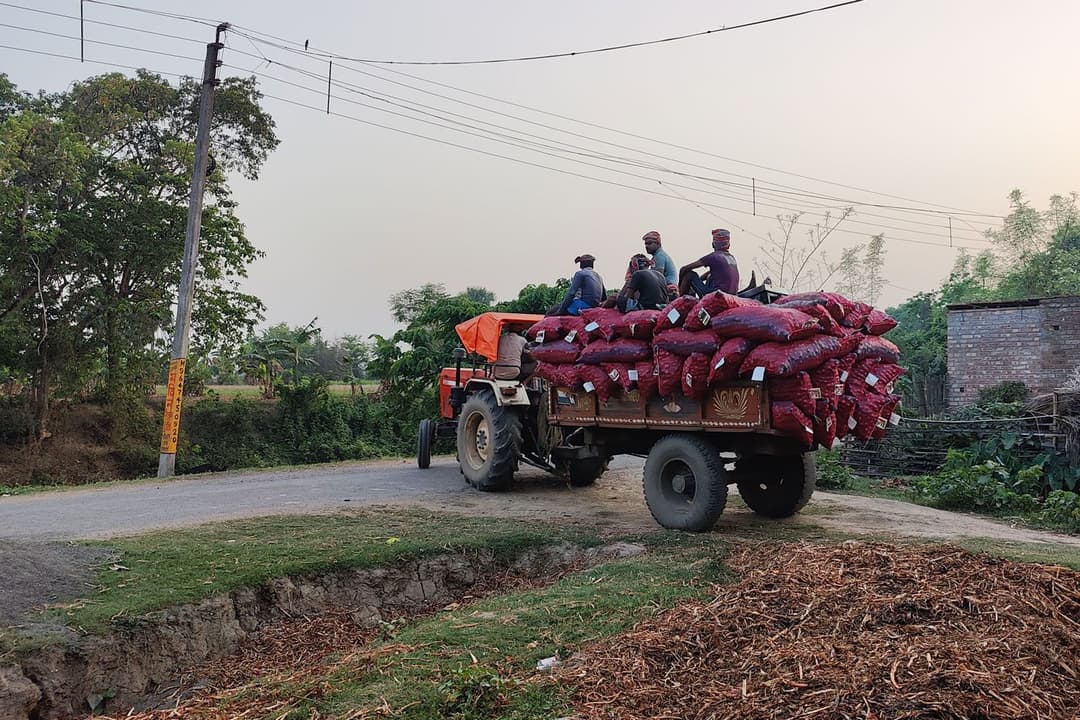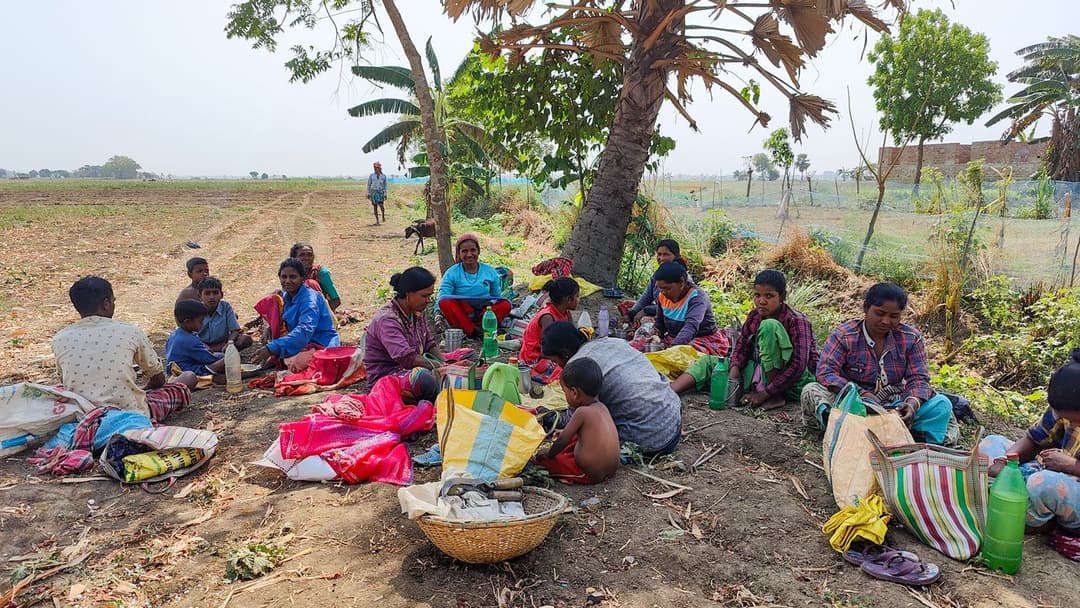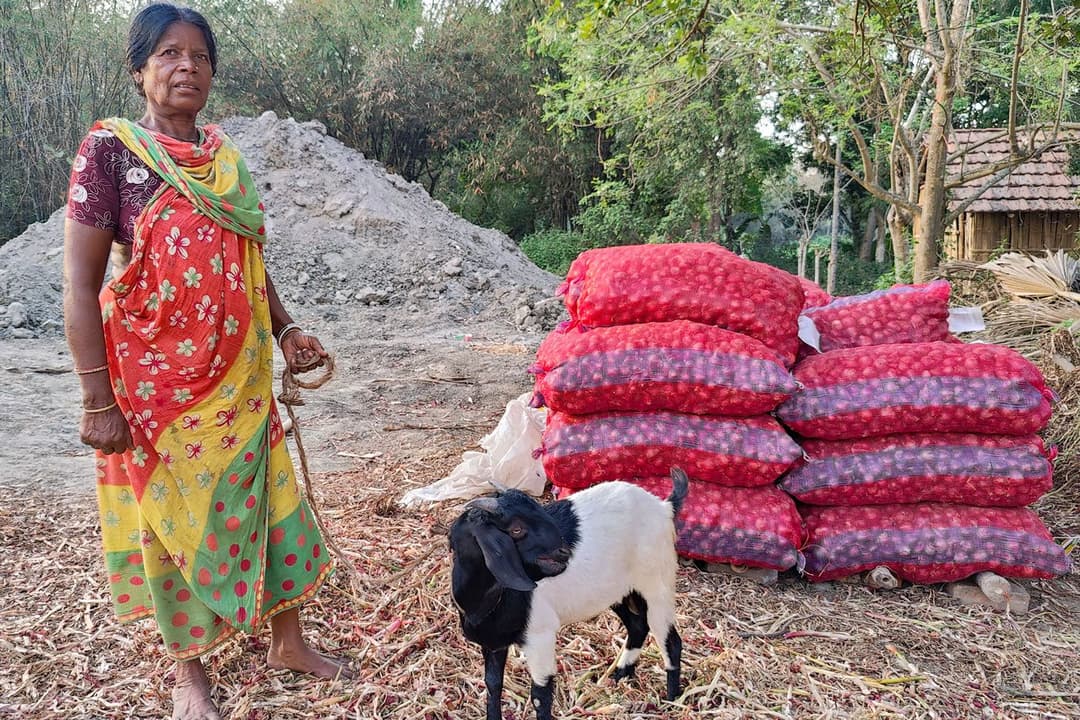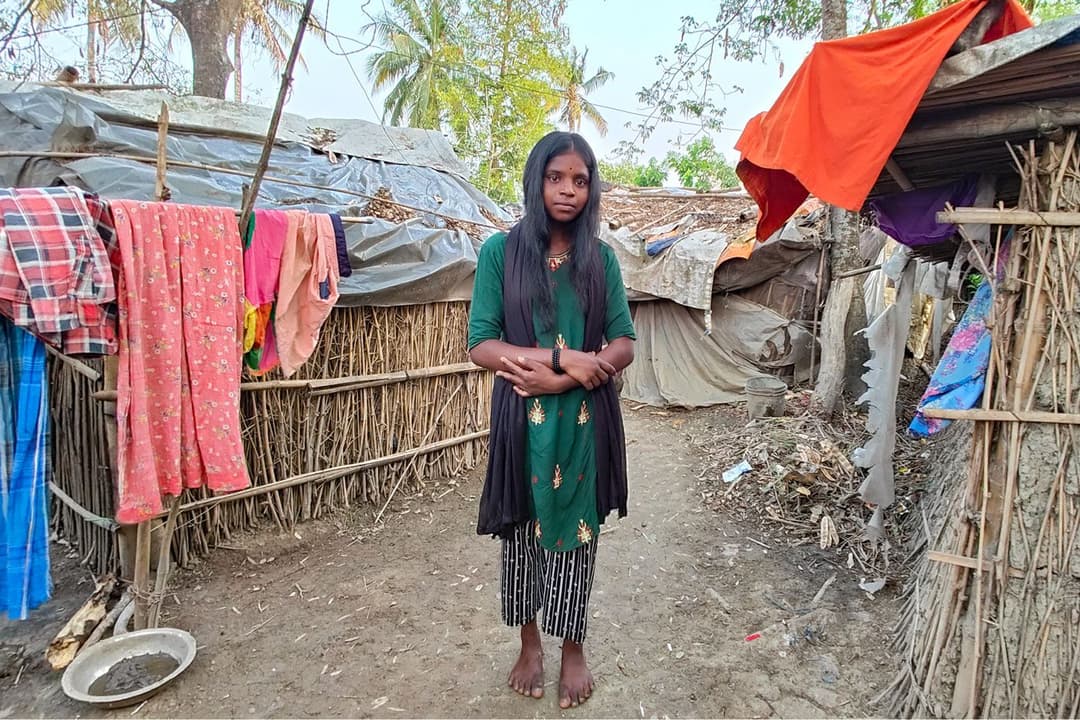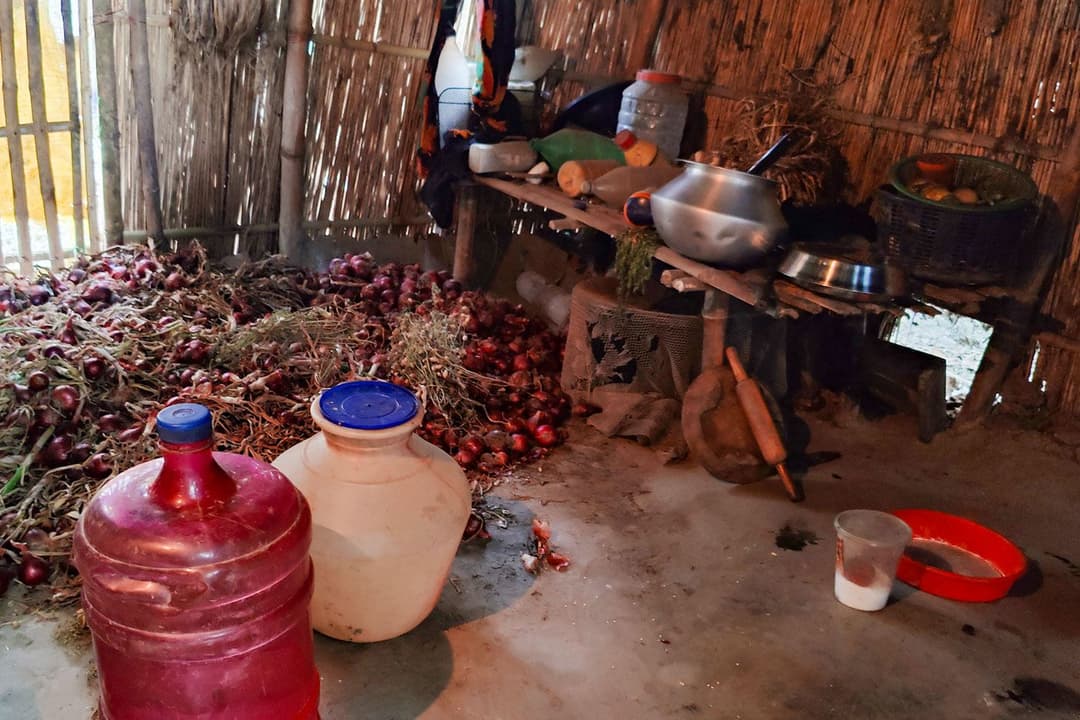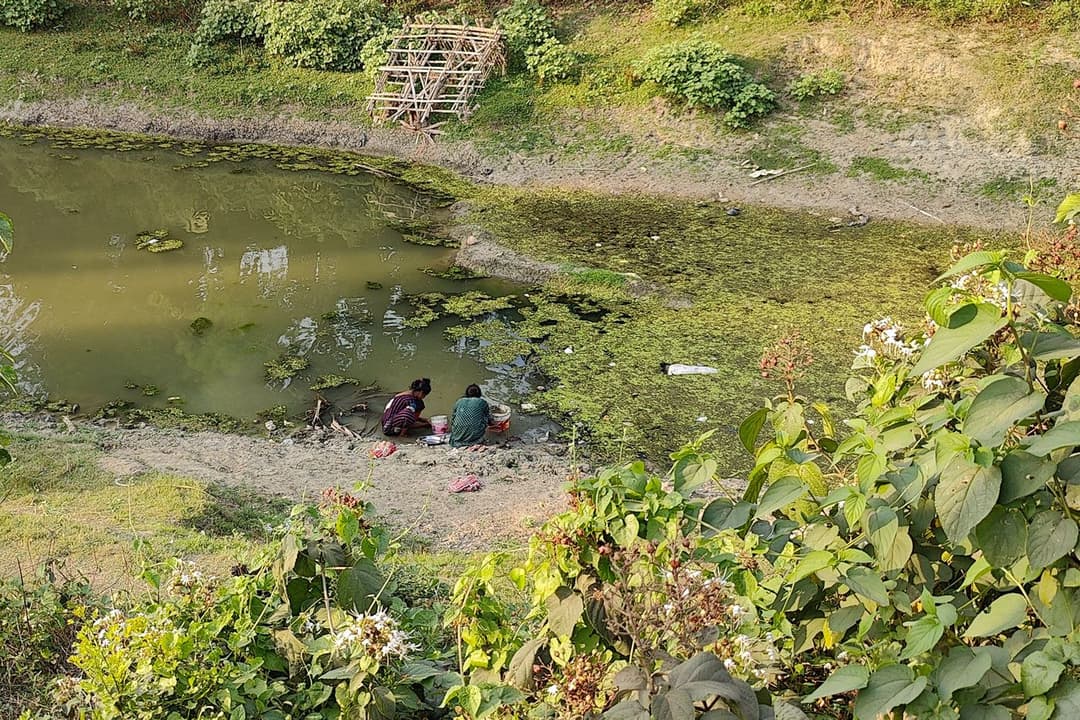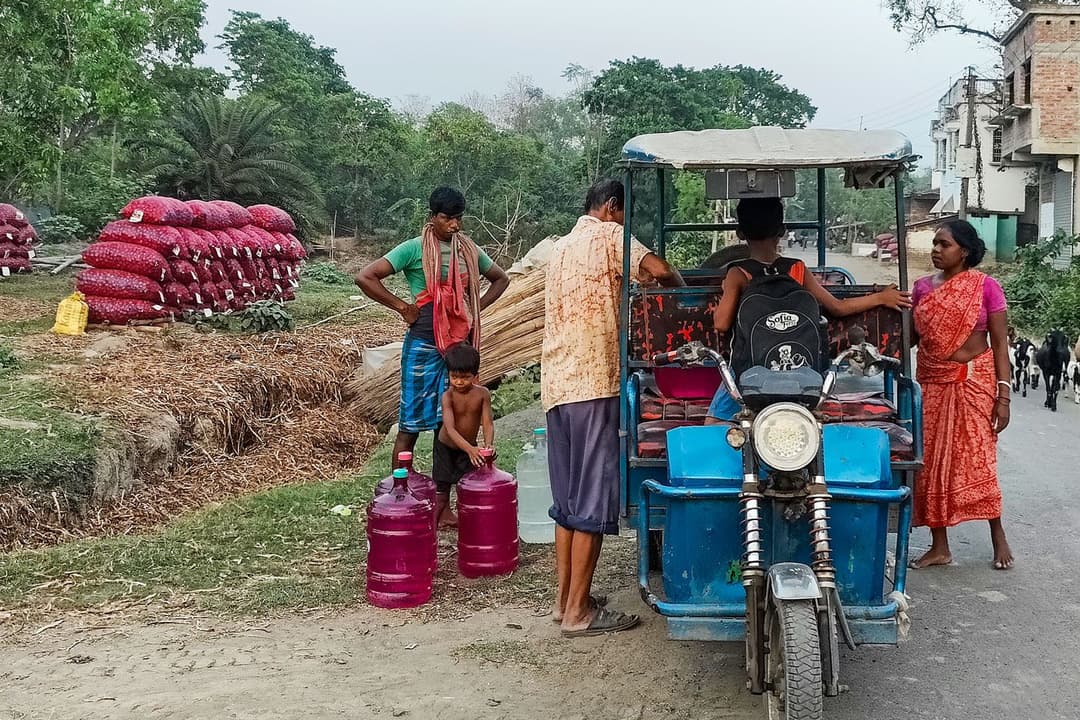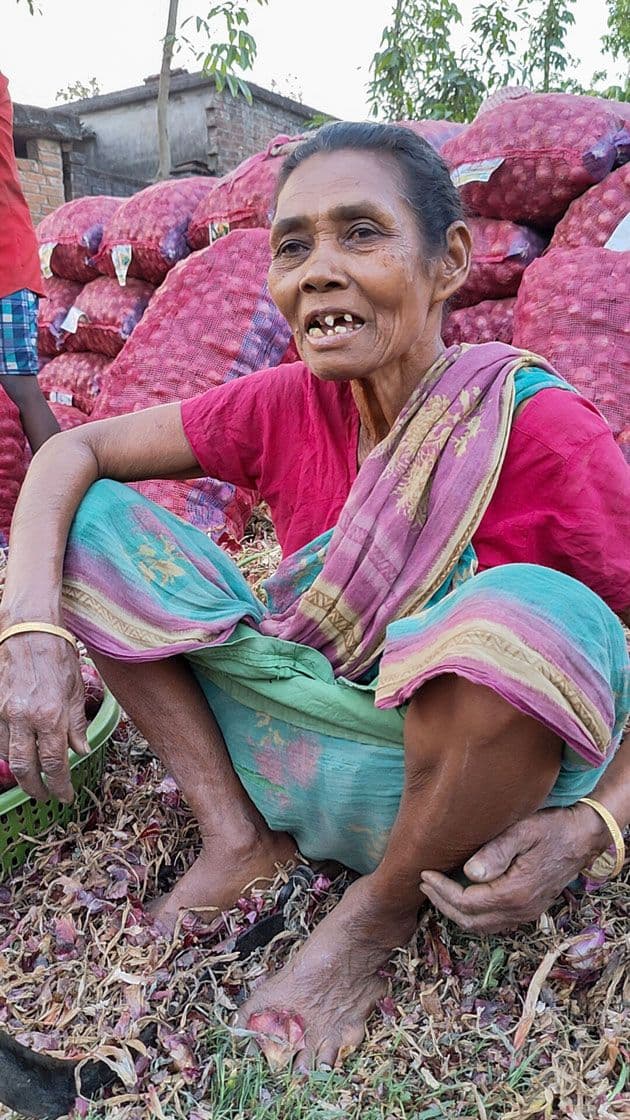

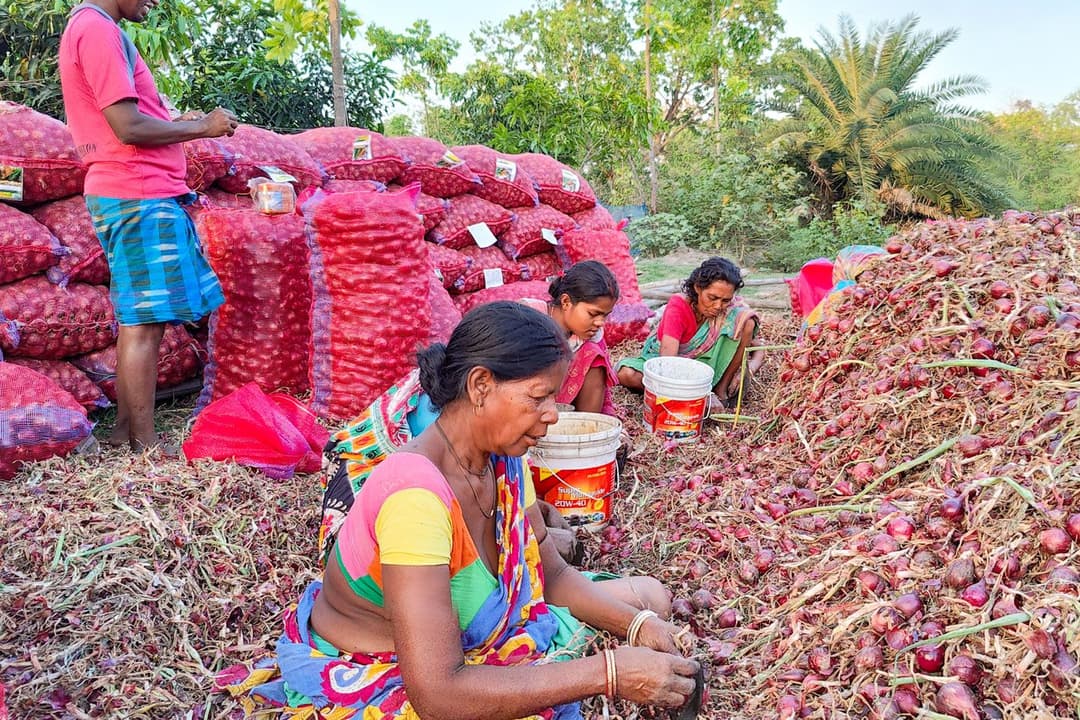
“Osob vote-tote chharo. Sandhya namar age anek kaaj go... [What vote-shote! Thousand and one things to finish before it is dark…] Come, sit here with us if you can bear the smell,” Malati Mal says pointing to the space on the ground next to her. She is inviting me to join a group of women, sitting and working around a huge onion mound, unfazed by the heat and dust. I have been hanging around in the village for almost a week now, shadowing these women, asking them questions about the upcoming elections.
It is early April. The mercury in this part of Murshidabad, West Bengal, reaches 41 degrees Celsius every day. Even at 5 p.m. in this Mal Pahariya hutment, it is scorching hot. Not a leaf moves on the few trees surrounding the area. The heavy, pungent smell of fresh onions hangs in the air.
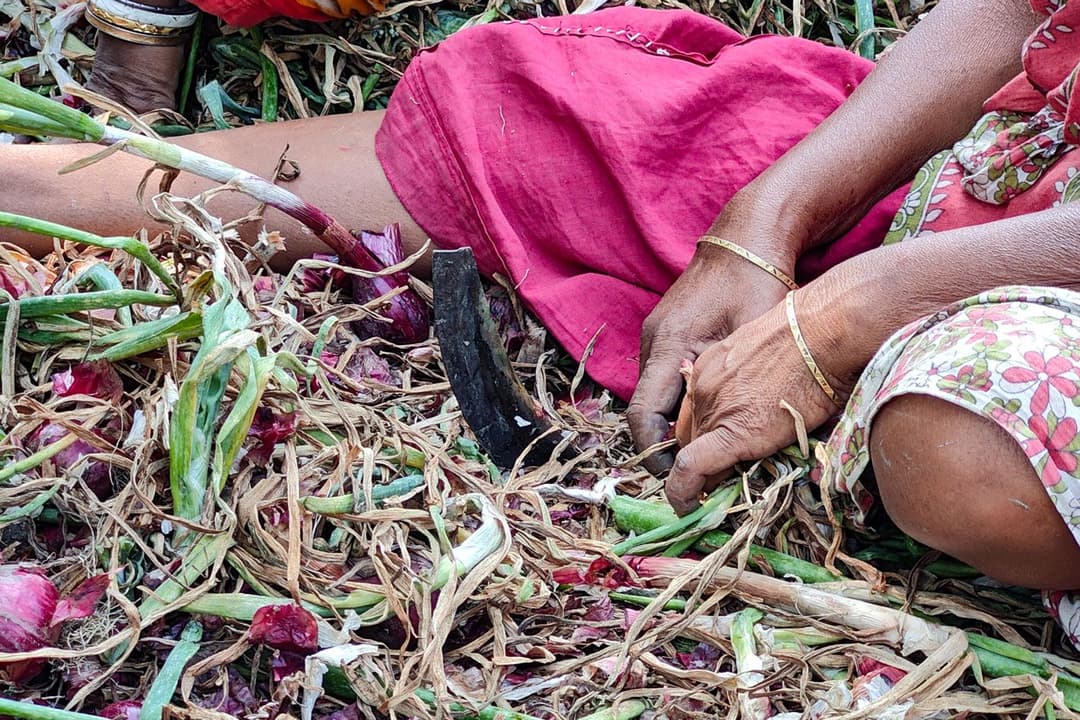
The women are seated in a semicircle around the onion mound, in the middle of an open space barely 50 metres away from their makeshift homes. They are busy separating the bulbs from the stems using a sickle. The sweltering afternoon heat, combined with the vapours of raw onions, makes their faces look luminous in a way that only hard labour can.
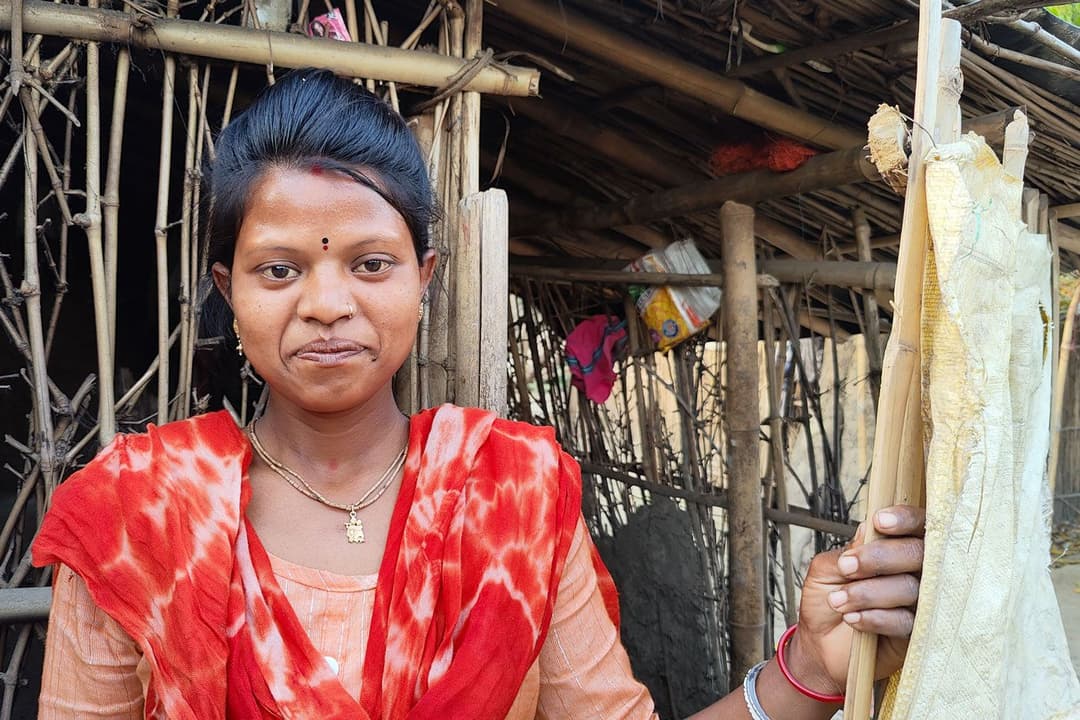
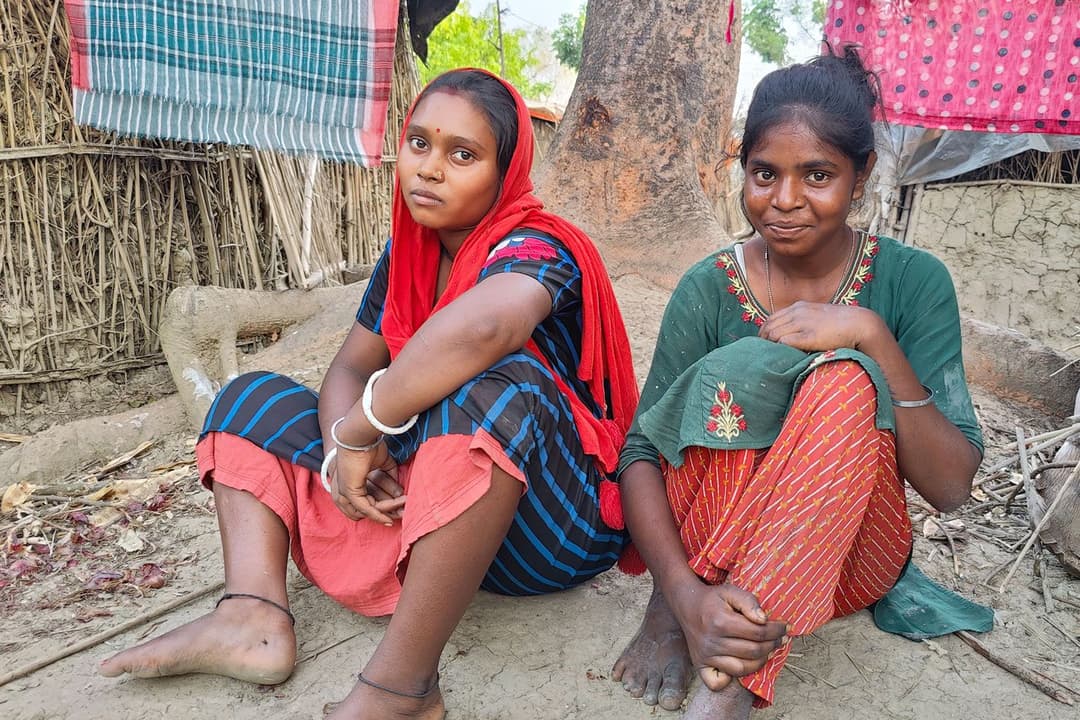
“This is not our desh [native village]. For the last seven or eight years we have been coming here,” says Malati, in her 60s. She and the women in the group belong to the Mal Pahariya Adivasi community, officially listed as a Scheduled Tribe in the state and known to be one of the most vulnerable tribal groups.
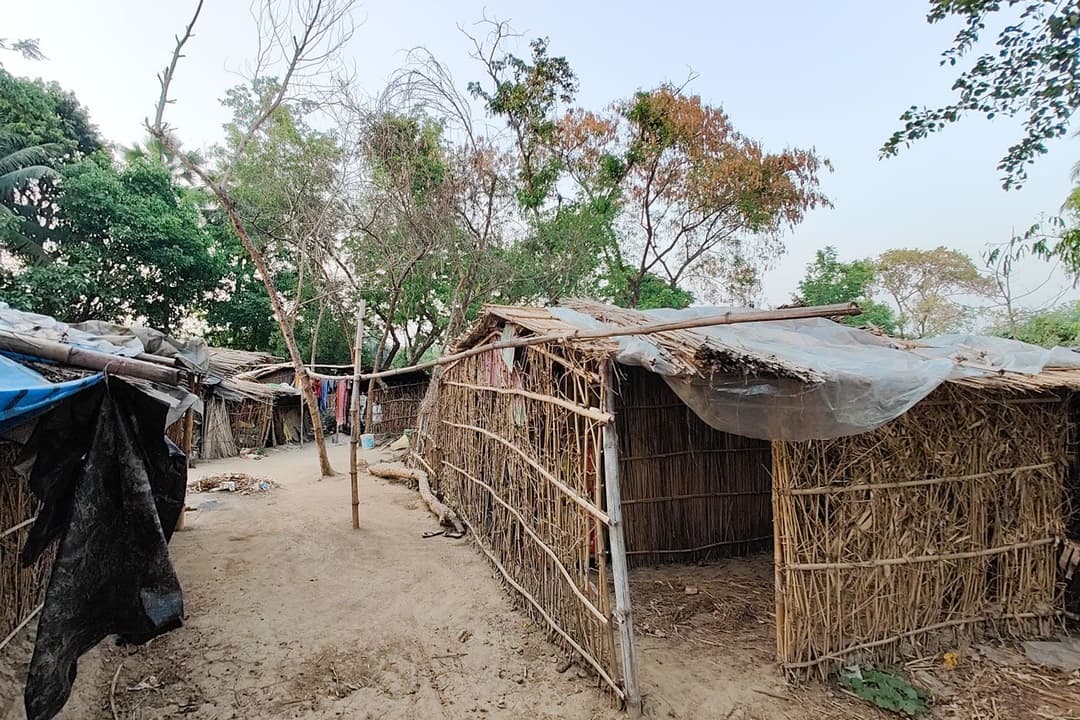
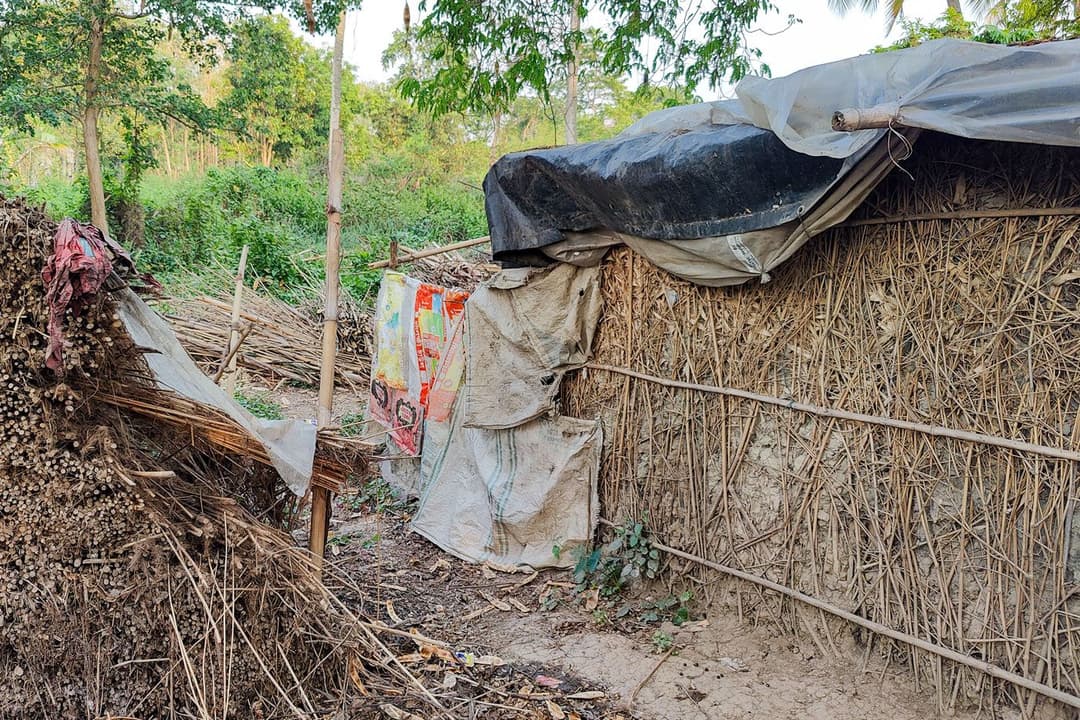
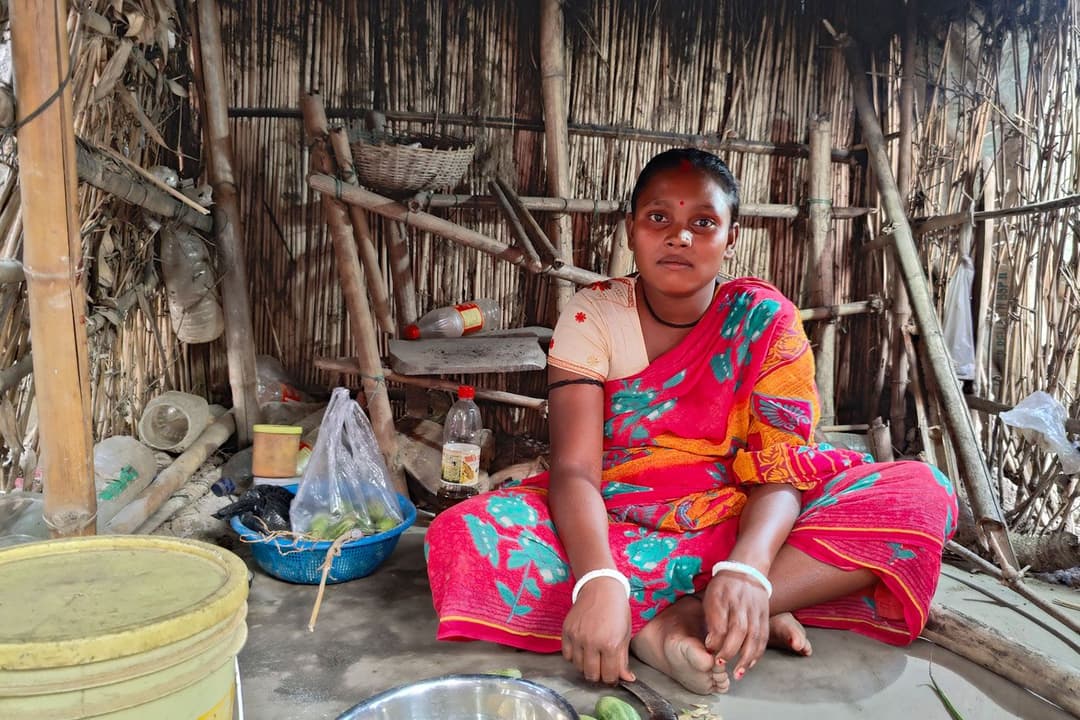
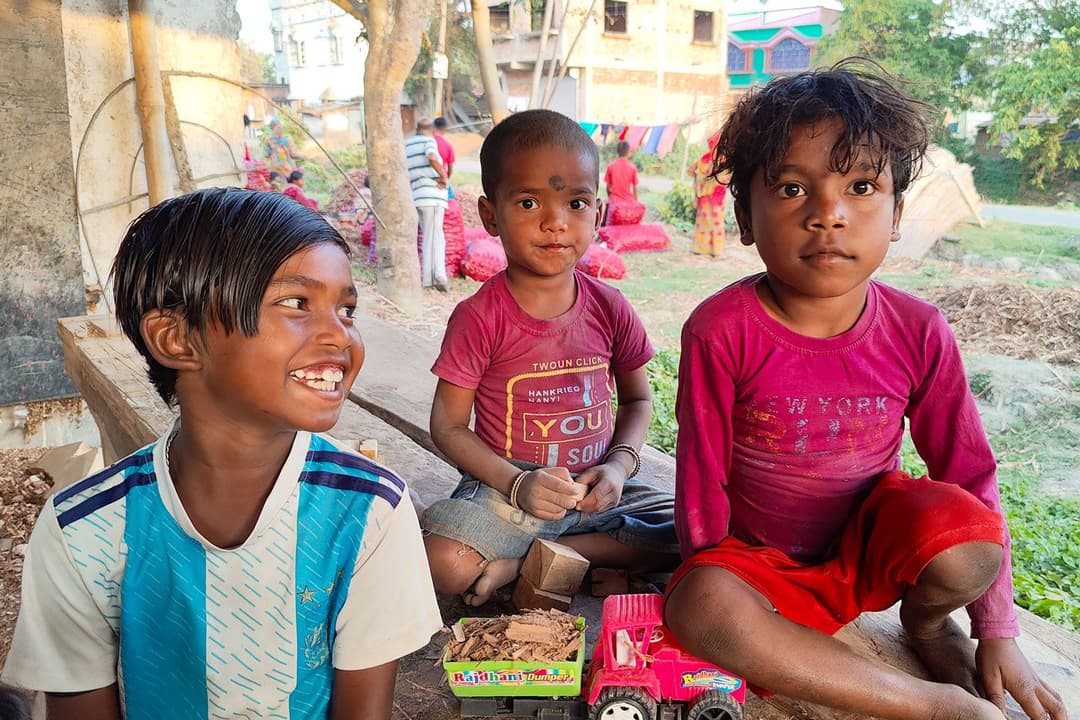
“In our village Goas Kalikapur, we have no work,” she says. More than 30 families from Goas in the Raninagar block I of Murshidabad district are now living in a cluster of makeshift huts at the fringes of the Bishurpukur village and work on local farms.
They were to return to their village, they told me, for voting in the Lok Sabha elections scheduled on May 7. Goas Kalikapur is about 60 kilometres away from Bishurpukur hamlet.