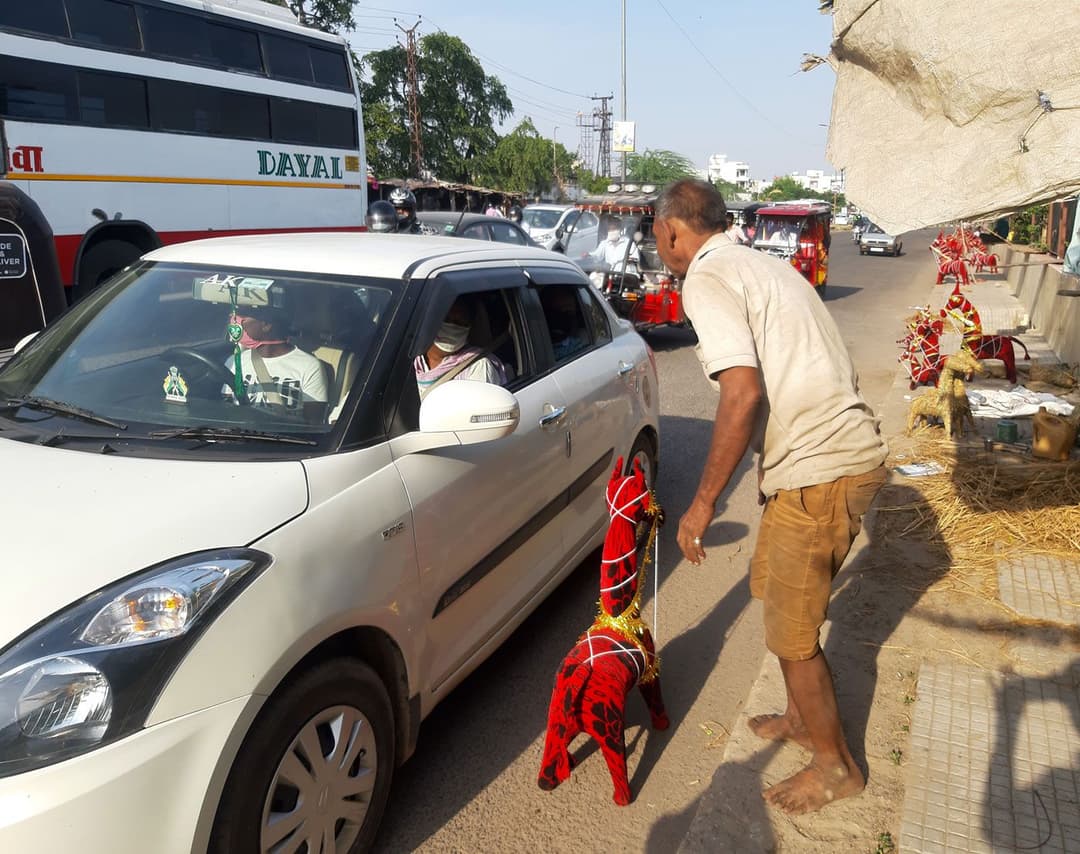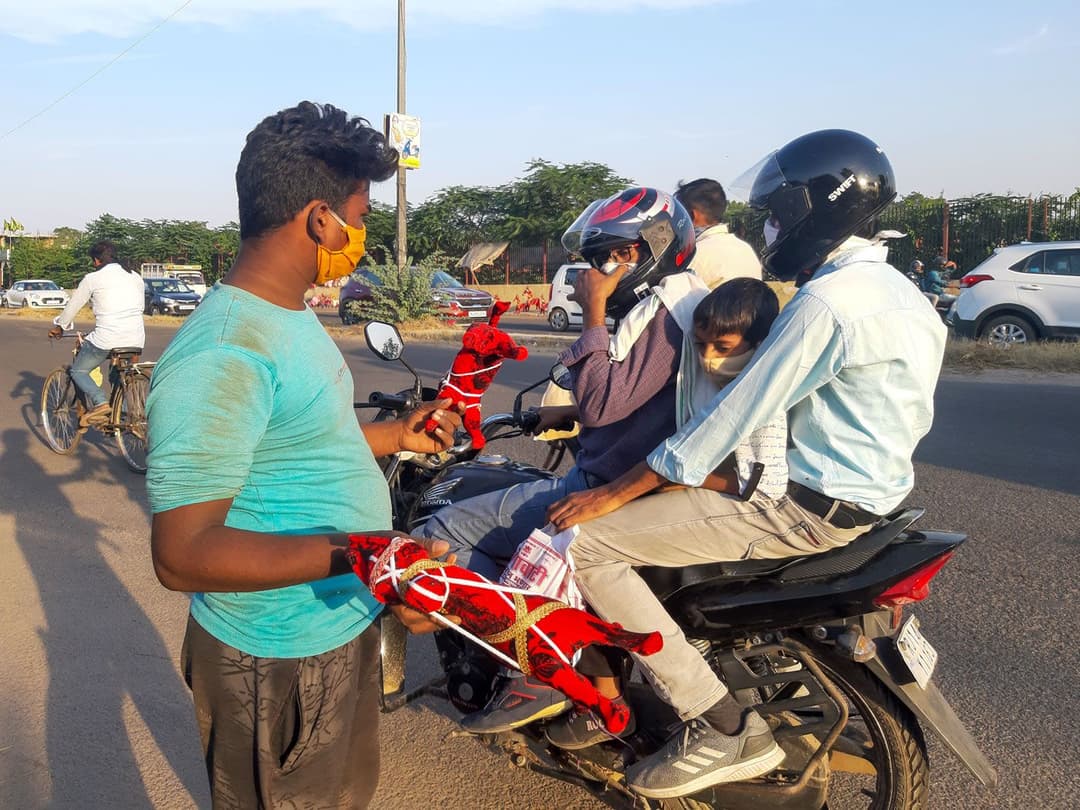


Using a half-made horse as a pillow, Juararam Bhat was sleeping by the roadside when a car stopped by. That woke him up. The 60-year-old craftsman rushed to the person sitting in the car, and sat on the toy horse to demonstrate its sturdiness. Surely this was a bargain at 300 rupees? The customer beat him down to 200. And so Juararam made his first – and perhaps last – sale of the day, at 4 p.m.
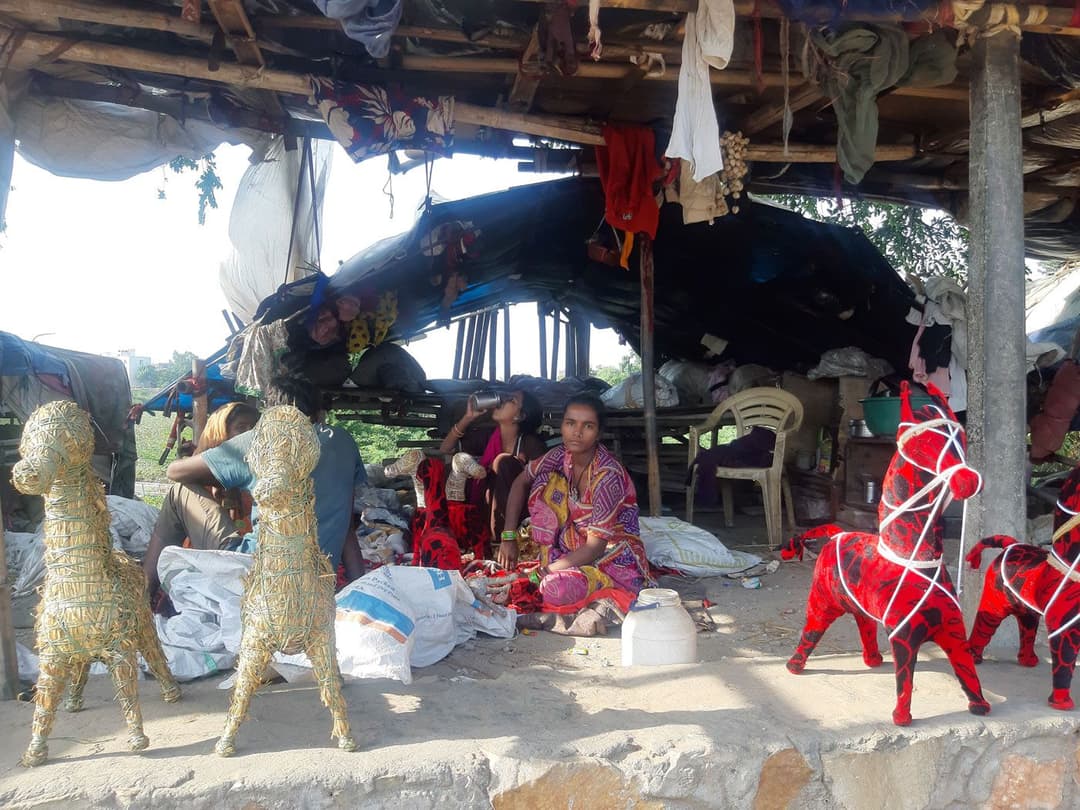
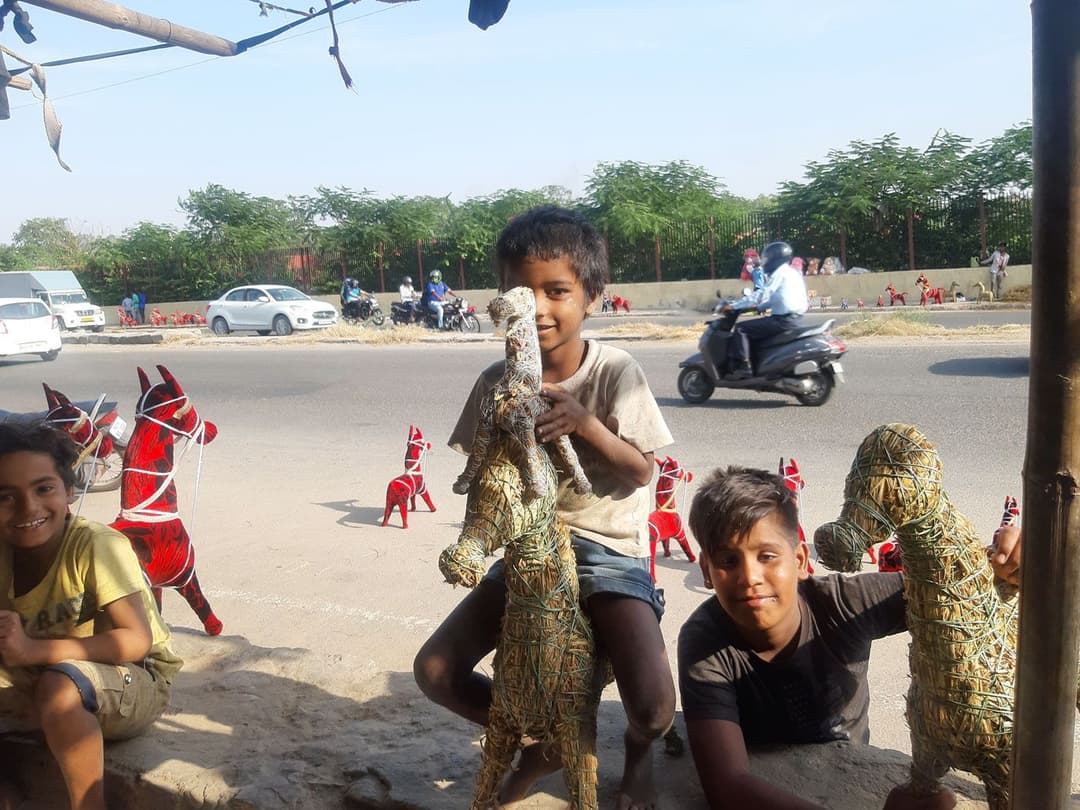
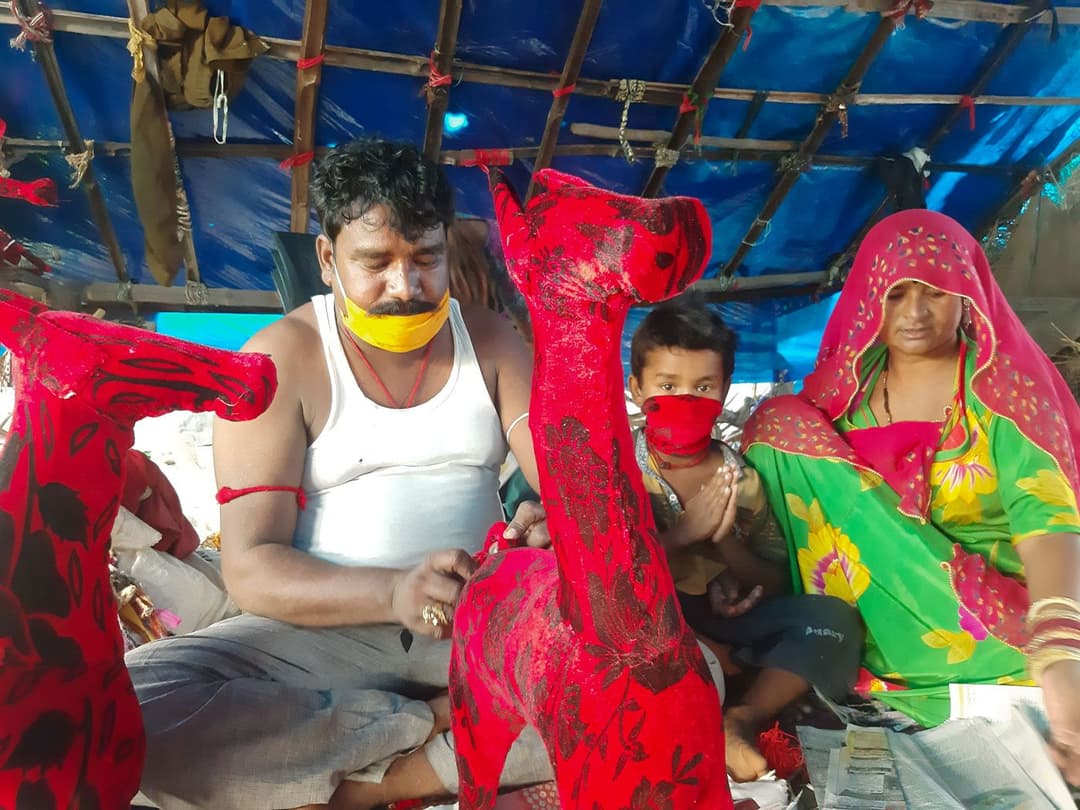
Close to where he was resting is Juararam’s shanty of bamboo poles covered with tarpaulin and plastic sheets. He lives here with his wife Buglibai, and their two sons, their wives, and children. Their hut is amid a cluster of 40-50 similar dwellings near the bridge over the Amanishah stream in the Ambabari dargah area of west Jaipur. The families living here, from the Bhat community (listed as an OBC in Rajasthan), all make decorative items with dry grass (or straw) – elephants, horses, camels and more.
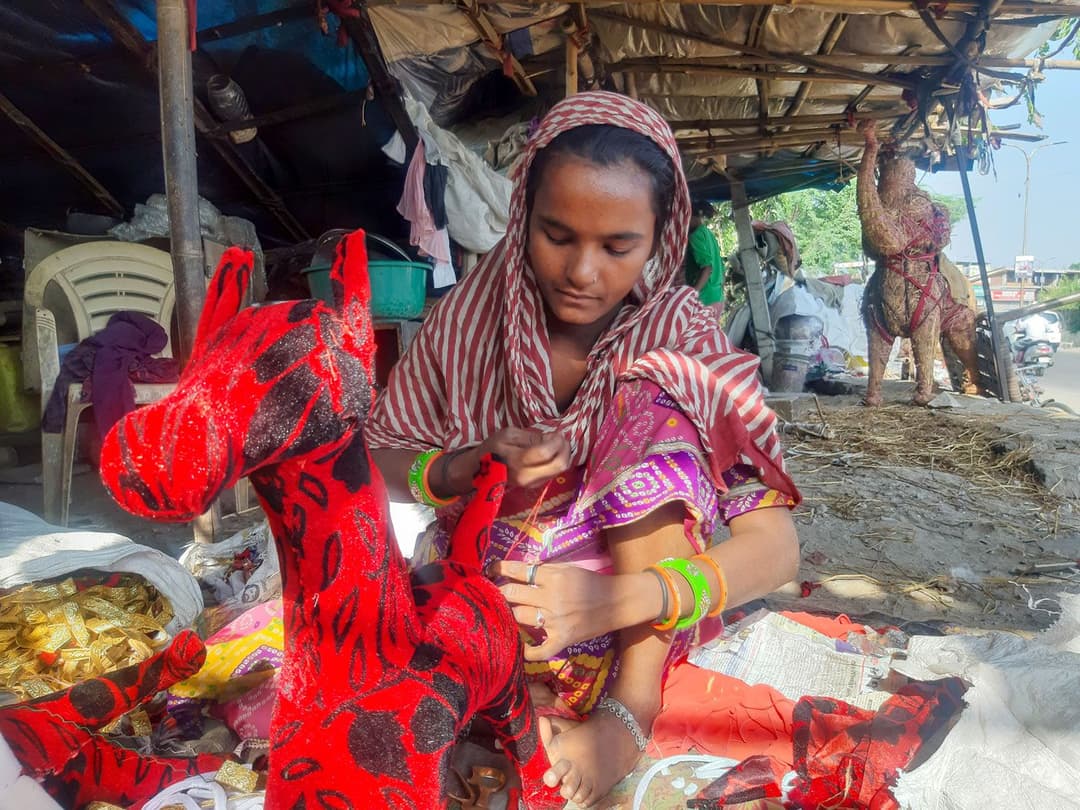
“I don't remember the year, but it was my father who came to Jaipur from Didwana town in Nagaur district,” says Juararam. In the toy-making process, his main task is to make the straw skeleton. While doign this, he inserts a thin bamboo stick every now and then to support the structure and ties the dry grass with wire and thread to keep it in shape. Then he passes on the completed structure to Buglibai to stitch a red velvet cloth around it before decorating it with gold-coloured lace. It takes them 2 to 3 hours to make one such item.
The hut where they are sitting to make these artefacts is their home and workplace, as well as ‘warehouse’. They have moved this makeshift house more than four times, in each instance after the police and the Jaipur city authorities demolished their settlements, which they deem illegal. At the present location, for water they depend on tankers and nearby shops, use public toilets or spaces near the Amanishah stream, and for electricity most of the families use LED lights charged by batteries.
Juararam’s family, like all others in this cluster near the bridge, has never owned any farmland – most of them are from villages in Jodhpur and Nagaur districts of Rajasthan. Their traditional occupation, he says, was making wooden puppets and putting up performances, but now they are mainly engaged in making the decorative items of dry grass and velvet.