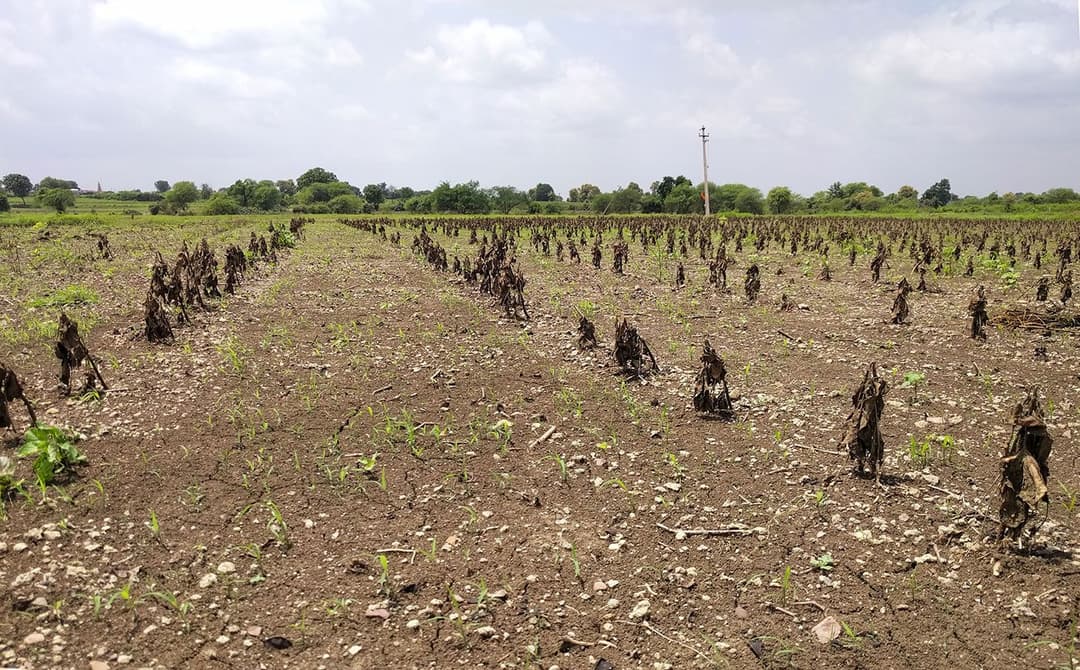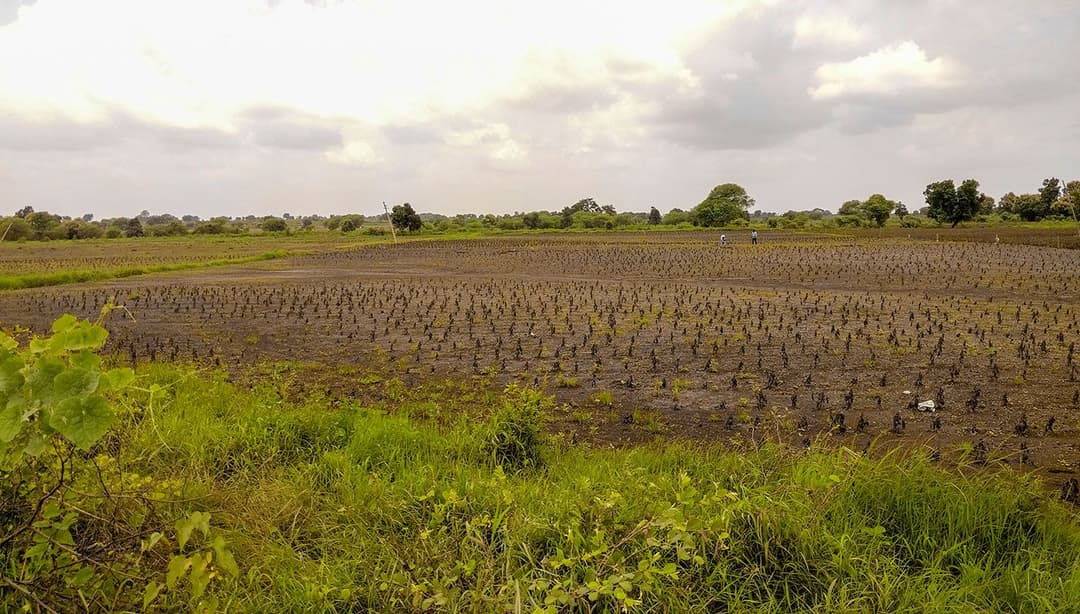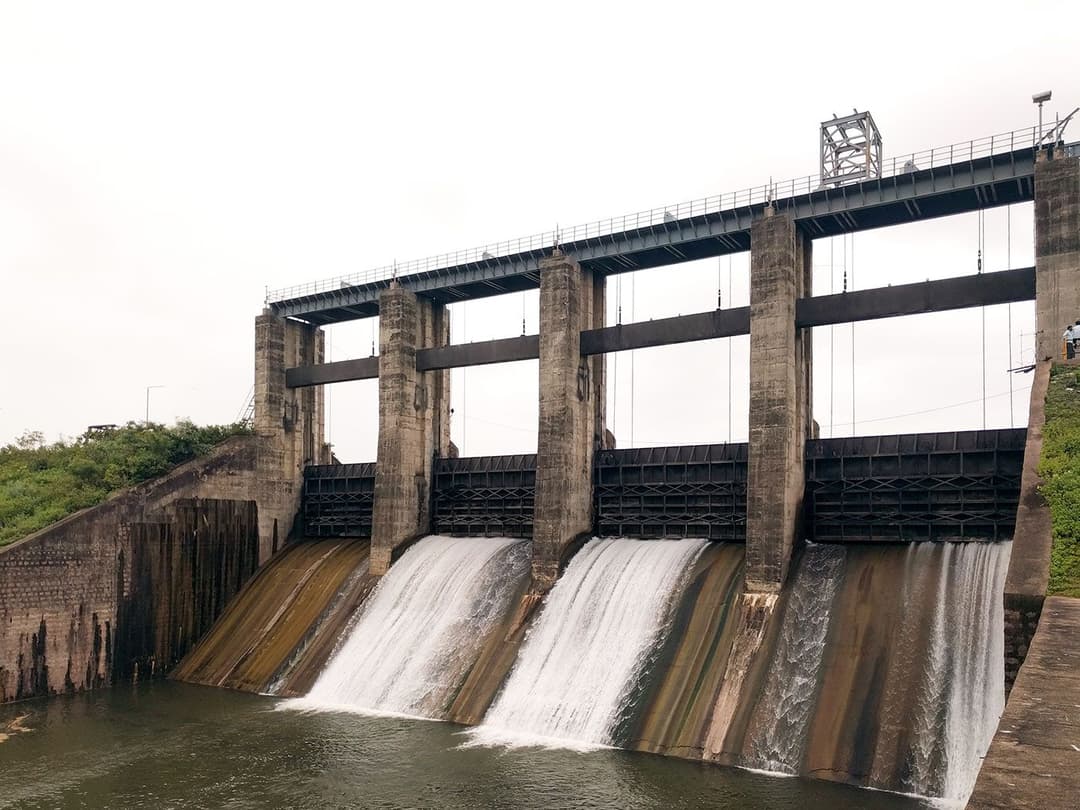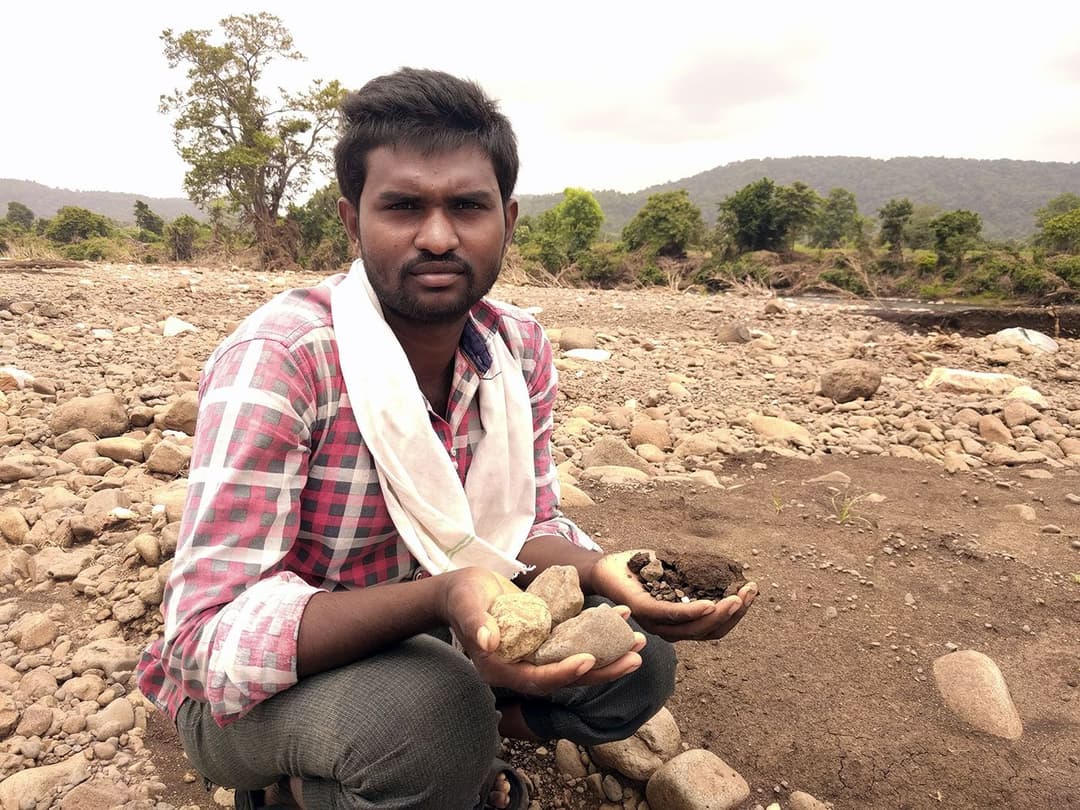

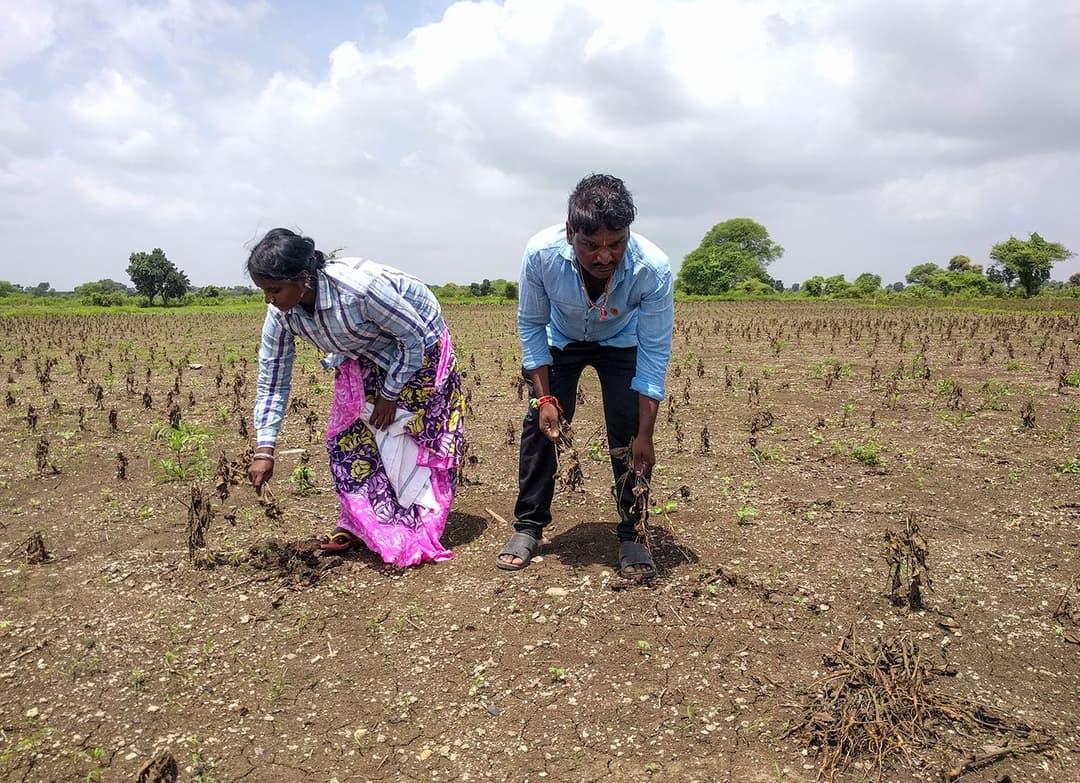
By the end of July, the Sathnala resevoir in Telangana’s Adilabad district was full. The farmers of Karanji village celebrated, hoping to irrigate their crops in both the kharif and rabi seasons. But a downpour on August 16 and 17 brought around 200 mm of rain. It flooded the fields on the banks of the canals, both upstream and dowstream of the reservoir on Sathnala river, a tributary of the Penganga, which eventually joins the Godavari. The flood washed away the crops – mainly cotton, a bit of soyabean – leaving only stones and sand in the farmlands.
Between June and August this year, Adilabad recieved 44 per cent more rain than the normal of around 880 mm for these months. Last year, during the same months, the district received 27 per cent less rainfall than the normal, shows data of the India Meteorological Department. So while for many farmers 2017 was a low-income year, 2018 has so far become a zero-income period.
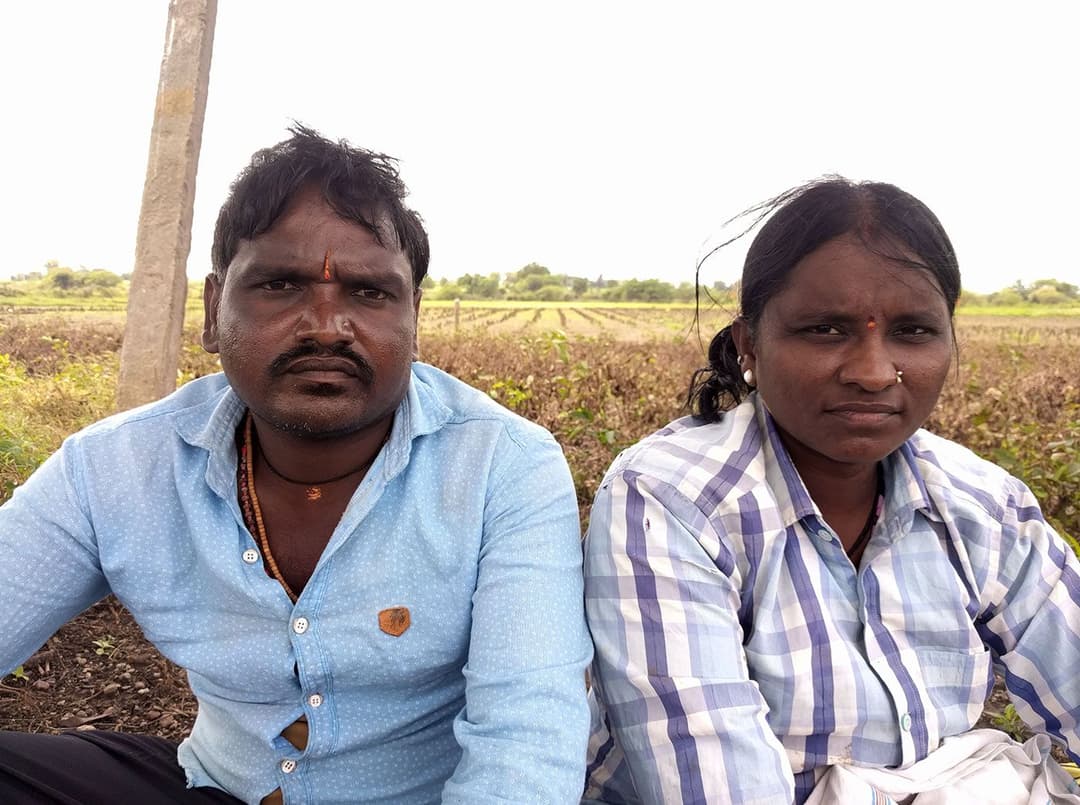
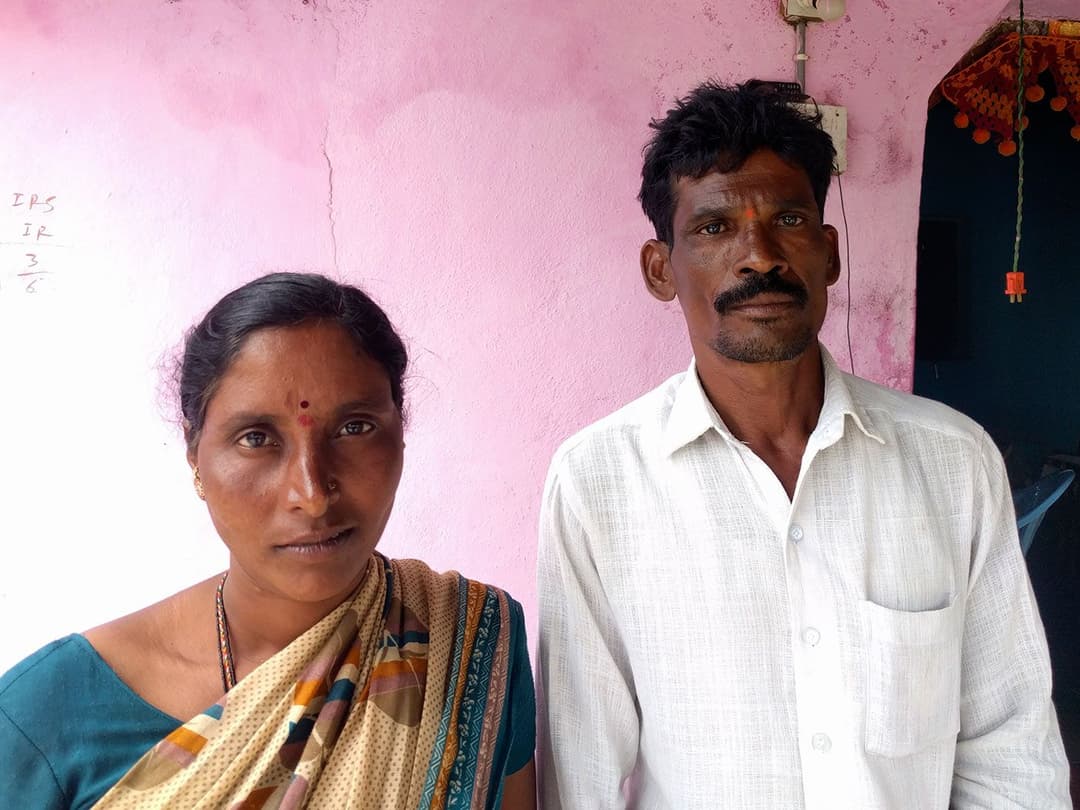
Among them is Kuntawar Sangeetha of Karanji in Jainad mandal, a village of around 1360 people, located downstream of the Sathnala dam. In June, she and her husband Gajanan planted their first crop ever – of cotton – hoping to harvest it in January-February 2019.
Before this first sowing on her own land, Sangeetha was an agricultural labourer. Gajanan too worked on an annual wage of Rs. 86,000 as a farm labourer. He was employed on the landowner’s condition that Sangeetha would work on the same land. Her work days were intermittent, and she earned Rs. 120 a day. “The last three years we worked with a malik (landowner),” she says. When they could not find work, wage labour through the MGNREGS helped. “Or I would load and unload sand onto tractors [from the Penganga, for a private contractor],” says Gajanan.