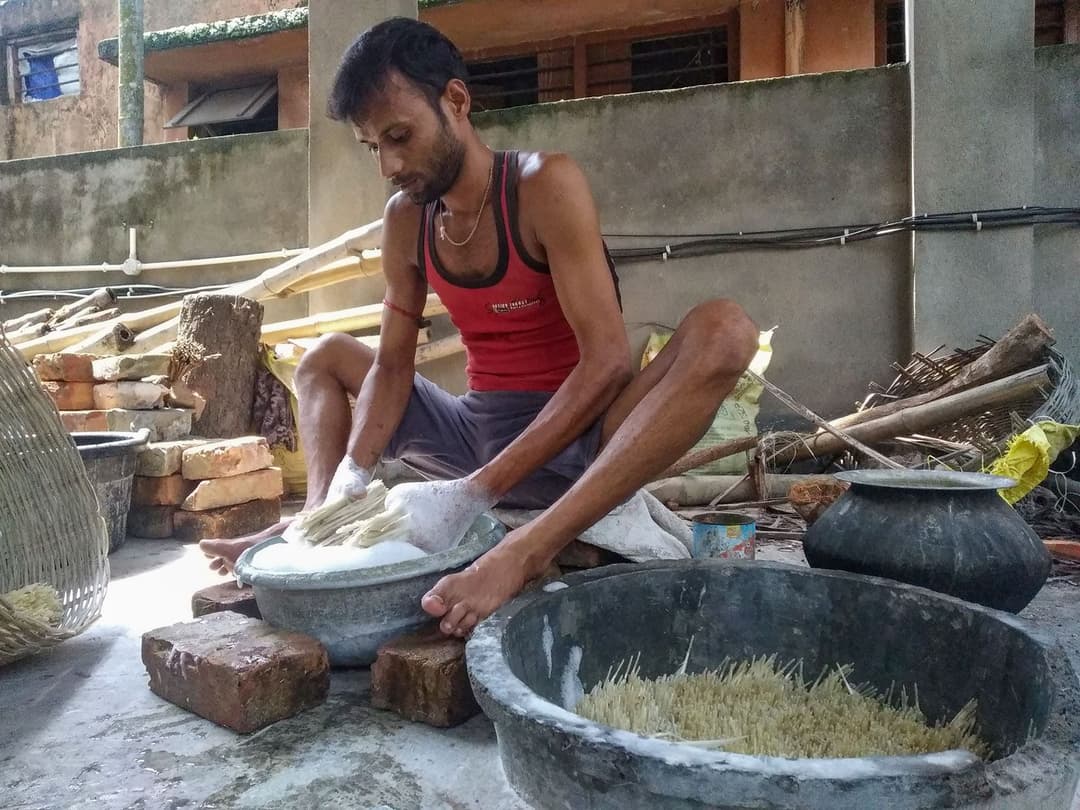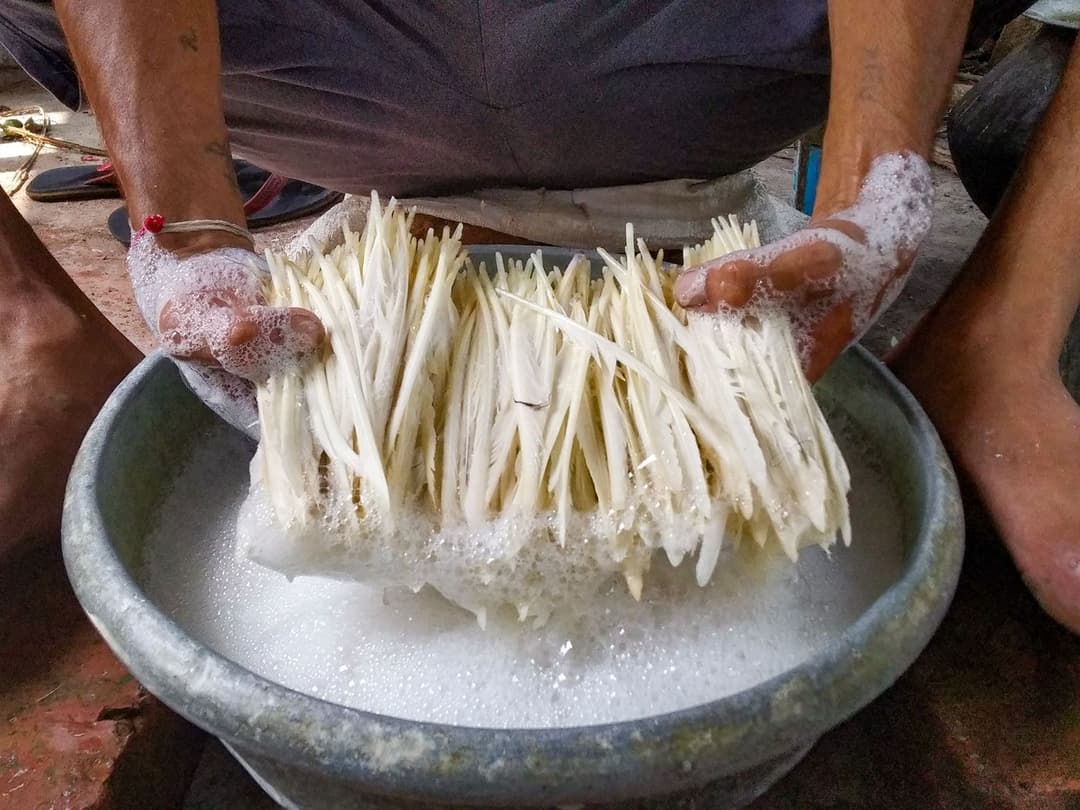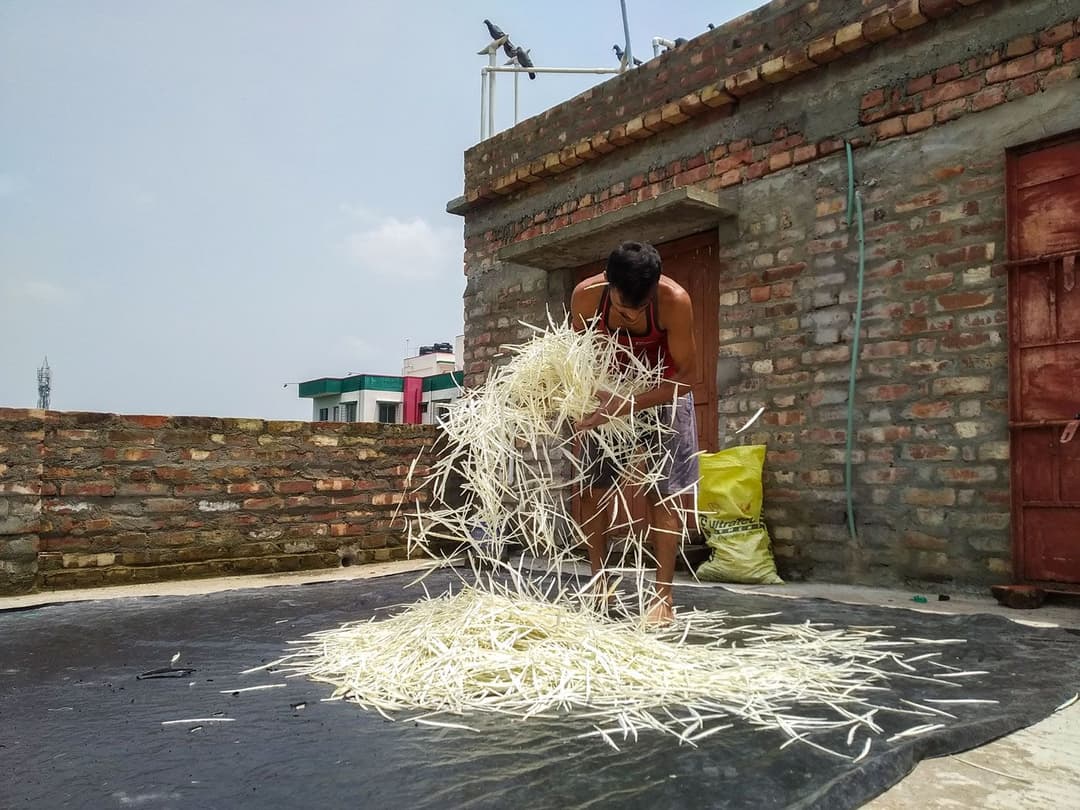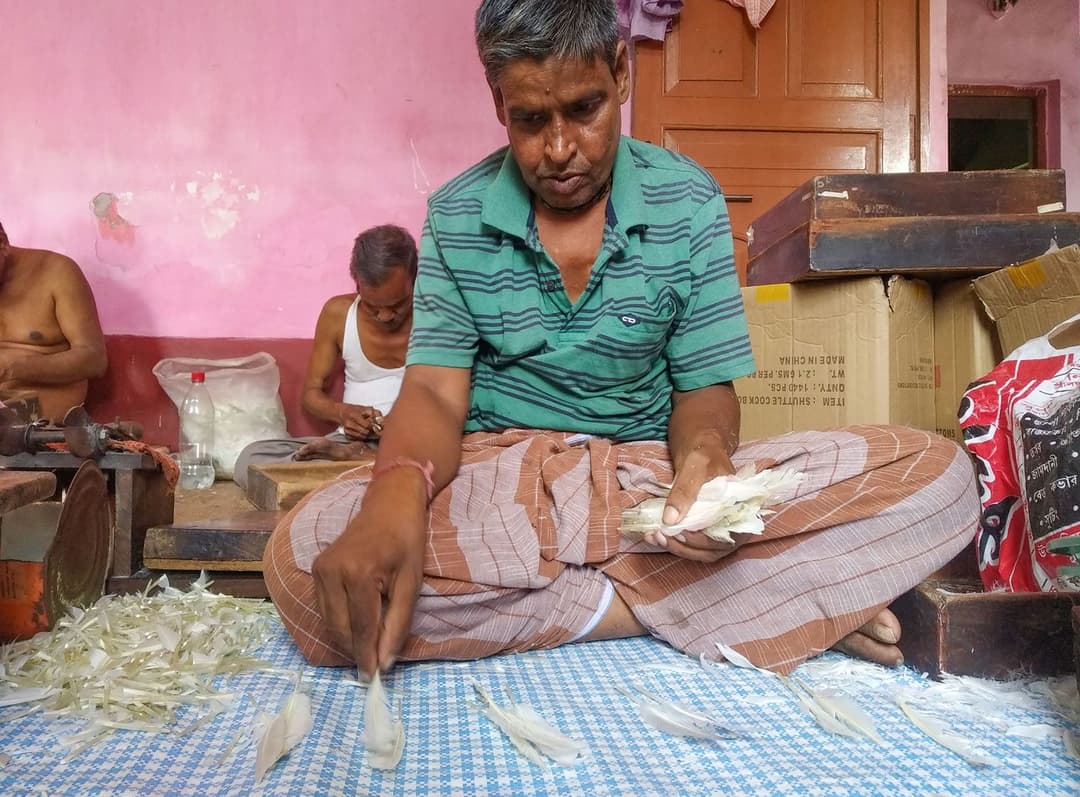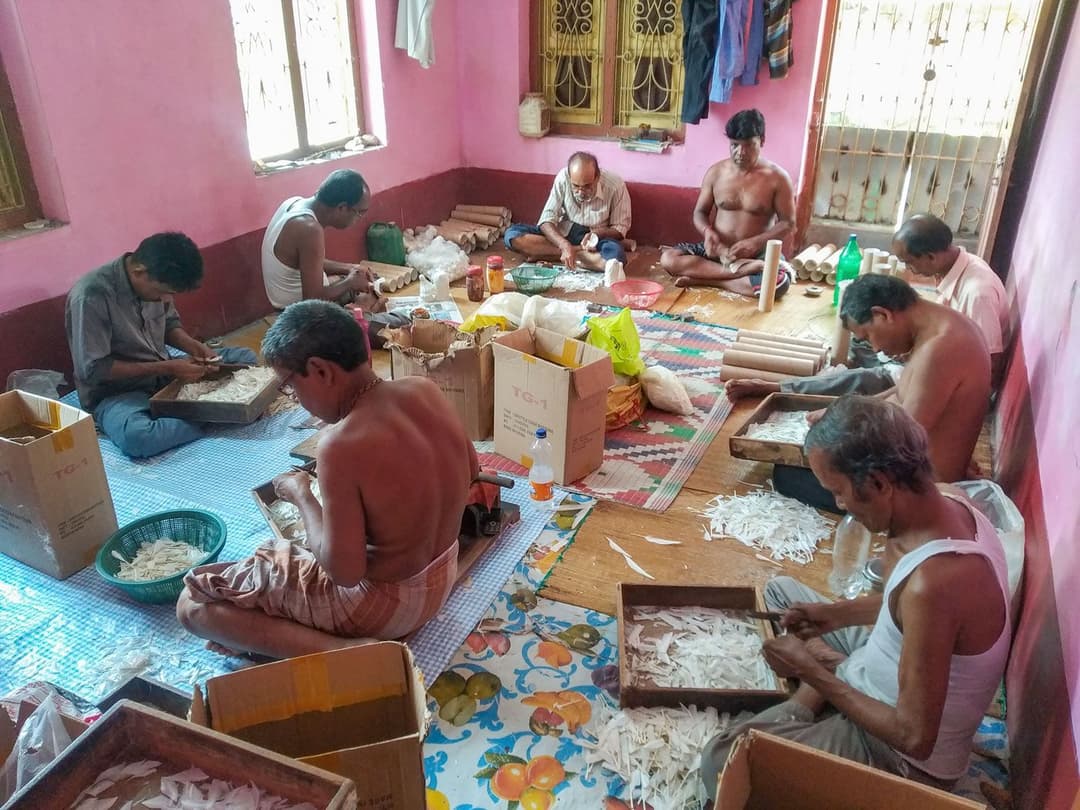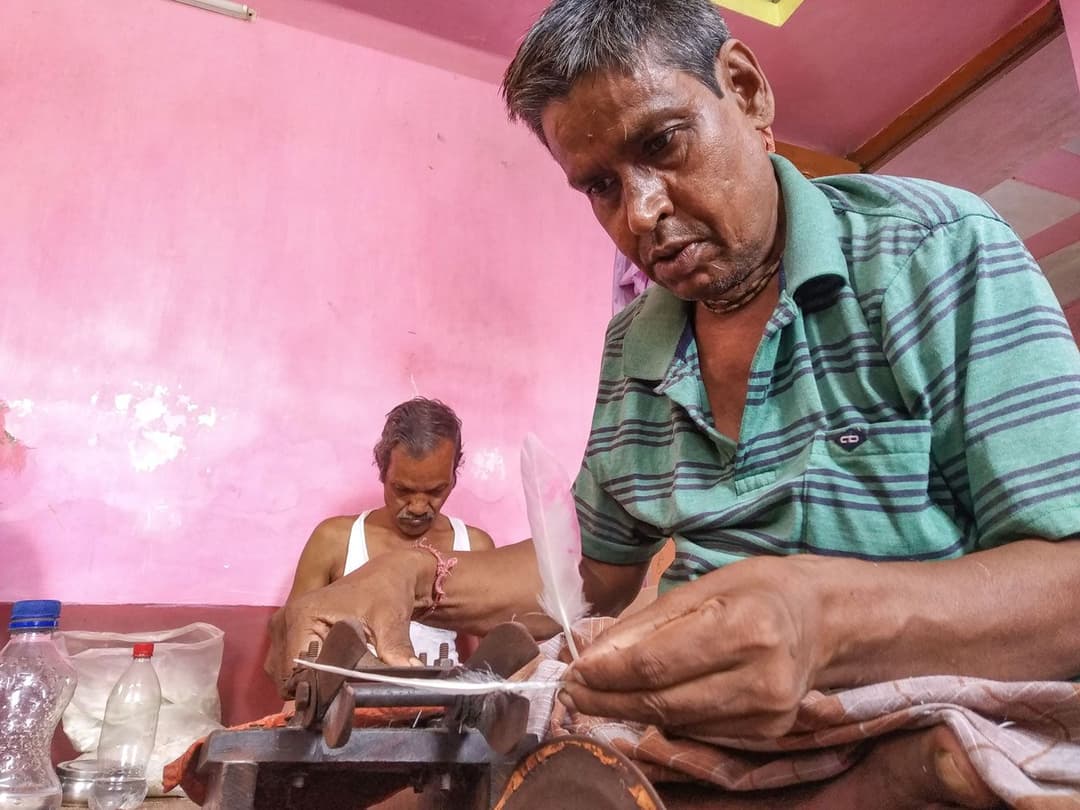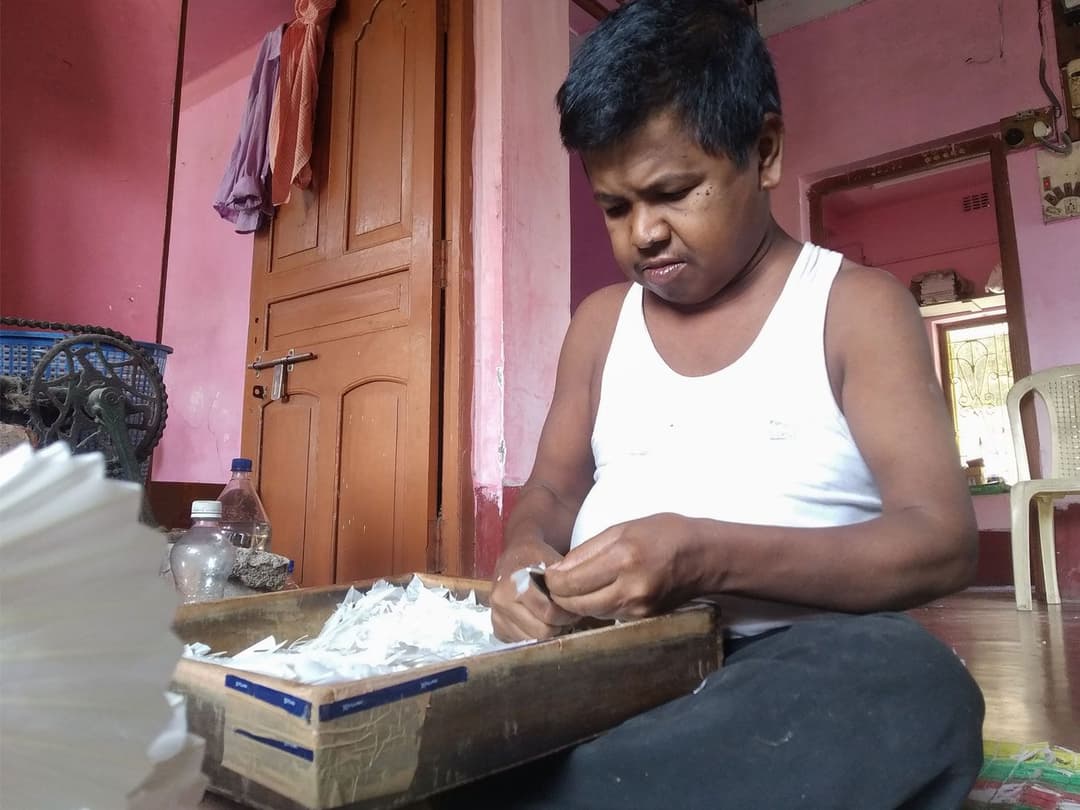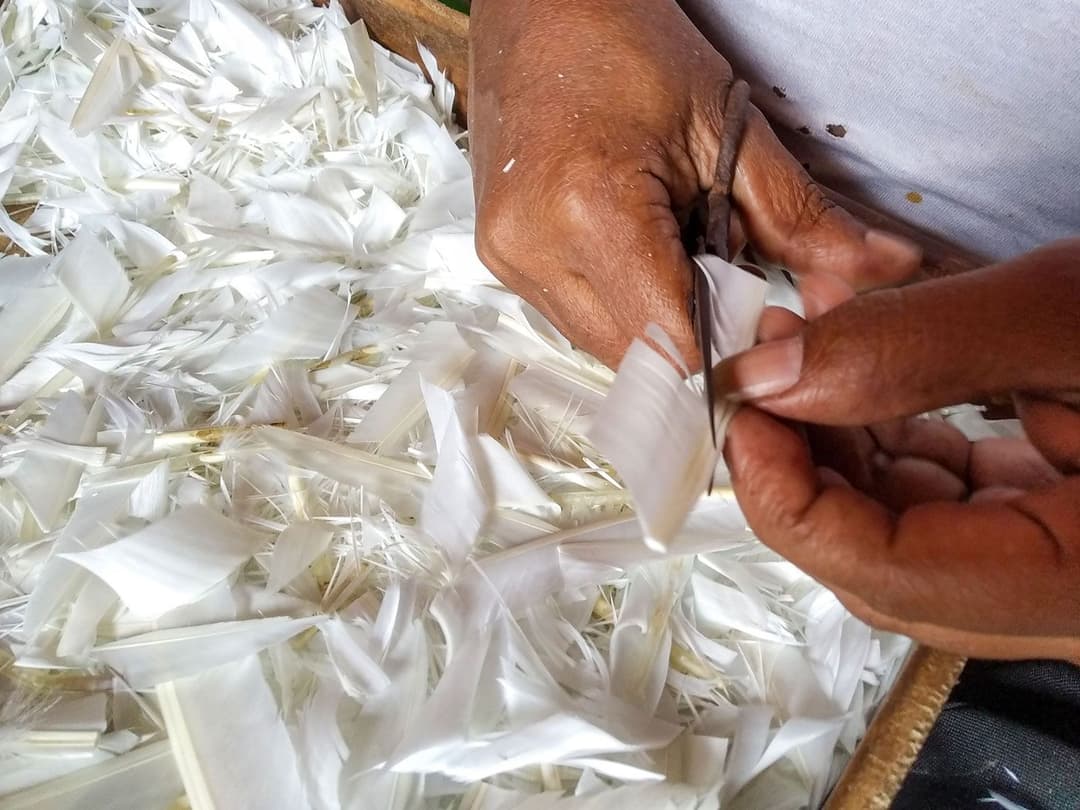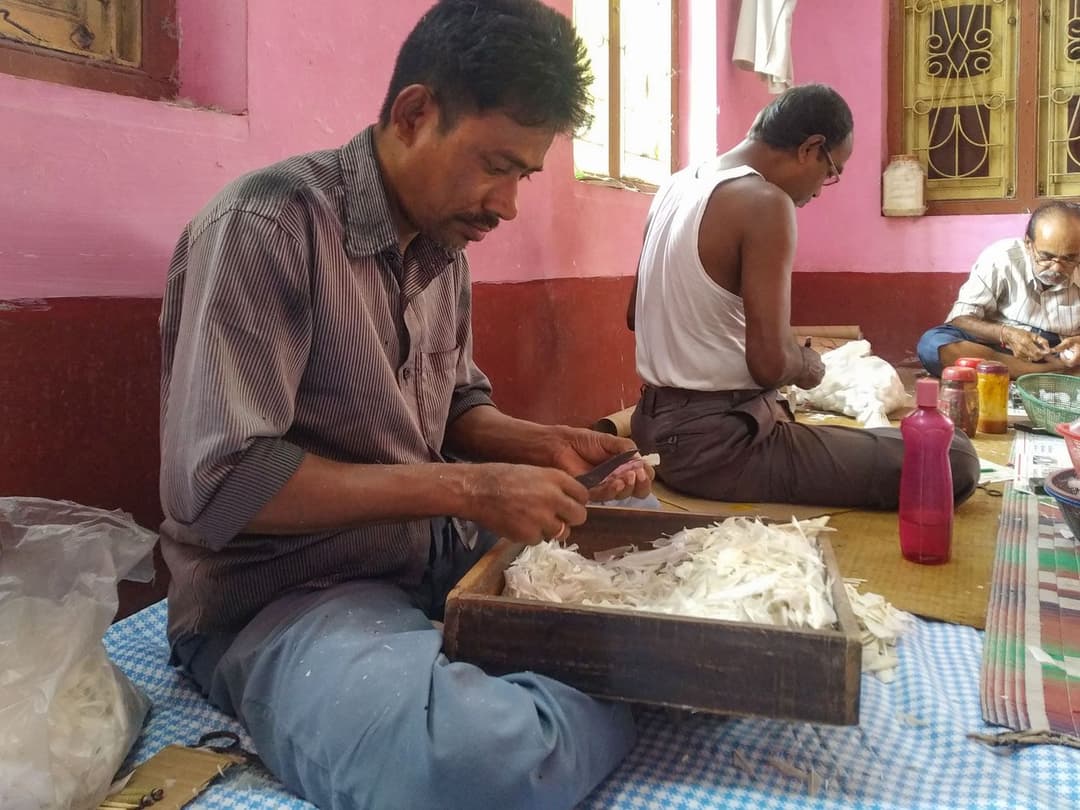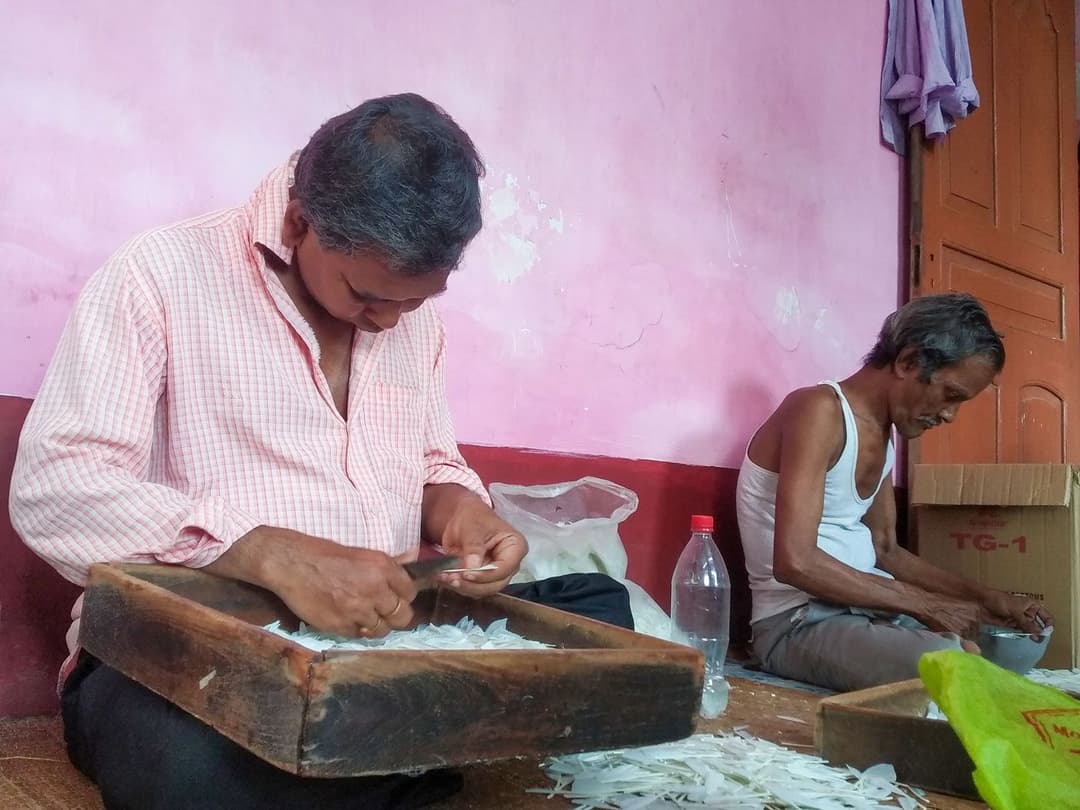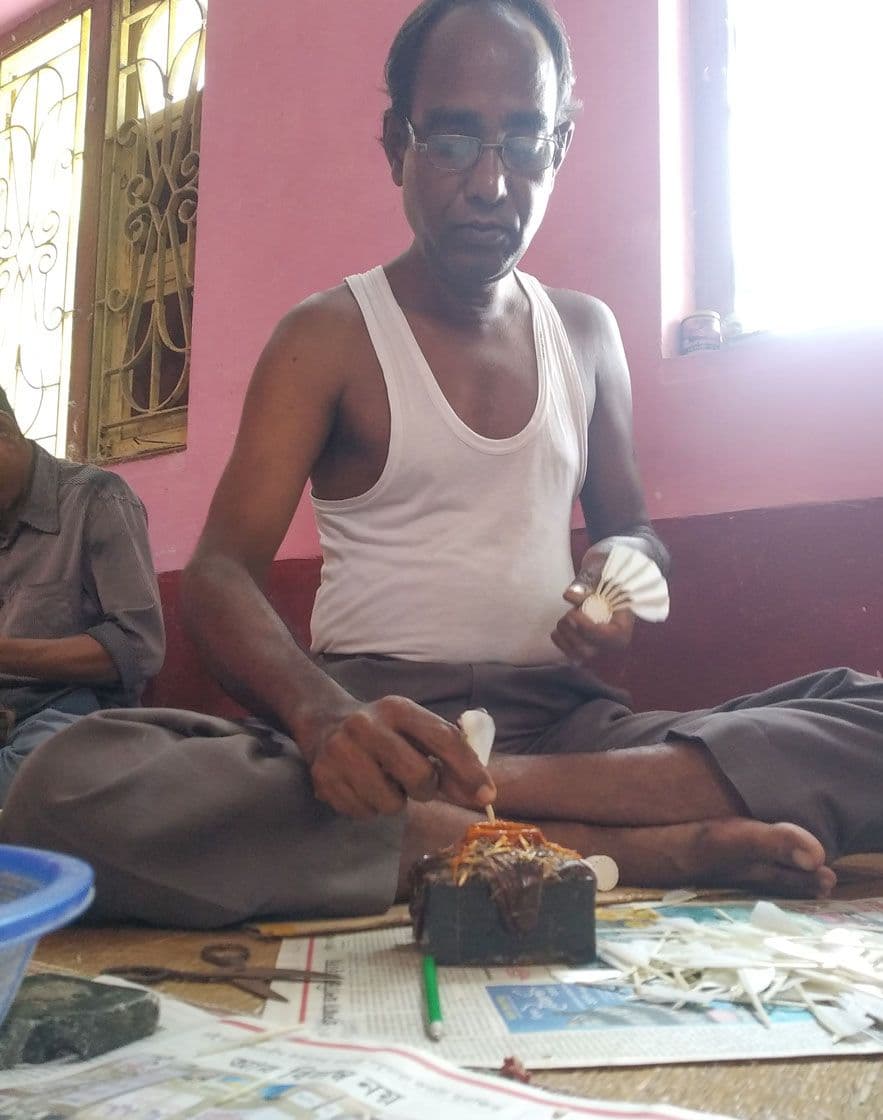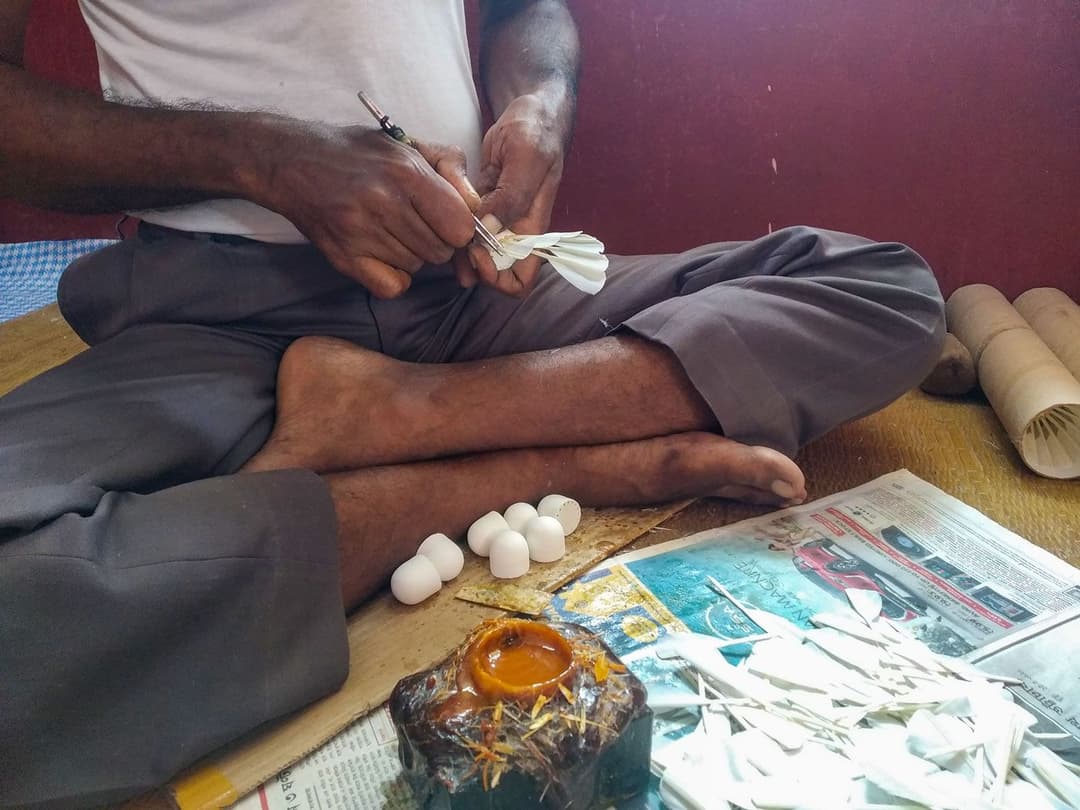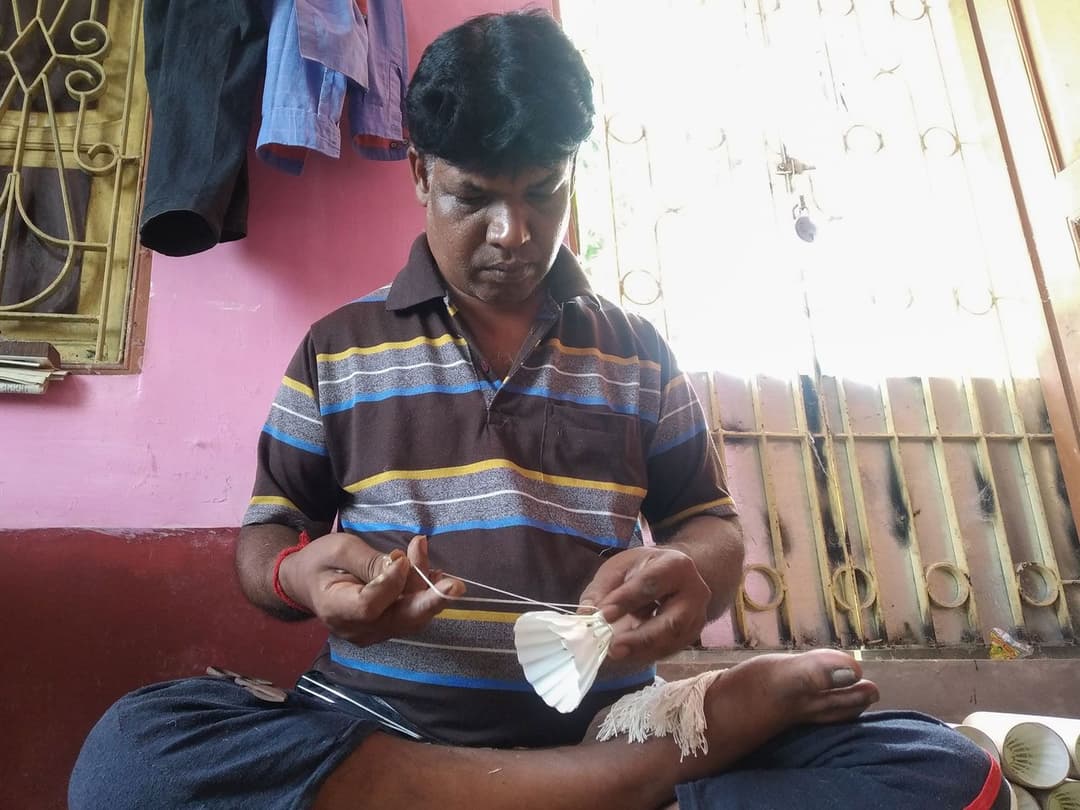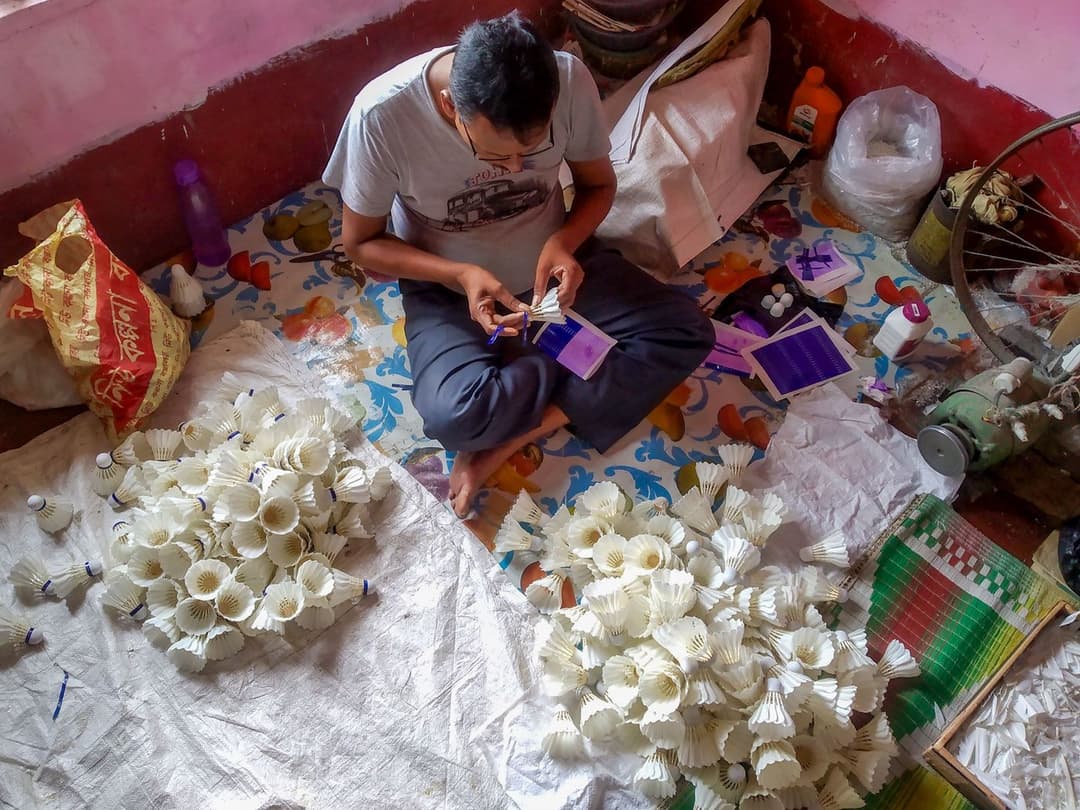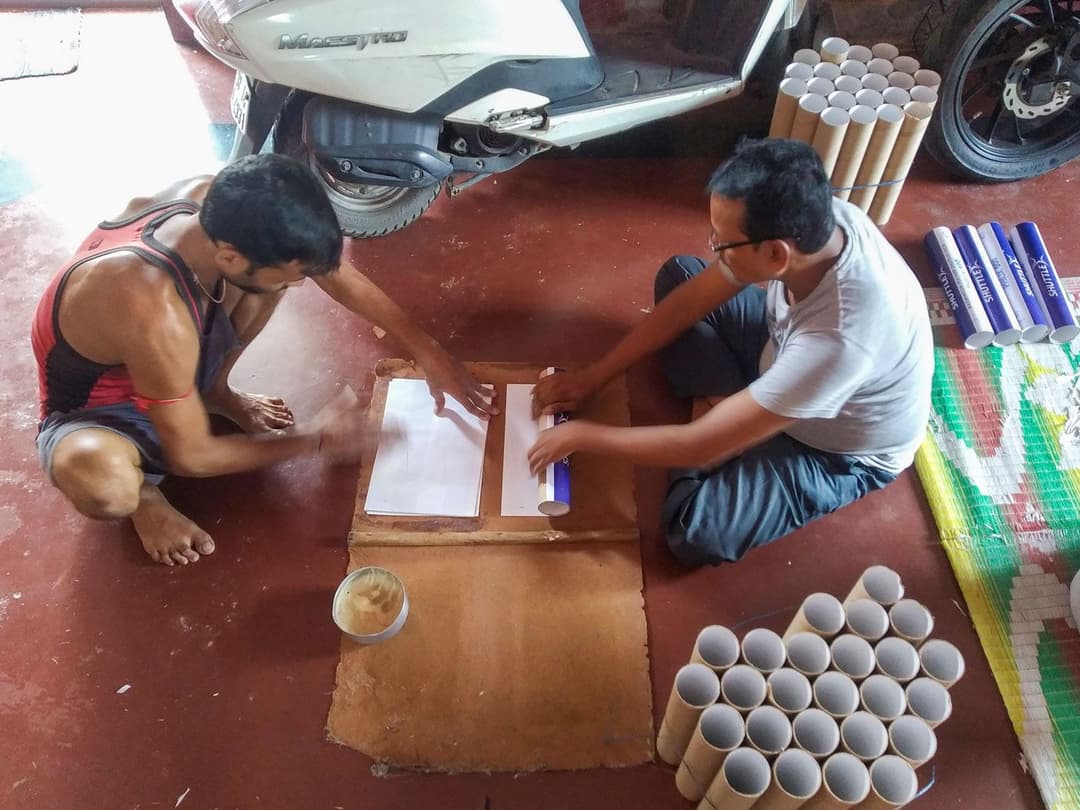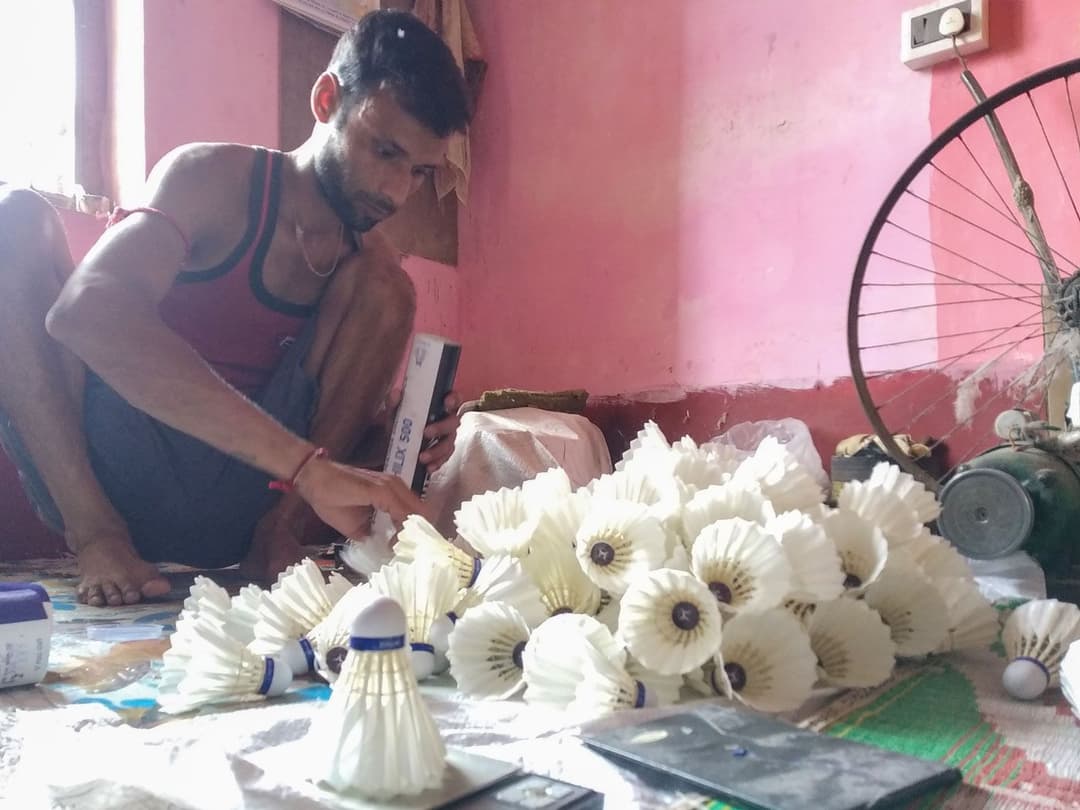

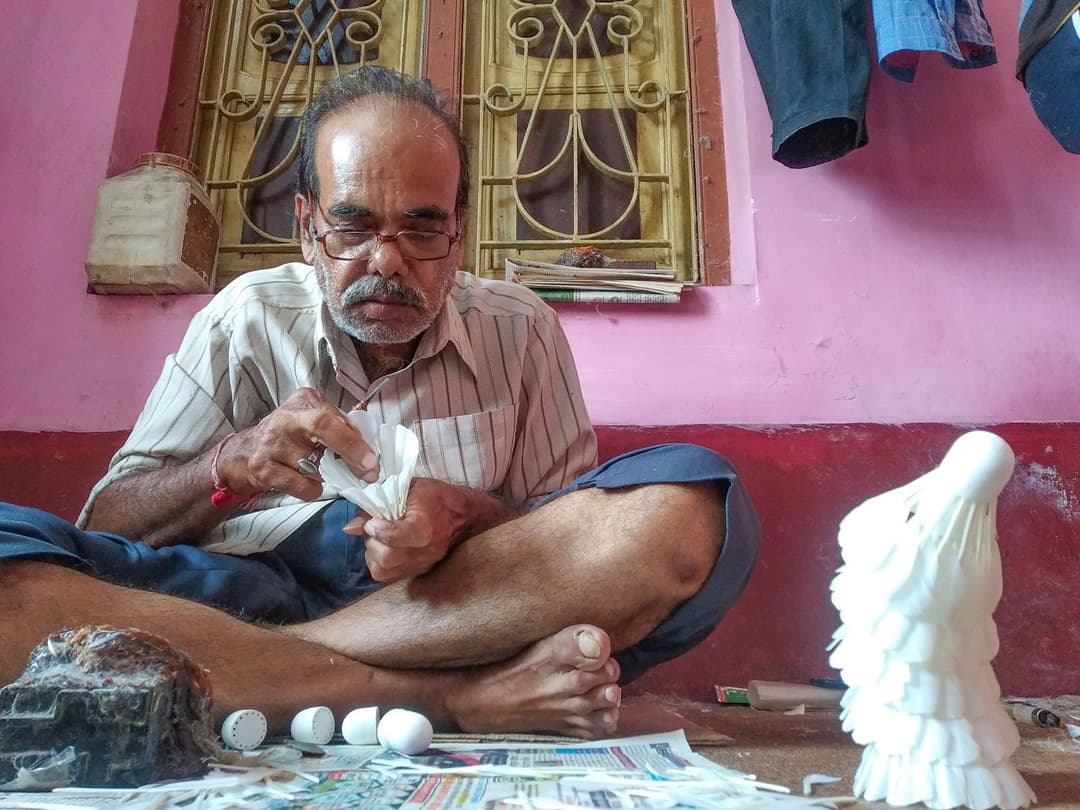
Duck feathers are scattered all over Naba Kumar Maity's karkhana (workshop). There are clean feathers, dirty feathers, trimmed feathers, and feathers of various shapes, and in varying shades of white. The mild breeze coming in through the open windows, ruffles the feathers, sending them whirling into the air before they drop.
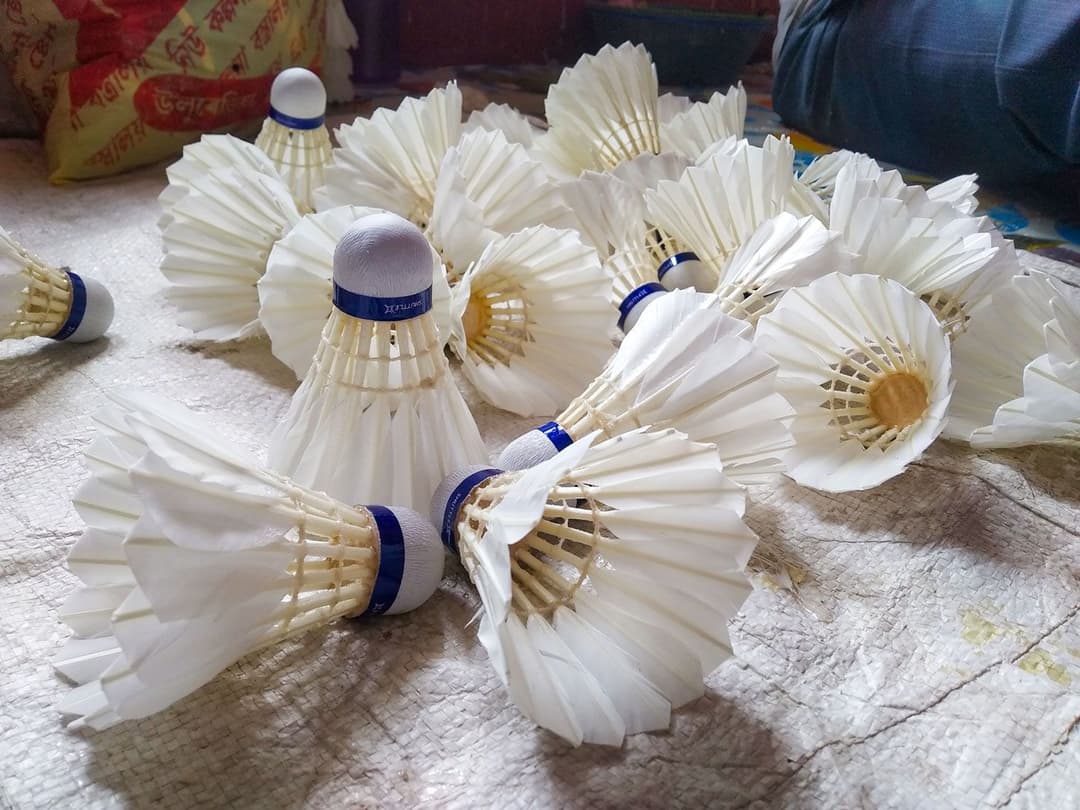
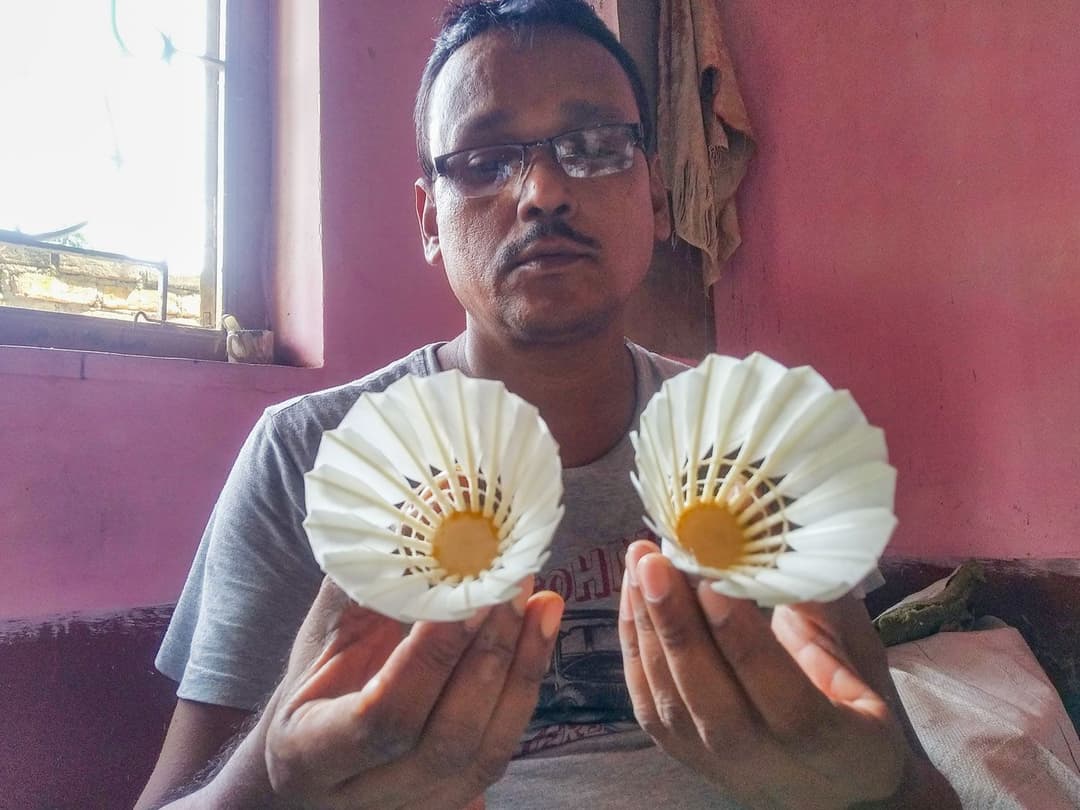
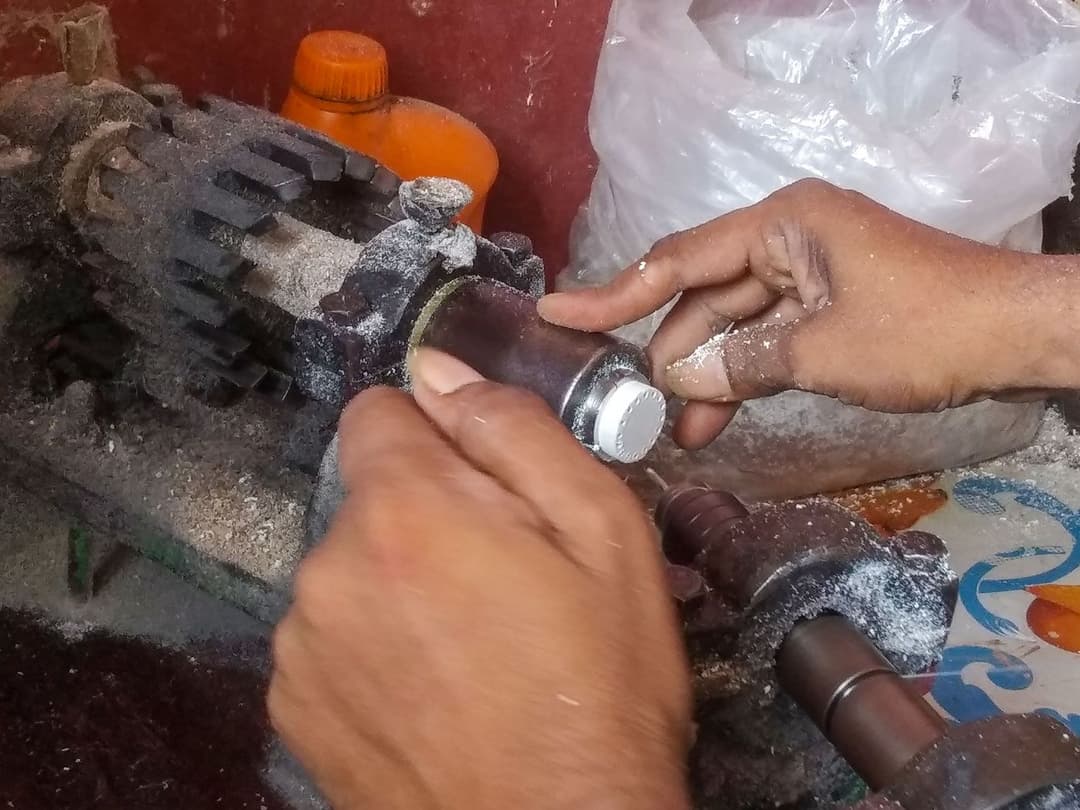
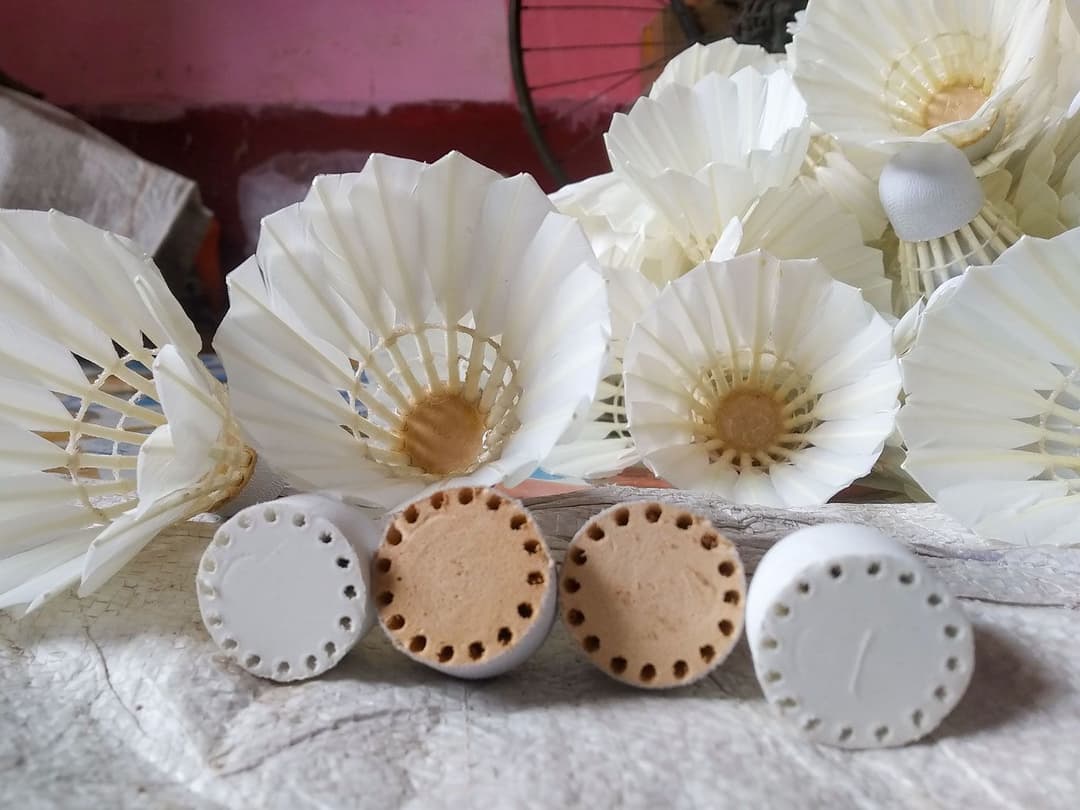
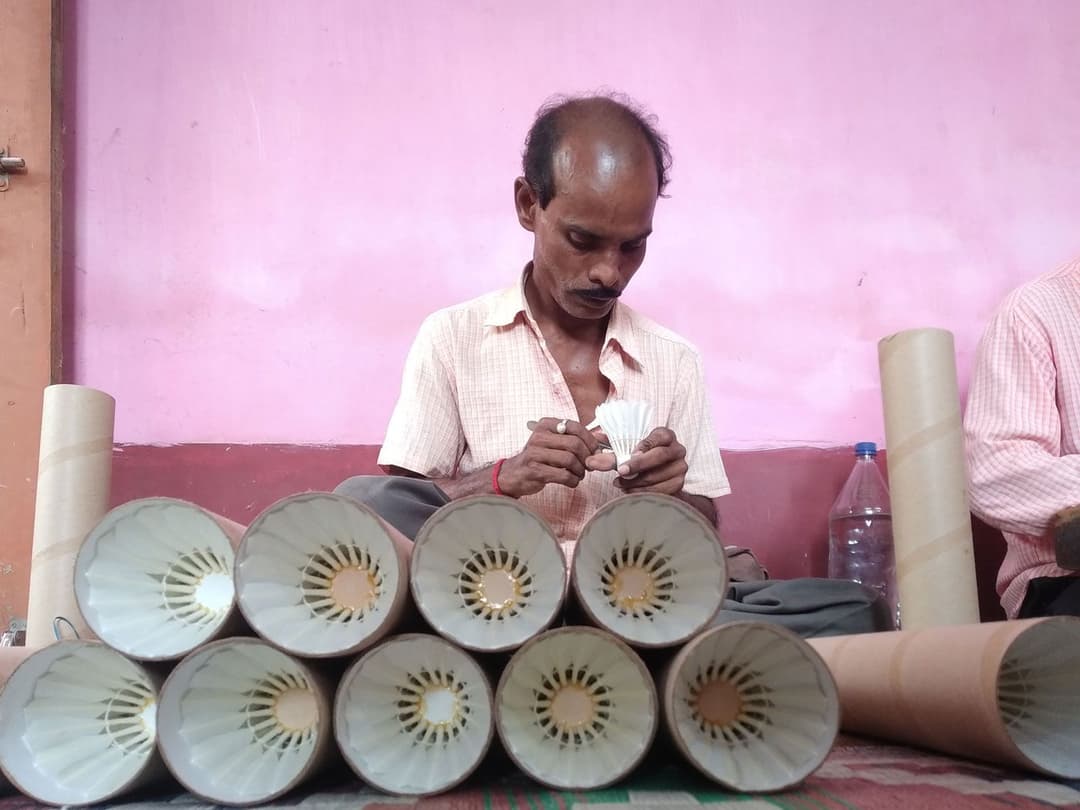
We are on the ground floor of Naba Kumar's three-storeyed house in Uluberia. The air inside the workshop is filled with the sound of scissors snipping and iron shears cutting. This is where India’s badminton shuttlecocks are made. “White duck feathers, synthetic or wooden hemispherical cork base, nylon mixed with cotton thread and glue are what make a shuttle,” he explains, picking one out from a ready-to-dispatch barrel.
It is 8 a.m. on a sunny and humid Monday morning in late August, 2023. We don’t know yet, but five weeks later, Indian shuttlers will grab the country’s first-ever Asian Gold, beating the South Koreans 21-18; 21-16.
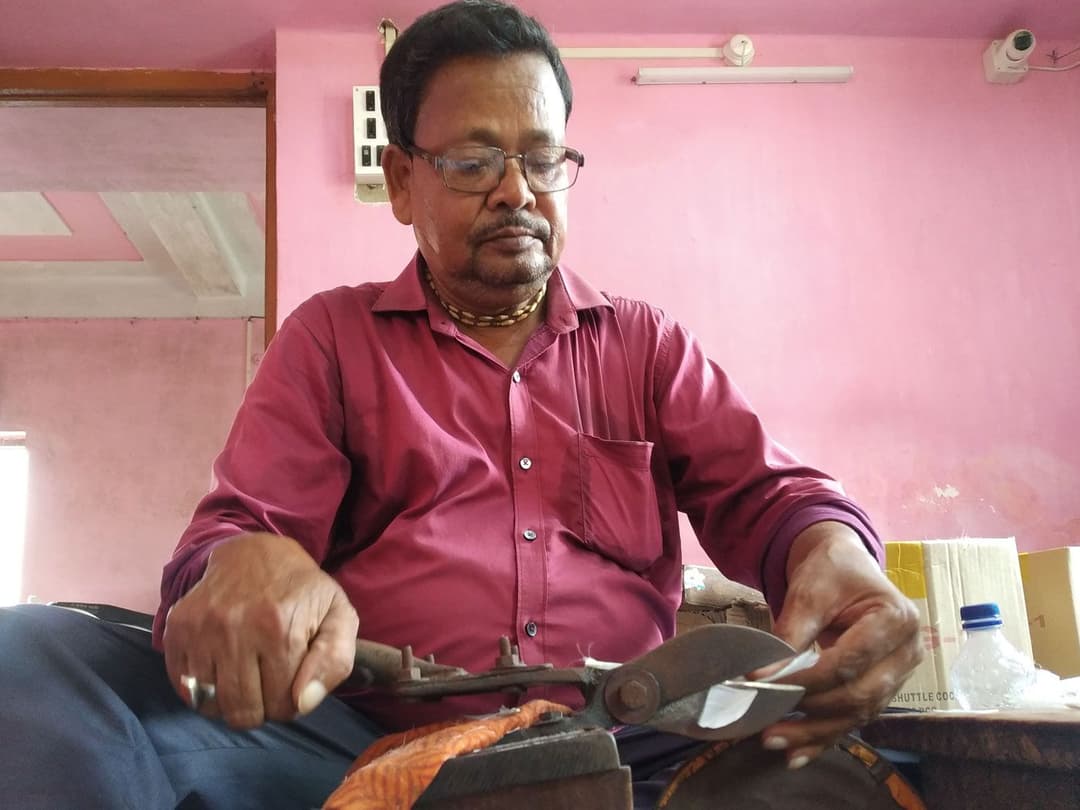
Here in Uluberia, slippers and cycles of karigars (craftsperson) are already lined up at the entrance of the production unit. Dressed in an ironed, full-sleeve maroon shirt and formal pants, Naba Kumar too is ready for the day.
“I started making badminton balls with hans-er palak [duck feathers] when I was 12 at a karkhana in my village Baniban,” says the 61-year-old who began his journey in this industry as a feather-shaper. Using hand-held iron scissors, he would cut three-inch long feathers to shape. Karigars refer to shuttlecocks as ‘balls’.
“The first factory [in Bengal] was J. Bose and Company that came up in the 1920s in Pirpur village. Gradually J. Bose’s workers opened their own units in nearby villages. I learnt the craft in one such unit,” he adds.