
“That evening when my water broke, I was in extreme pain. It had been snowing for the past three days. Whenever that happens and there’s no sunlight for days, our solar panels don’t get charged.” Shameena Begum, 22, is talking about the time of birthing her second baby in Wazirithal village of Jammu and Kashmir’s Bandipore district. A village where the sun does not shine long enough, or even regularly – where people rely on their only source of energy: solar power.
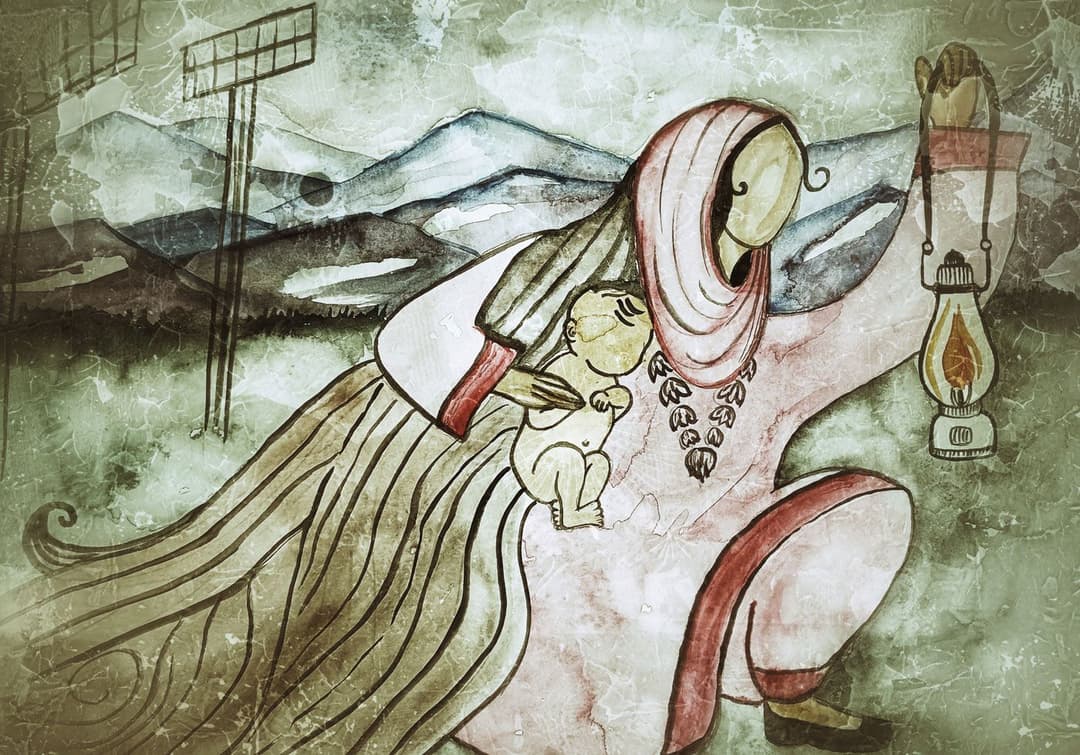
“Our house remained dark but for a kerosene lantern,” Shameena continued. “So, my neighbours came together that evening, each with her lantern. Five bright yellow flames lit up the room where my mother somehow helped me give birth to Rashida.” It was a night in April 2022.
Wazirithal is one of the most picturesque villages under Badugam gram panchayat. A 10-hour drive from Srinagar, including four and a half hours of off-roading from Razdan Pass via Gurez valley, half a dozen check-posts, and a final 10-minute walk, is what it takes to reach Shameena’s home. That is the only way.
The houses of 24 families in this village in Gurez valley, just a few miles away from the Line of Control, are made from deodar wood and coated with mud from the inside for thermal insulation. Old yak horns, sometimes original, sometimes a wooden replica painted green, adorn the main doors of the houses here. The windows, almost all of them, open to the sights on the other side of the border.
Shameena is seated on a pile of wood outside her house with two of her children – two-year-old Farhaz and four-month-old Rashida (names changed) – soaking in the last rays of the evening sun. “My mother tells new mothers like me to sit in the sun, mornings and evenings, with our newborns every day,” she says. It is still August. The snow has not yet colonised the valley. But there are still cloudy days, occasional rains, and days without the sun, without electricity.


