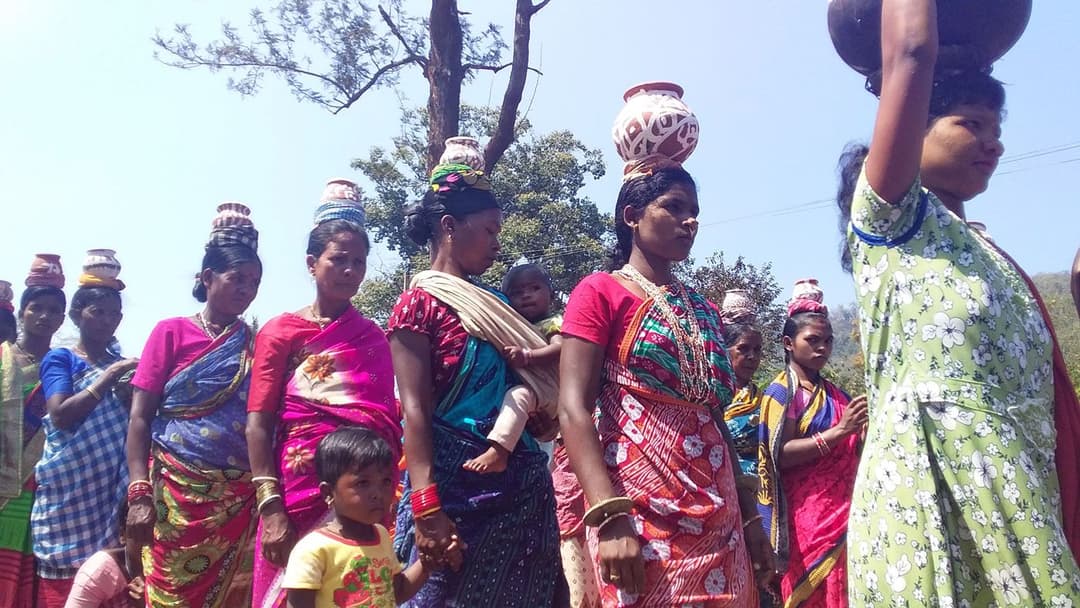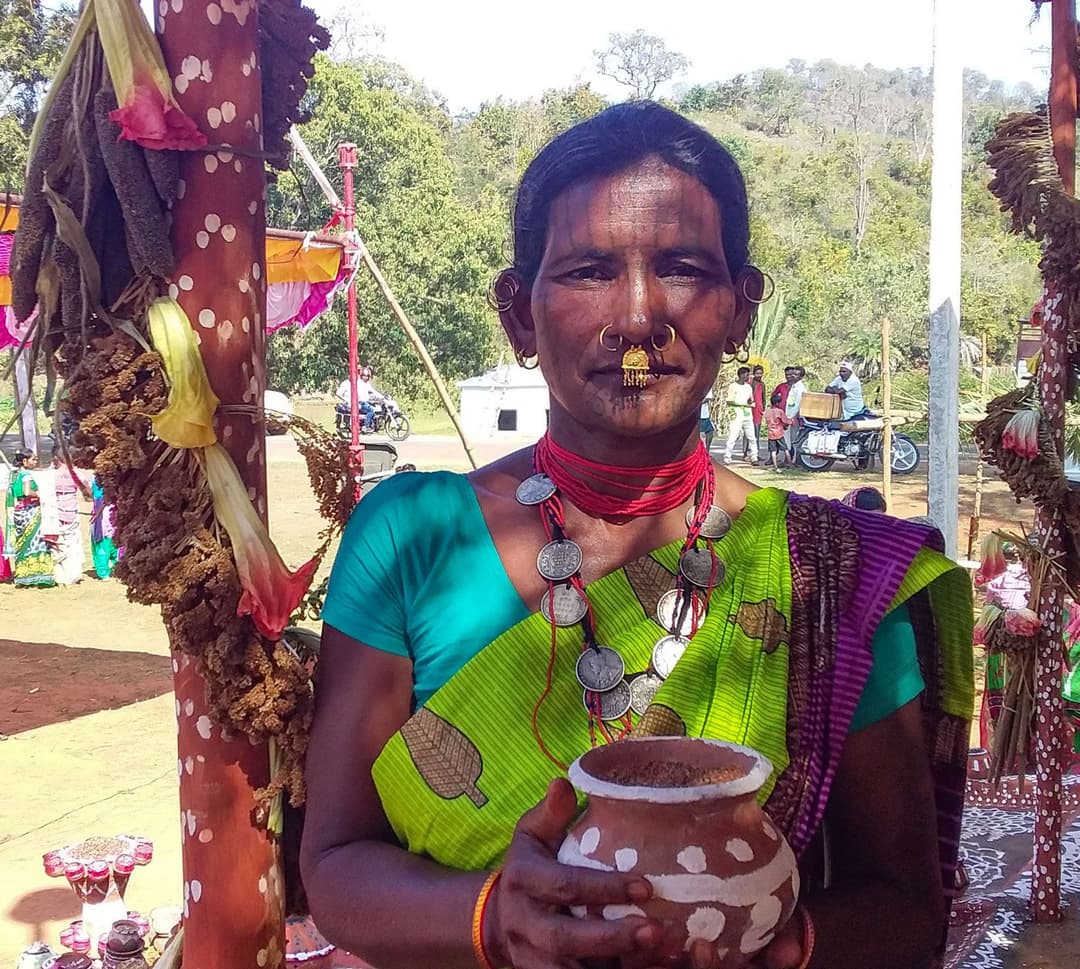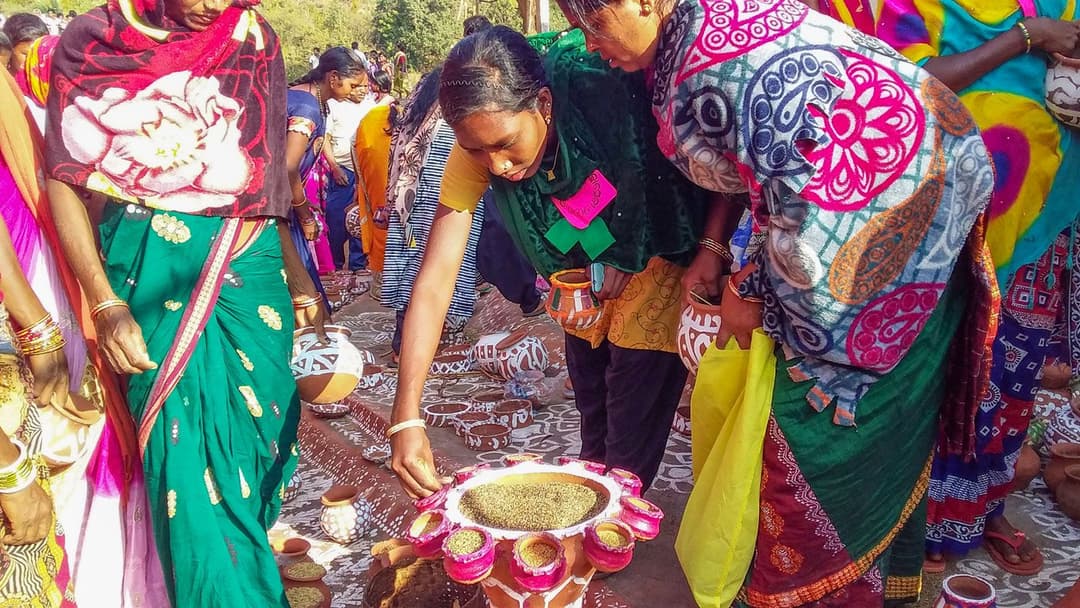

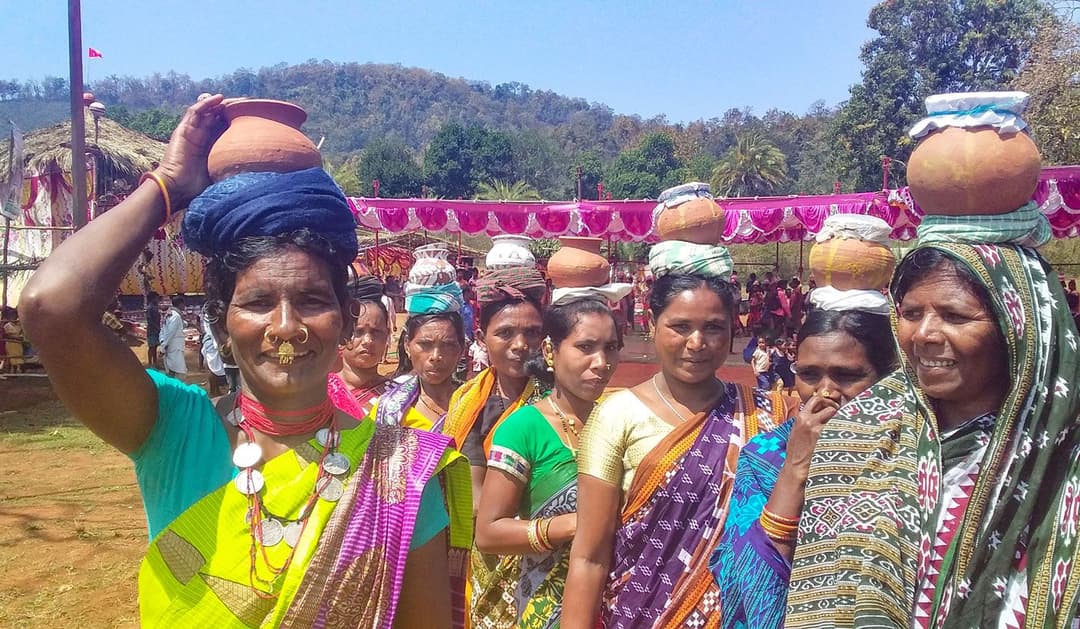
“This festival gives us hope,” said Balabati Majhi. She and other Adivasi women from the Kutia Khond community were preparing to attend the local indigenous seeds festival. Their village, Burlubaru, surrounded by hills and dense forest, was bustling with the preparations. The women were singing and dancing to the beats of traditional drums, the dhap and tamuk, holding small earthen pots filled with indigenous seeds on their heads.
They had gathered at the shrine to Dharani Penu (Earth Goddess) at the centre of their village. After a puja performed by the village priest, they starting moving in a procession to the festival site – an open field near their village in Tumudibandha block of Odisha’s Kandhamal district,
“We perform a puja for a good harvest. Sometimes, we also offer our deity a goat and hen. A good harvest feeds us the whole year. At the festival, we exchange seeds with others, so we also pray for a good harvest for those who take seeds from us," said 43-year-old Balabati, whose family cultivates millets and maize on two acres.
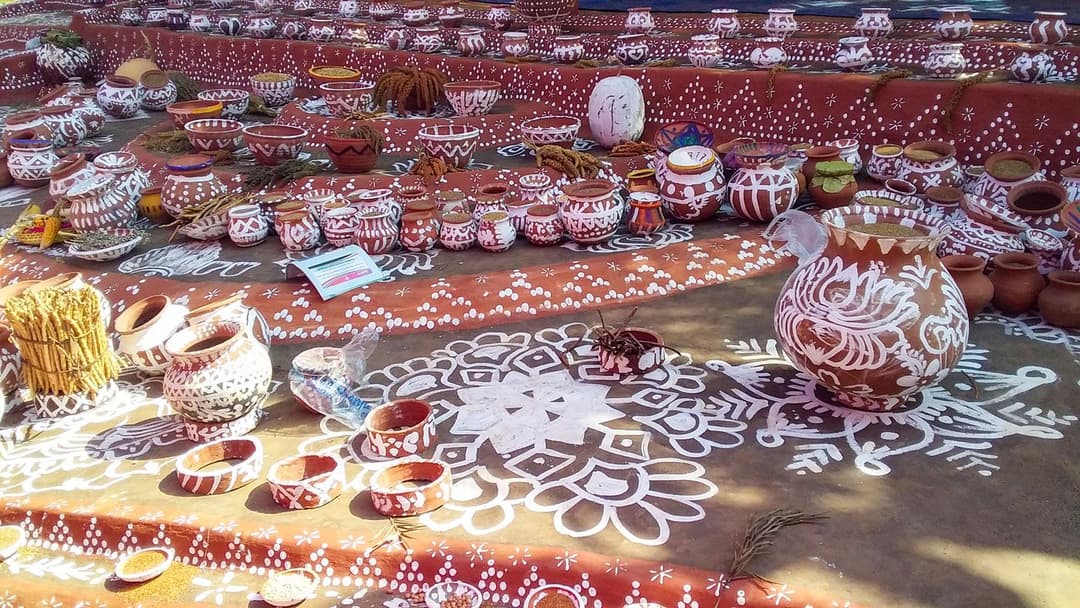
Balabati and around 700 Adivasi women farmers from the villages of Kotagarh, Phiringia and Tumudibandha blocks attended the annual seeds festival this year. Organised around the time of the harvest in March, the event is an occasion to exhibit and exchange traditional seeds, revive lost varieties and speak of farming practices.