
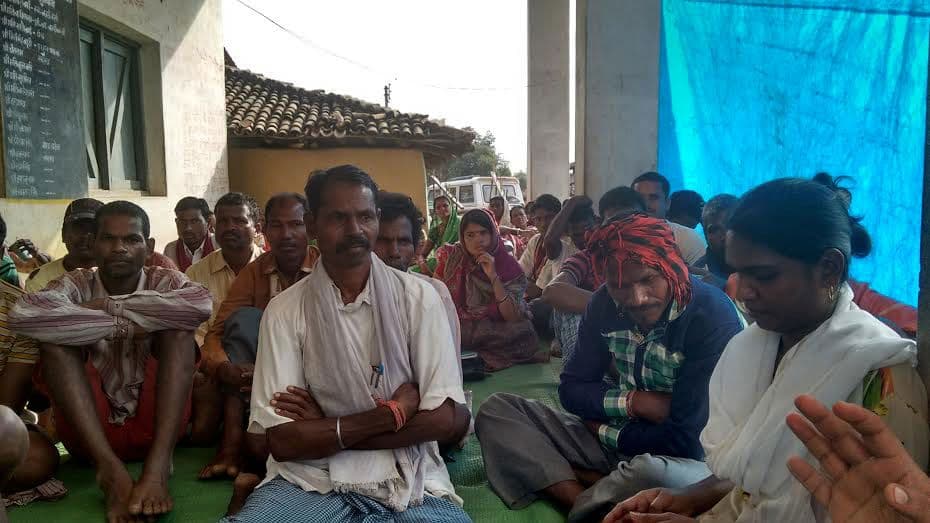
"They said our life will change for the better, but they have betrayed us," says Pritam Kunjam of Junwani village. ‘’After taking our land, officials have given us back only a small portion on lease and tried to make us believe that is all we own. Some of us have lost our homes, farms and yards. But what we have truly lost is our grasslands, forests, public land, cemeteries and playgrounds. We have been going to the government offices to get our land back for months.”
The people of Junwani in Dhamtari district of Chhattisgarh, 140 kilometres from Raipur, launched a struggle in December 2015 to get their land back. They are fighting for their entitlements under the Scheduled Tribes and Other Traditional Forest Dwellers Act, or the Forest Rights Act (FRA). The legislation, enacted in December 2006, came into force on January 1, 2008. The FRA provides for restitution of traditional forest rights to forest inhabitants across India. It grants community rights to use minor forest produce and grazing lands, and individual titles to land that Adivasis were farming as on December 13, 2005.
While the Chhattisgarh government claims to be ahead of other states in leasing lands under the FRA, data presented at a workshop on forest rights held on November 15, 2015 in Raipur, where both state and union government officials were present, points to a different reality.
The state government has dismissed 60 per cent of individual claims by Adivasis in the past seven years – or around 512,000 such claims made under the FRA. And contrary to the law, which stipulates 2.5 acres per adult , the Chhattisgarh government has only recognised an average of 2 acres of forestland per family .
When 44 per cent of the land in Chhattisgarh is forested, not granting these rights to people who are entitled to them becomes even more significant. Data presented at the same workshop showed that Tripura and Kerala have dismissed only 34 per cent of similar individual claims.
Junwani has 265 voters according to its panchayat voters’ list – 662 acres are due to them as individual rights. But local activist Benipuri Goswami says that “decades-old records are being used and only 180 acres have been given on individual leases.” Madhu Sarin, president of the executive committee of Vasundhara, a Bhubaneswar-based research and policy group on environment and sustainability issues, says, “Our law allows an adult 2.5 acres of land, but they have given a smaller area, that too only in the name of the father.” Women have not been given any land in Junwani, Kunjam says. “Not a single woman's name has been registered.” And, he says, no identification or map has been provided along with the leases.

