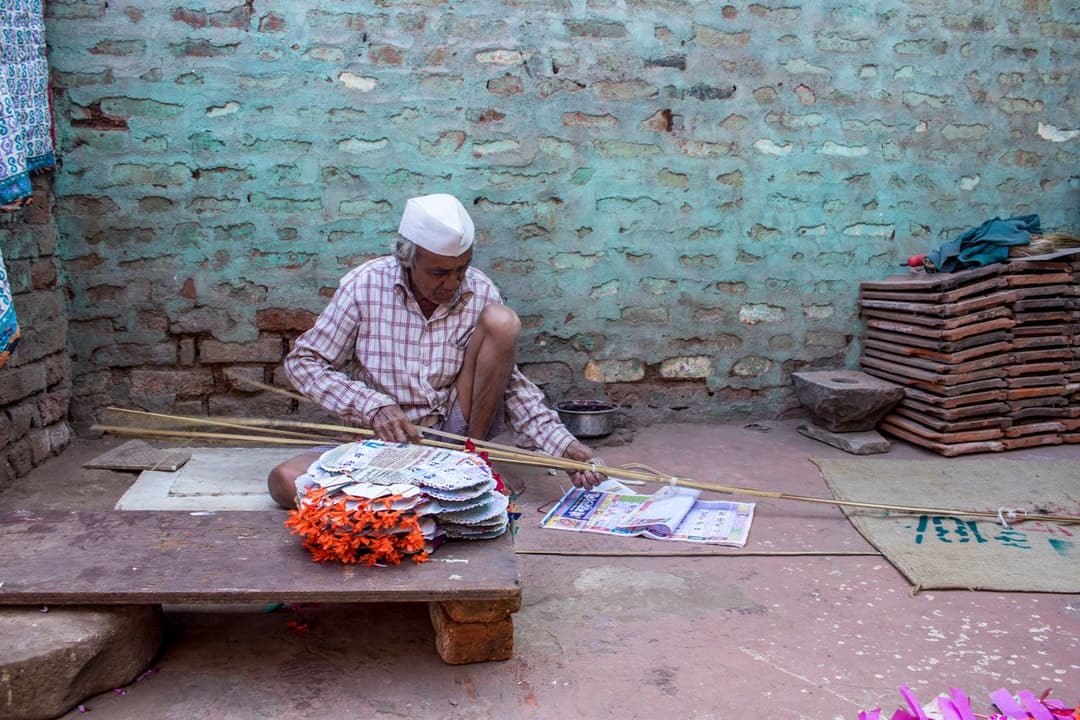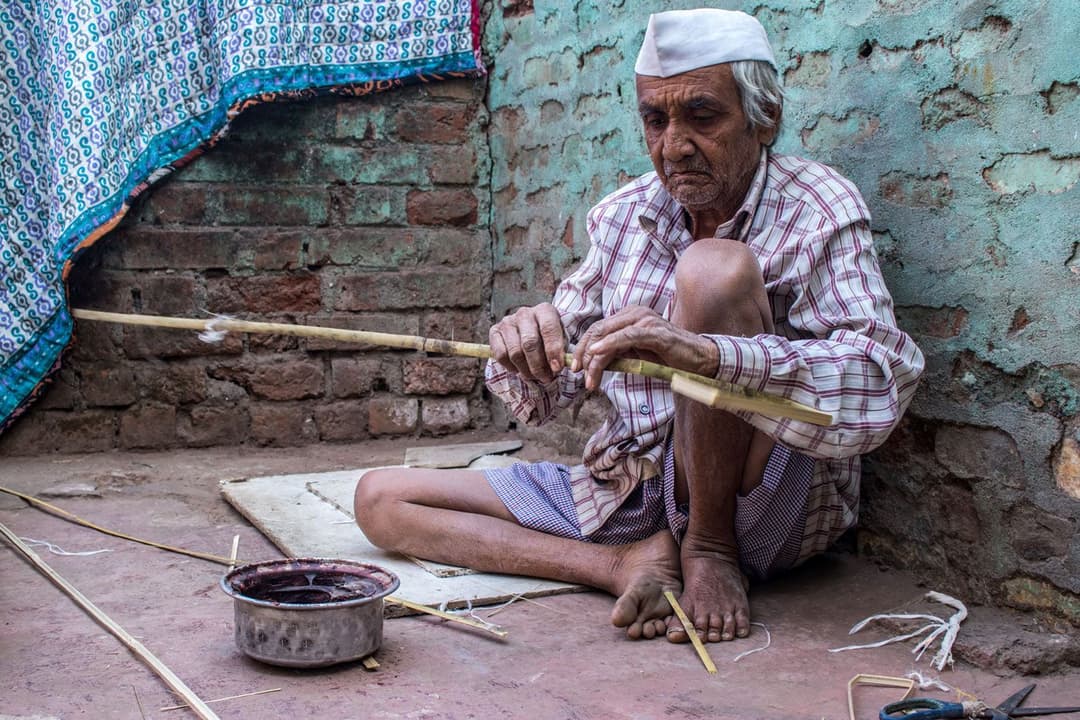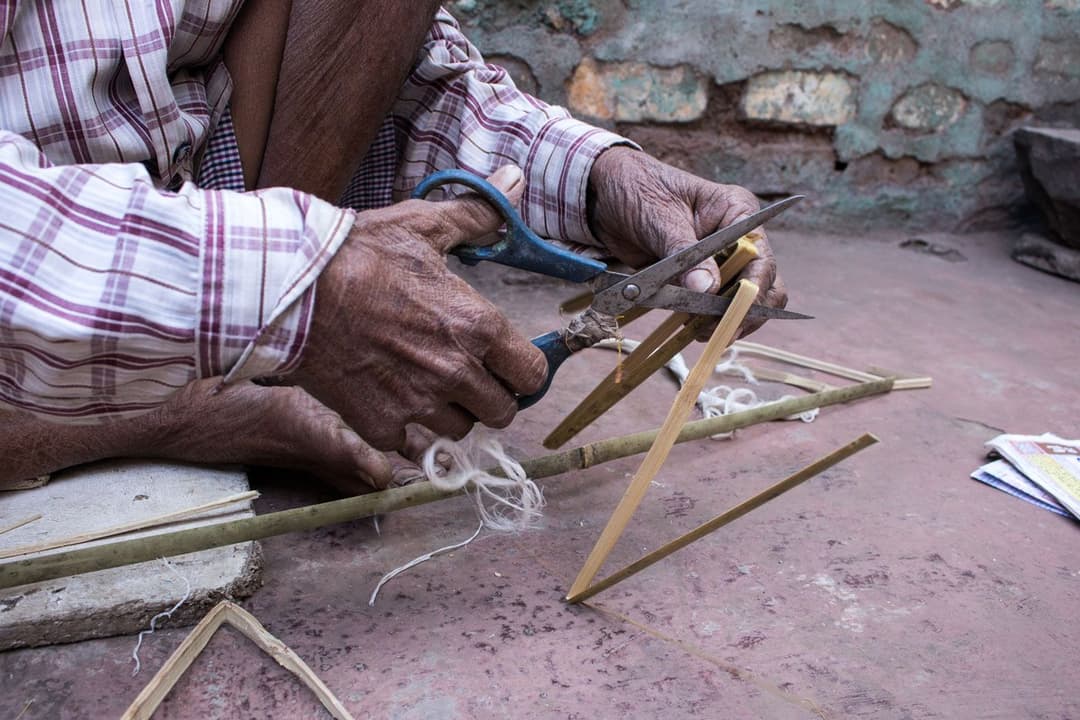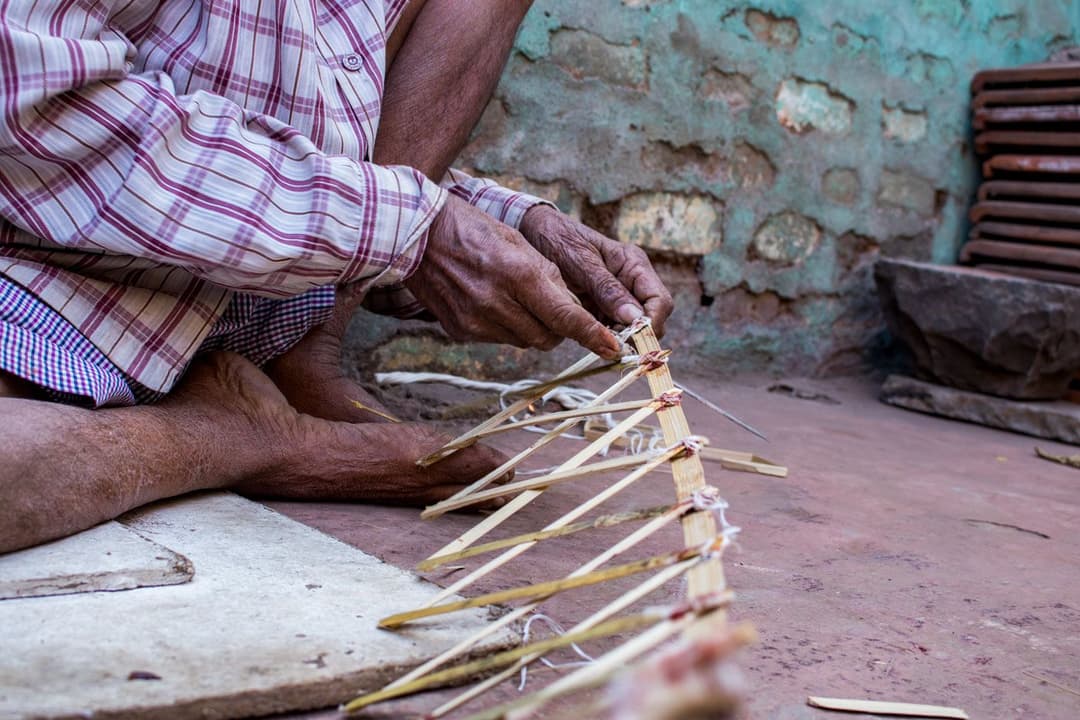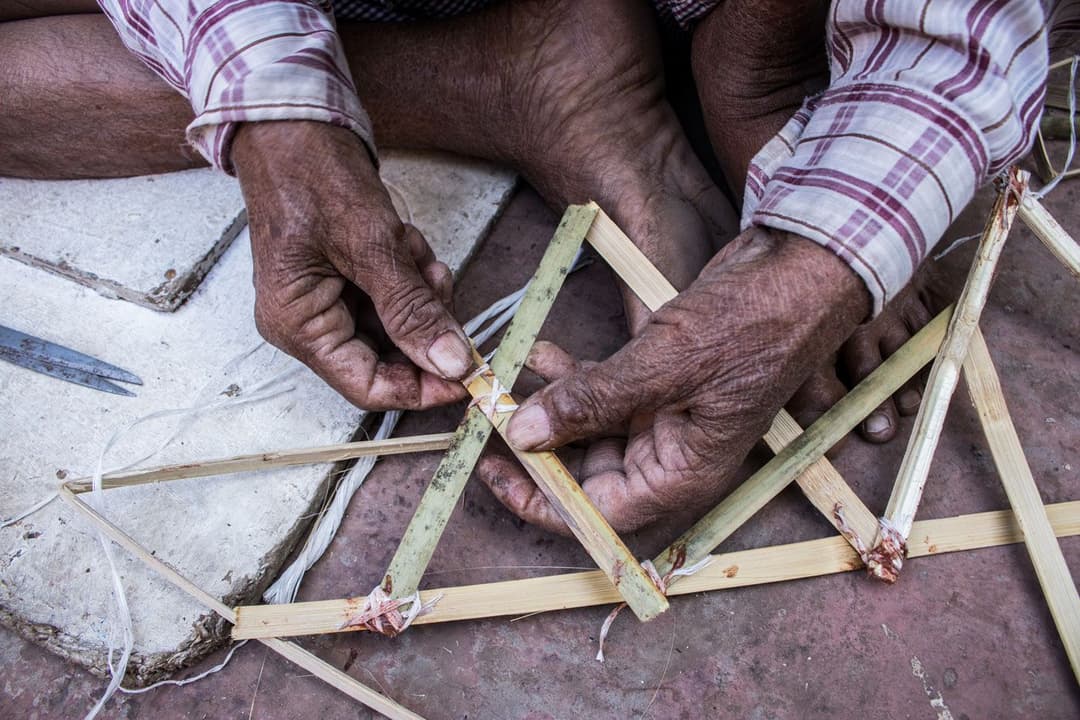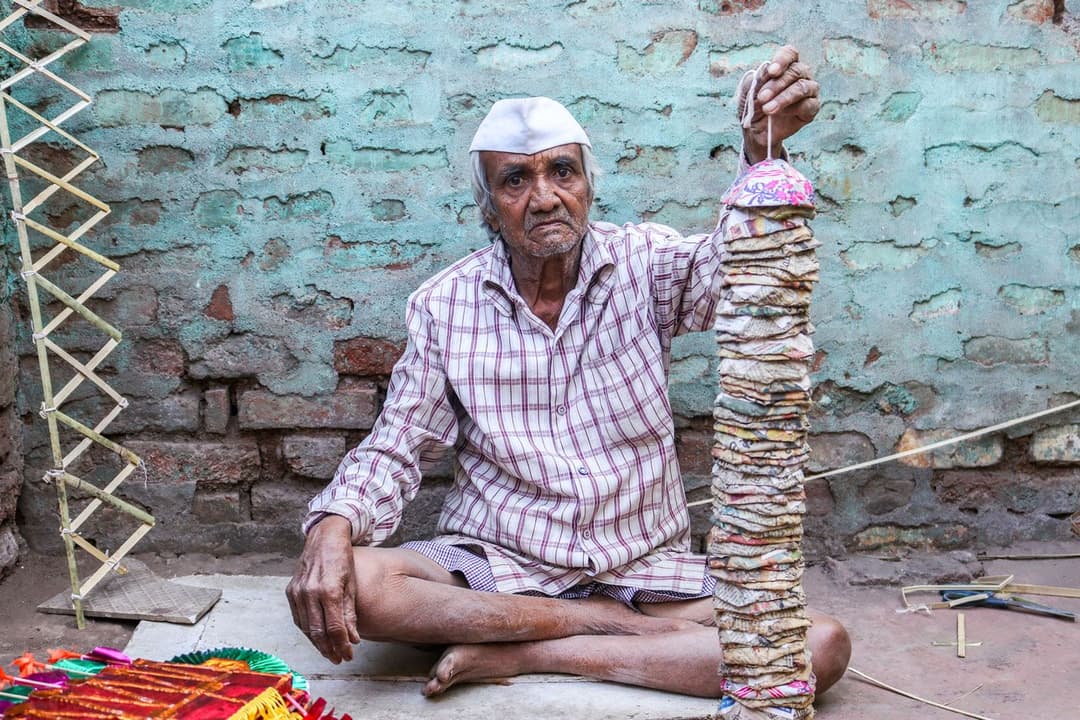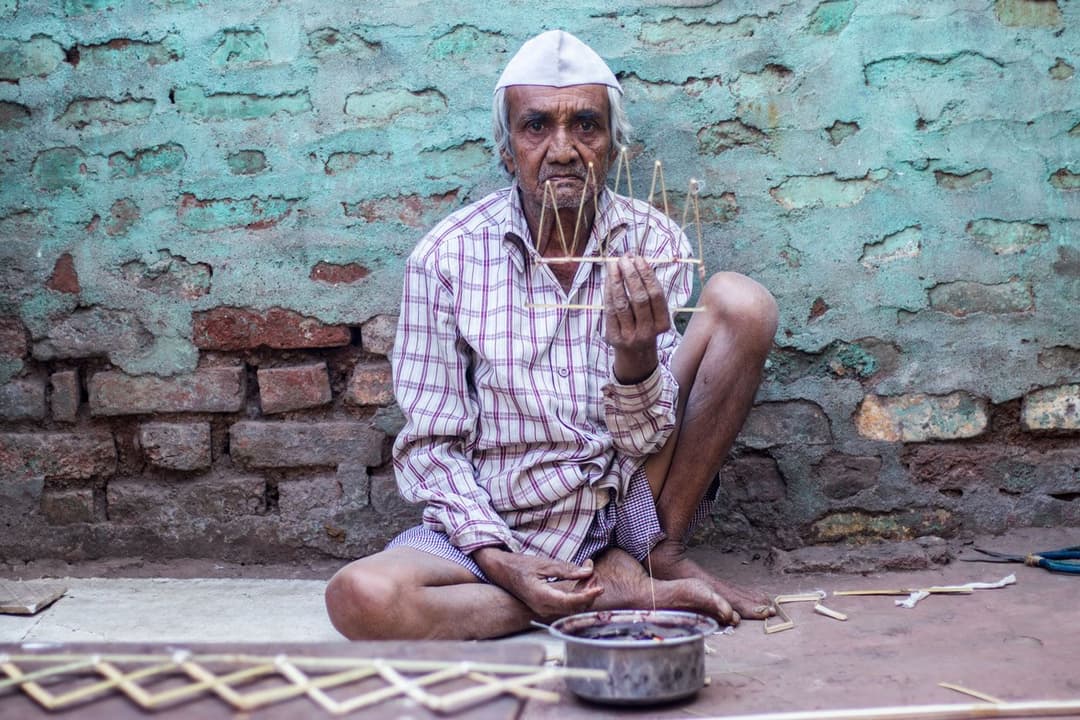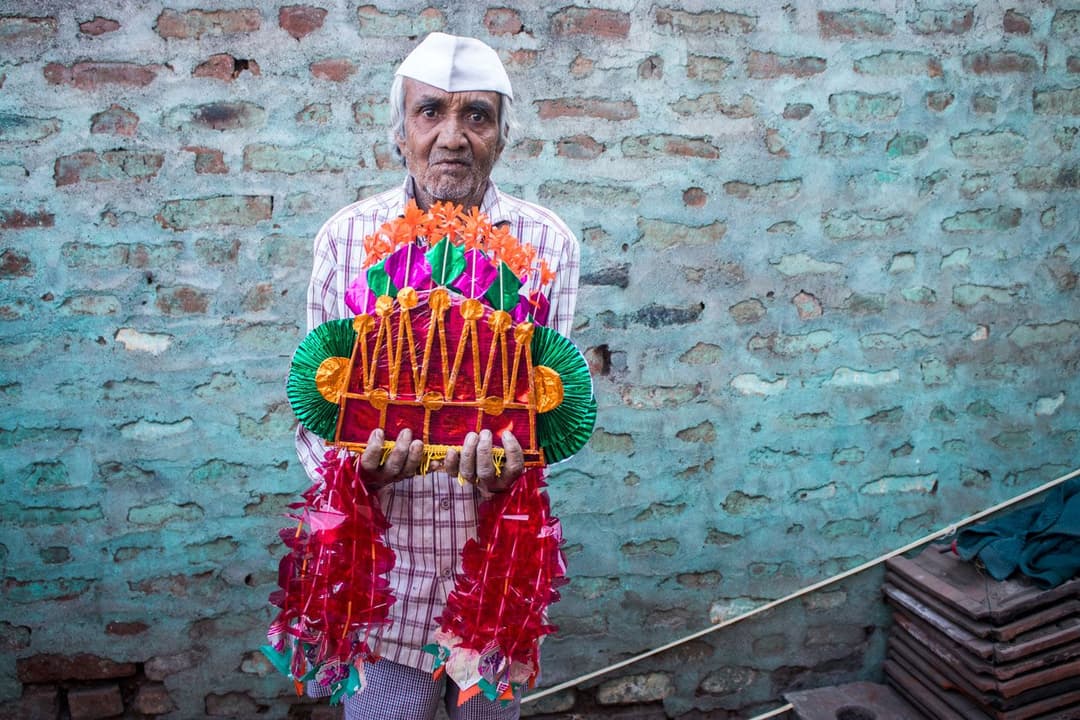


When Muralidhar Jawahire sits down to work, there is no space for error or distraction. His hands move rapidly and in silence, connecting the joints of a toran, tying them together with a coarse cotton thread. The frail frame of the 70-year-old belies the solid concentration that he brings to the bamboo frames he crafts nearly every day.
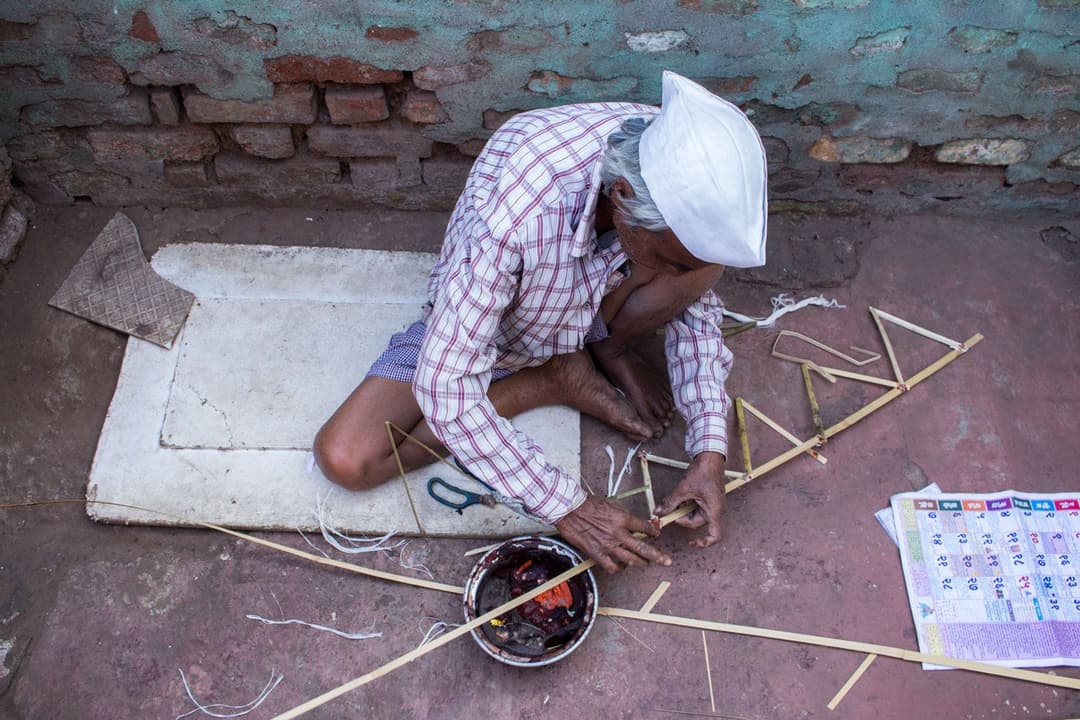
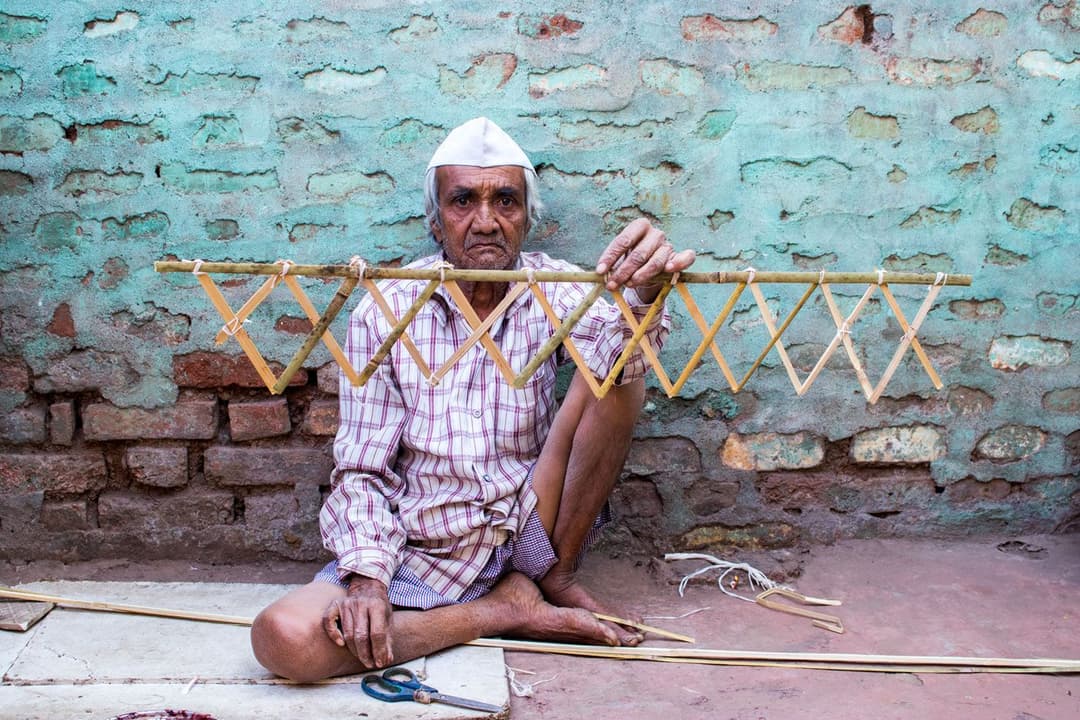
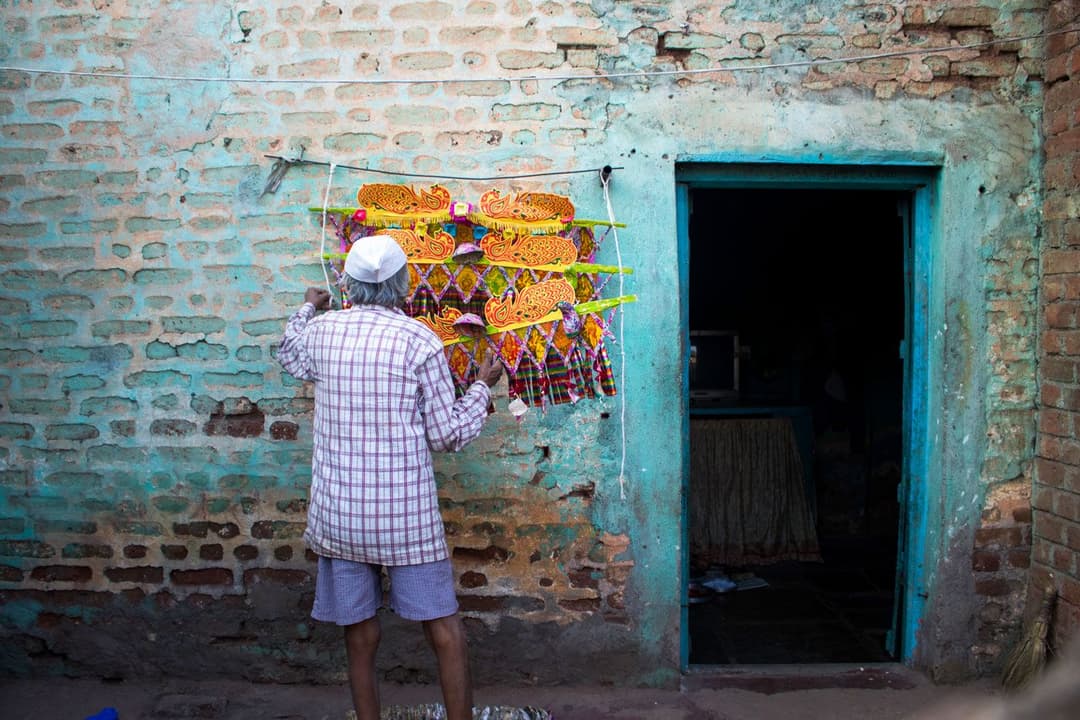
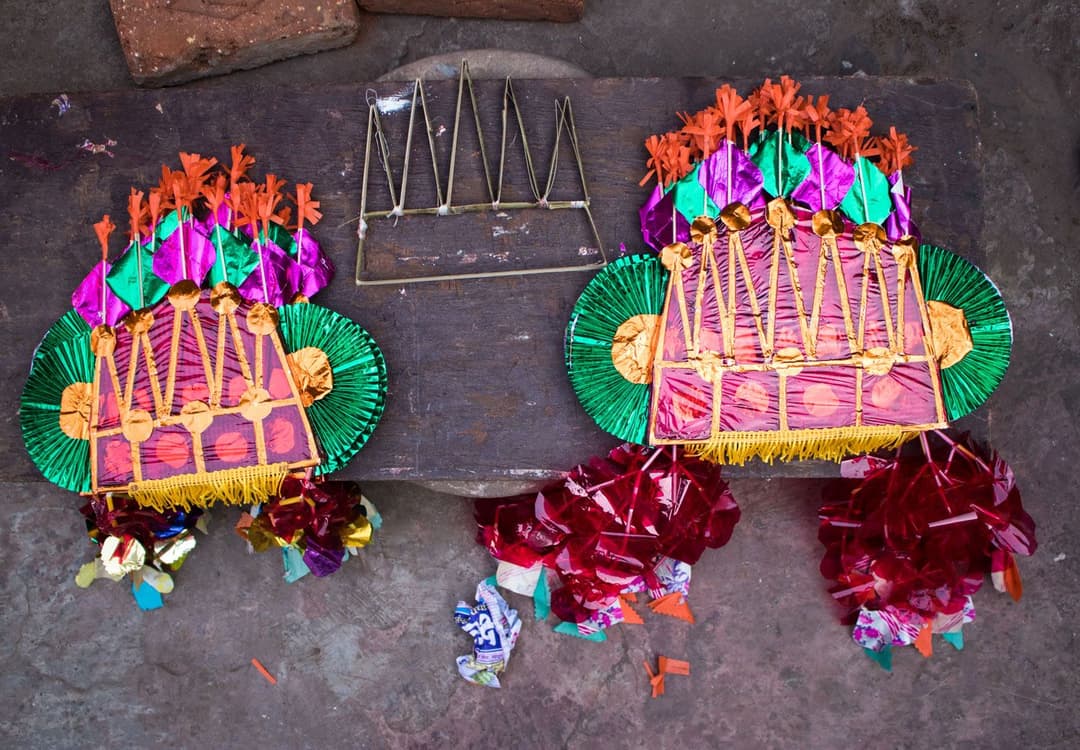
In the workspace outside his turquoise mud and brick house in Maharashtra’s Ichalkaranji town, his work materials are scattered around – bamboo sticks, colourful papers, gelatine paper, old newspapers and more. These will, in a few hours, be turned into intricate torans – garland-like decorations used to adorn the door frames of houses and temples.
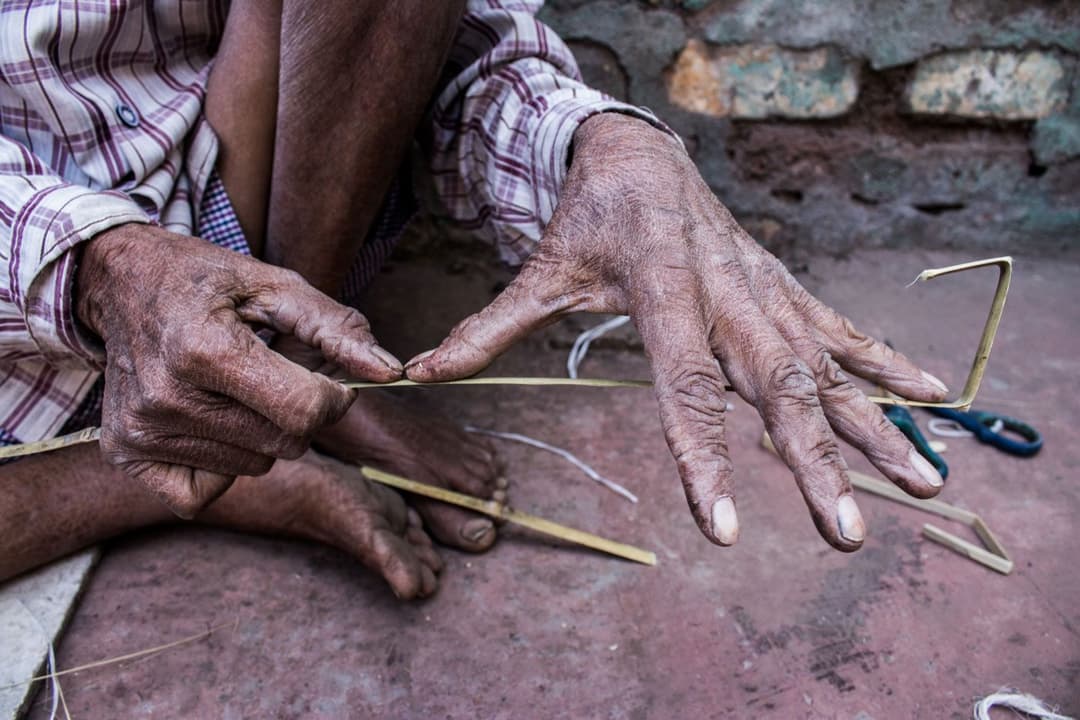
Muralidhar’s wrinkled palms swiftly cut a cross-section of a bamboo stick into 30 pieces of equal size. He then turns these into nine equilateral triangles relying entirely on his intuitive sense of measurement. The triangles are attached to bamboo sticks that are 3 or 10 feet long.
From time to time, Muralidhar dips his fingers into a dented aluminium bowl that contains khal, a type of gum made from crushed tamarind seeds. His wife Shobha, who is in her early 60s, has made it that morning.
“He won’t even say a word while working, and no one can interrupt him,” she says.
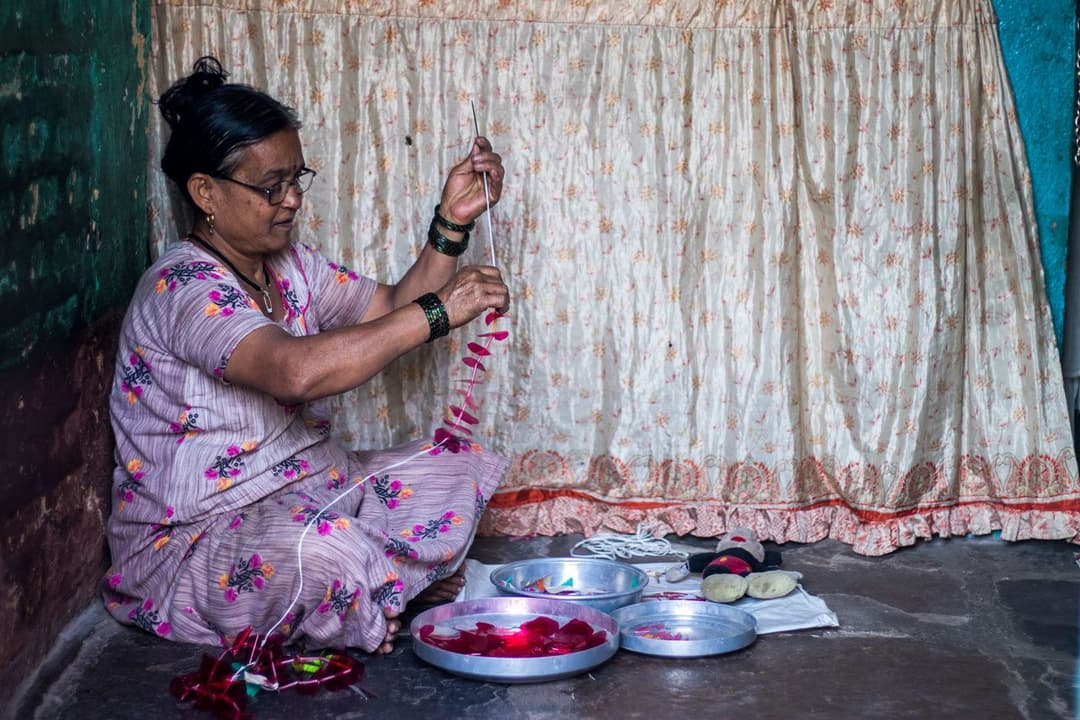
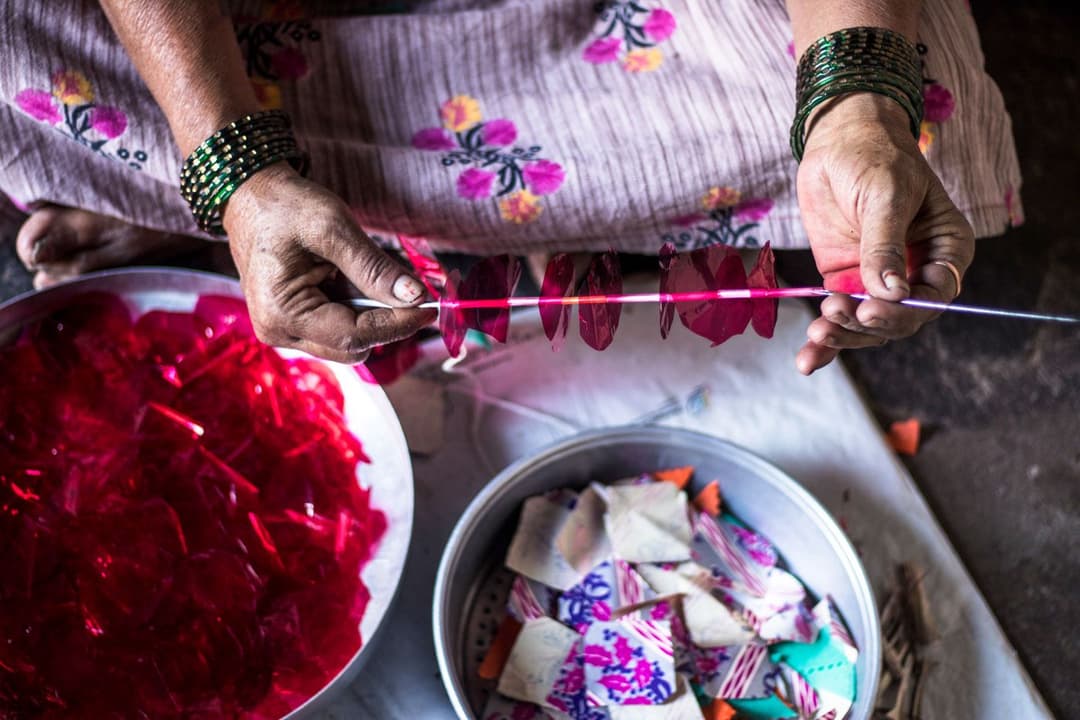
While Muralidhar continues silently making the bamboo frames, Shobha prepares for the decoration tasks that follow – she weaves circular pieces of colourful gelatine paper into a tassel. “Whenever I get free from household chores, I start doing it. But this work is a strain on the eyes,” she says.