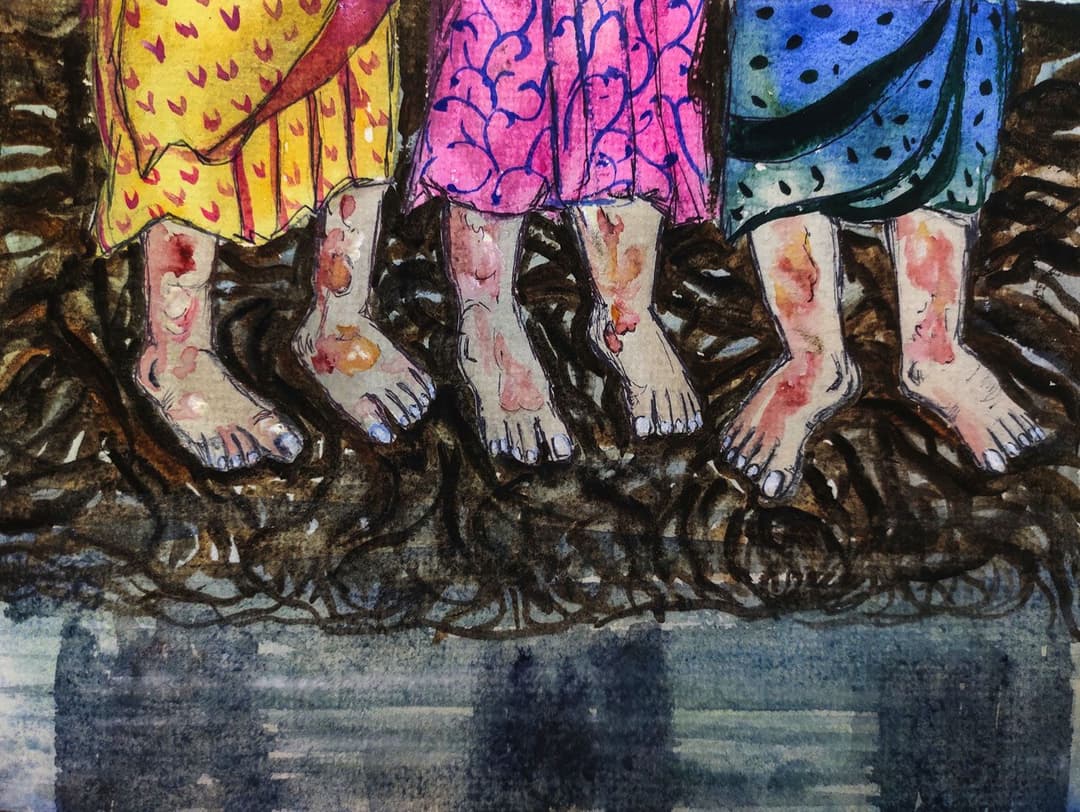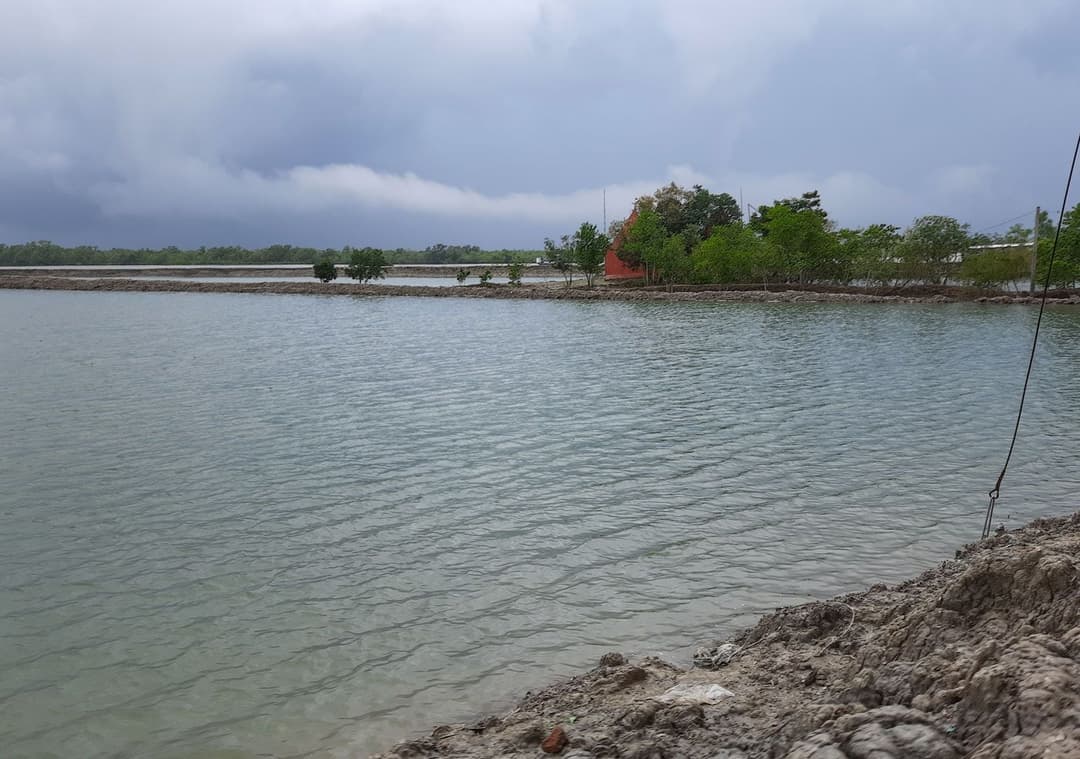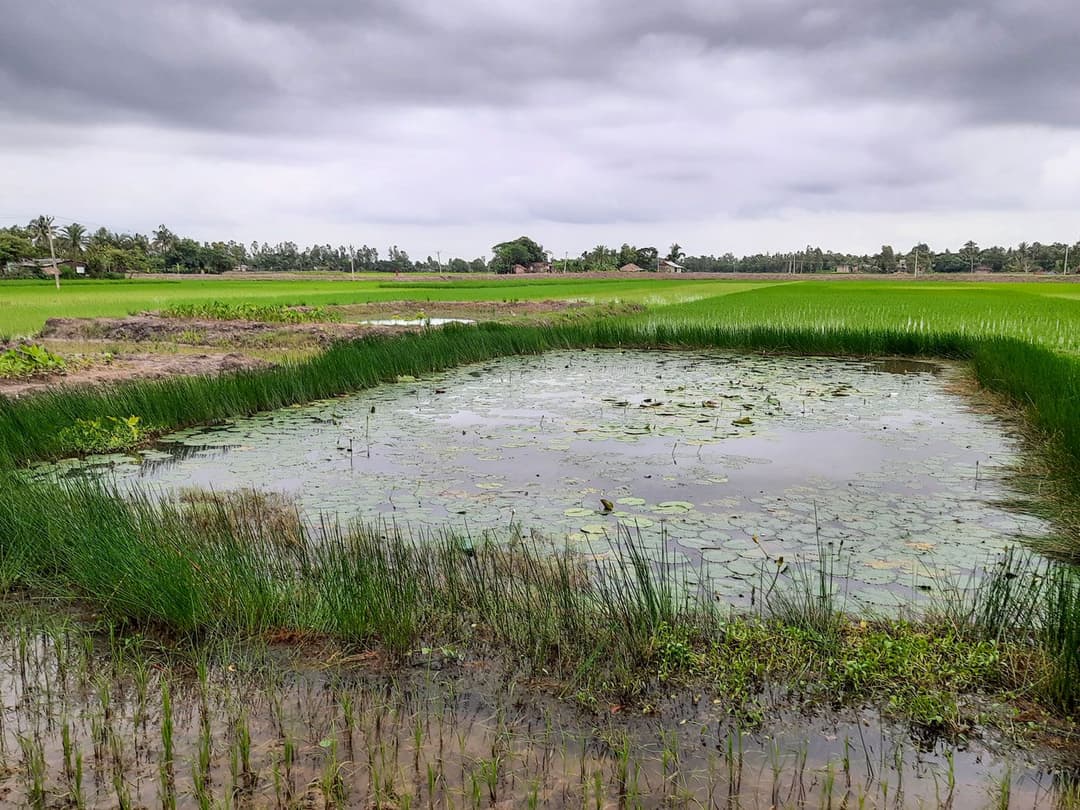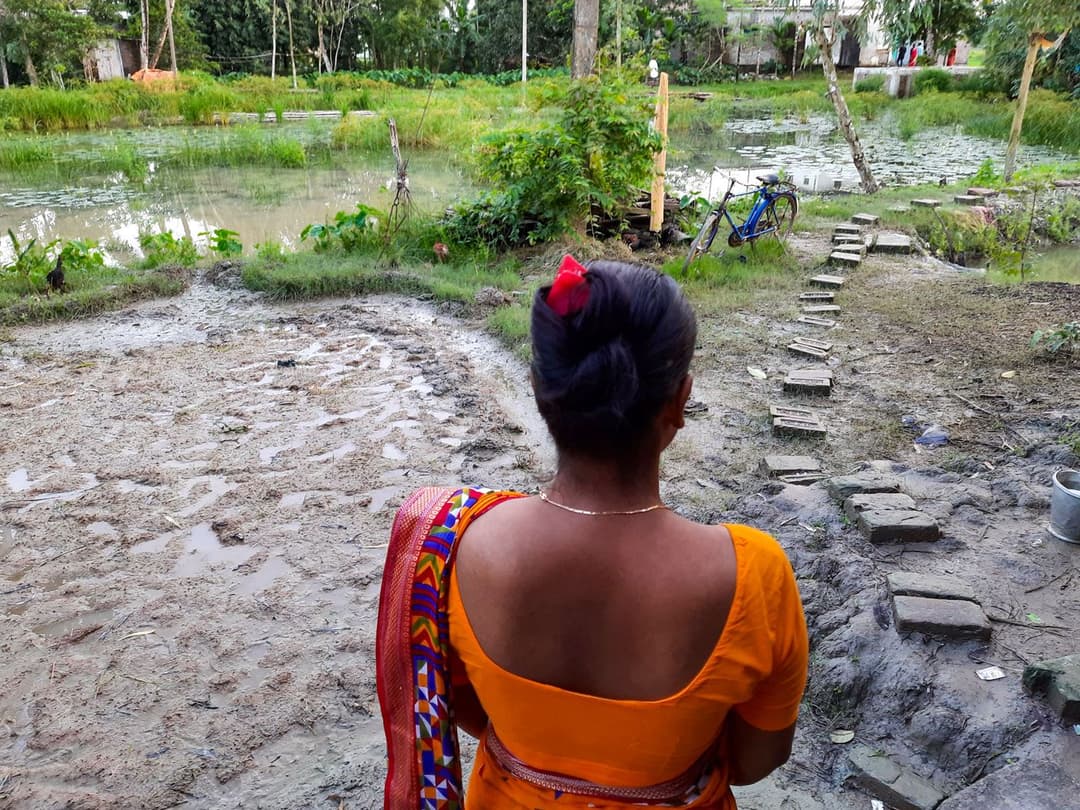


All of 22 and already worn down by health problems for over three to four years, as Meenu Sardar stepped out to fetch water that summer morning in 2021, nothing could have warned her that the worst was about to come. The stepway leading to the pond in Dayapur village was broken in places. Meenu slipped and tumbled down the stairs, falling face down.
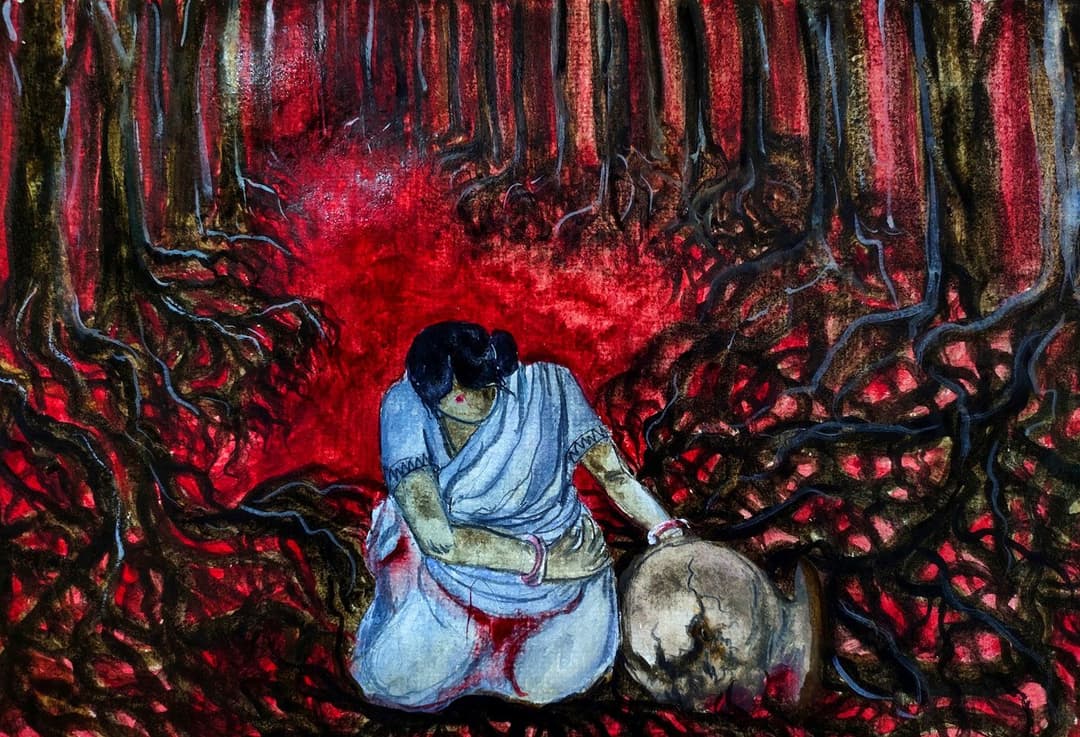
“I had excruciating pain in my chest and stomach,” she recounts in Bengali. “I started bleeding from the vagina. When I went to the bathroom, something slipped out of me and fell to the floor. I noticed a flesh-like substance coming out of me. I tried to pull it out, but I couldn’t extract the whole thing.”
A visit to a private clinic in a nearby village confirmed the miscarriage. Meenu, tall, thin, and wearing a smile despite her worries, had irregular menstrual cycles since then, along with acute physical pain and emotional distress.
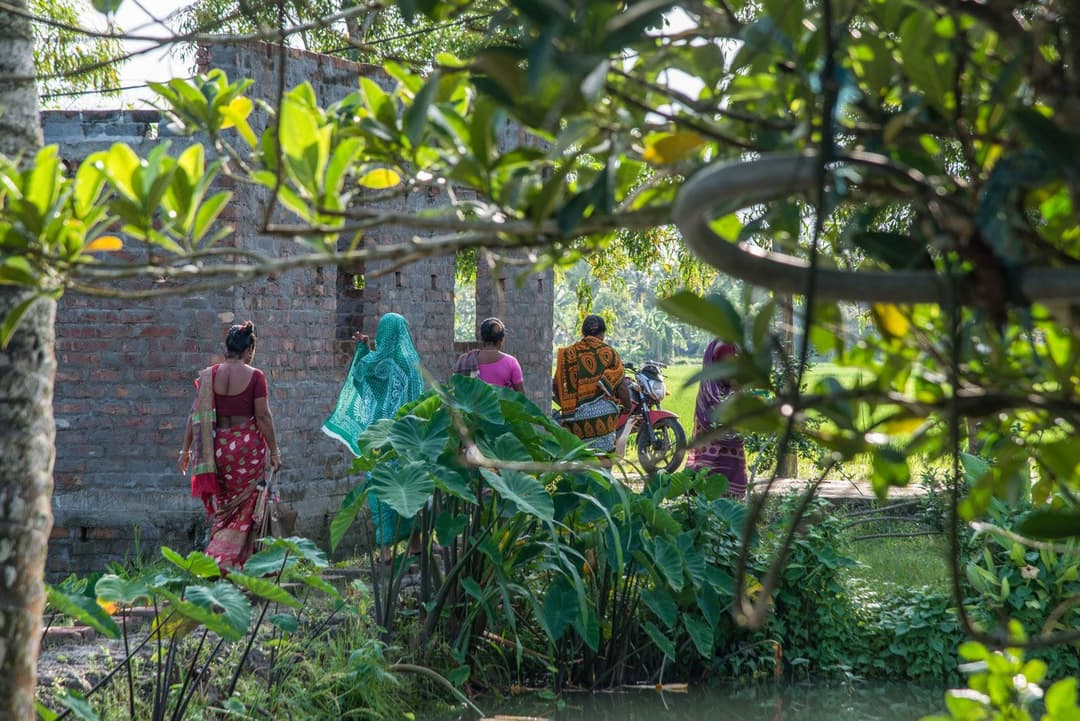
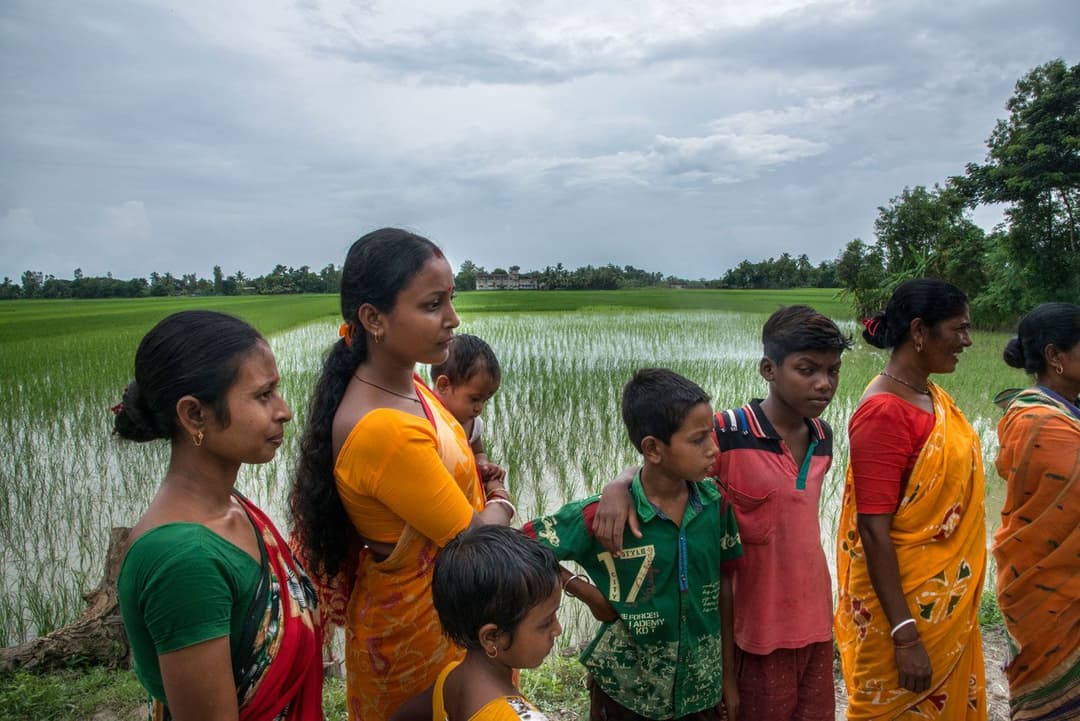
Her village in the Gosaba block of West Bengal’s South 24 Parganas district has a population of about 5,000. Lush with sprawling paddy fields and the mangrove forests of the Sundarbans, it is among only a handful of interior villages in Gosaba that are connected by road.
Meenu was bleeding without a break for more than a month after the fall, and that was not the end of her suffering. “Sharirik somporke eto byatha kore [sexual intercourse is so painful],” she says. “It feels as if I am being torn apart. When I have to pass stools and exert pressure, or when I lift heavy objects, I can feel my uterus coming down.”