
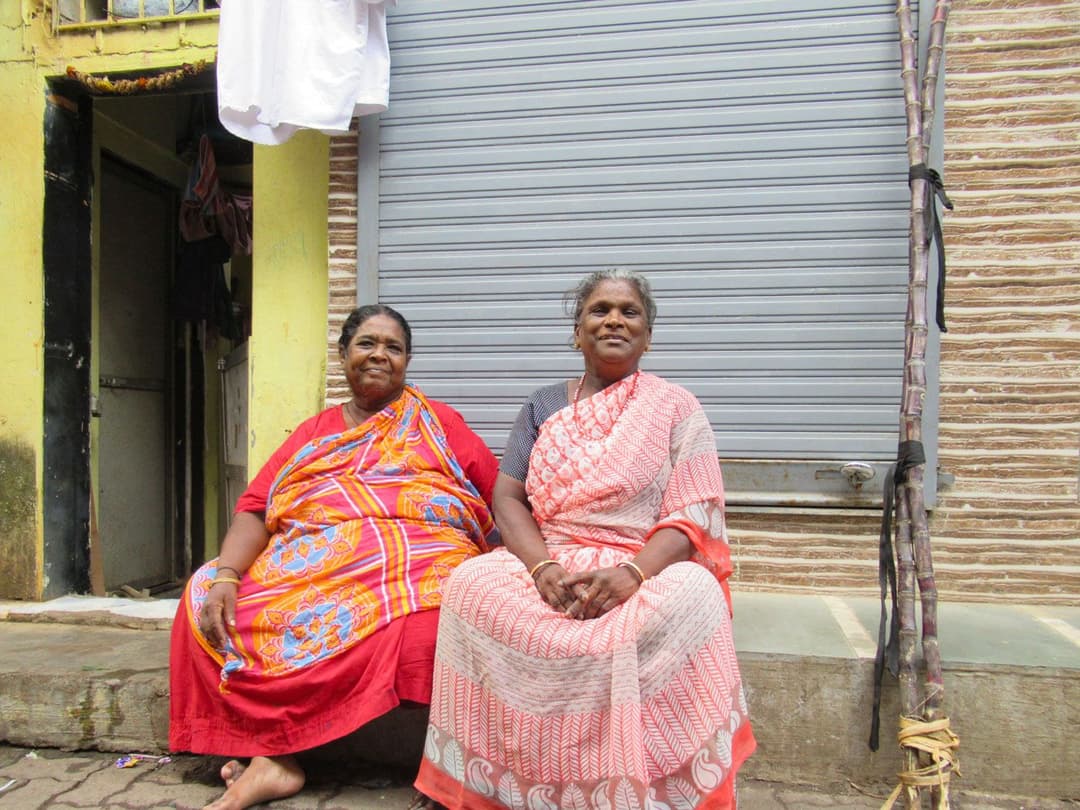
“Using hair colour will make your hair more white,” declares Pushpaveni Pillai. “Like this,” she emphasises, pointing to a tile of the white-blue chequered floor. In her late 60s, she has just a few strands of grey herself. “Coconut oil and Lifebuoy soap only,” she insists, stressing the ‘only’ in English – that’s the key.
She is sitting on that tiled floor one afternoon and speaking of years past and times present. “In my mother’s time,” she says, “her mother-in-law would give her a piece of coconut, and she would chew on it while bathing and rub it into the scalp – that was her coconut oil.”
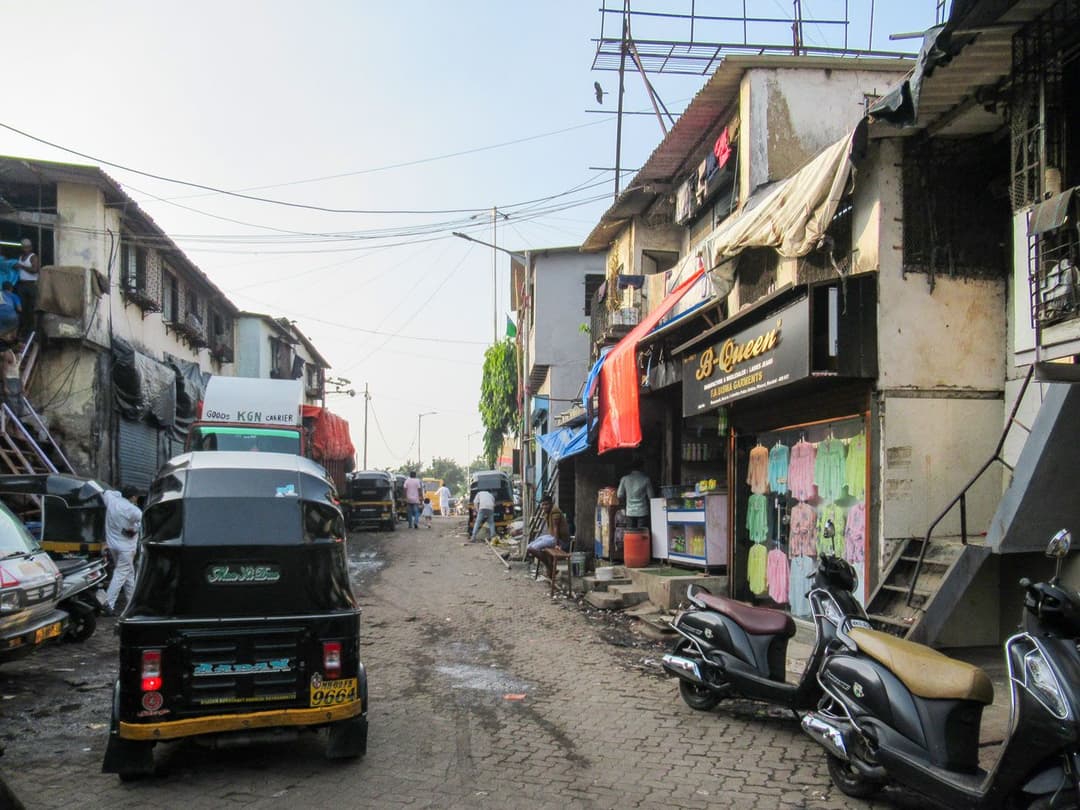
Vasanti Pillai, sitting next to her, solemnly concurs. Both women (distantly related) have spent around 50 years in single rooms in the same lane in Dharavi. Both speak of a rare contentment with their lives, both are bonded by a decades-long companionship, and both have a roomful of memories of a world that’s changed.
Pushpaveni came to Dharavi as a young bride at the age of 14-15. The wedding was in a mandap in a maidan down the same lane, the boy lived in Dharavi. “He was 40 years old,” she says. So much older? “Yes, he was short-statured [so we didn’t realise], and in those days no one checked these things. The ceremony was followed by a meal of sambar-rice,” she recalls, “vegetarian only.”
She moved into the room that Chinasamy, her husband, had purchased a while ago for Rs. 500 – then a gigantic sum of money. He had a job in a local workshop that manufactured surgical threads and wires – starting with a Rs. 60 salary and retiring in the mid-1990s with a monthly income of Rs. 25,000.