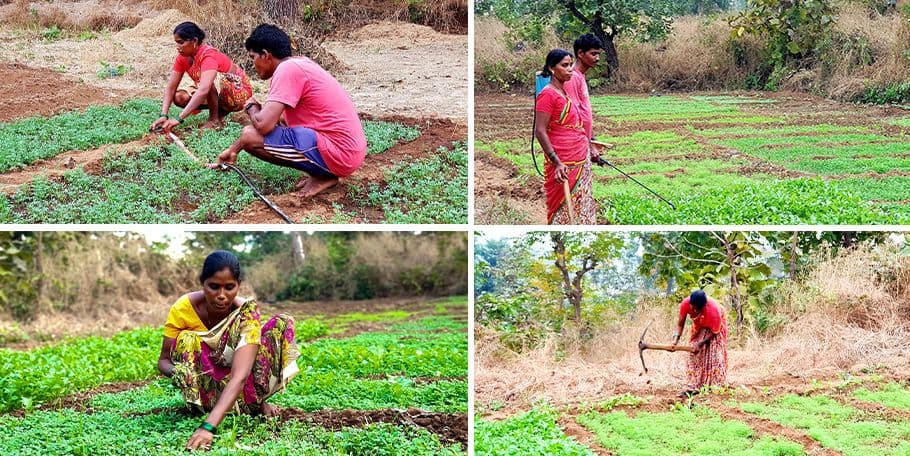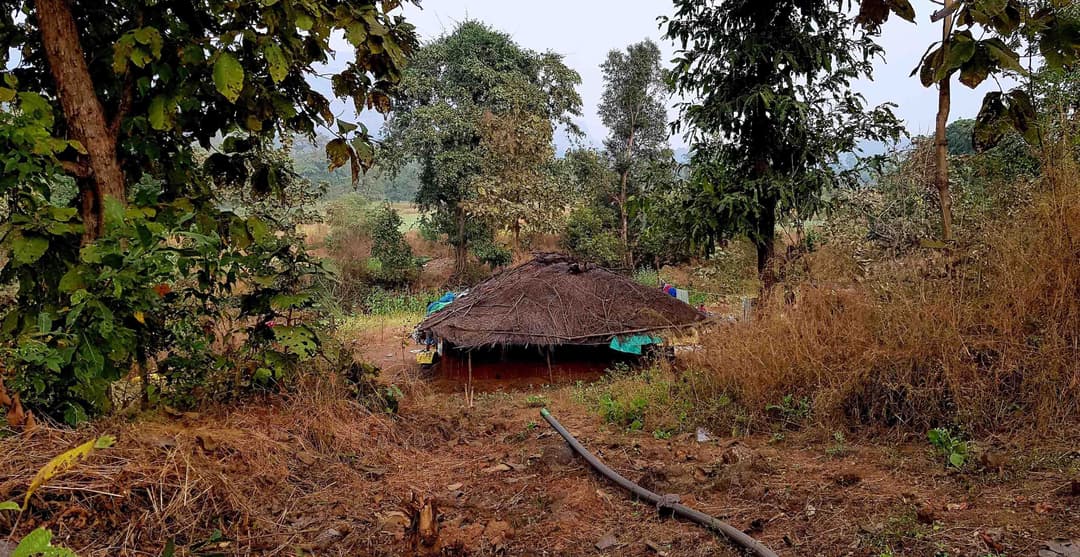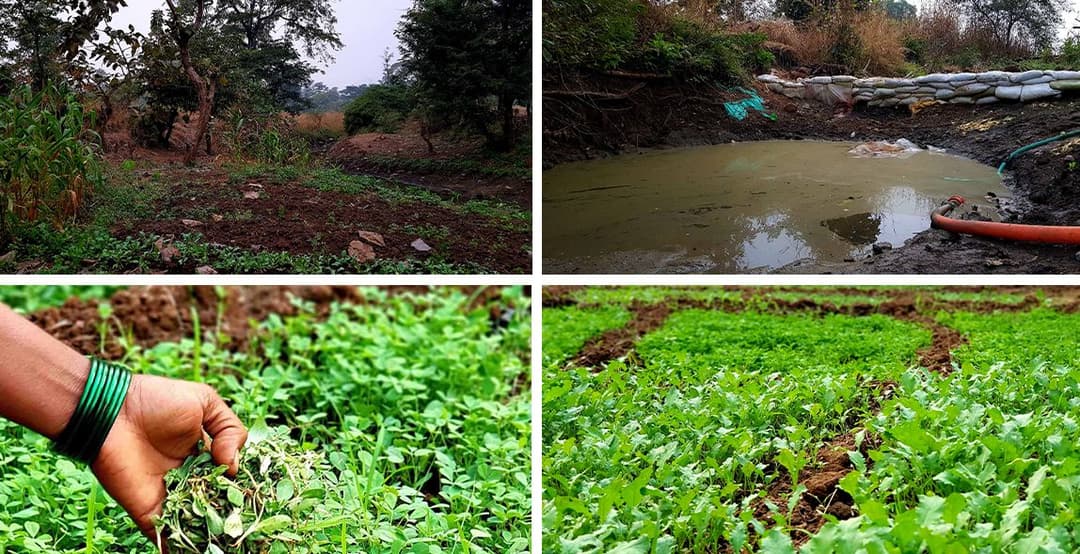

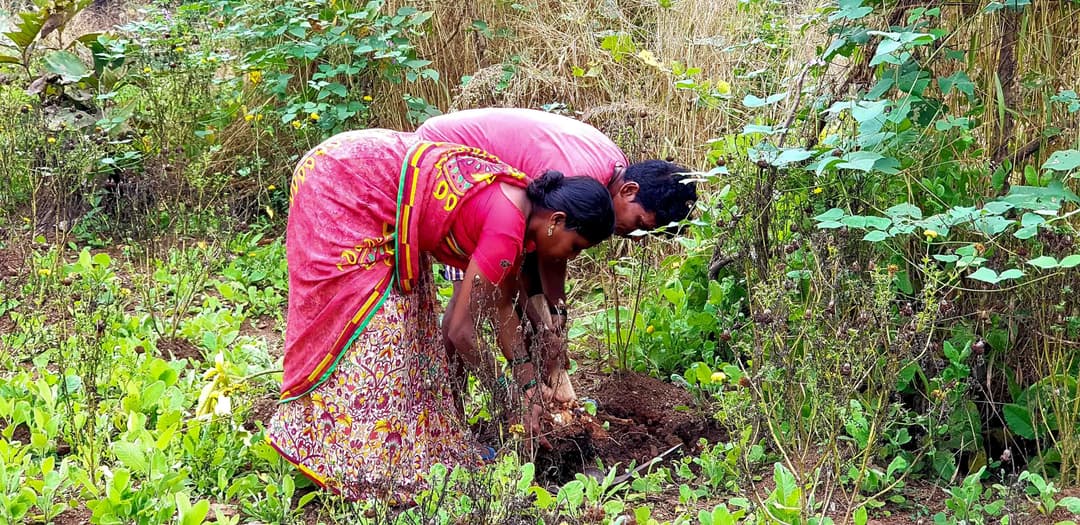
“It rained quite a lot this year. So I thought the water from the stream would last longer. I told my husband to stay back in the village. We could cultivate some more vegetables. Working on our own farm is much better than migrating for labour. But see what happened,” Jayashree Pared, my Kaki – my father’s brother’s wife – was telling me, looking at the cloudy skies. It was November 2019. “Winter has arrived, but there is no chill in the air. The monsoon is over, but the sky has yet not cleared. And my methi is on the verge of dying, so is the palak. The mustard was okay till yesterday, but today it too has bugs. What do we do?” Kaki was busy pulling out the infested plants while speaking to me.
“The weather has changed. We don’t get enough sunny days. That has caused all this [the infestation]. The shopkeeper selling these chemicals [pesticides] also says this. I am sure he knows a lot about this?” she said, looking for my nod. She was worried that the blight will spread all over their piece of land and all the vegetables will wilt. “I could have earned Rs. 200-250 by selling vegetables from this one muddy patch. But most of it died while sprouting. Now even what is growing is dying. I have a lot of tension because I can’t tell how much I will earn from this. The ghevda and waal were flowering, but then all the flowers wilted and fell off. The beans too are infested,” Kaki continued.
She sells the vegetables sitting by the streetside, after carrying them in baskets on her head for two kilometres to Ganeshpuri, or sometimes takes a bus to the markets at Vasai; this fetches my uncle and aunt around Rs. 1,000 a week, at most. That’s their only source of income.