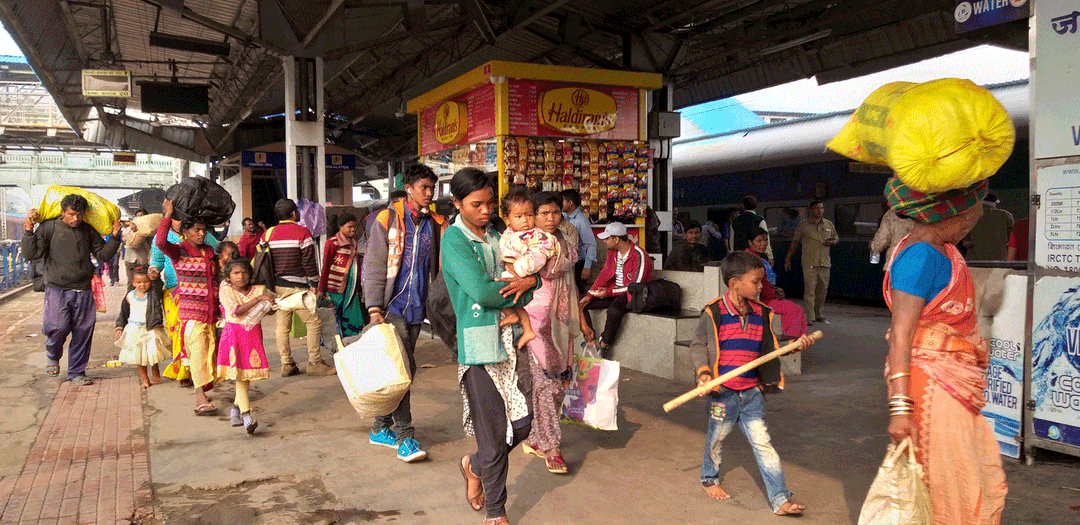

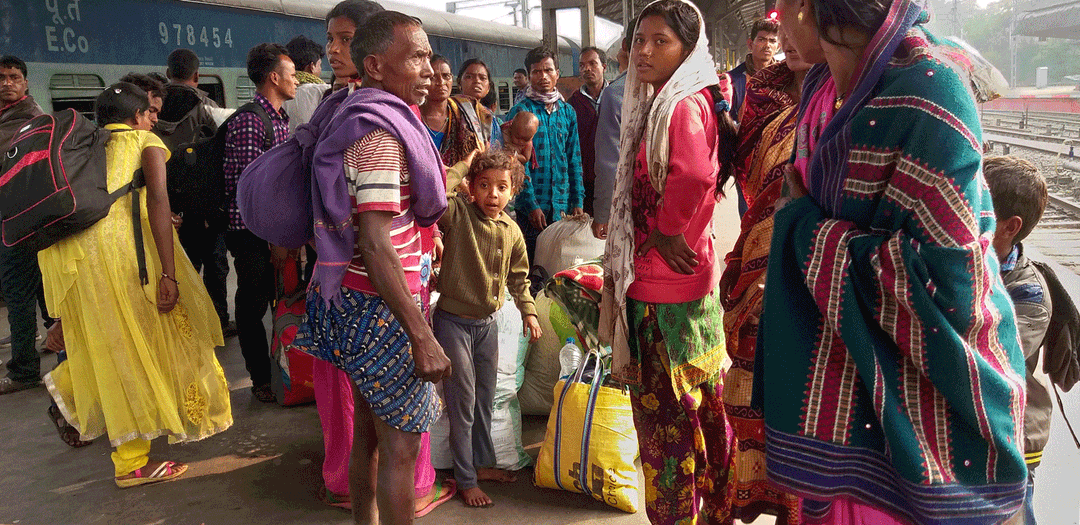
Our train had reached Nagpur Railway Junction. It was around noon last December. The Jodhpur-Puri Express changes its engine at Nagpur, so it stops for a while. On the platform was a band of travellers carrying bags on their heads. They were seasonal migrant labourers from western Odisha travelling for work, waiting for a train to Secunderabad. After the harvest in Odisha (between September and December), many marginal farmers and landless farm labourers leave their homes to work at brick kilns in Telangana. Many also go to the kilns in Andhra Pradesh, Karnataka and Tamil Nadu, among other states.
Ramesh (he did not want to give his full name), who was in the group, said that the migrants were from Bargarh and Nuapada districts. Their long journeys from their villages start by road to Kantabanji, Harishankar or Turekala railway stations, where they board the train to Nagpur, then change trains to reach Secunderabad in Telangana. From there, they take shared four-wheelers to reach the kilns.
The labourers take an advance from a contractor (Rs. 20,000 to Rs. 60,000 for a group of three adults) just before the Nuakhai festival in August-September, when they celebrate the harvest by offering newly grown rice to the family deity. Then, between September and December, they go to the brick kilns, work and live there for six months, and return before the monsoon. Sometimes, they work so hard and so long to repay their advance, it’s a form of bonded labour.