

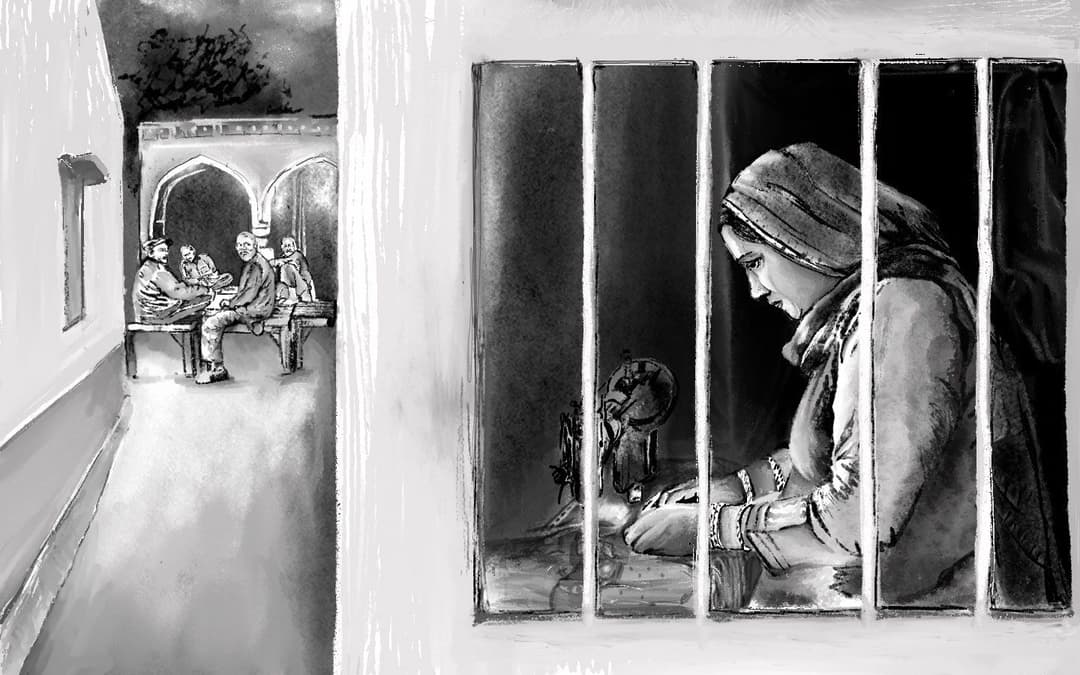
On winter afternoons, when work in the fields is over and the younger members of the household are away at their jobs, the men of Harsana Kalan village in Haryana’s Sonipat district are often at the chaupal (village square), playing cards or resting in the shade.
The women are never seen there.
“Why should women come here?" asks Vijay Mandal, a local resident. "They don’t have time from their work. Woh kya karenge in bade admiyon ke saath baith kar? [What will they do sitting among all these esteemed men]?"
Until a few years ago, this village of roughly 5,000 people, barely 35 kilometres from Delhi and part of the National Capital Region, strictly followed the purdah or practice of women wearing veils.
“Women did not even look towards the chaupal,” Mandal says. Located roughly at the centre of the village, this is the place for meetings, where the panchayat gathers to settle disputes. “Pehle ki aurat sanskari thi [The women of the past would respect tradition],” says Satish Kumar, a former sarpanch of Harsana Kalan.
“They had a sense of dignity and honour,” says Mandal, “They would wear a veil if they even walked towards the chaupal,” he adds, a smile creasing his face.
None of this is new or novel for 36-year-old Saira. She has lived through and followed most of these diktats for the last 16 years, ever since she came here as a 20-year-old bride from Majra Dabas, her village near Delhi. Unlike the men, she goes by just her first name.
“If I had met my husband before the wedding, I would never have said yes to this marriage. Is gaon mein toh katey na aati [I would never have agreed to come to this village],” Saira says, her fingers running deftly between the sewing machine needle and the purple fabric she is working on. (Her name, and the names of all her family members, have been changed in this story.)


