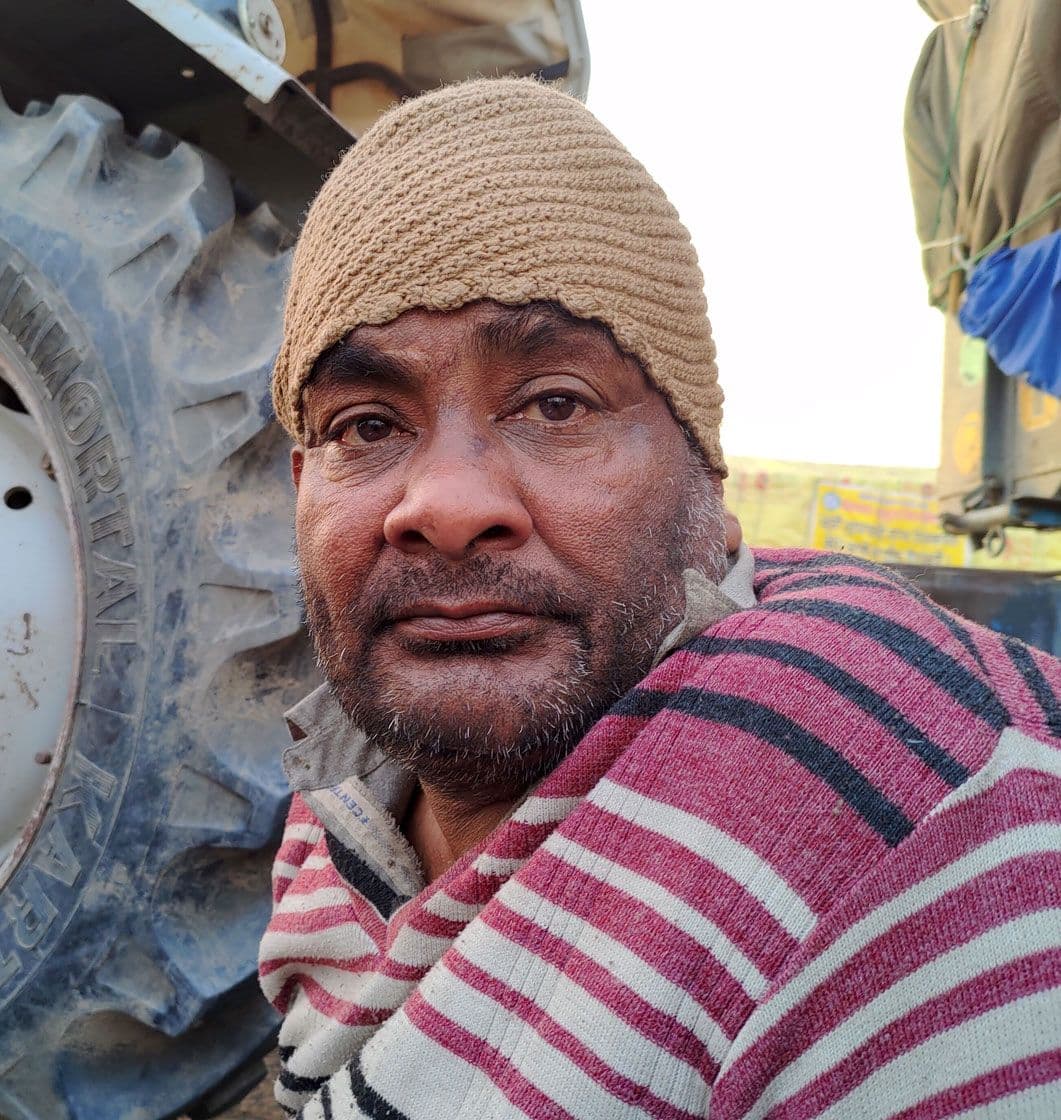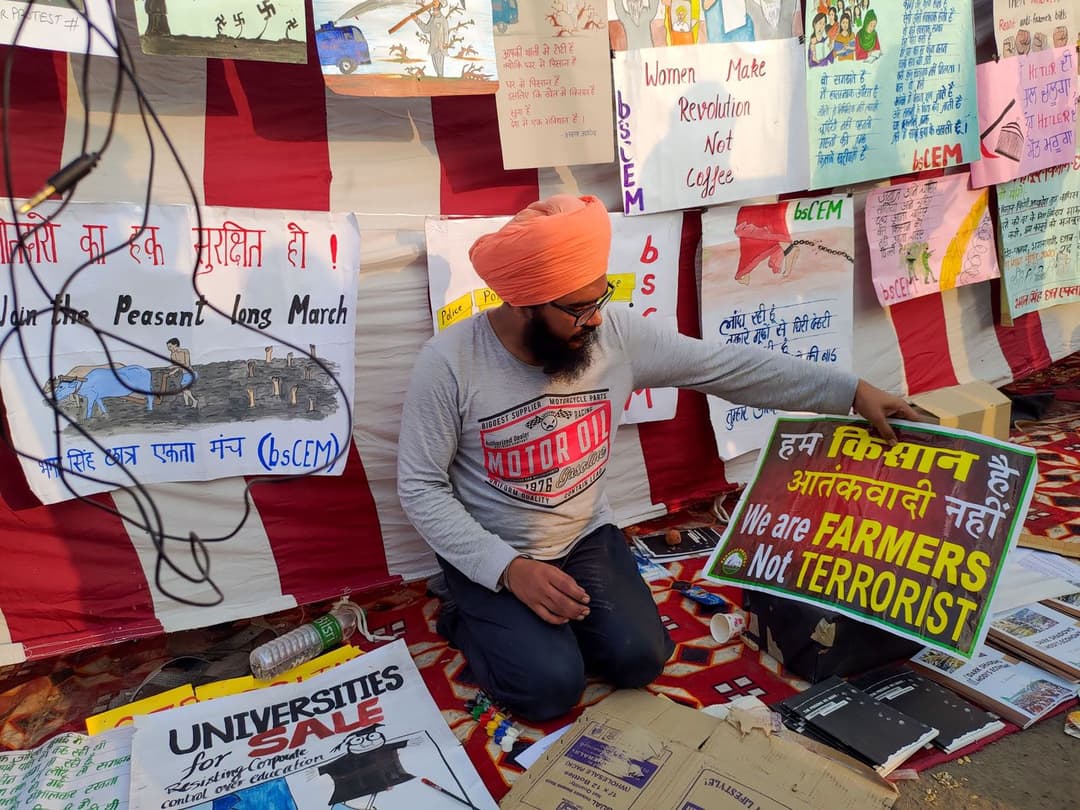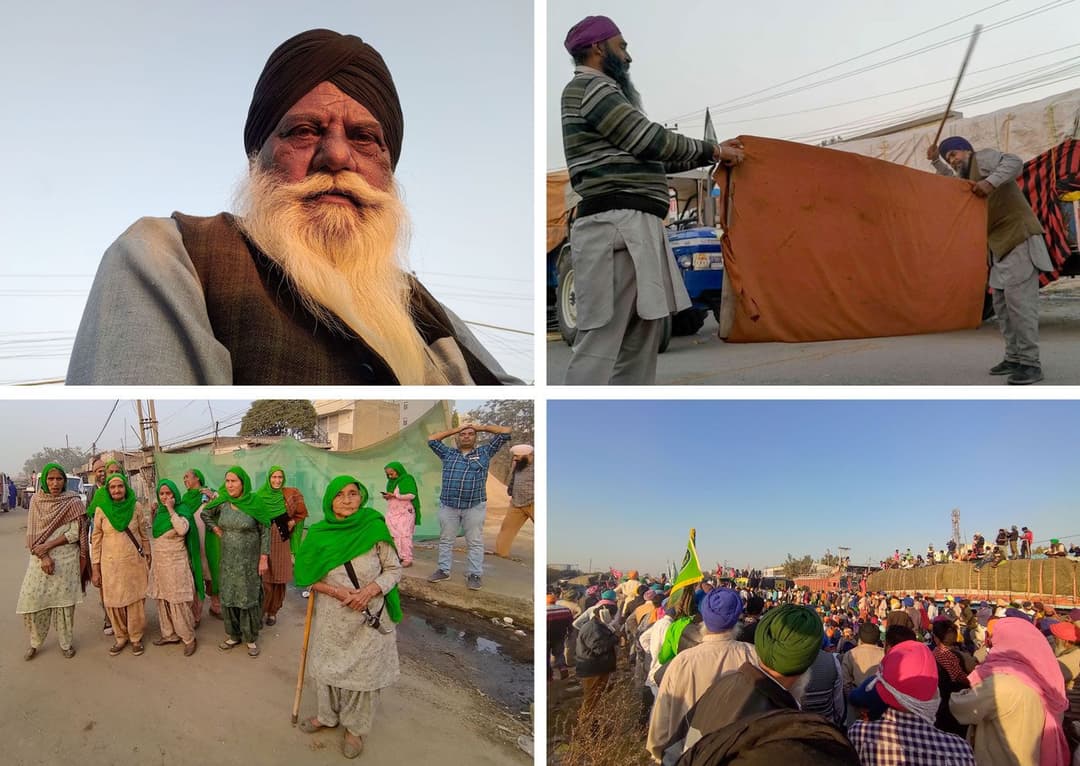

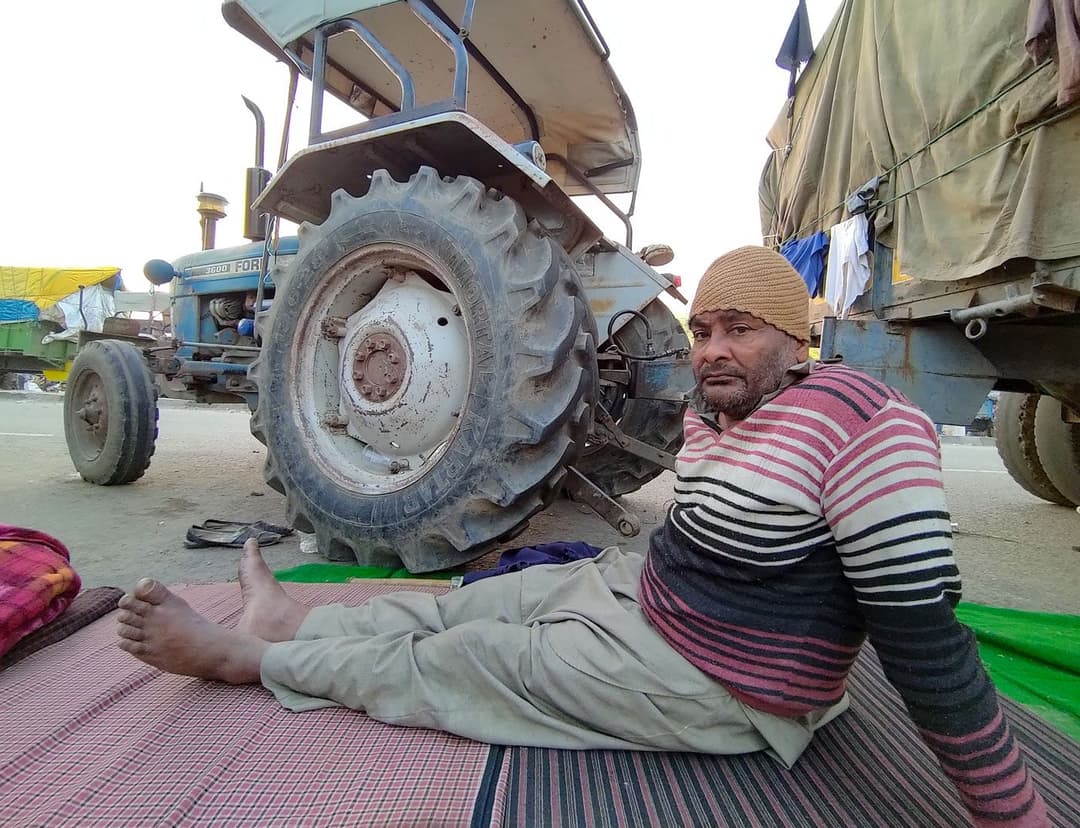
The hazy winter light shifts across Harjeet Singh’s face as he sits watching the sea of protesting farmers at the Singhu-Delhi border in Haryana’s Sonipat district.
Nearby, the elderly and the young – men, women as well as children – all have busied themselves in various tasks. Two men are cleaning mattresses, whacking them with lathis, preparing for the night. A few are distributing tea and biscuits to passers-by. Many are on their way to the front of this huge congregation to listen to their leaders’ speeches. Some are making arrangements for dinner. Others appear to be simply roaming about here and there.
Harjeet is among the tens of thousands of farmers at the gates of Delhi protesting against the three farm laws rammed through Parliament in September this year.
Rice and wheat, he says, were the crops he used to cultivate on his four acres of land in Majri Sodhian village of Punjab’s Fatehgarh Sahib district. Harjeet, who is in his 50s, is unmarried and lives with his mother.
An accident he suffered in 2017 left Harjeet unable to walk, though it has not deterred him from joining the massive protests with his fellow farmers. “I was working on the roof of my house when I fell,” he says of the accident. “I broke my hip bone.”