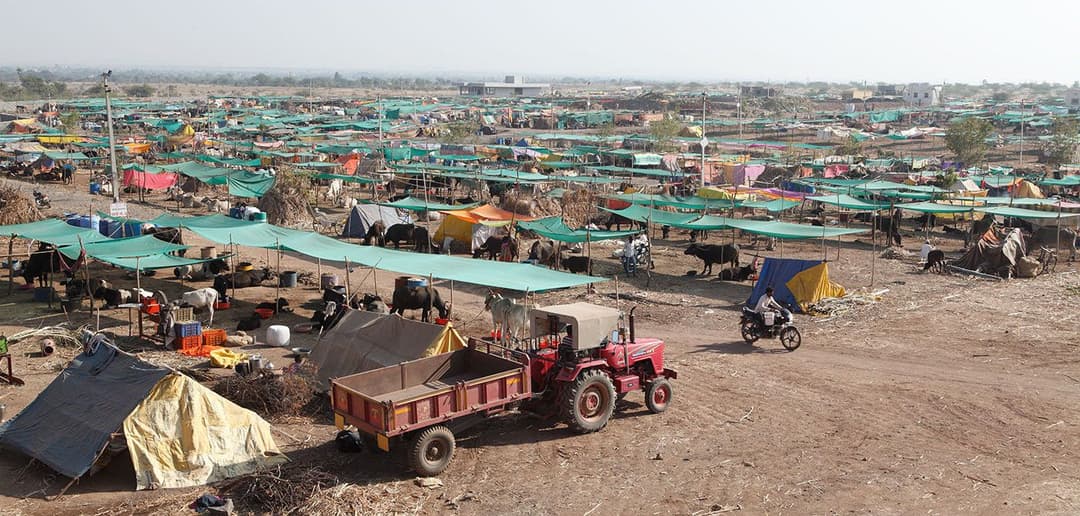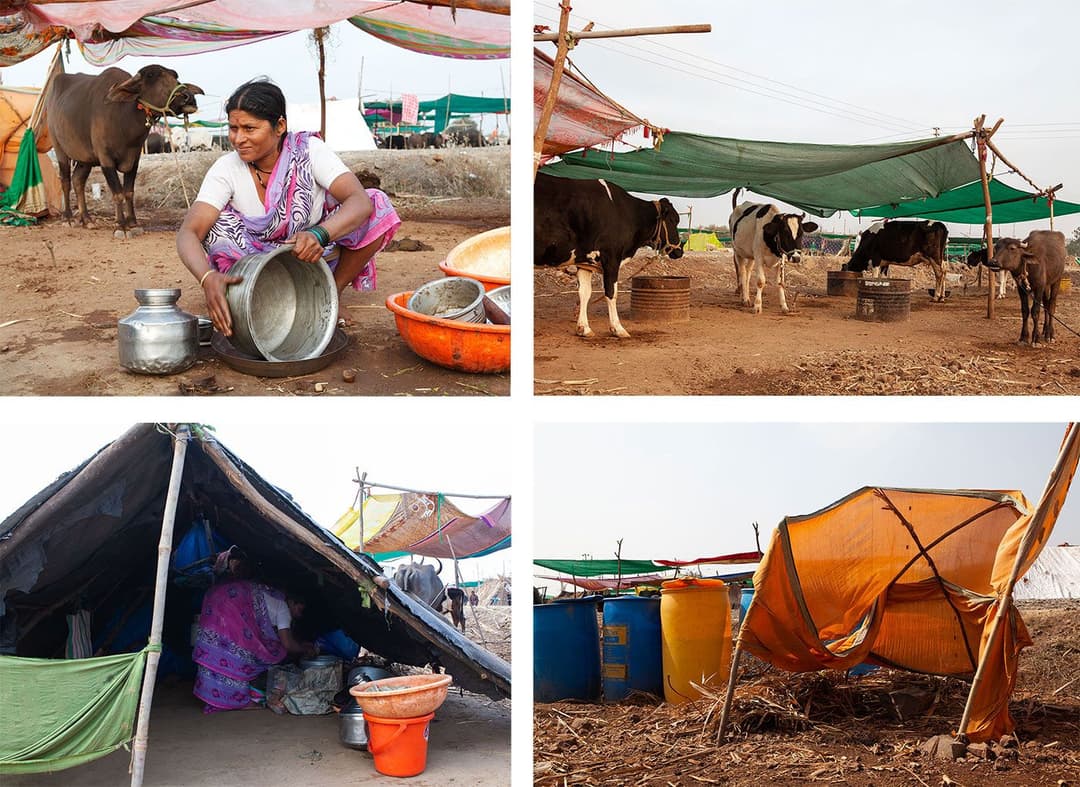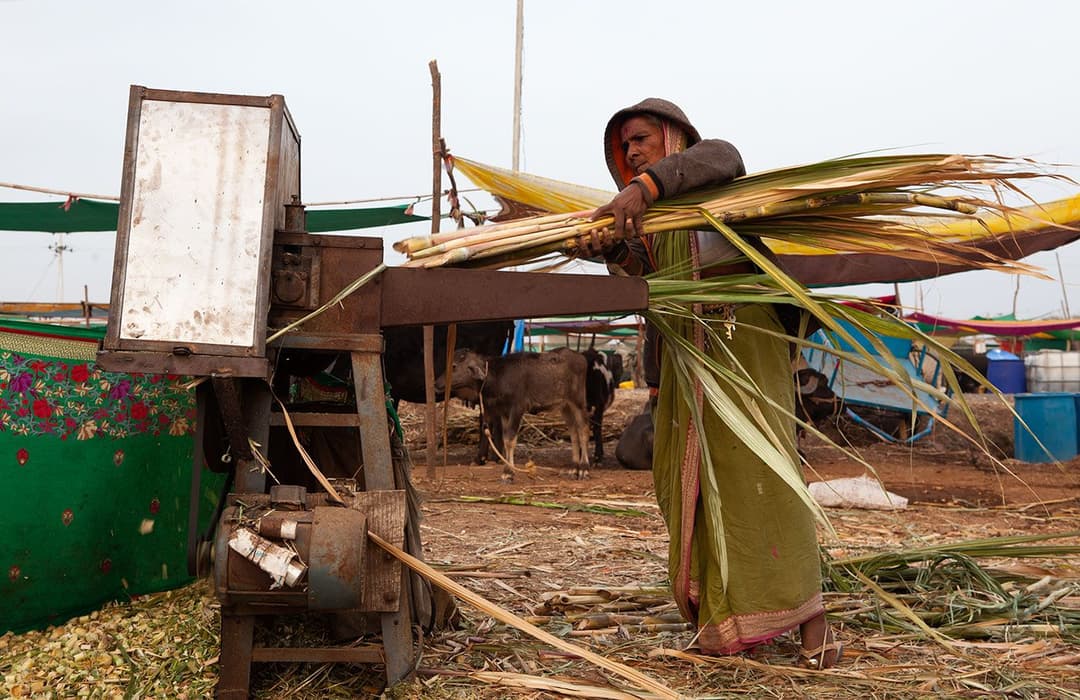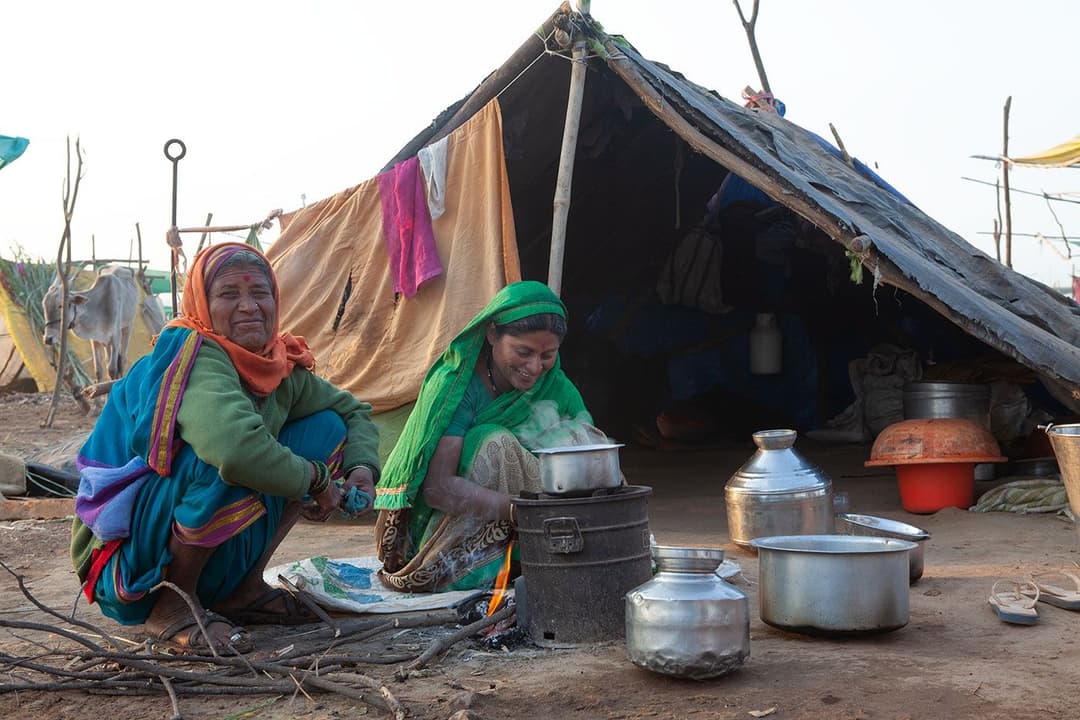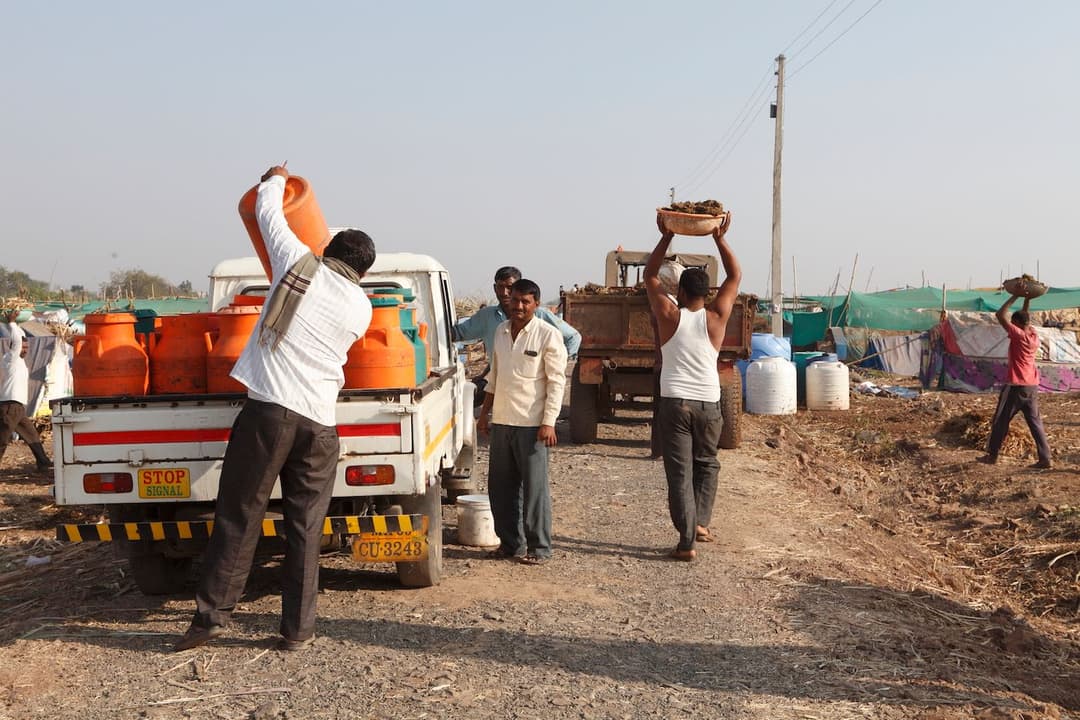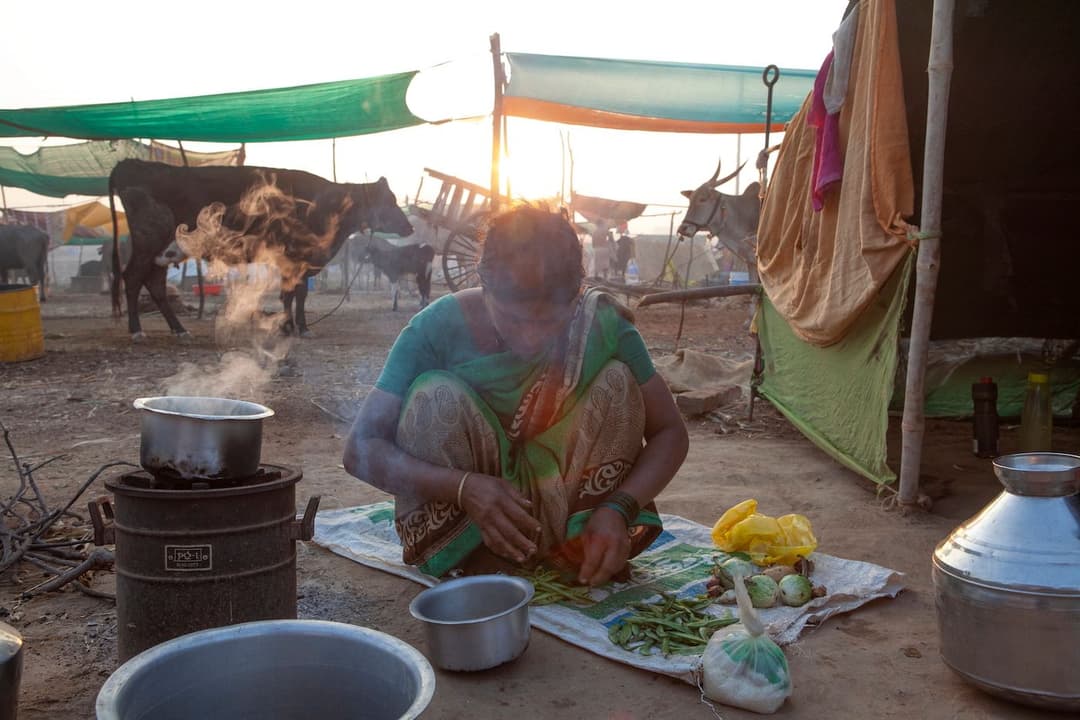
It’s six in the evening. Time for the cows to come home. But in Masaiwadi, the cows will not be returning for six months. No cow bells, no mooing, no bustle of the milk collection vans and no smell of fresh cow dung. This village of around 315 households in Man block of Satara district in Maharashtra is silent. Half of its people and almost all the livestock have gone to a fodder camp, around five kilometres away, near Mhaswad town, which is over 100 kilometres from Satara.
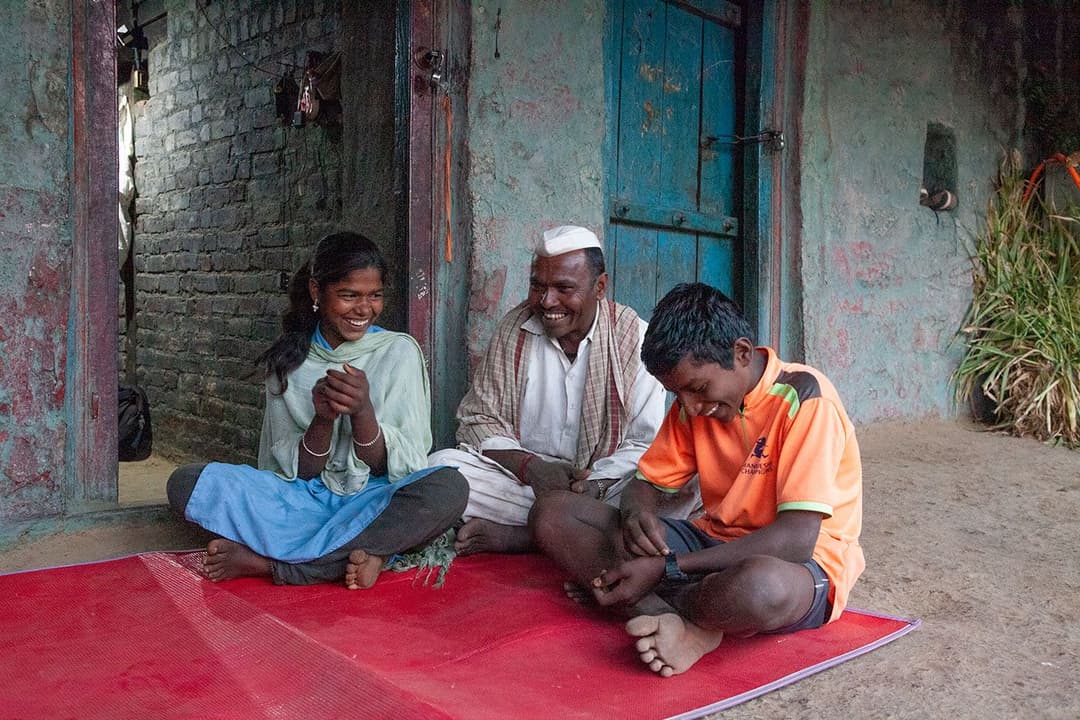
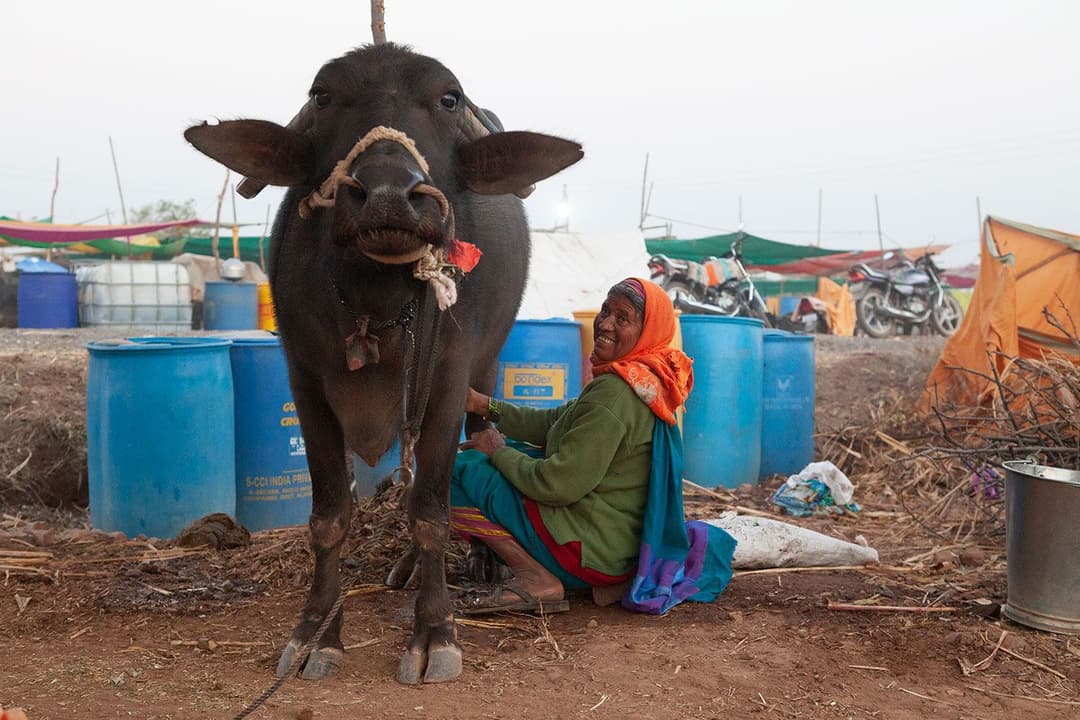
Sangeeta Virkar, 40, too has shifted base there since January. She has brought along her two buffaloes and two Jersey cows, as well as a cow and a calf that belong to her old and infirm father. Her husband, Nandu, 44, has stayed back in the village to be with their 15-year-old daughter Komal, who is appearing for her Class 10 exams, and son Vishal, who is in Class 7. Their eldest daughter is married. The family’s three goats, a cat and a dog are at home too.
“The children at home and cattle in the camp. I have to look after both [the same way],” says Sangeeta, who is from the Dhangar community, a Nomadic Tribe. “We haven’t had a single spell of rain this year. We have 12 acres of land cultivated jointly by my husband and his two brothers. Normally, we get 20-25 quintals of jowar or bajra [in the kharif season]. But this year, we have got nothing. The entire crop was lost. No rain means no fodder. The rabi sowing is almost zero. How do we feed our animals?” she asks, patting a cow lovingly.