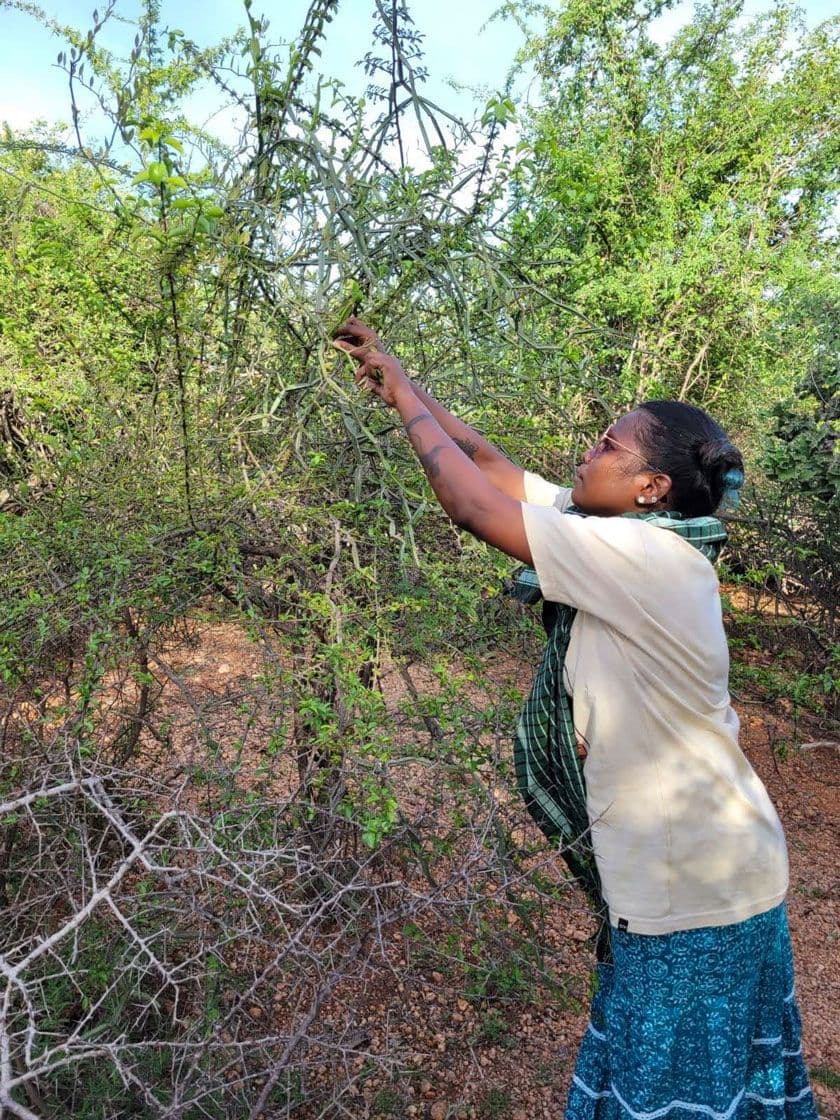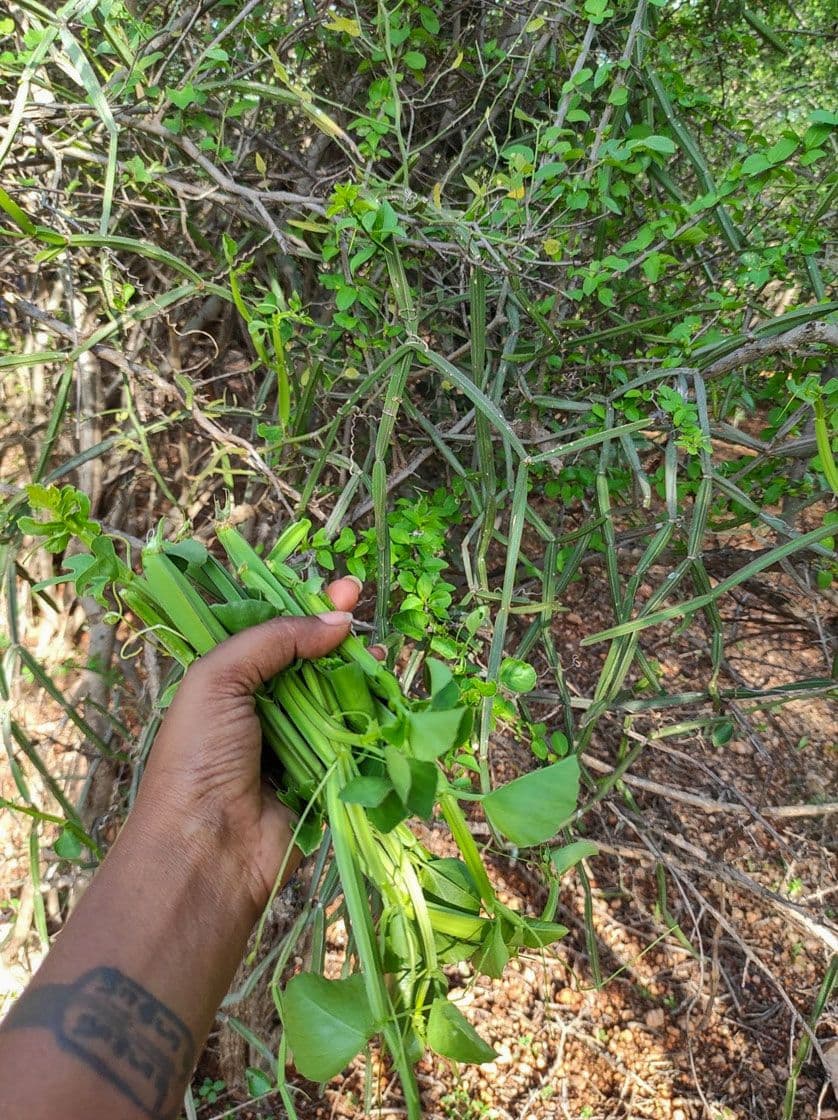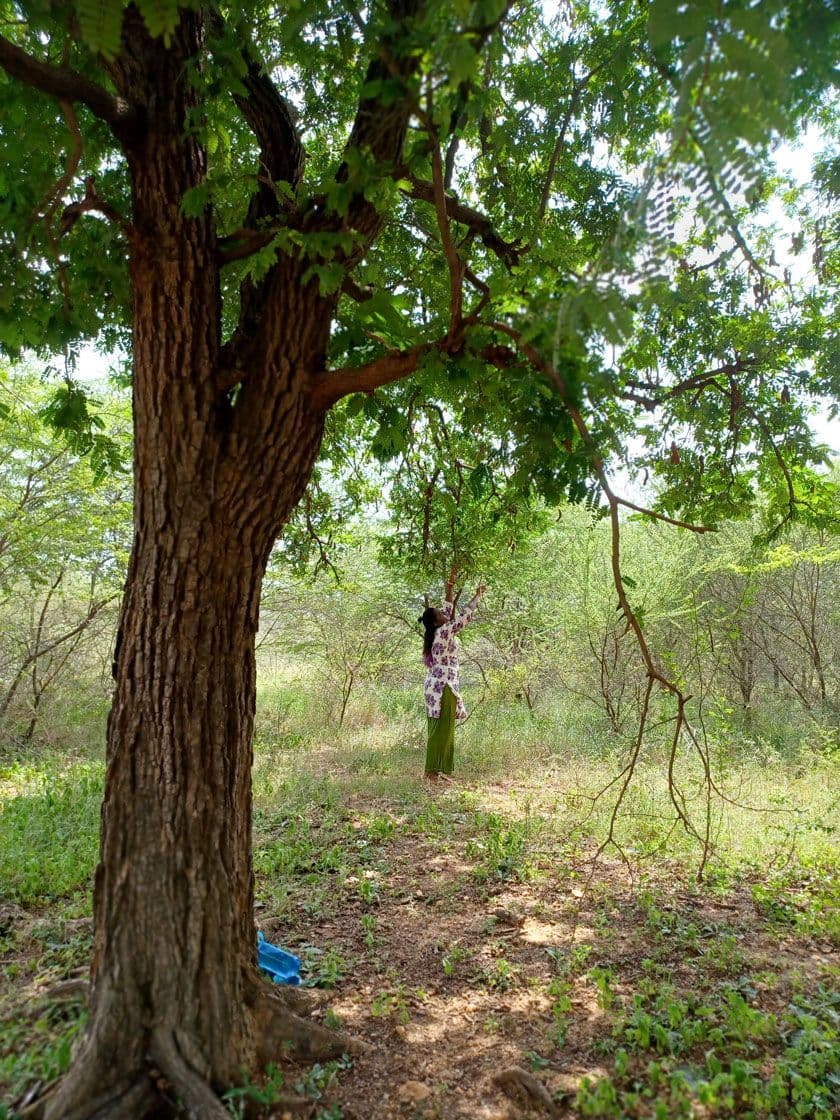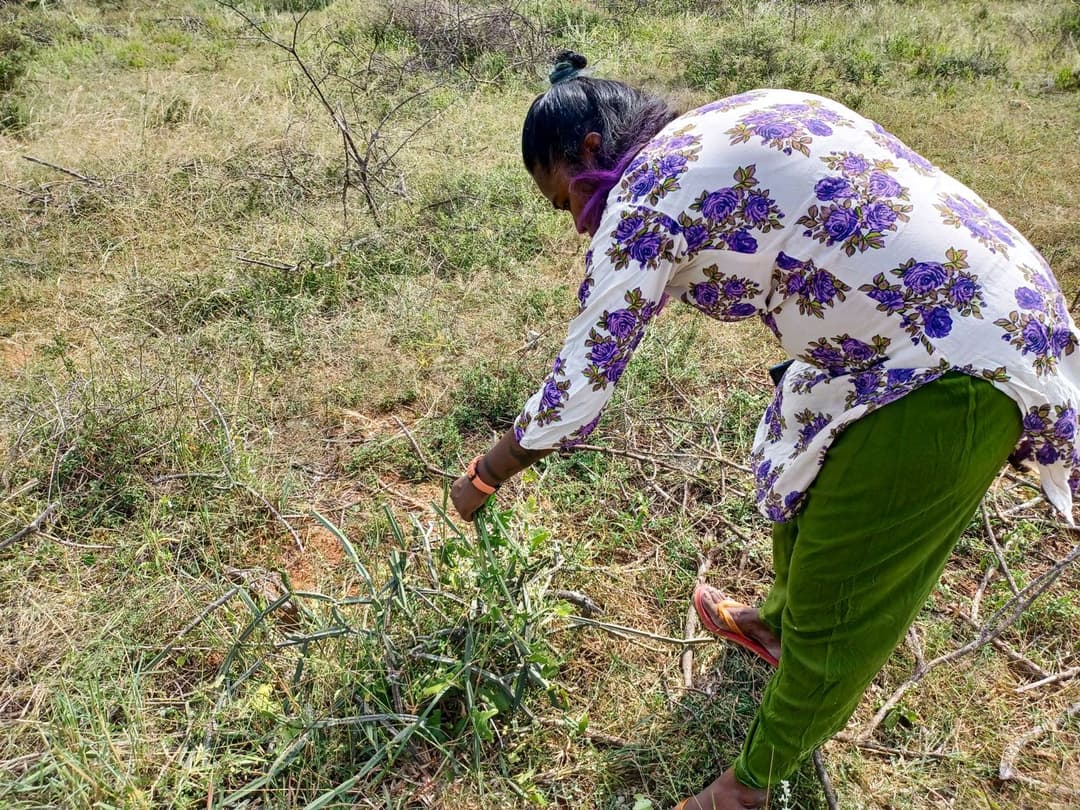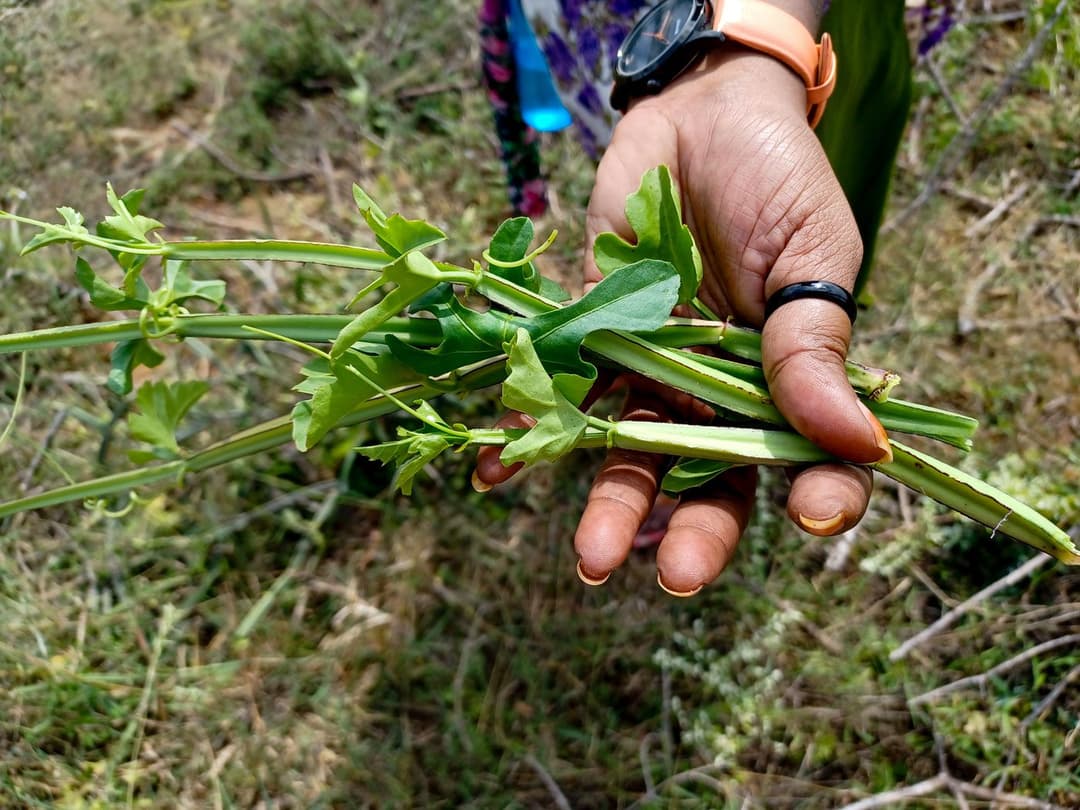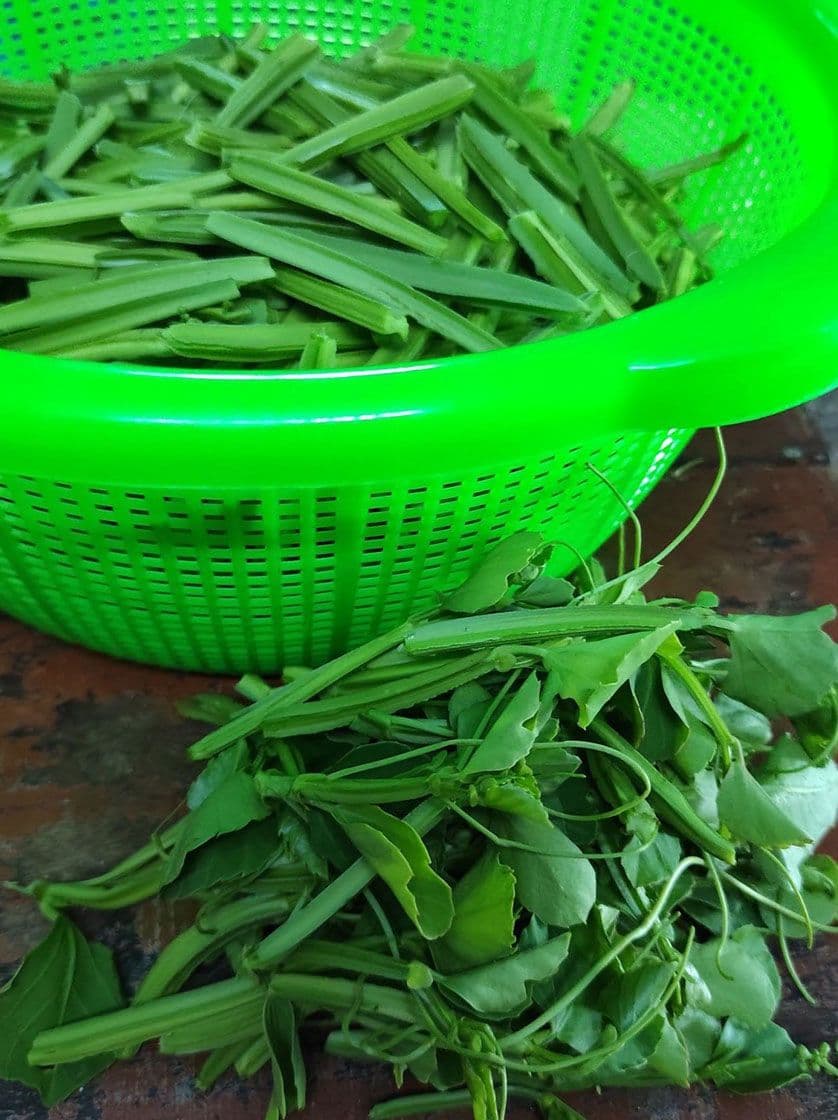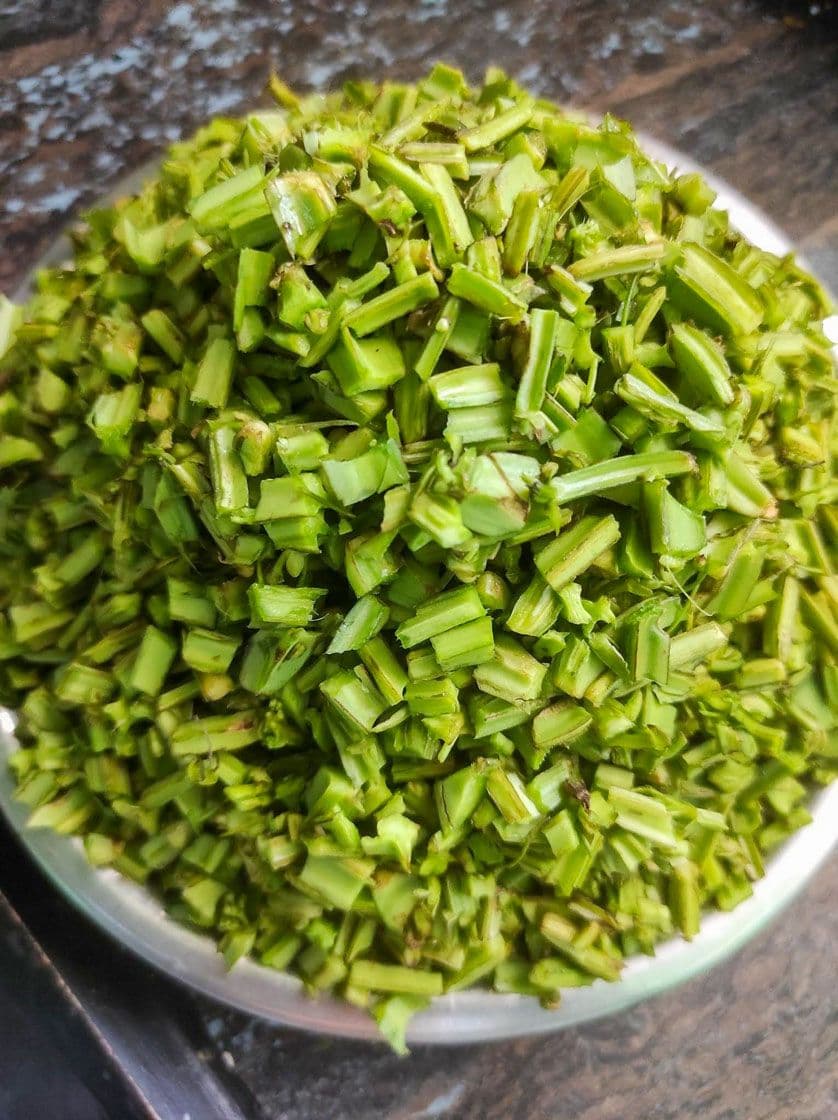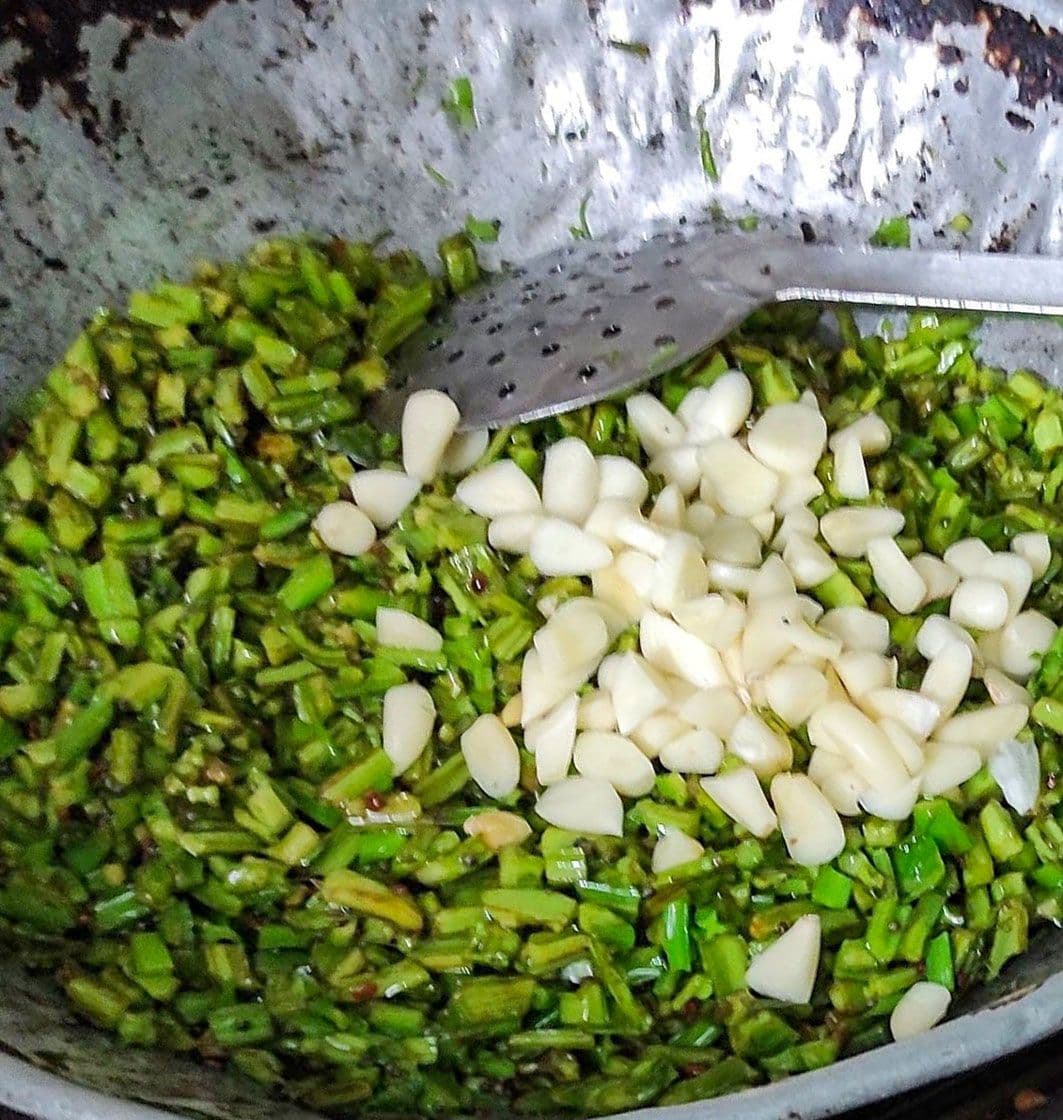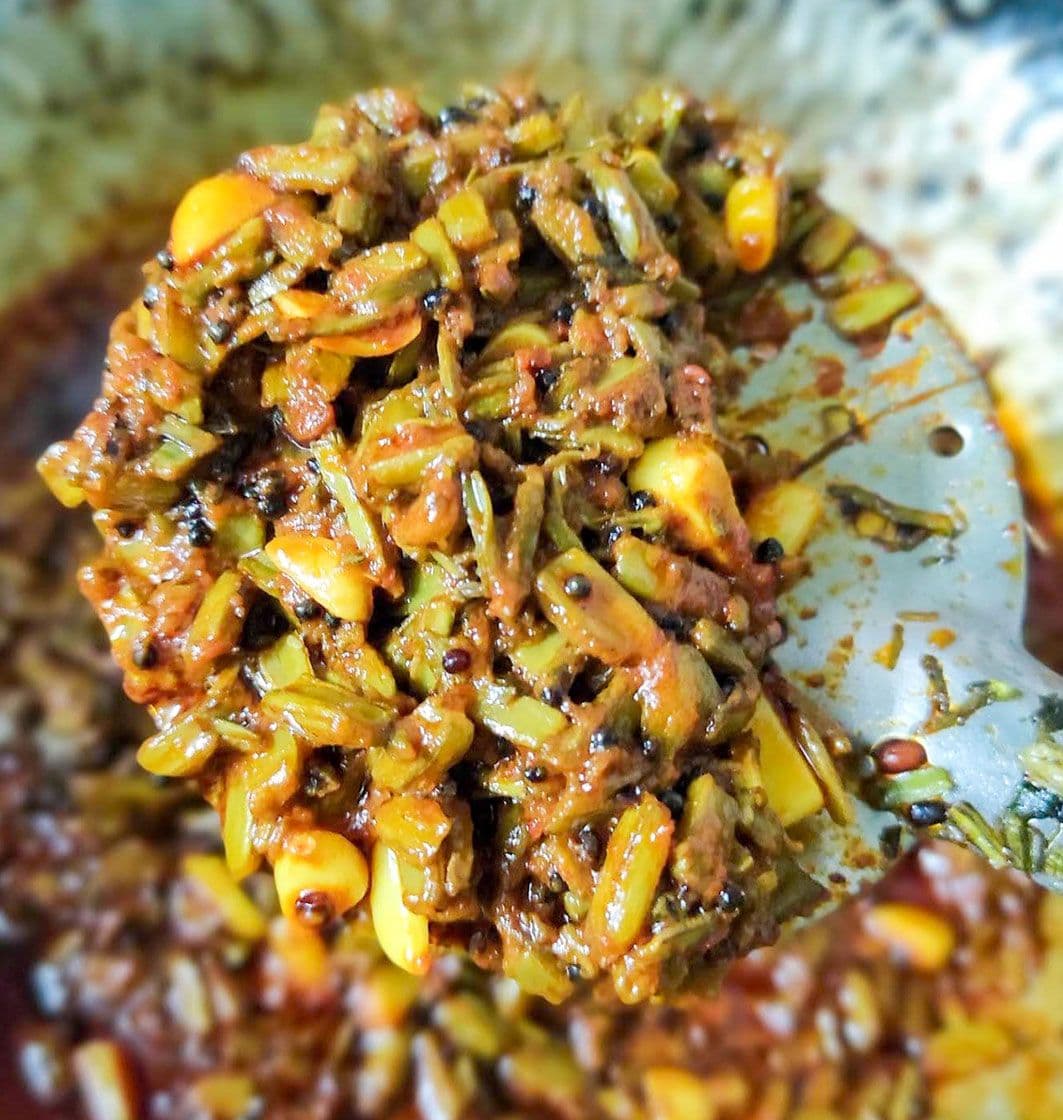

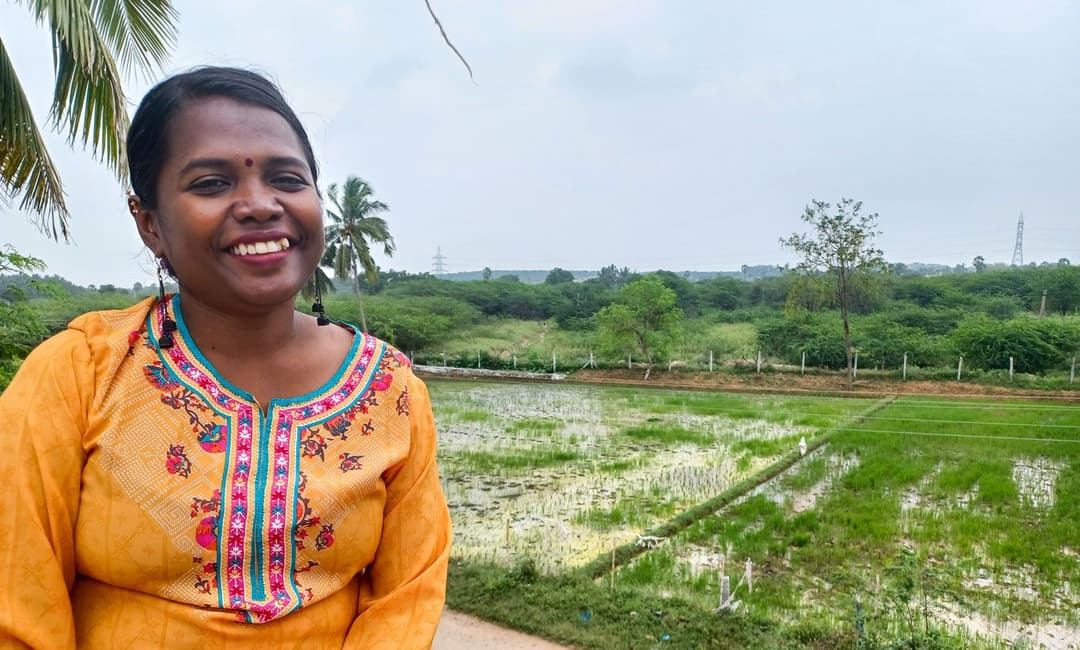
Here we are in the scrub jungle, looking for the ‘Devil’s backbone.’ That’s what pirandai (Cissus quadrangularis) is called anyway. This square-stalked creeper that Rathy and I are searching for has many fine qualities. Typically, the tender new stem is picked, cleaned and preserved with red chilli powder, salt and sesame oil. Done properly, the pickle so created stays unspoilt for a year. And it tastes great with rice.
It's a warm January afternoon and our path to the jungle follows an ancient, dried-up creek. It has an evocative Tamil name: Ellaiathaamman Odai. Literally, the stream of the Goddess Without Boundaries. It’s a phrase that gives you goosebumps. And the trail – over rocks and sand, wide here, wet there – gives me some more.
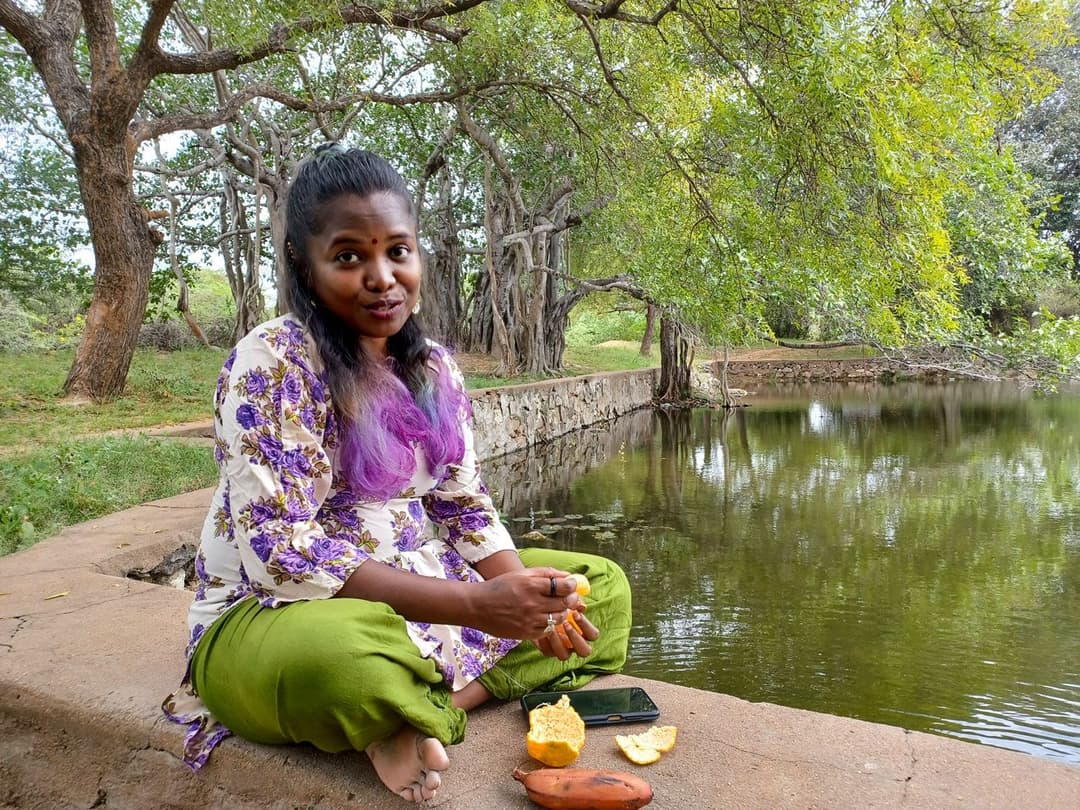
Rathy tells me stories as we walk. Some are fictional and fun – on oranges and butterflies. Many are real and chilling – on the politics of food and caste clashes that spiked during the nineties, when she was in high school. “My family fled to Thoothukudi…”
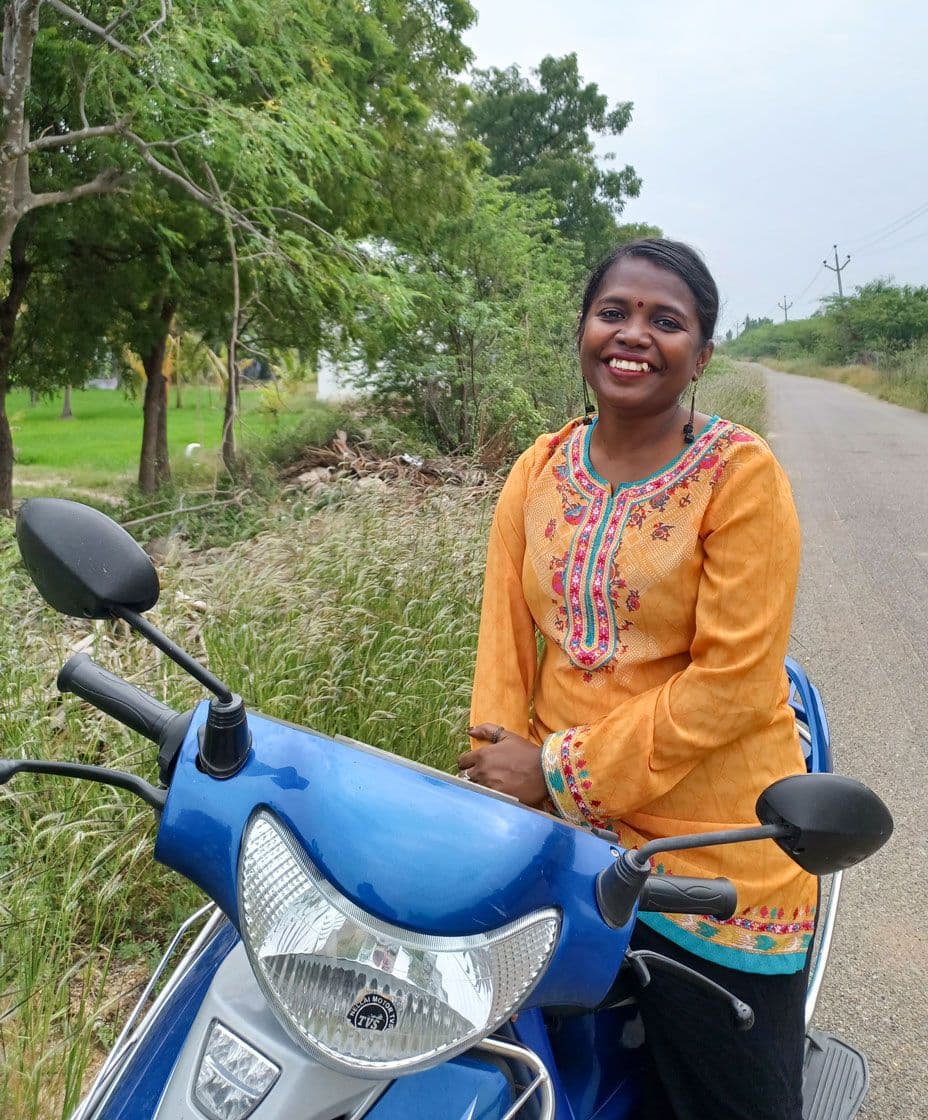
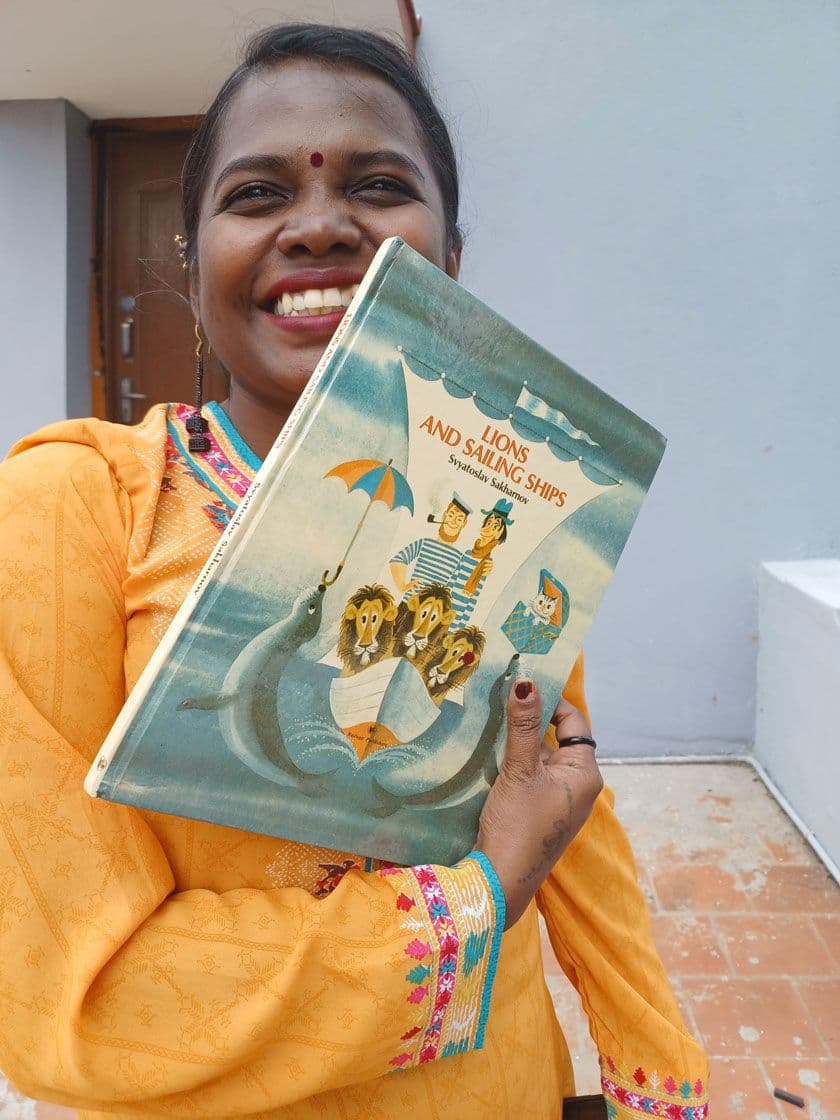
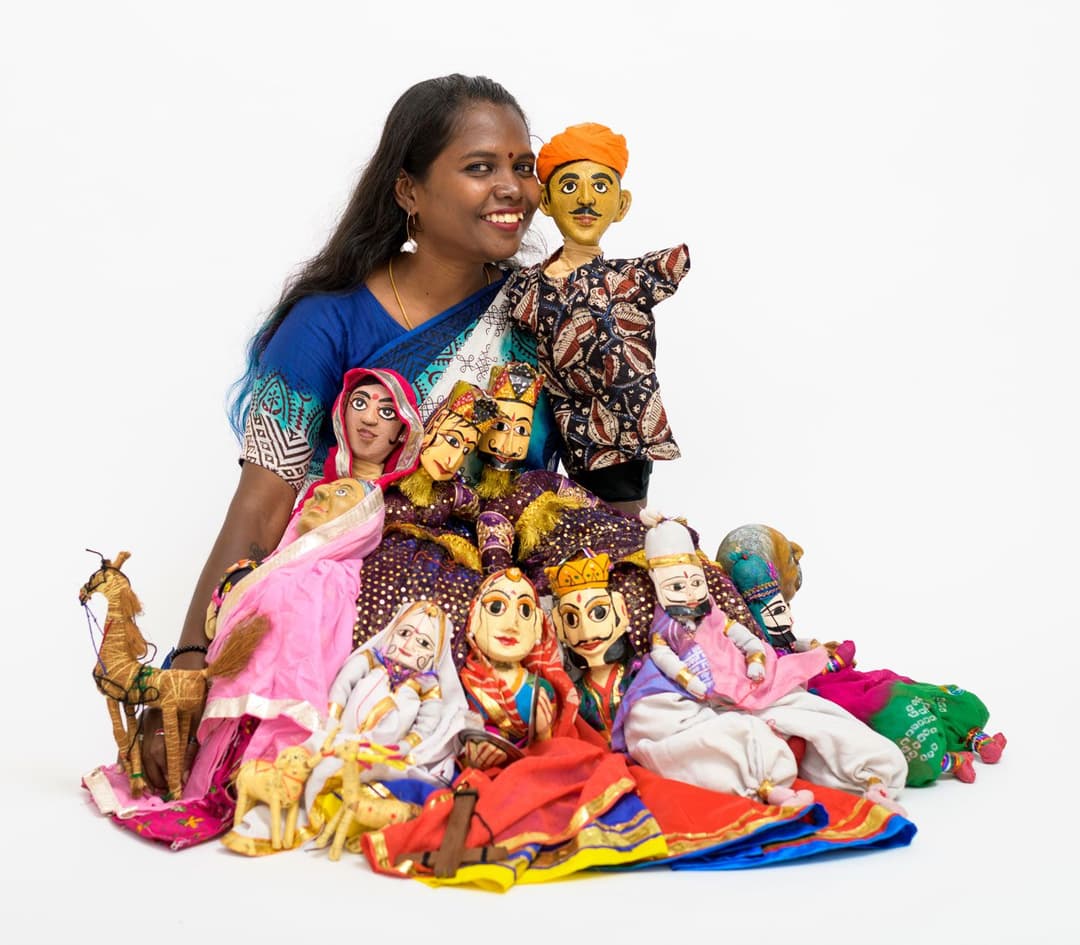
Two decades later, Rathy is back in her village as a professional storyteller, library consultant and puppeteer. She talks slowly; she reads fast. “During the covid pandemic, in seven months, I read 22,000 big and small children’s books. At some point, my assistant begged me every day to stop reading. Otherwise, I began talking in dialogues.” And she laughs.
Her laughter is a gurgle, like the river she’s named after: Bhagirathy. She goes by the abbreviated Rathy, and lives about 3,000 kilometres south of the Himalayas where her namesake becomes the Ganges. Her village – Thenkalam, in Tamil Nadu’s Tirunelveli district – is surrounded by hills and scrub jungles. She knows them well, just as everybody in the village knows her.
“Why are you going to the jungle?” ask the women labourers. “We’re foraging for pirandai,” Rathy replies. “Who is that woman? Your friend?” demands the cowherd. "Yes, yes," Rathy grins, I wave and we walk on...