
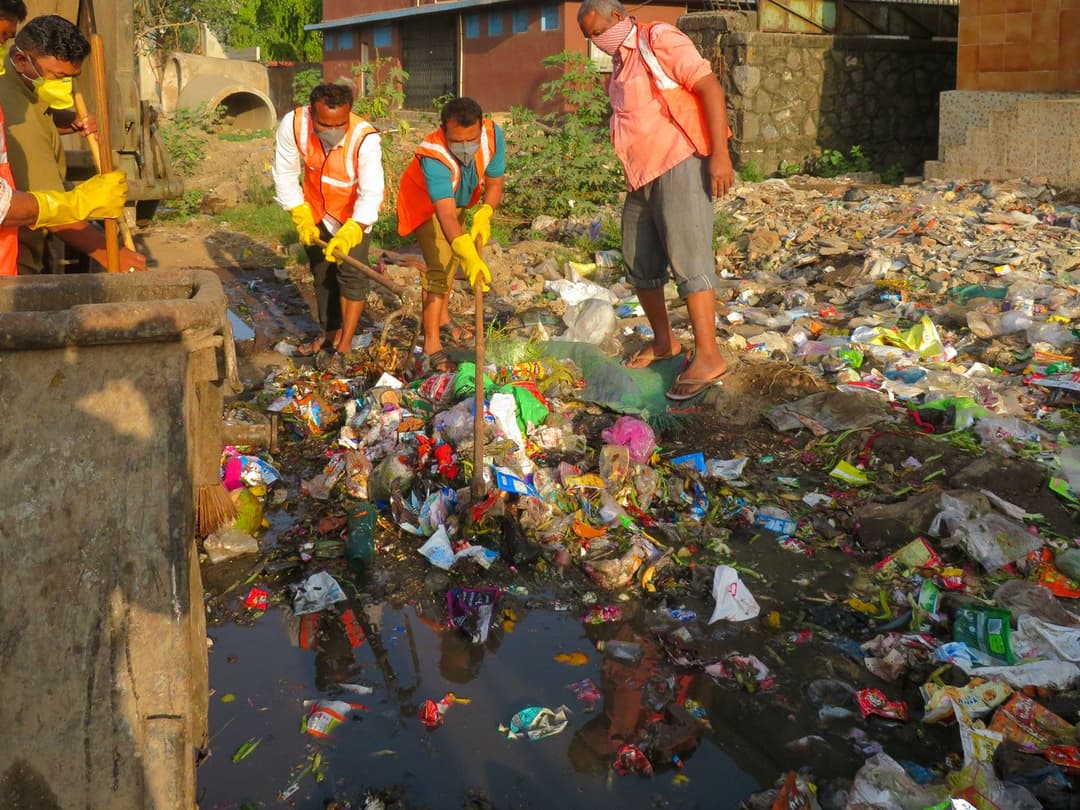
For Anita Ghotale, Saturday, March 21 was a usual day at work – though many shops in the city were shut, the markets deserted, the streets quiet. With the lockdown measures put in place by the government due to the spread of Covid-19, many were staying shut in at home in Mumbai that day.
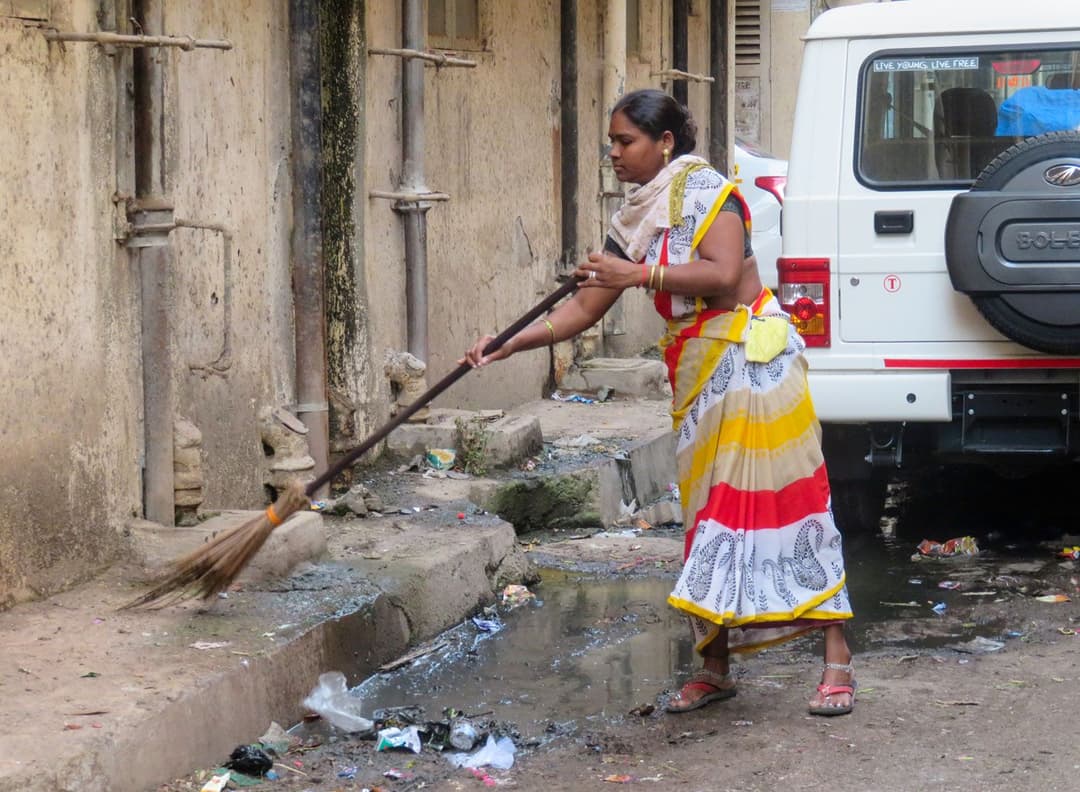
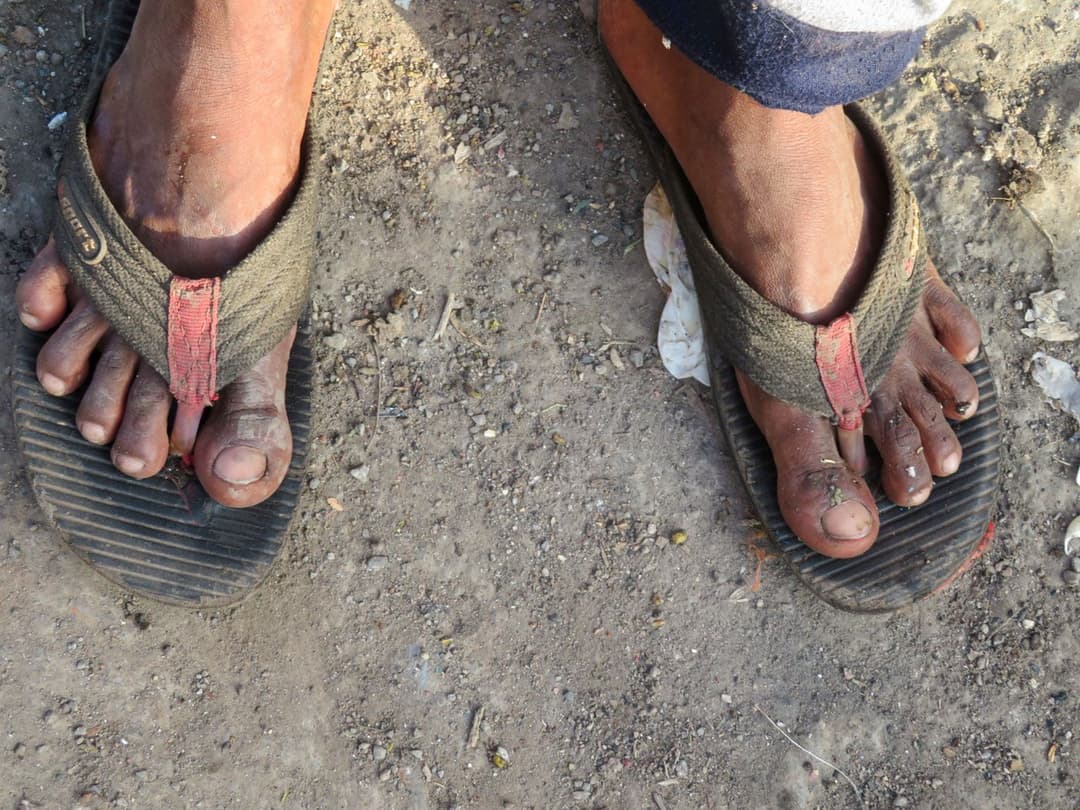
But Anita was cleaning those quiet streets, sweeping away sludge-like garbage from accumulated dark and dirty water. Some of the filthy water splashed onto her legs. “For us, every day is risky. Not only now because of this corona, but [it’s been like this for us] from many generations,” she said.
It was around 9 a.m., and she had been at work for two hours, sweeping the streets and pavements in M-West ward in Mahul village of Chembur in eastern Mumbai.
What about her own health in this grim situation? “We got these masks only yesterday [on March 20], that too when we demanded them due to the virus,” she said. A mask was tucked into the waist of her saree, and 35-year-old Anita was wearing a scarf around her neck for protection. “These masks are thin and not reusable [after two days of wear],” she said. No signs of gloves, and protective footwear like sturdy boots is unheard of in her line of work.
Anita belongs to the Matang community – listed as a Scheduled Caste in Maharashtra – and says her family has been engaged in sanitation work for generations. “My grandfather used to carry human shit on his head from open gutters [in Mumbai],” she says. “Be it any generation or year, our people have always had to fight for their rights as human beings.”
To make matters worse, Mahul, the area where Anita lives and works, has for some years now been in the news for its high levels of air toxicity due to the nearby chemical industries and refineries.