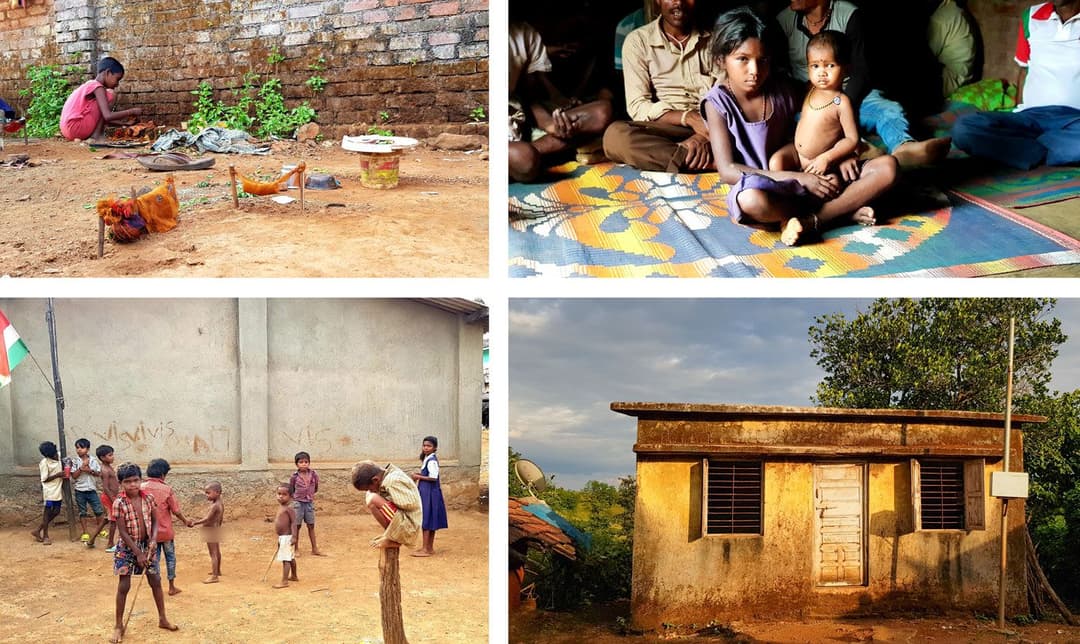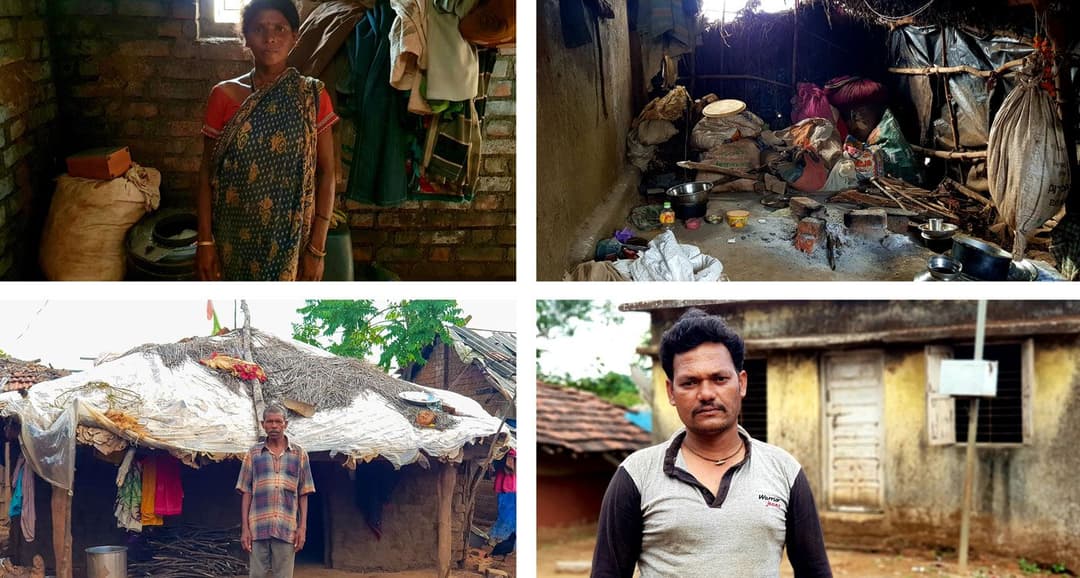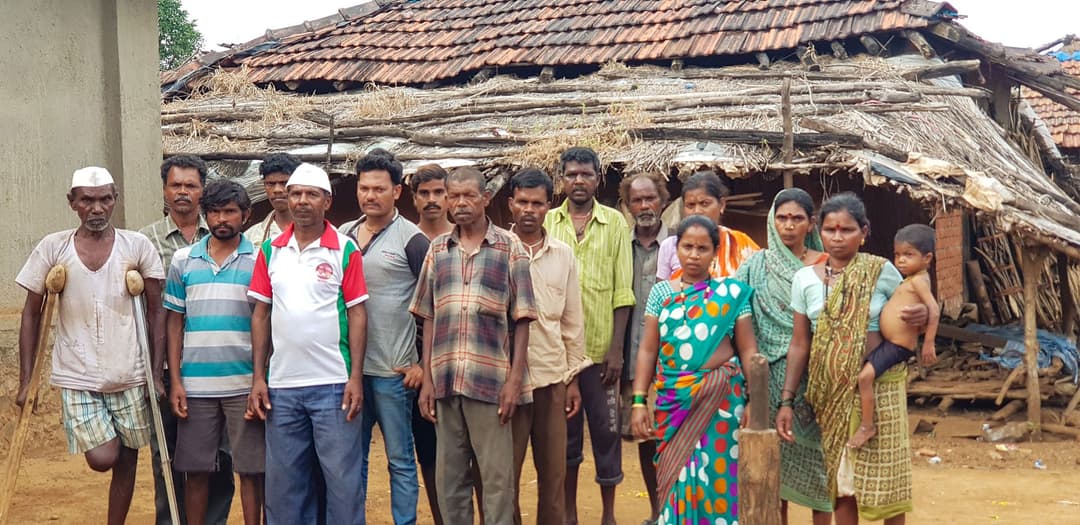

“You must have celebrated the festival. What about us? There is hardly any work. Where will the money come from?” Sitting at her doorstep, Soni Wagh, 60, asked bluntly, looking at me intently. People gathered around tried to signal to her to keep quiet. But Soni’s words were not just for herself – her utterances contained the reality of life in her entire hamlet. No one could hide that. It was early November, Diwali had just got over. But no house in the pada had any lanterns. There were no decorative lights. No dwelling in Botyachi Wadi was adorned with flowers like some of the city homes during Diwali.
The wadi was silent. The only sound was the echoes of children playing in the open courtyards. Their feet smeared in dust. Their clothes frayed and worn. Garments with broken buttons covered some of them only partially. In one corner of a courtyard, 5 or 6 girls, 8 to 9 years old, were playing ‘house-house’. Arranged before them were aluminium and steel vessels from their home’s kitchens. A torn stretch of cloth tied to four sticks fixed in the ground served as a cradle for a baby.
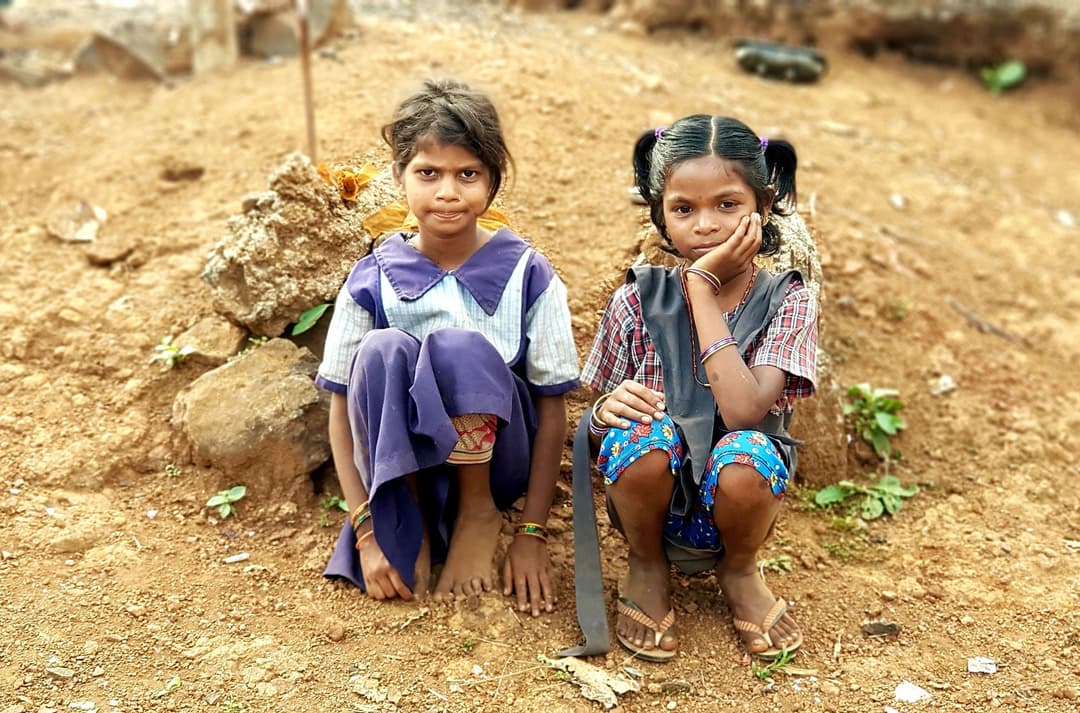
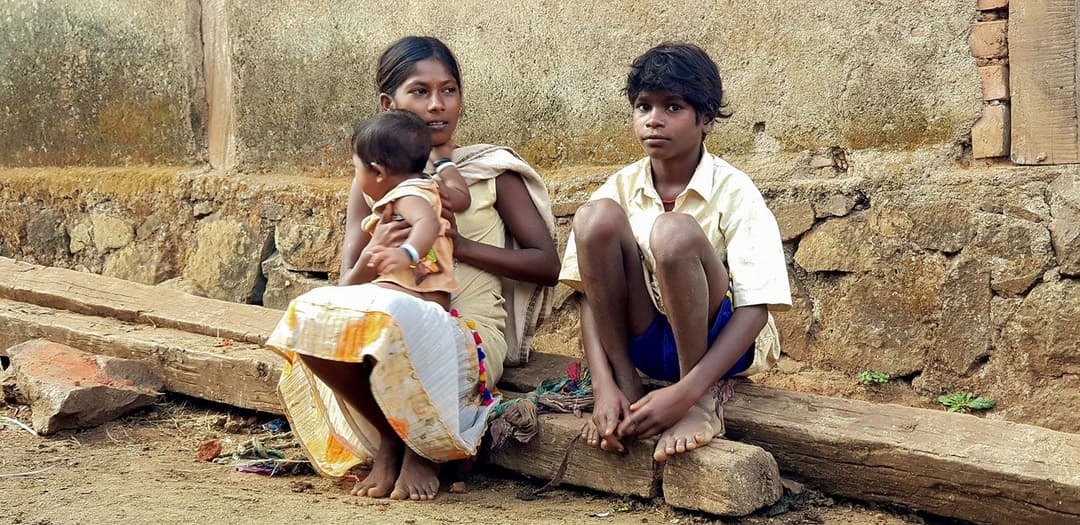
A girl sitting close by was holding the baby, a few months old, on her lap and watching the others at play. A boy was sitting next to her. When I approached, they got up to leave. The girl stopped when she sensed that I wanted to ask her something. “Do you go to school?” The answer was no. Anita Dive, 9, had dropped out of school after Class 1. Why not? “I have to look after the baby. How can I go to school? My family goes to the brick kilns for work.”