

“The harmonium is our life and lifeline, our farm and our home.”
That’s 24-year-old Akash Yadav speaking, while pumping the bellows of a harmonium to test it for air leaks. He loosens the keys and turns them upside down to clean them, and continues, “We barely manage one meal. We helplessly watch our children – who do not even complain – sleep hungry. This is the most cruel and traumatic time of our lives, this lockdown.”
Akash and his 17 fellow repairmen here are a rare group – one that journeys from Madhya Pradesh to over 20 cities and towns in Maharashtra from October to June every year – repairing harmoniums. That’s a job demanding great skills, including a heightened sense of classical music – and extraordinary hearing ability.
They are called petiwallahs in most places they go because of the harmoniums and toolboxes they carry. All of them are Karahirs – a sub-group of the Ahir or Gawli communities in Madhya Pradesh, within the (OBC) Yadav caste cluster.
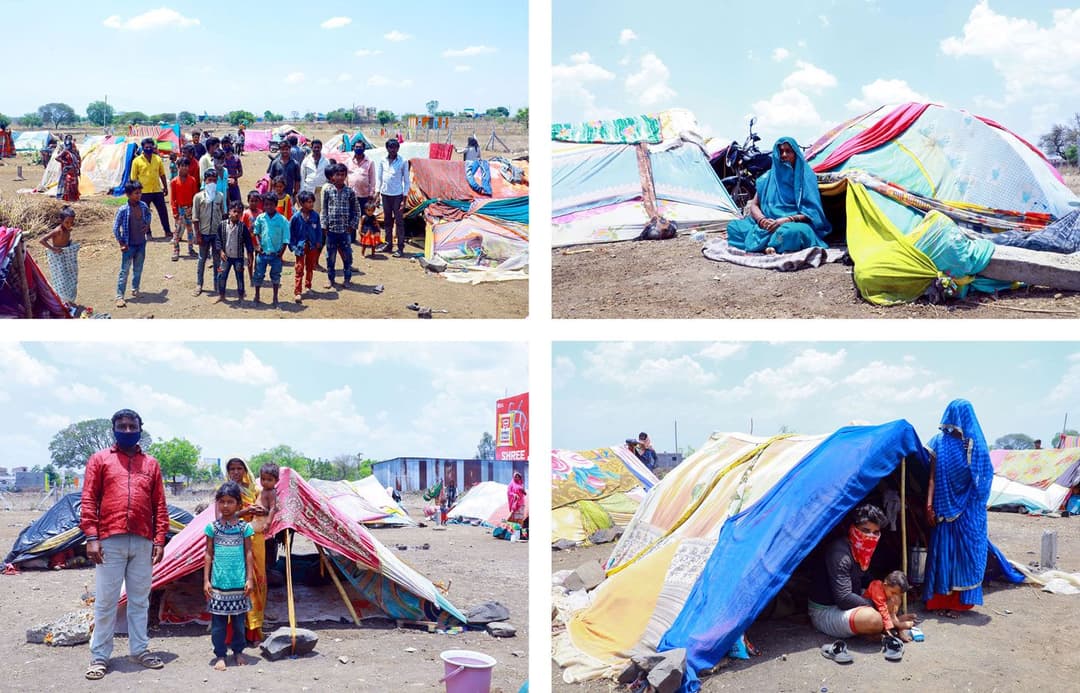
Akash was speaking to me in Renapur, 18 kilometres from Latur town in Maharashtra. All 18 harmonium-tuners have their families with them, totalling 81 people. The lockdown saw them stuck in tents on an open ground that the Renapur municipal council had permitted them to occupy.
They are from Gandhigram in Madhya Pradesh’s Jabalpur district, a village of 940 people (Census 2011) in Sihora tehsil. “If this illness [Covid-19] continues to pose restrictions on travel, we will die. We have no money. Before we begin journeying, every year, we keep all our important documents with neighbours in our village as we live in kachhe ghar [mud houses] there. So we don’t have our ‘yellow’ ration cards on us. We are starving here. Can you please request the authorities to let us go back?” asks Akash.