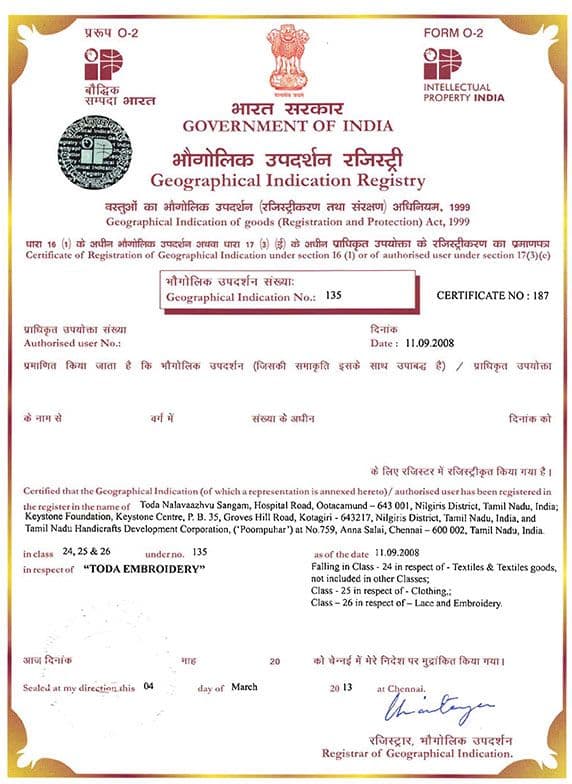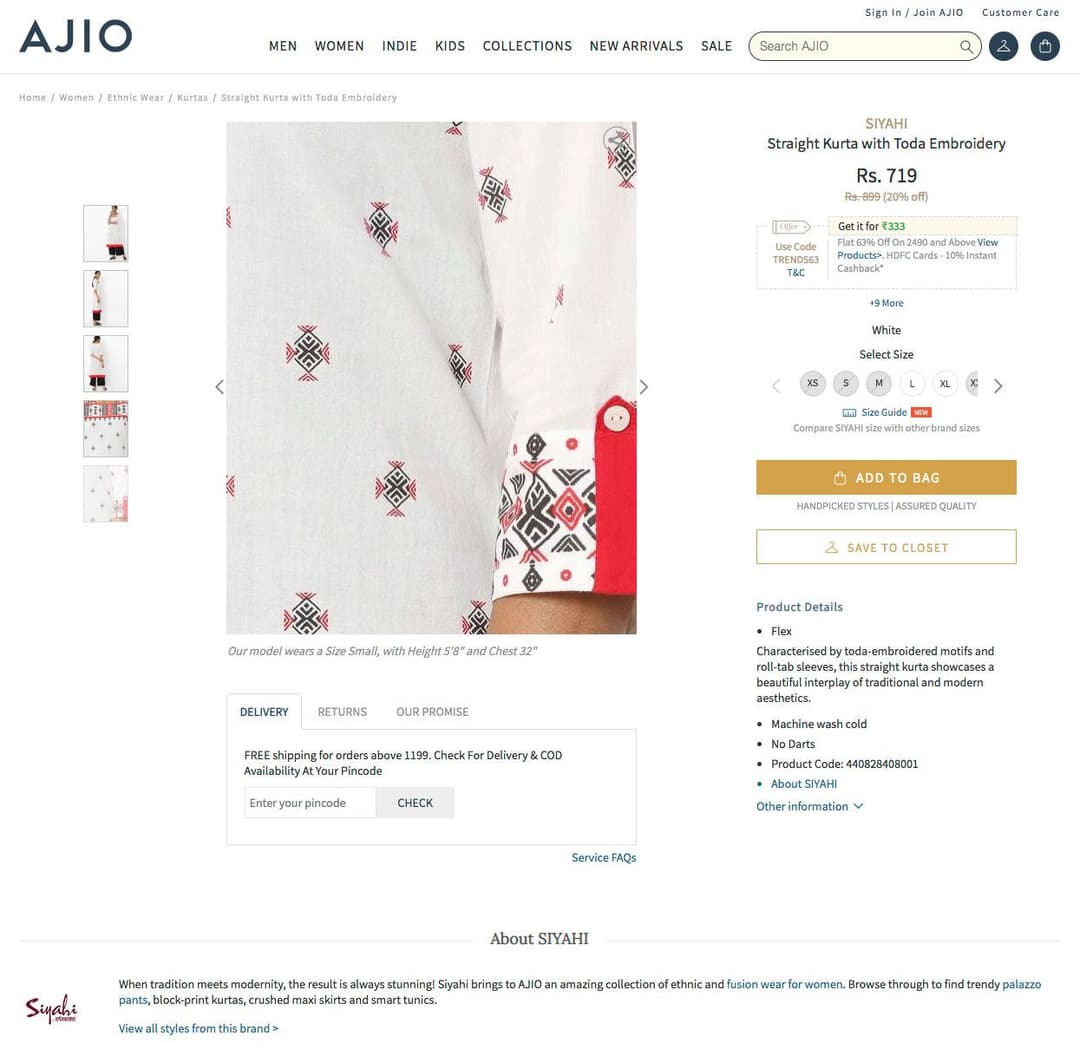

“See this photo of a tag on a kurta [marketed by a big brand] talking about ‘Toda embroidery’. It is a print stamped on the cloth! And they have not even bothered to get the facts right, calling the embroidery ‘pukhoor’ and other words that don’t even exist in our language,” says Vasamalli K.
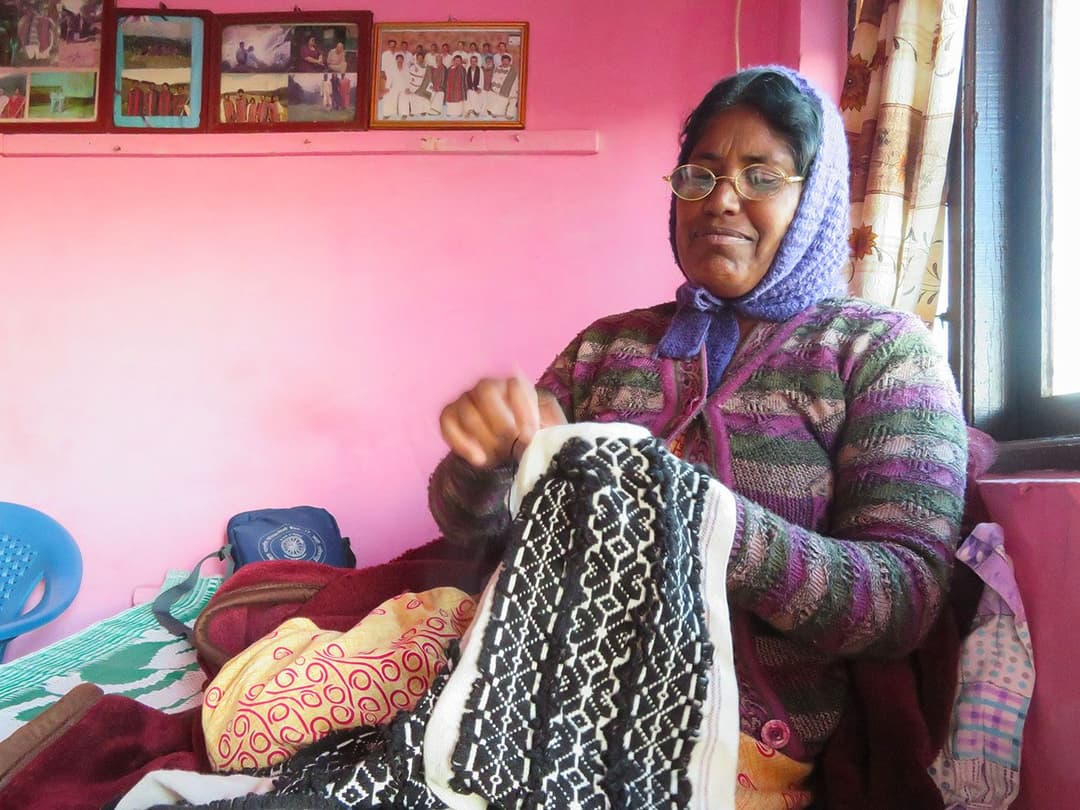
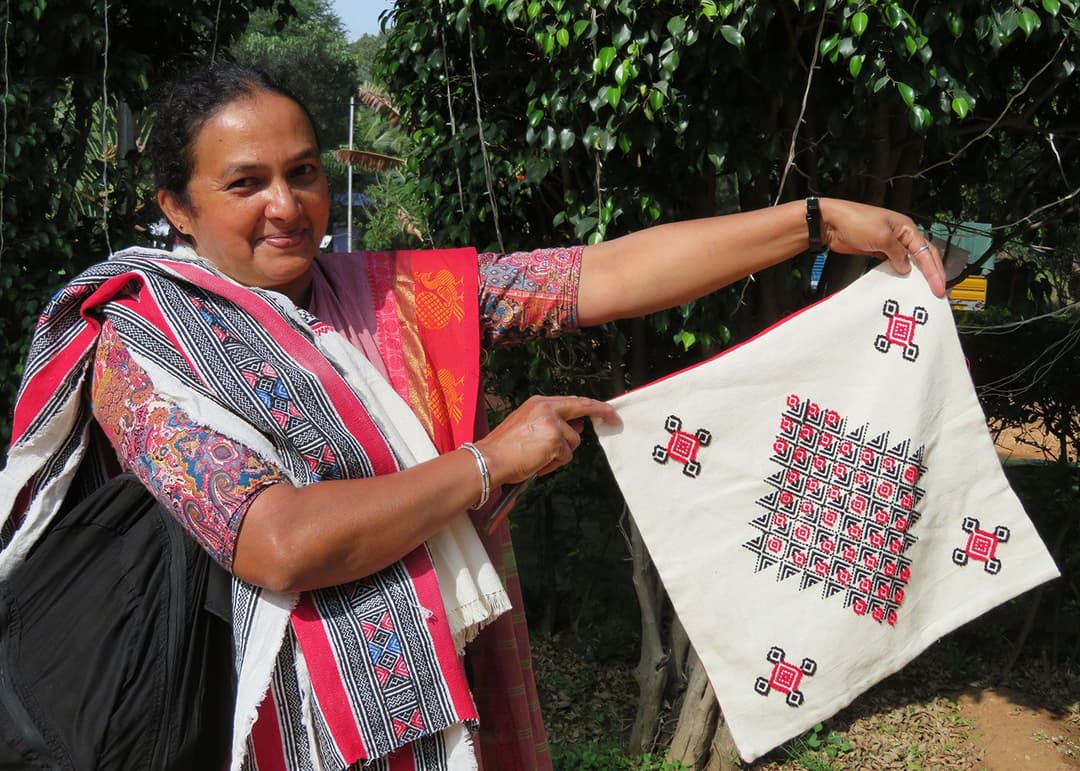
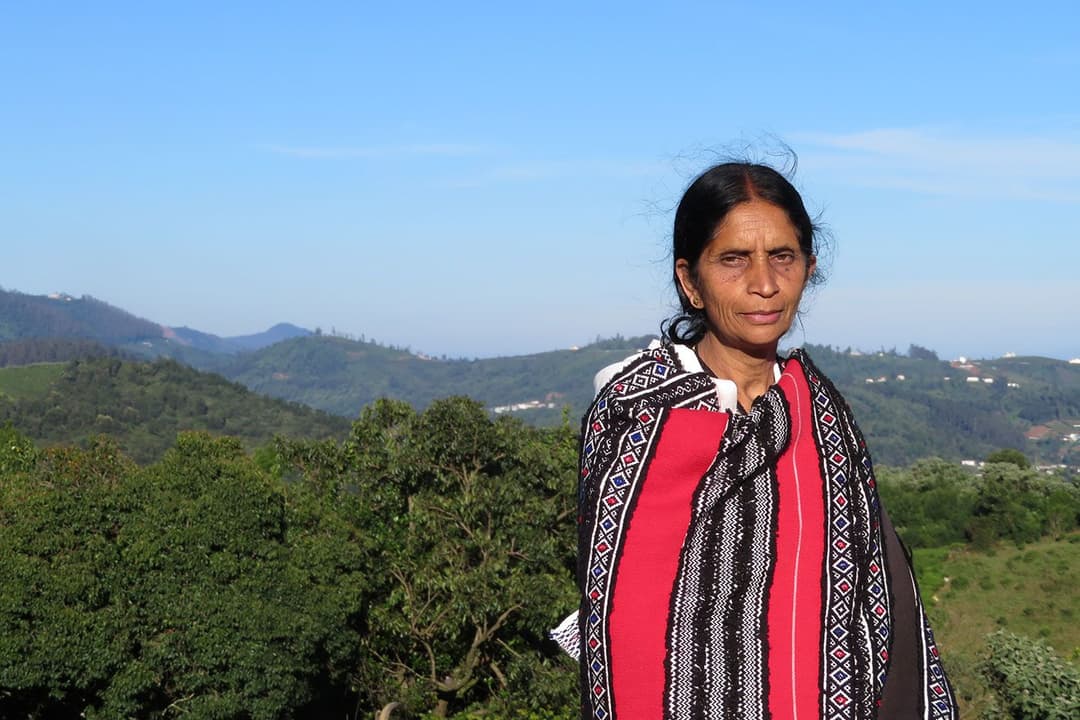
In the Toda language, the community’s embroidery is called pohor. Vasamalli, in her 60s, is a veteran embroider who lives in Karikadmund hamlet in Kundah taluk of the Nilgiris district of Tamil Nadu. Around 16 kilometres away, in Ooty (Udhagamandalam) town, Sheela Powell, who runs a Toda embroidery products outlet, was incredulous too when she saw a ‘Toda’ saree being sold online for just Rs. 2,500 by another well-known retailer. She immediately ordered it. “It was advertised as a ‘Toda embroidered saree, skilfully hand embroidered by the women of Tamil Nadu’. I wanted to know how they could price it so low and where it was done.”
The saree was delivered in a few days. “I saw it was machine embroidered, and the reverse was covered with a strip of cloth to hide the untidy threads,” Sheela says. “Yes, the embroidery was in black and red, but that was the only similarity.”
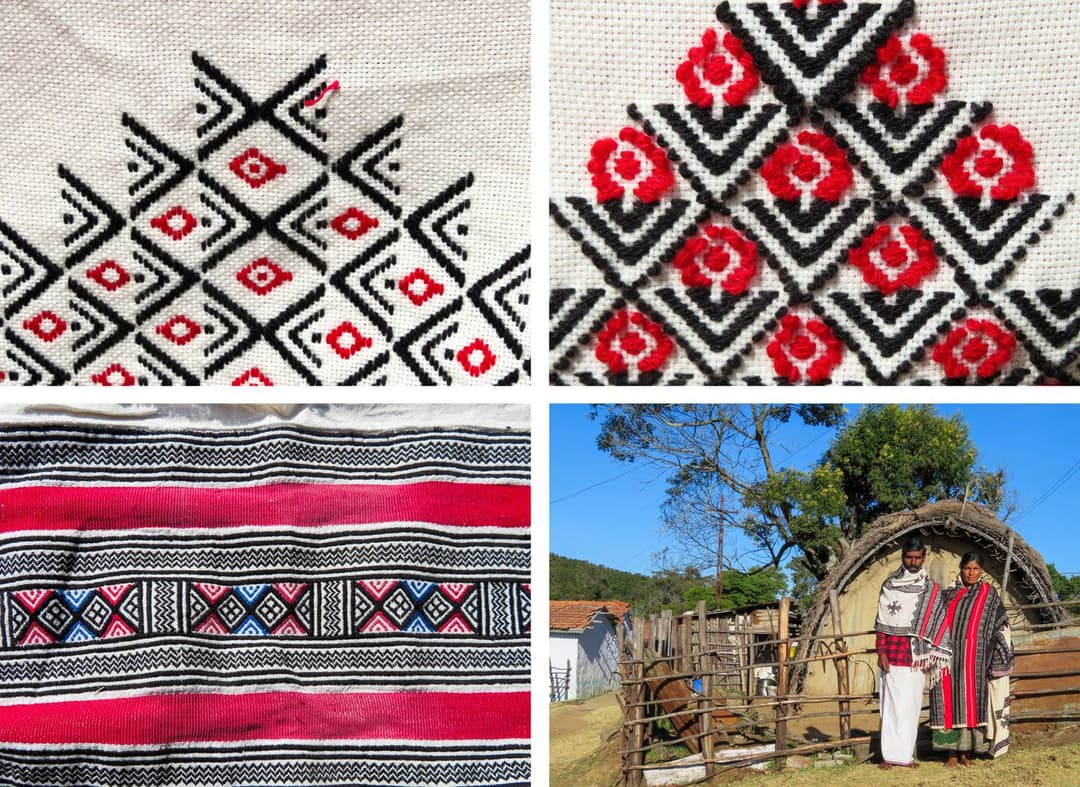
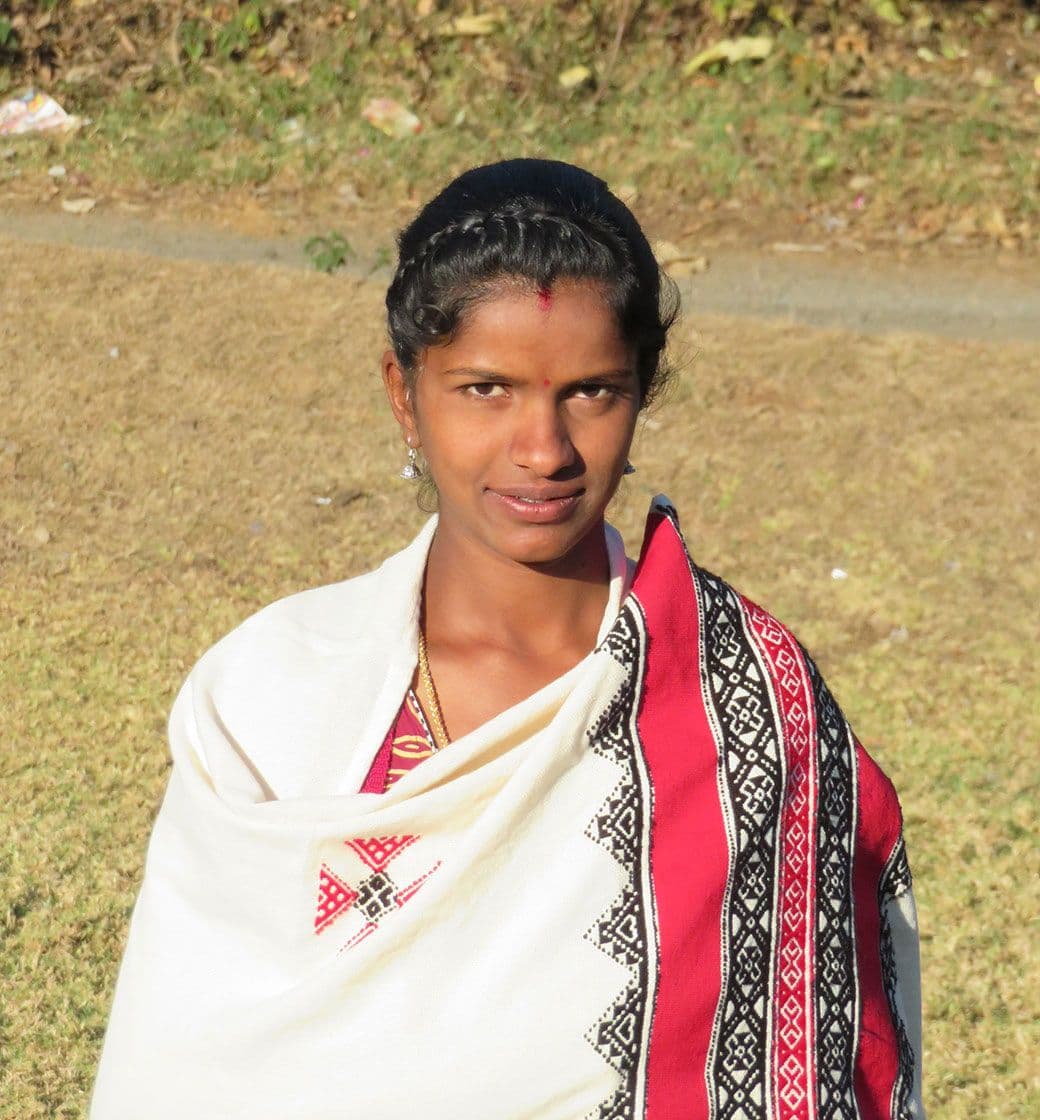
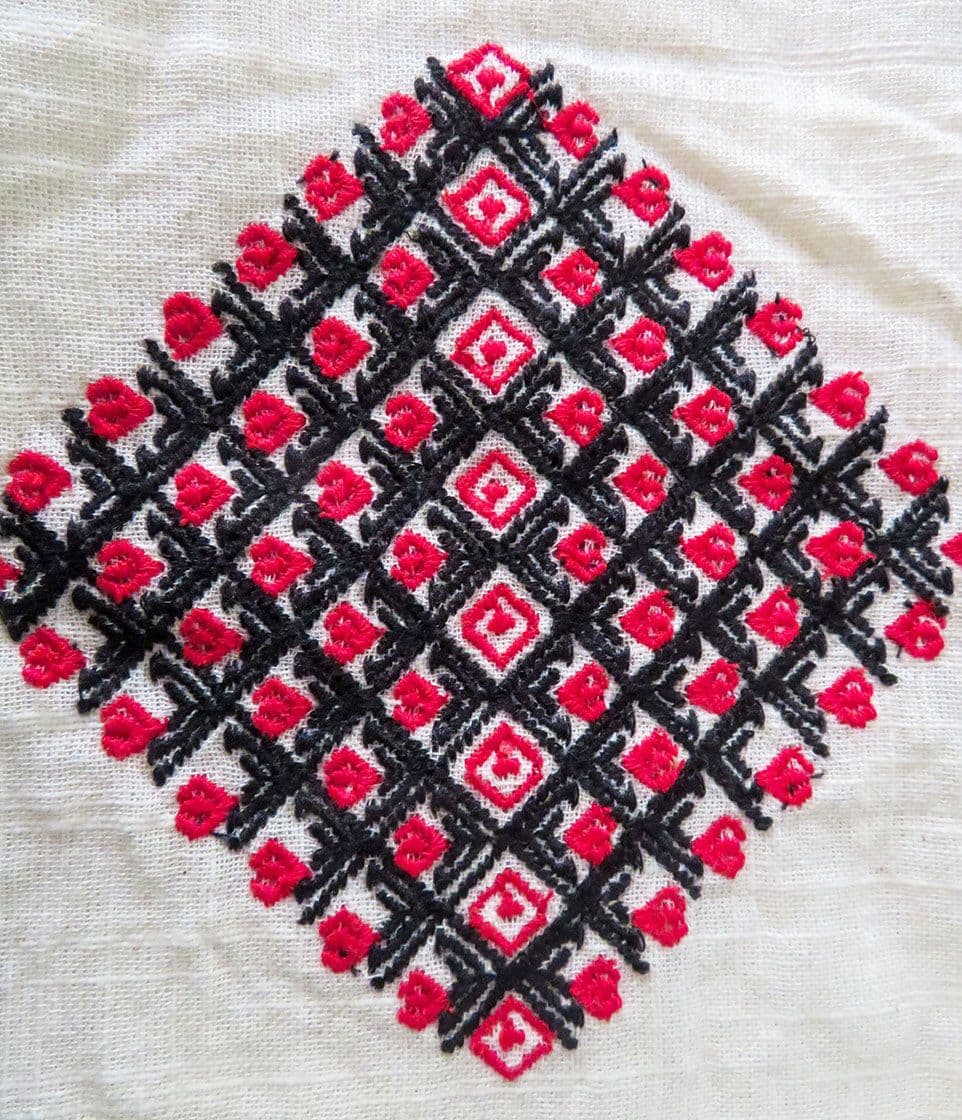
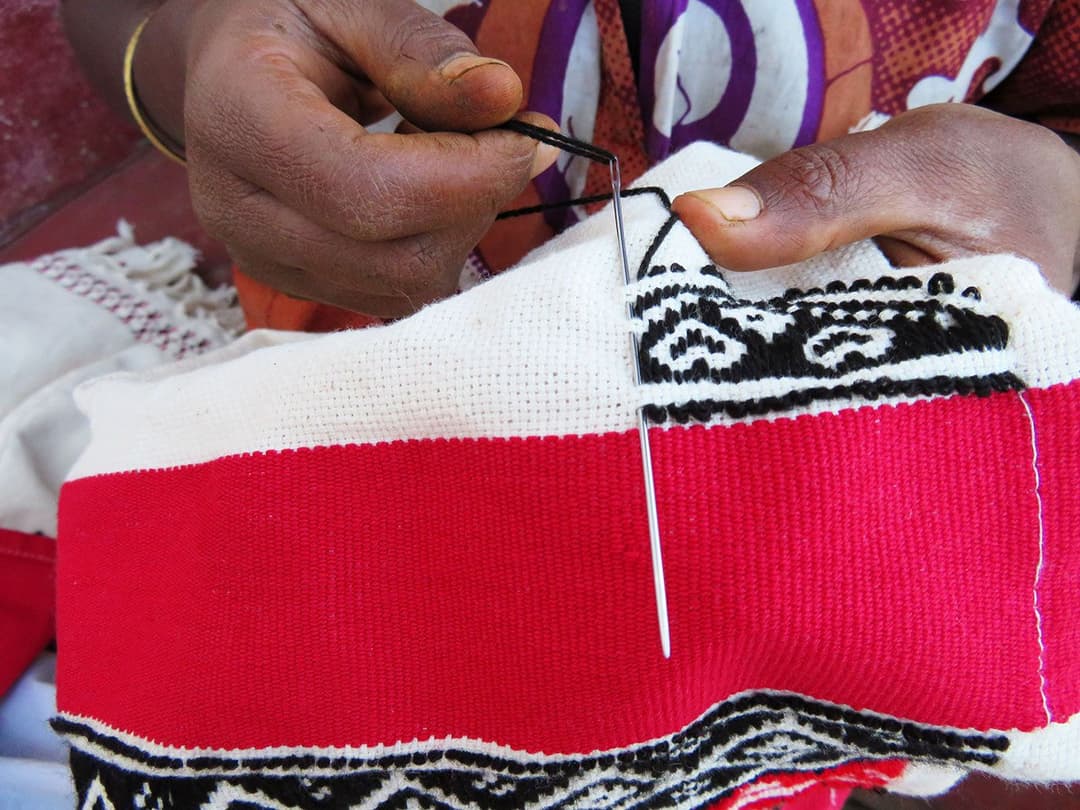
Traditional embroidery, done by women in the Toda community, has distinctive red and black (and occasionally blue) thread work in geometric designs on unbleached white cotton fabric. The traditional Toda dress is a distinctive shawl, the putukuli. Considered a grand garment, it is only worn for special occasions like visits to the temple, festivals and finally as a shroud. Around the 1940s, Toda women began to do made-to-order piece work for British buyers – tablecloths, bags and other items. For the next many decades, sale was limited to those who requisitioned the items. Only cotton thread was used in the past, though now most Toda women use wool thread, because, they say, it is less expensive and faster to work with.