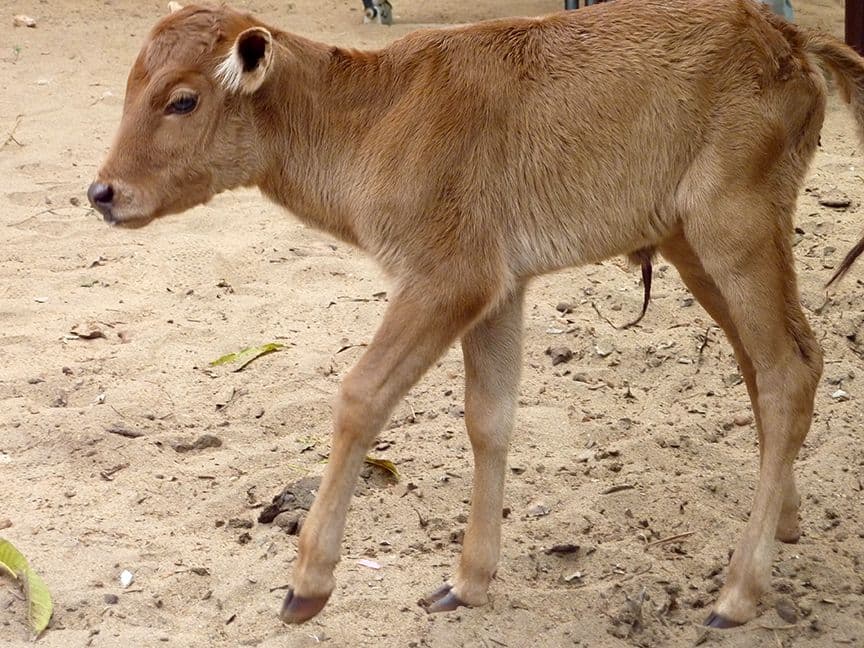

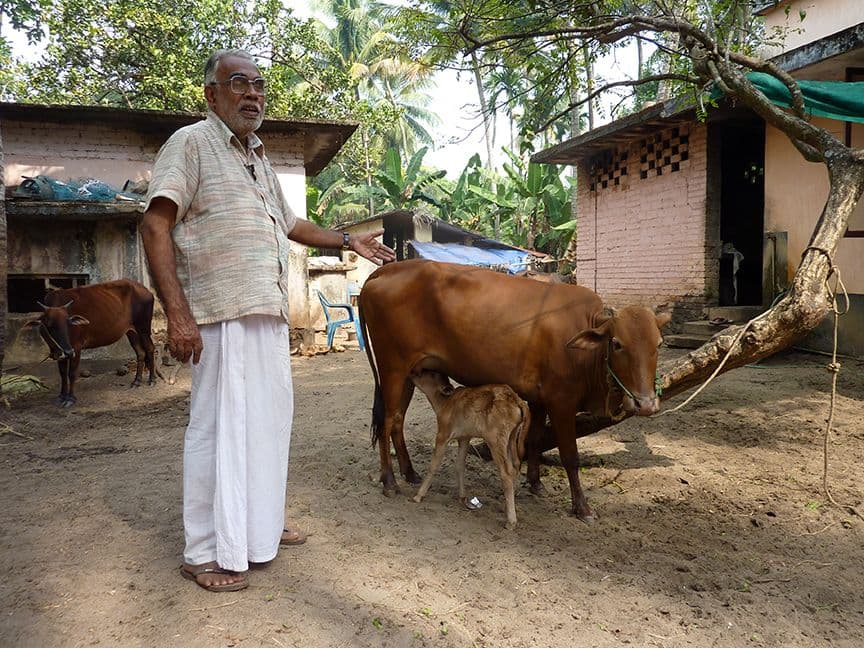
Visitors flow in and out of Chandran Master's compound in P. Vemballur village in Thrissur, Kerala. Students, teachers, trainees in animal husbandry work and even officials walk around like it's a public space. And in some ways, it is. People come a distance to see his 22 cows and two bulls – mostly from rare indigenous breeds. Also, the many kinds of mango, bamboo and fish he has cultivated, again species native to India. The former English teacher also boasts a classic Kathiawari horse and several native breeds of poultry. But the star attractions are the tiny Vechur – the world's smallest cow – and other dwarf varieties of Kerala cattle.
The visitors' interest also reflects a growing concern in the state about the fate of domestic breeds of cattle and other livestock. Like elsewhere, a strong emphasis on crossbred cattle that aimed at higher milk production also saw a sharp decline in native animals. There is now a serious debate on the results of that approach. Kerala's cattle population declined by around 48 per cent between 1996 and 2007.
Dr. R. Vijayakumar, Director of Kerala's Animal Husbandry Department (AHD), says the state's new breeding policy “limits exotic [that is, non-native] germplasm to 50 per cent of cattle. We are now also propagating native breeds. We even conduct artificial insemination with the semen of native bulls.” And while the number of animals may have fallen between 1996 and 2007, “milk productivity of cows in the state rose in that period. From an average of six litres a day to 8.5 litres, even as crossbreeds came to account for 87 per cent of Kerala's cattle.”
However, the cost of milk production is much higher with the crossbreeds. The feed requirement of native dwarf breeds like Vechur and Kasargode are very minor. Their feed-to-milk conversion is very good. The crossbreeds are high-maintenance animals and are disease-prone. “See this Vadakara Dwarf,” says Chandran Master. “I doubt I spend five to ten rupees on her feed daily. Still she gives me three to four litres. But the quality of her milk is highly prized and I could get Rs. 50 a litre for it. So even in that way, the benefit is greater. There is no high standard of feed required either. Kitchen scraps and leftovers can be used. And they don't require special sheds or anything.” He, however, does not sell milk. He does sell “very few calves each year when the numbers exceed my capacity to manage.”