
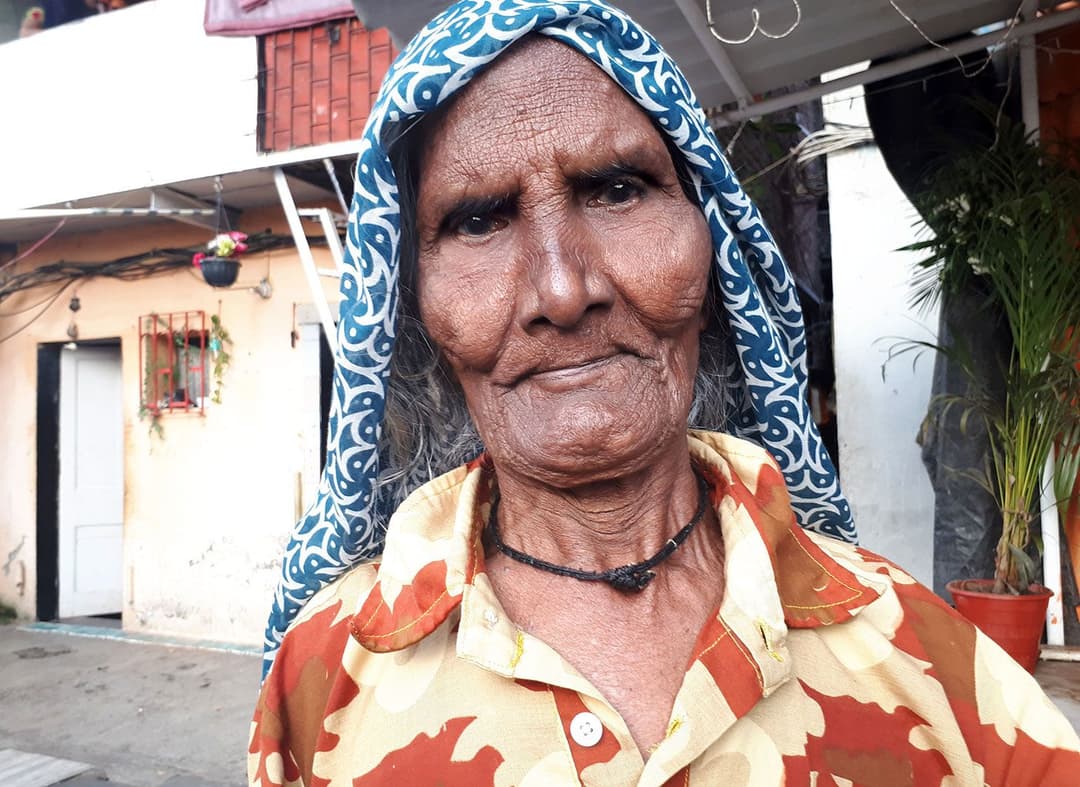
“Nobody has ever interviewed me. I will tell everything…”
‘Everything’ includes some 70 years of cleaning toilets, sweeping, washing and scrubbing multiple homes in Mumbai’s Khar West suburb, for a pittance. As late as in the 1980s and early 1990s, Bhateri Sarabjeet Lohat was getting Rs. 50 a month for cleaning all 15-16 homes in an entire building. That, and leftovers or throwaways from their kitchens.
“My name is Bhateri Devi. I’m originally from Sanghi village in Rohtak district of Haryana. I don’t remember in which year I came to Mumbai, but I was newly married then. My mother-in-law had got the job for me, as a replacement for one of our relatives. My husband, (also a sanitation worker), died a few years later when my son was just two or three. He used to work in Dadar and while returning home in a local train, he stood at the door and was hit by an electric pole. He died on the spot.”
It’s been decades, but as she narrates this, the pain still comes through. Bhateri Devi, is breathing heavily. She lives in Valmiki Nagar, Bandra East, Mumbai. Her Aadhaar card gives her birth year as 1932, which would make her 86 years old. But her lined and wrinkled face suggests Bhateri is over 90 – which she asserts she is. Her son Harish died on June 30 this year, well into his 70s. Bhateri got married when she was merely 12 or 13, after which she came to Mumbai with her husband Sarabjeet Lohat.
Her entire family (and most relatives from her husband’s side) were in Mumbai, having migrated from Haryana. Almost all of them were sanitation workers in private jobs. Most of the people living in this locality are, like Bhateri, Dalits from the Valmiki community who migrated to Mumbai from Haryana at different times, in search of work. Like Bhateri, they all speak Haryanvi at home. Several of Mumbai’s Valmiki settlements comprise of people from Haryana. That is particularly so in Bhandup Tank Road, Dombivli, Matunga Labour Camp, Vikhroli and Chembur.


