
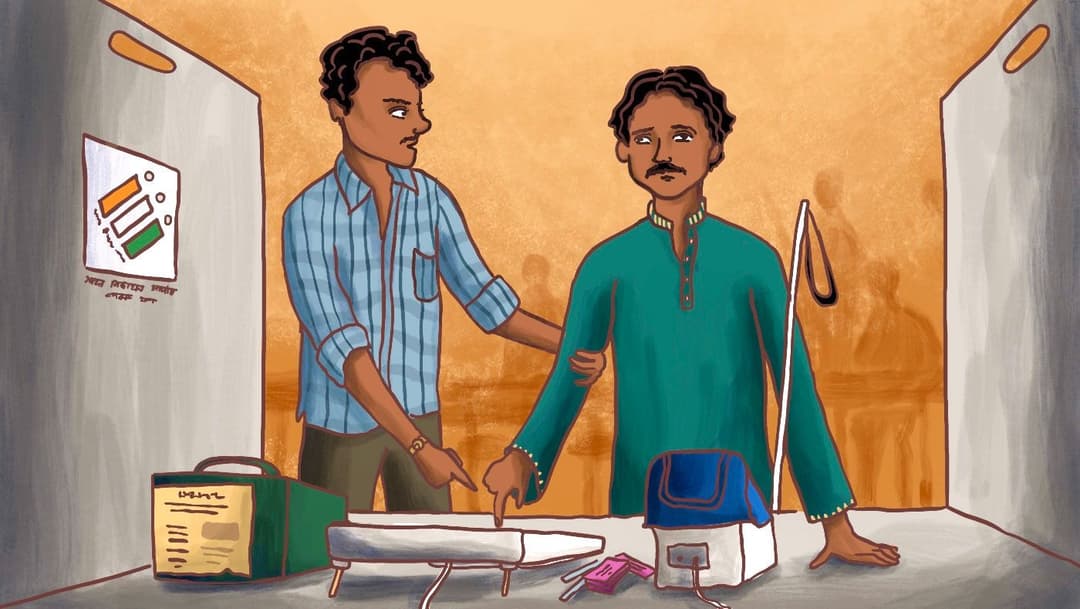
This is Bablu Kaibarta’s second chance to vote in a general election.
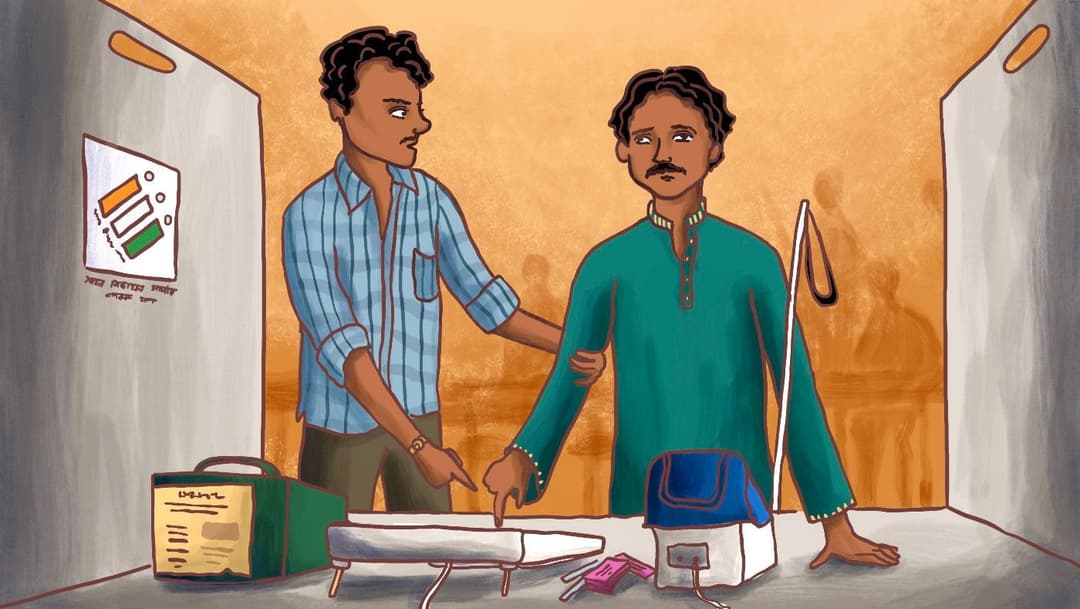
When Bablu went to cast his vote for the first time in the last elections, the officials let him through. He didn’t have to wait in any queue. But once he went into the polling booth in the village of Palma in West Bengal’s Purulia district, Bablu was not sure how he would cast his vote.
Bablu, 24, is a person with visual disability, and there were no provisions for Braille ballot papers or a Braille EVM (electronic voting machine) at the local primary school which was doubling up as a centre for the 2019 General Elections.
“I didn’t know what to do. What if the person helping me lied about the symbols?” Bablu, a second-year undergraduate student, asks. Even if the person told the truth, he argues, his democratic right to a secret ballot would also be infringed upon. Feeling slightly nervous, Bablu still pressed the button pointed out to him and verified it after coming out. “Thankfully, the person had not lied to me,” he says.
The Election Commission of India specifies the use of braille ballots and EVMs for PWD-friendly (Persons with Disability) booths. “There are many provisions on paper,” says Shampa Sengupta, director of the Kolkata-based Sruti Disability Rights Centre. “But implementation is poor.”
The general elections are again on hand, but Bablu is now unsure if he should make the journey home to vote in the sixth phase of the General Elections, 2024. Bablu is registered as a voter in Purulia which goes to the polls on May 25.