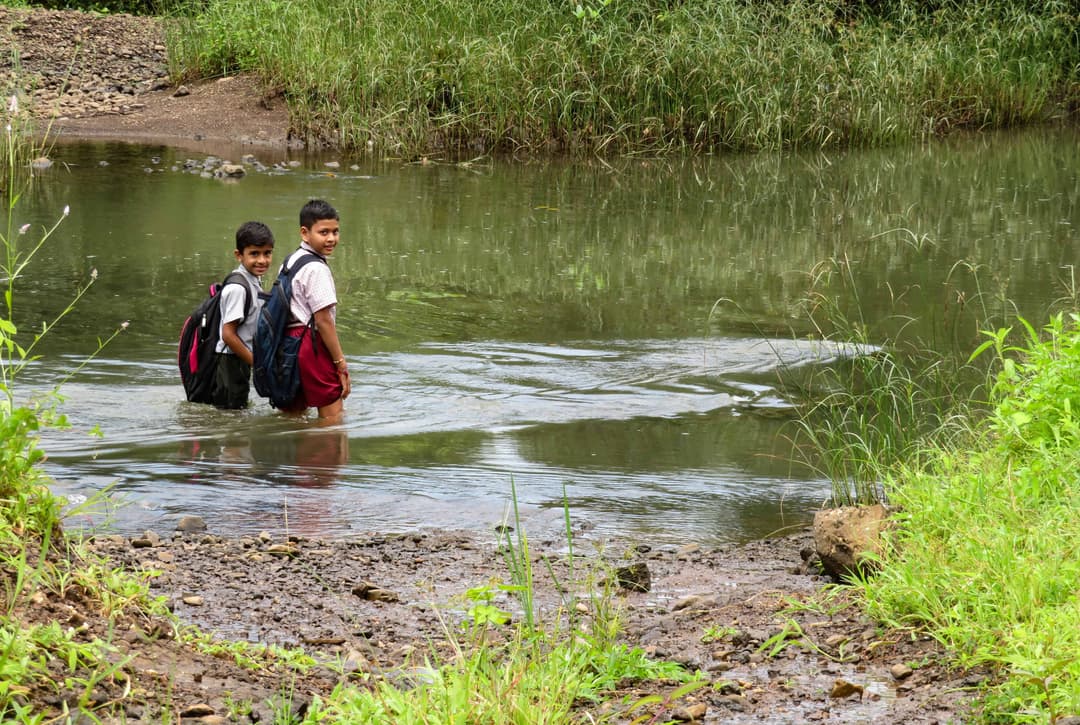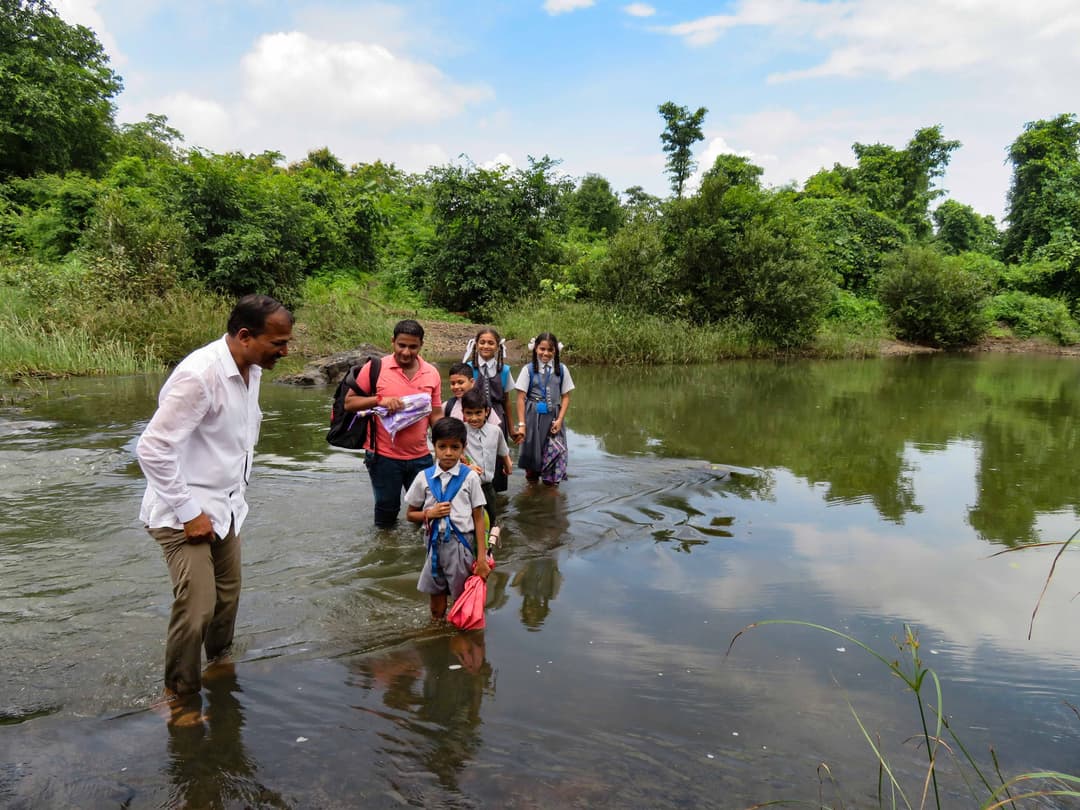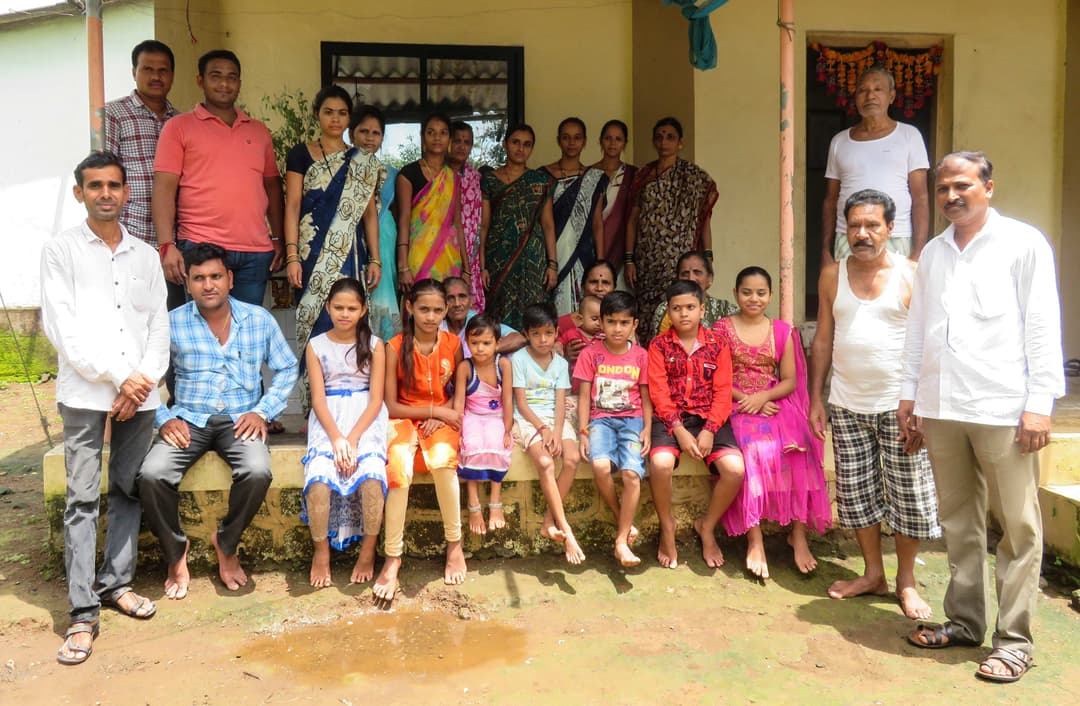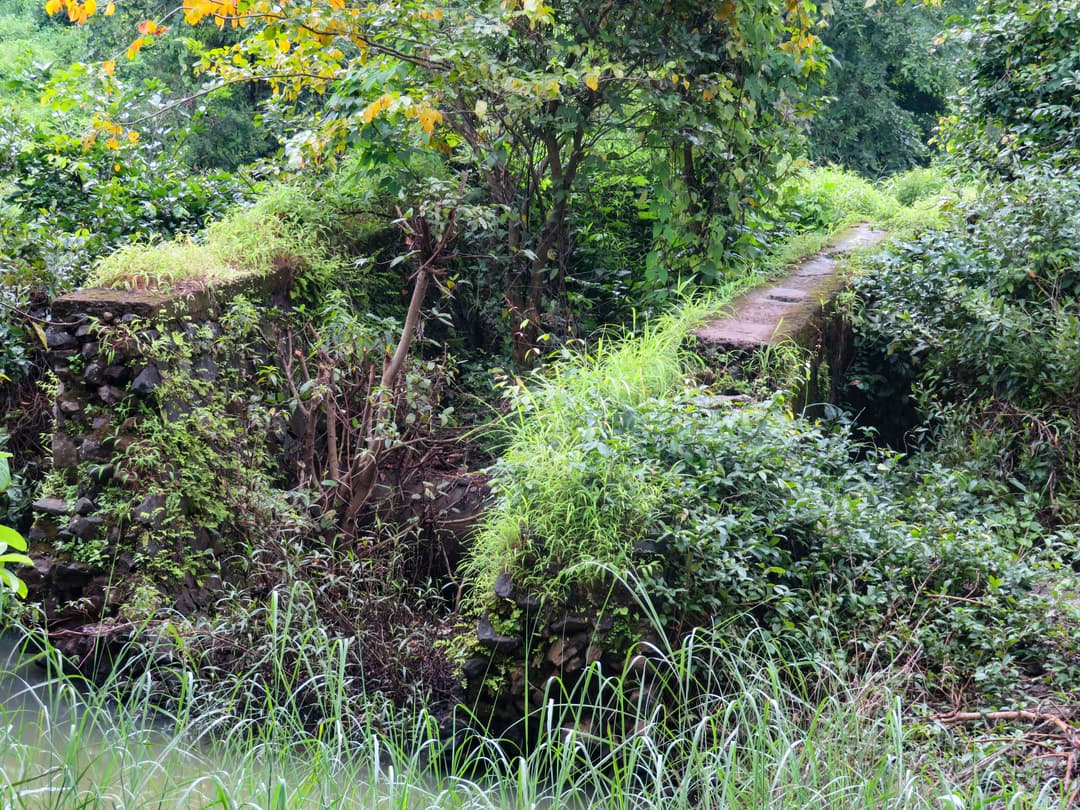

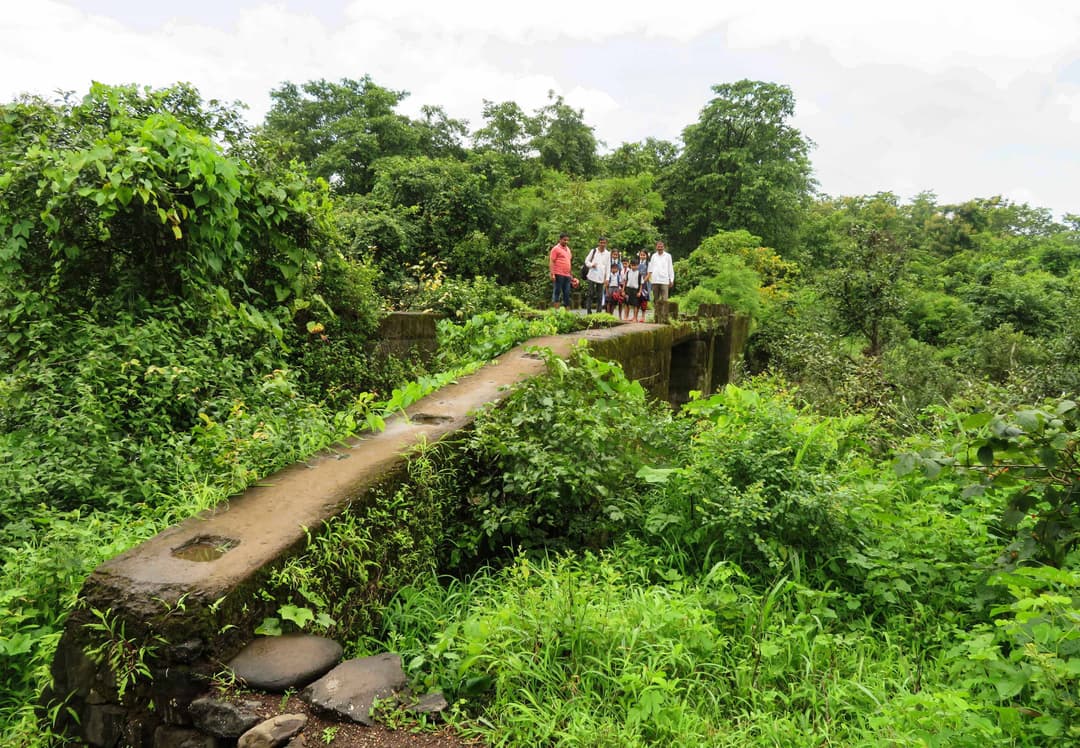
Yash Mahalunge risks his life every day to attend school in the monsoon. Along with a bunch of other boys and girls, and a few parents, eight-year-old Yash walks on the slippery narrow wall atop the pillars of a partially collapsed bridge. From there, it’s a straight drop, several feet below into the bushes and sludge.
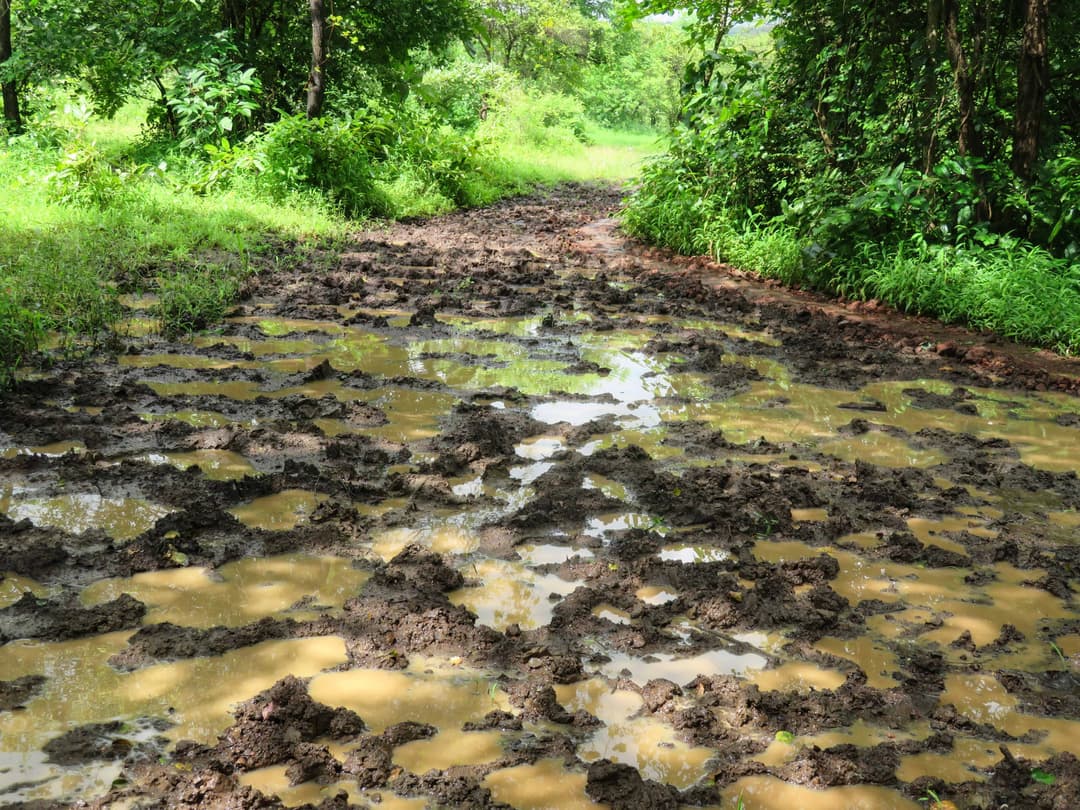
Twice every morning, on their way to and from school, the group walks single file, most of them barefoot, holding umbrellas in one hand and shouldering heavy backpacks. After the 30-second perilous walk, their feet touch the safer concrete surface of the remaining bridge. Then they march on a muddy pathway to reach their houses in Aure Palheri hamlet – two kilometres from their school in Aware village.
“I feel scared when I look down. I feel dizzy. I hold baba’s [father’s] hand very tightly,” says Yash.
Aure Palheri’s 77 residents (Aware gram panchayat office data) didn’t have to do this tightrope walk until 2005. A small bridge allowed them to cross this stream of the Bhatsa river. But on July 28 that year, the heavy rains washed away some of the bridge built by the Thane district council in 1998. Only the two narrow side walls – abutments – remained in that broken portion.