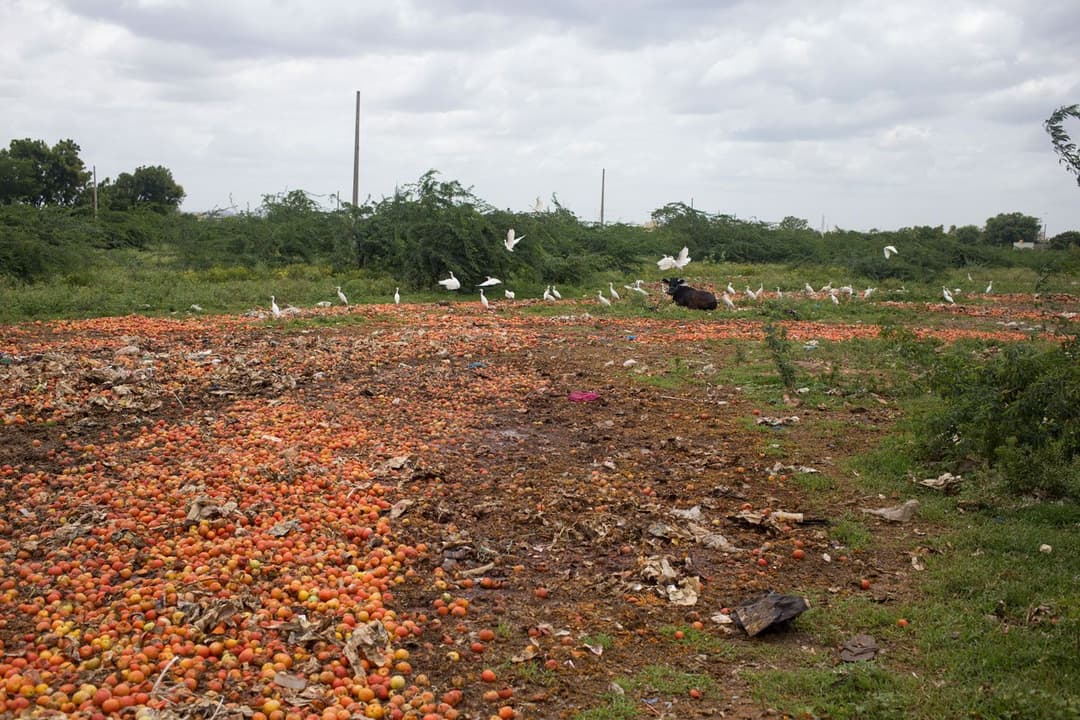

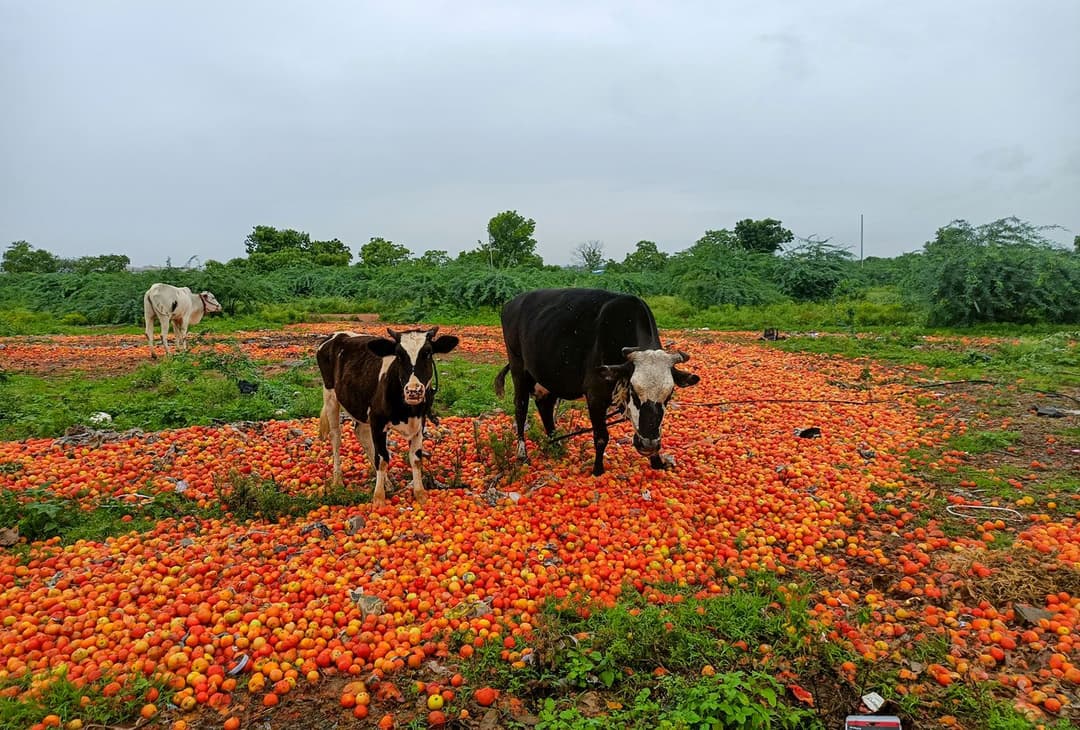
All the tomatoes you can eat – for free. If you’re a cow, and in this season, that is. In other seasons, it helps if you’re a goat.
This field near the Anantapur tomato market yard serves as a dumping ground when the prices of this fruit or vegetable dip. (Tomatoes are fruits that are considered vegetables by nutritionists, says Encyclopaedia Britannica). Farmers who’ve brought in their produce from nearby villages usually throw away their unsold tomatoes here. This spot is often crowded with goats. “But if goats eat tomatoes during the rains, they get flu,” says P. Kadirappa. He’s a shepherd who brings his goats into this town from Bukkarayasamudram village, barely five kilometres away, and also in Andhra Pradesh’s Anantapur district.
That’s a bit of a revelation, that goats can have more delicate constitutions than cows – and even contract the flu. It’s been raining in Anantapur over the last few days and so the goats were denied their favourite fruit. They did, however, hang around nearby chewing weeds and grass, perhaps casting envious glances in the direction of their larger rivals. The shepherds normally pay nothing to the farmers for this feast for their animals, as, sometimes, thousands of tomatoes are thrown away each day.
Tomato prices in Anantapur market usually fluctuate between 20 and 30 rupees a kilo. They are found cheapest at the Reliance Mart in town. “We once sold them for just around 12 rupees a kilo,” a staffer at the Mart says. “They have their own suppliers,” a vegetable seller says of the Mart, “but we buy at the market yard and usually throw away what’s going bad at the end of the day.”