“My elder son [an autorickshaw driver], and my daughter-in-law are going out to work in the morning, before the police start patrolling. He drops her in his auto, she cooks for a family and then they return in the evening,” an elderly woman says. While many working class people continue to toil secretly, the well-off look at the pandemic as a much-needed break in their lives. "Coronavirus holidays are here," I heard a man say outside a supermarket on March 19.
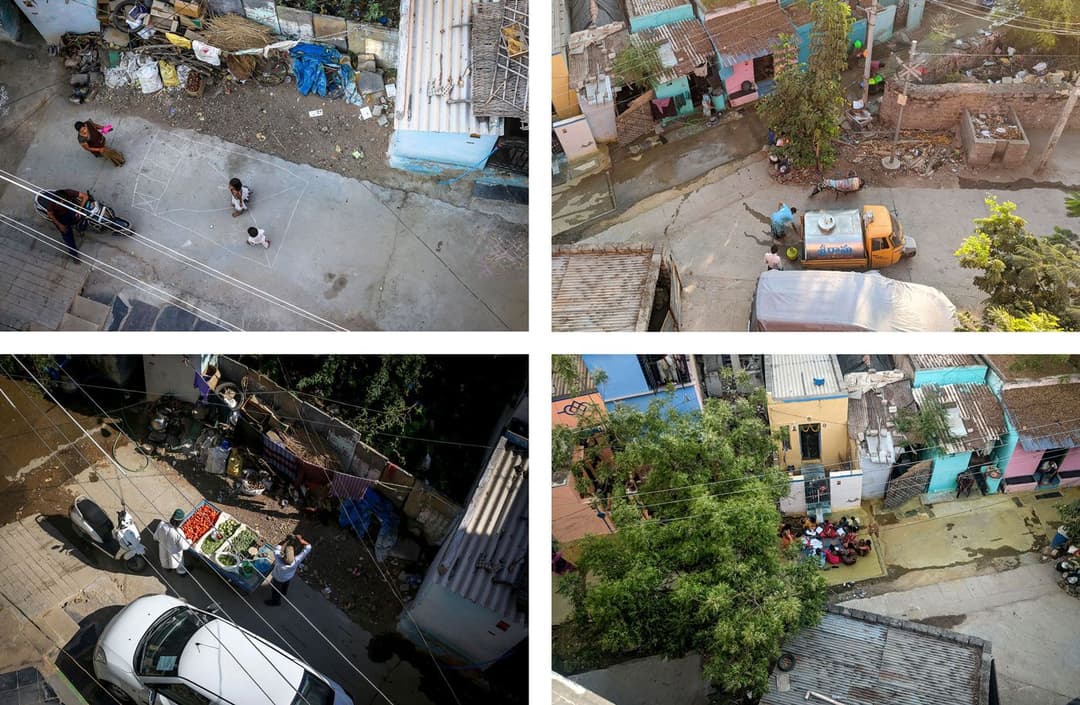
The balcony of our house gives us a bird’s eye view of Sangamesh Nagar. Our neighbouring families live in cramped houses with one or two rooms. They spend a considerable amount of their time outside their homes. Although we tried to explain the importance of physical distancing to some of our neighbours, living in a stuffy house under a fan in the perpetual summer of Anantapur is not easy. Amongst our neighbours are auto drivers, vegetable sellers, pig-rearers, teachers and domestic helpers. Many others also weave baskets or make winnowing fans. For those last two groups, every day is a work-from-home day. They continue despite the lockdown.
On most days, children here wake up early and help their parents fetch water, a very scarce and important commodity in Anantapur district. A few local companies sell ‘purified drinking water’ on the back of modified autorickshaws. One of them announces the arrival of its product every day on a loudspeaker with an upbeat song from a 2014 Telugu movie. It was there on March 30, too, and a few women filled up their plastic pots with the water. The company’s pre-recorded loudspeaker announcement urged people to buy their ‘purified’ water at a time when water from other sources is ‘contaminated with bacteria, viruses…’
Although the lockdown is slowly changing routines, people can't afford to follow the government’s instructions, which are centred on urban notions of individuality. Children continue to play their games (like hide and seek, cops and robbers, which don't require any props) on the street. For these kids, the lockdown is an extended holiday. Only recently did the sellers of goodies stopped coming. The vendor who announces himself into our street chanting verses about burnt groundnuts, stopped coming on March 21. Since March 28, the ice cream seller has not shown up. The vegetable seller continues to appear.
For our neighbours, whose homes are so cramped that they cannot all at once afford to stay indoors the whole day, stocking up essentials or ‘social distancing’ are nearly impossible. Adults continue to sit around boxes etched on the floor with their dice and play their favourite board game, meka-puli (goat and tiger).