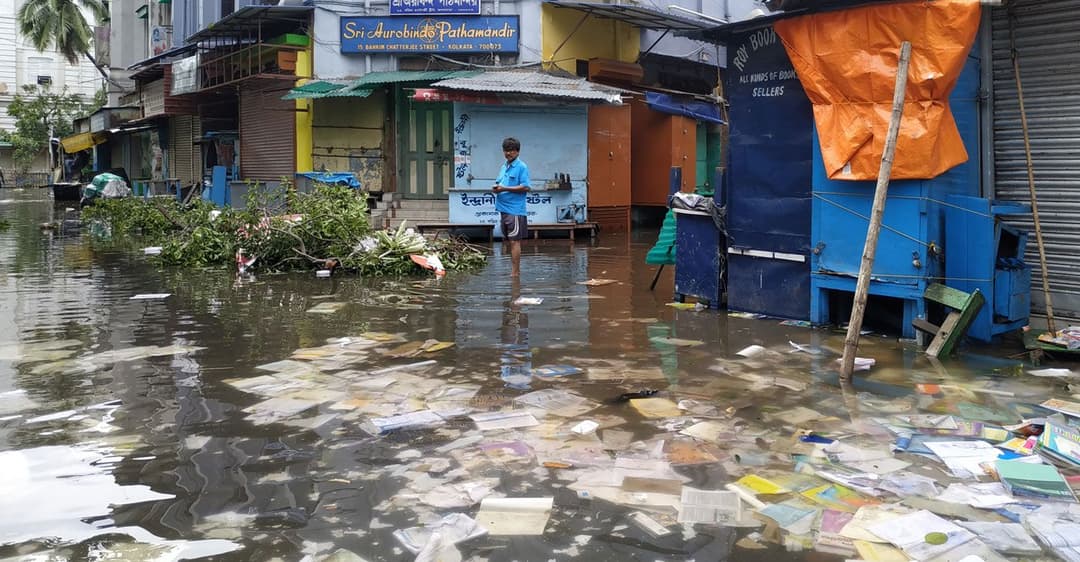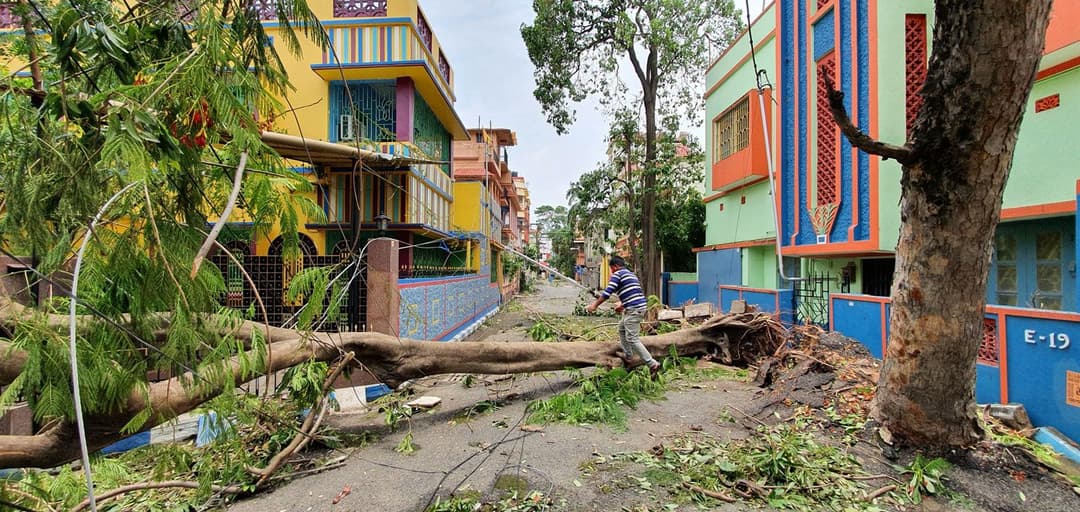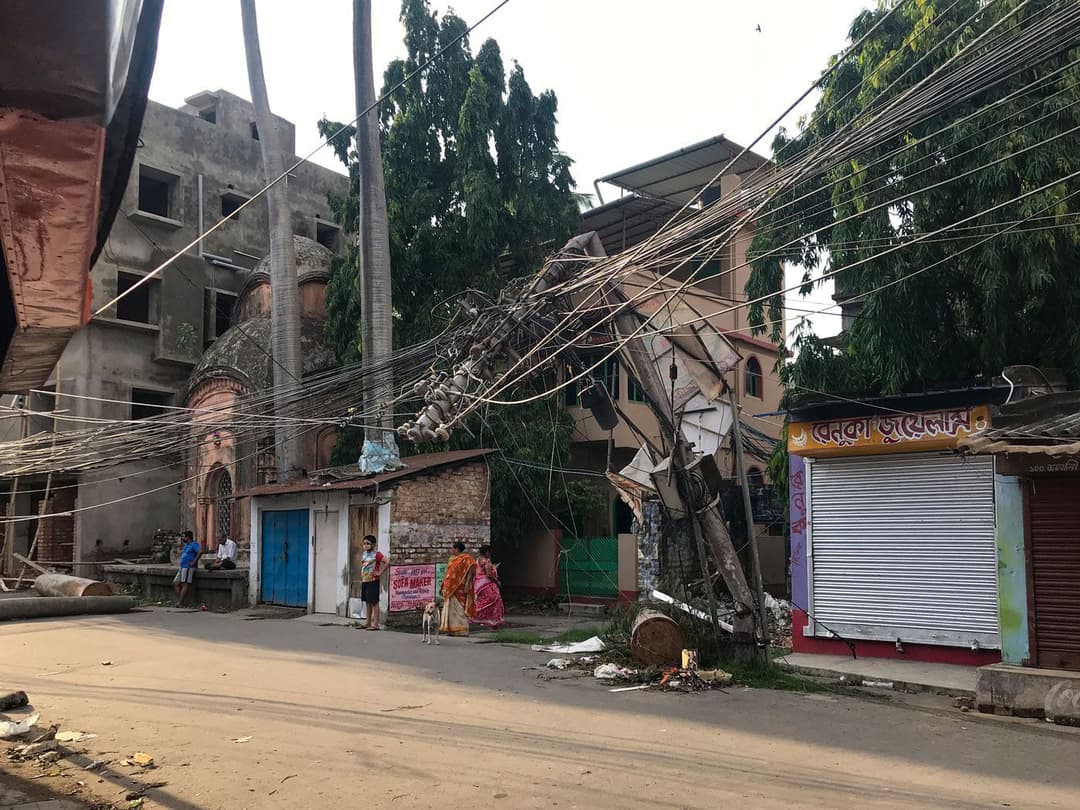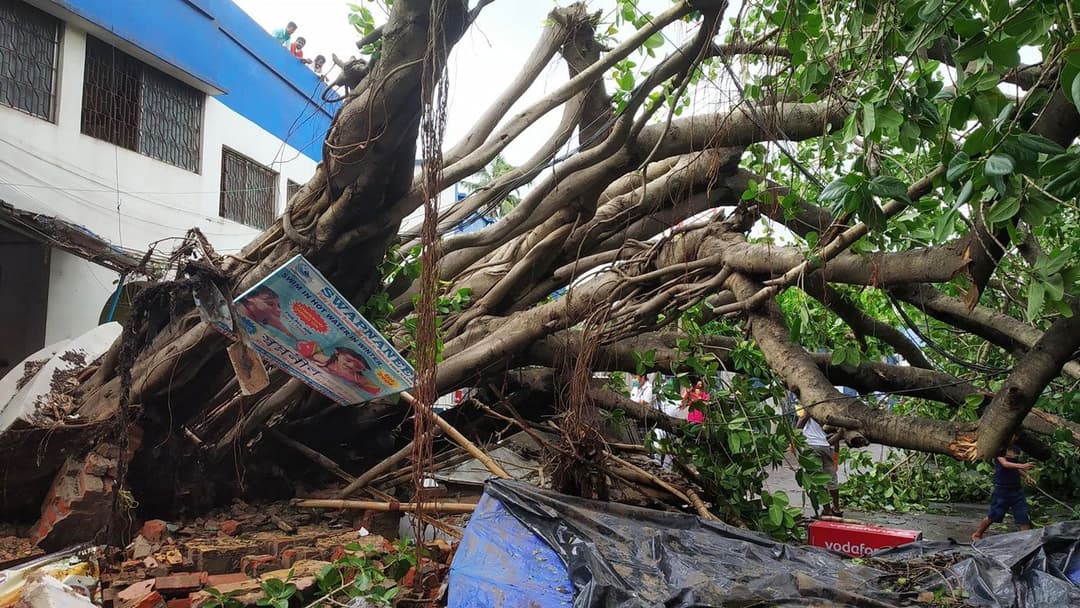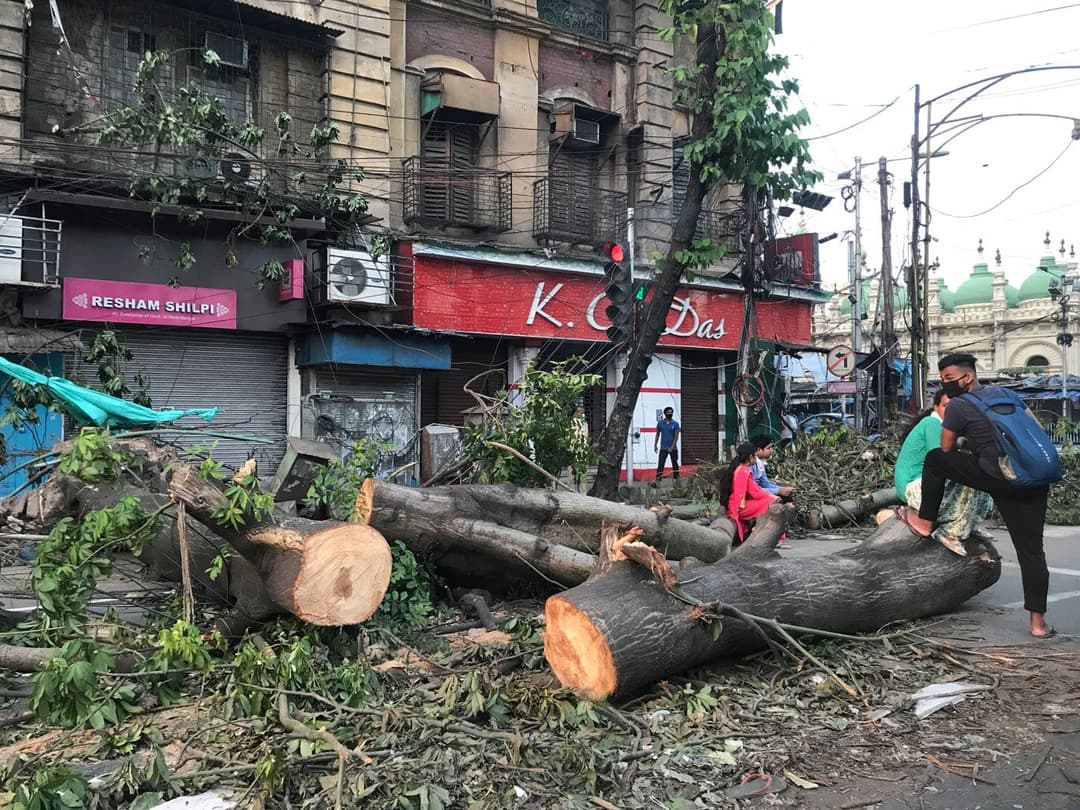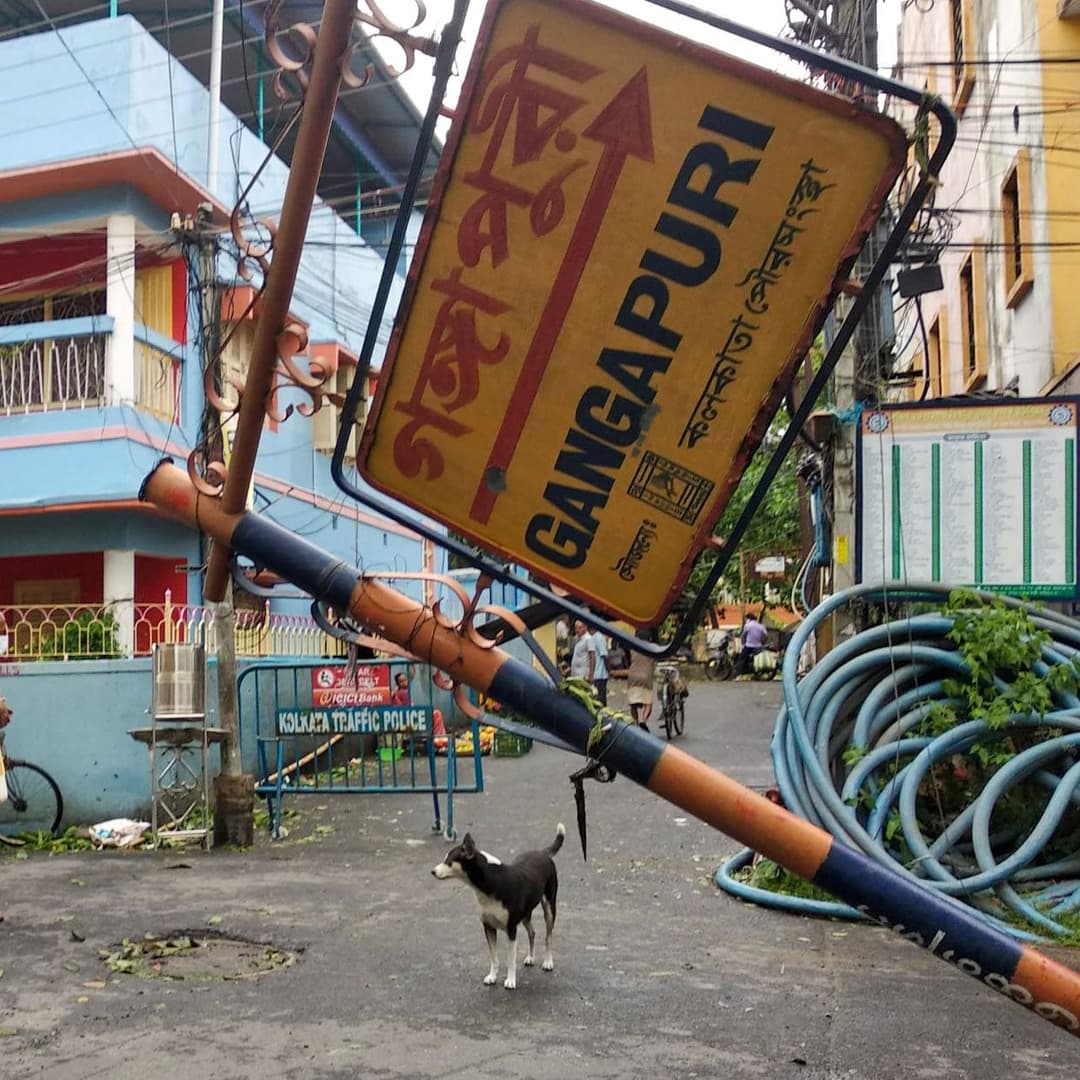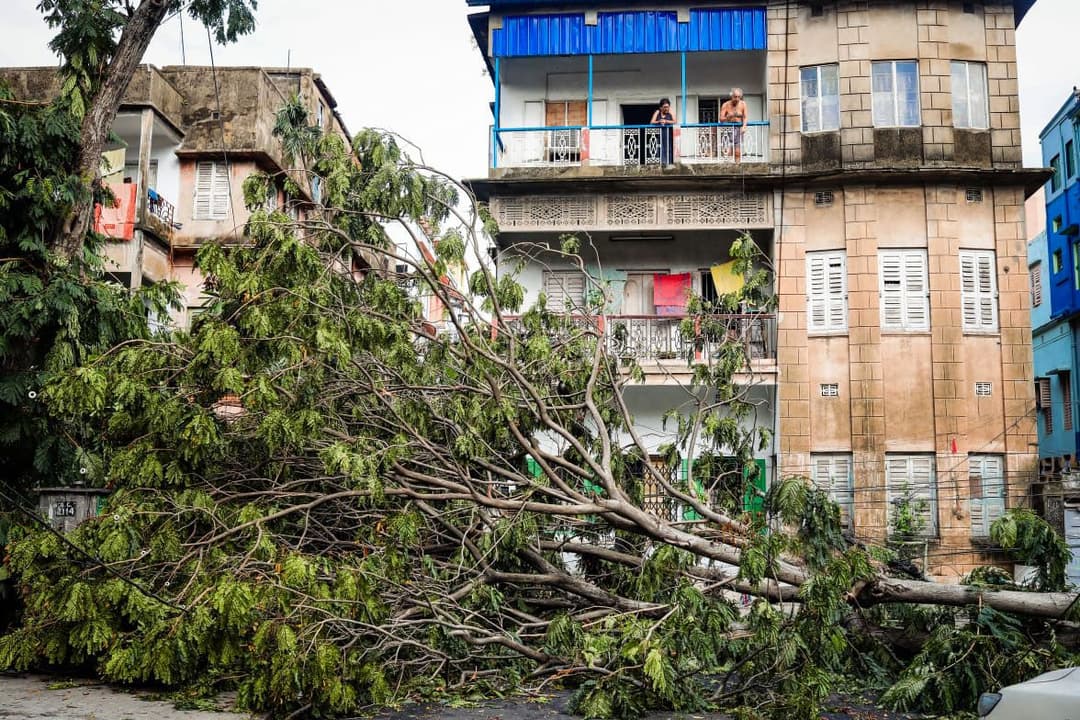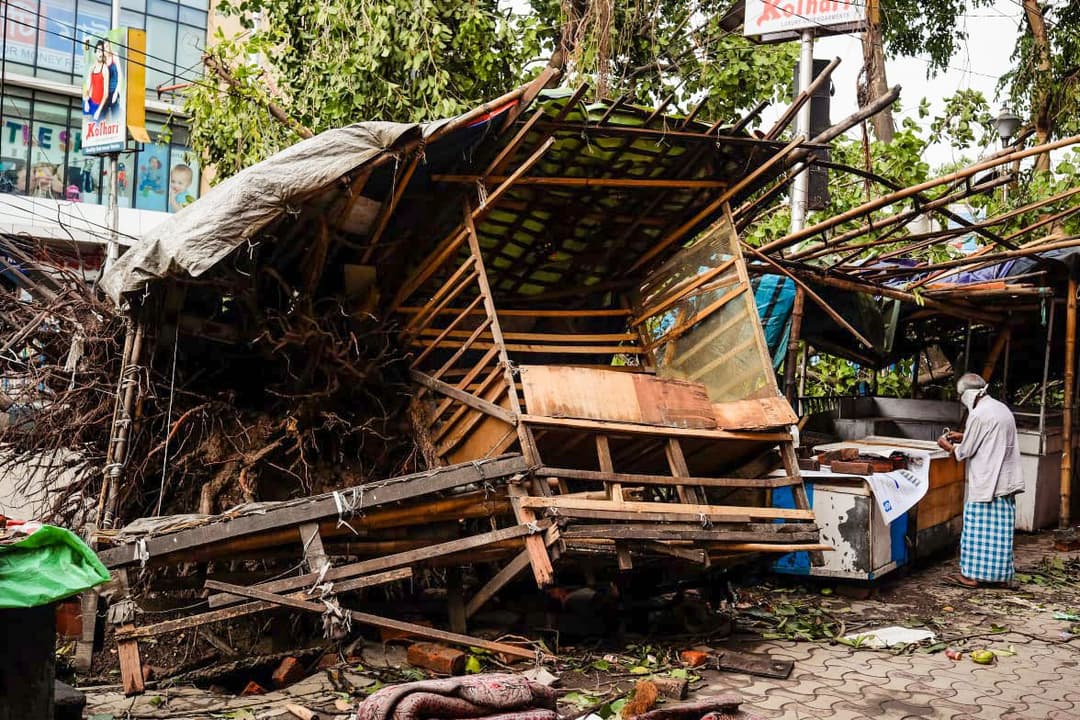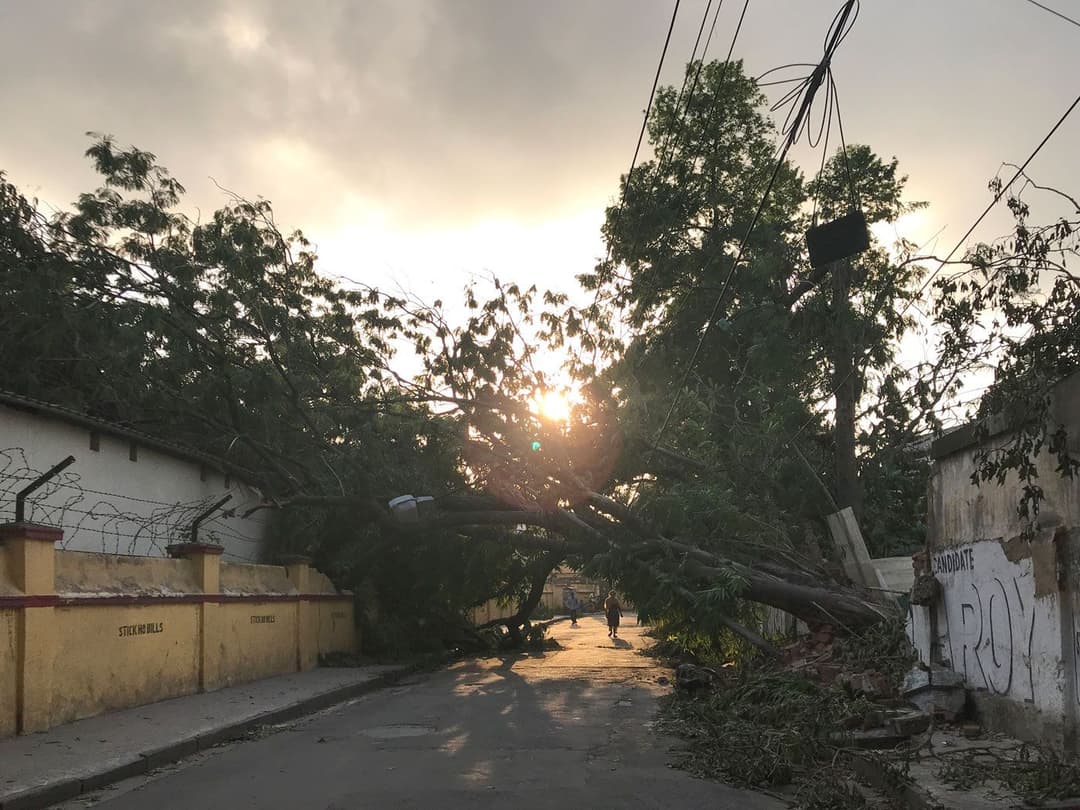

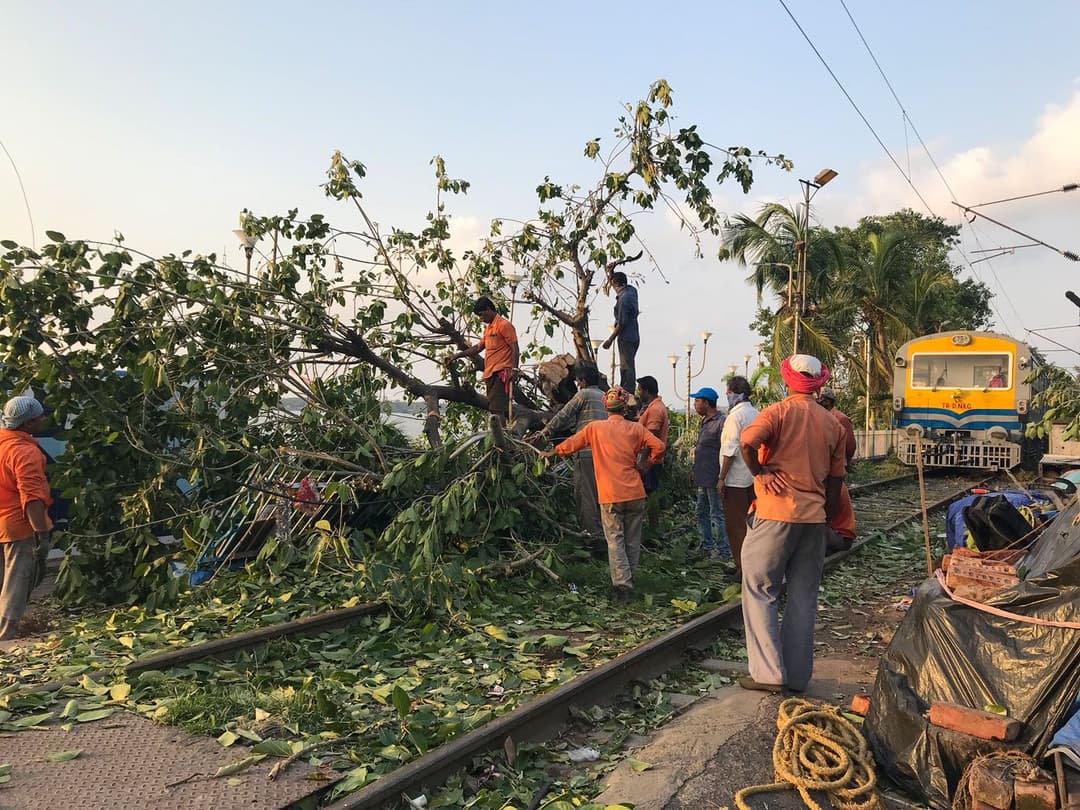
“When I see these big trees broken and uprooted, I feel like I have lost my children,” says Madan Baidya, a gardener in his early 40s. “My entire life I have lived with trees and plants,” he explains, visibly shattered by the devastation around him. “These were not merely trees, they were homes to so many birds and butterflies. They gave us shade from the sun and became umbrellas in the rains.” Baidya’s own nursery, on Kolkata’s Eastern Metropolitan Bypass, near the Shahid Smriti colony where he resides, has suffered huge damage.
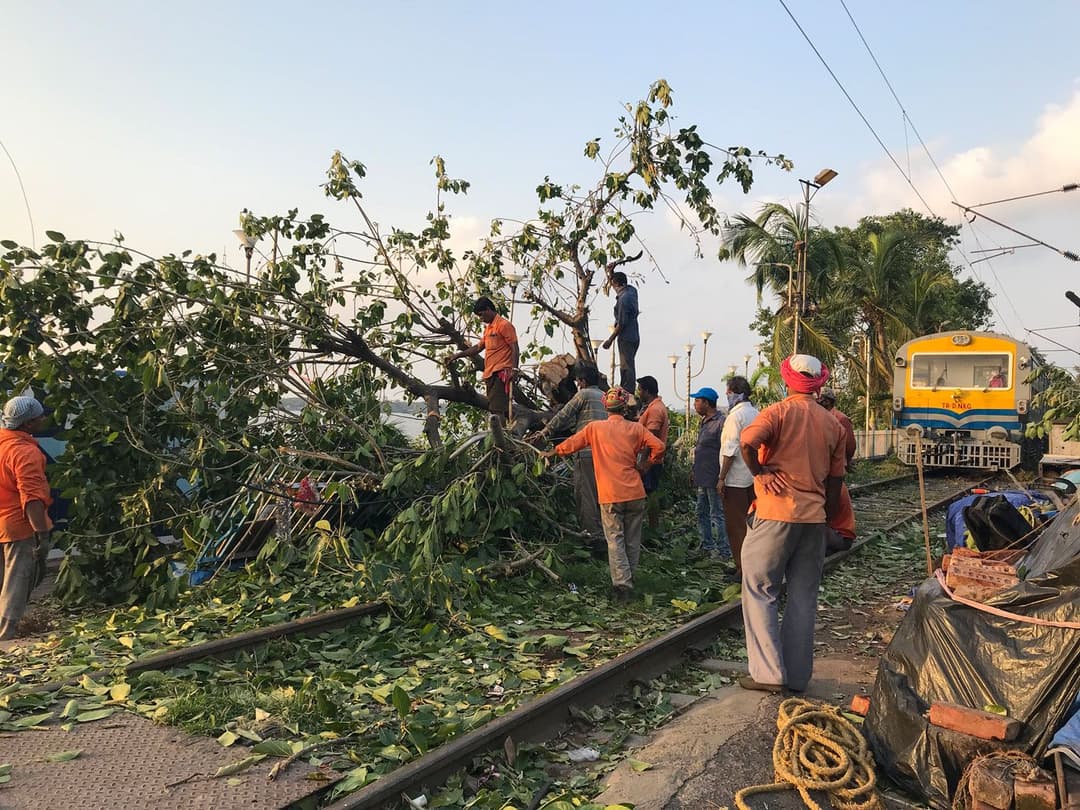
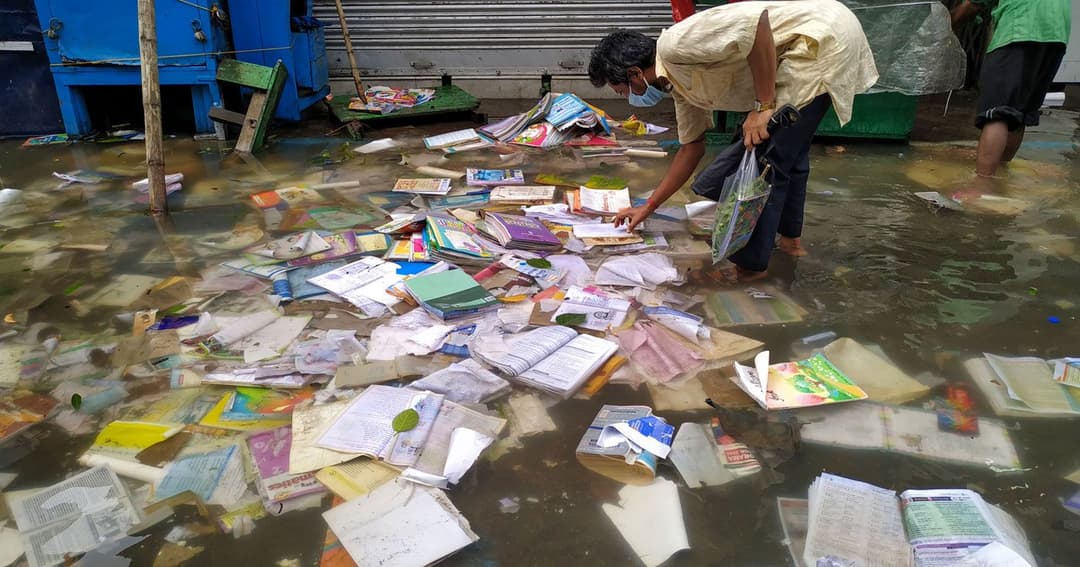
Around 5,000 big trees in the city were uprooted and tossed around by Amphan on May 20, estimates the Kolkata Municipal Corporation. Amphan, categorised as a ‘Very Severe Cyclonic Storm’, made landfall in the coastal areas of West Bengal with a wind speed of 140-150 kilometres and gusts up to 165 km. The storm brought 236 mm of rainfall in barely 24 hours, according the India Meteorological Department, Alipore.
The damage caused by Amphan in rural areas, particularly such regions as the Sundarbans, is hard to even estimate at this point. Both North and South 24 Parganas, including Kolkata, took a heavy beating. State-wide, the death toll is at least 80 people so far, including 19 in Kolkota.
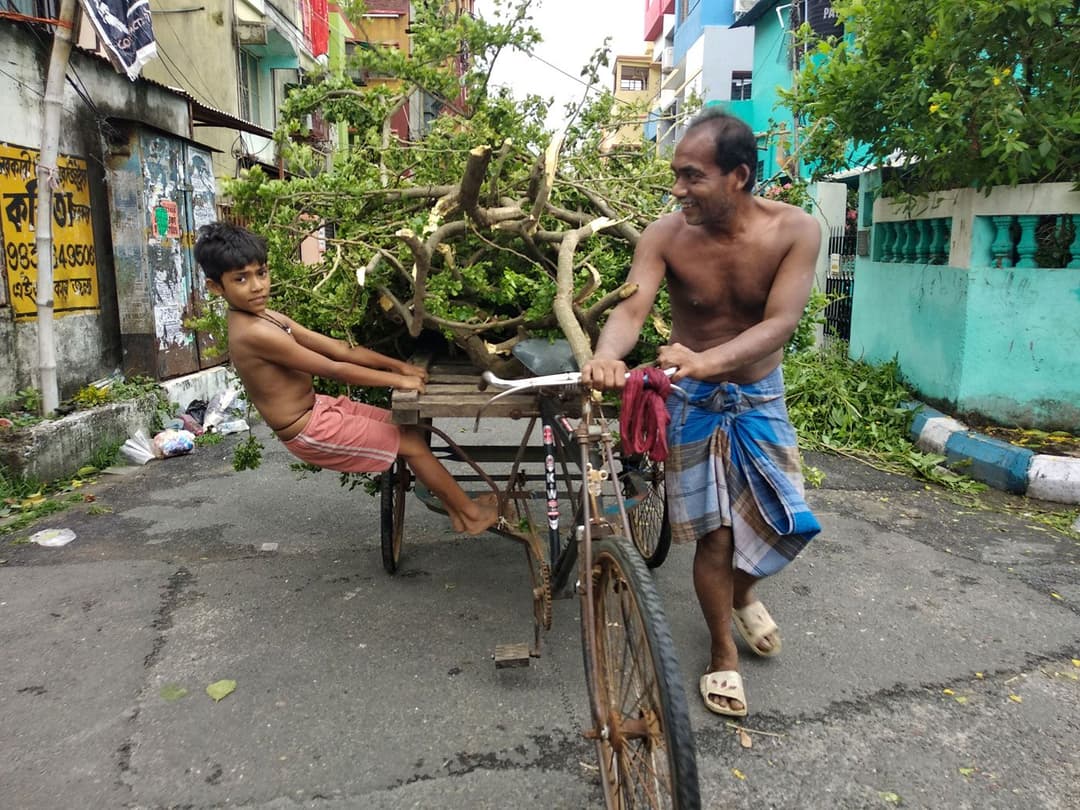
Many areas remain cut-off, and the damage to transport networks and road connections lethally combines right now with lockdown restrictions under Covid-19 – making visits there almost impossible. The complications caused by the lockdown go way beyond that, though. Restoration efforts are extremely difficult, because the labourers who would normally attend to that have long ago left the city for their villages in West Bengal and other states, due to the shutdown.