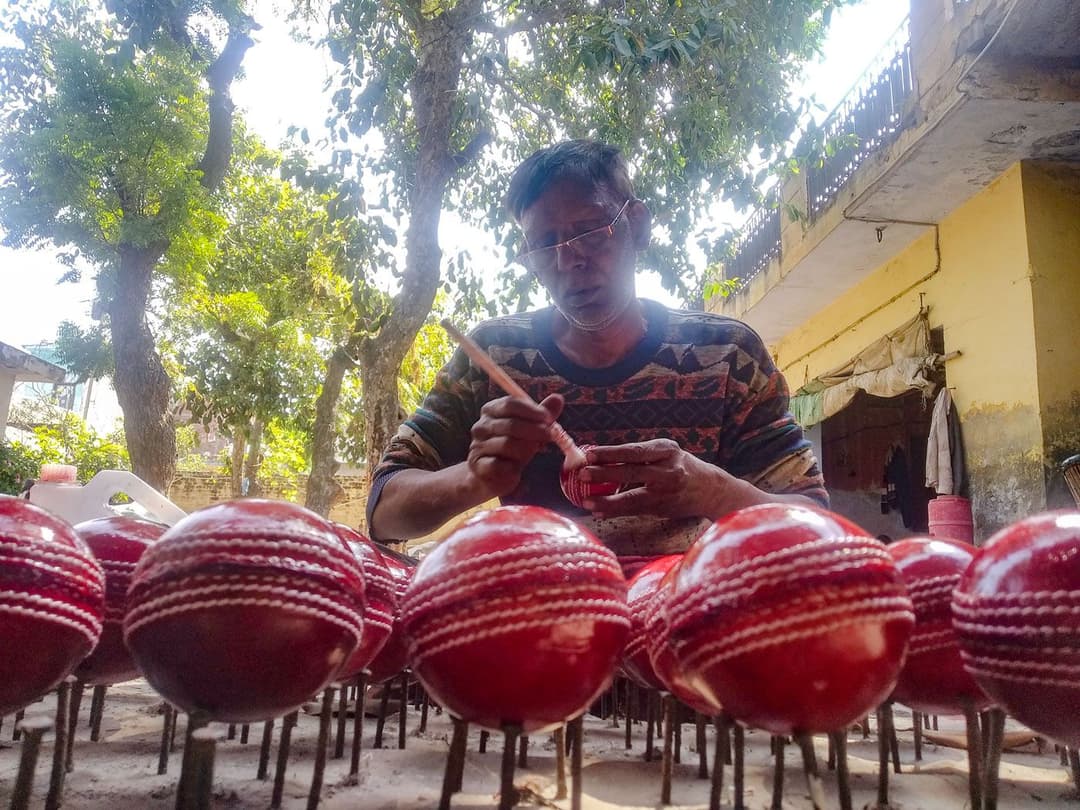
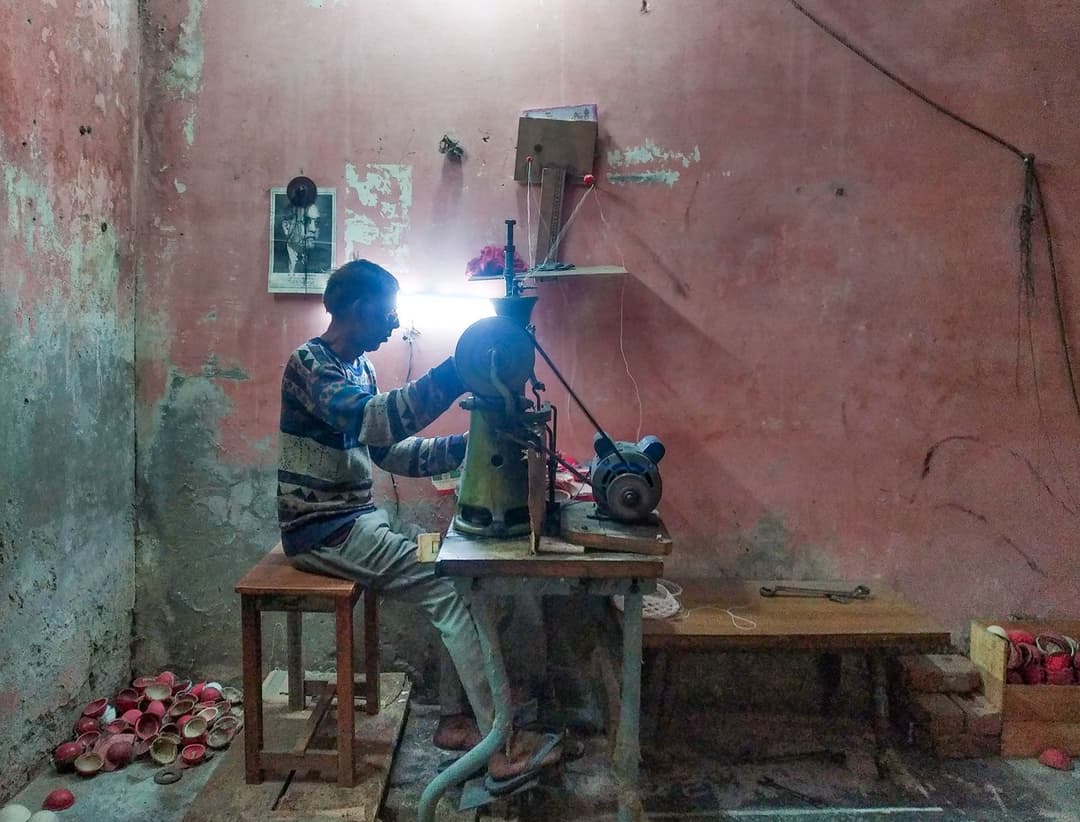
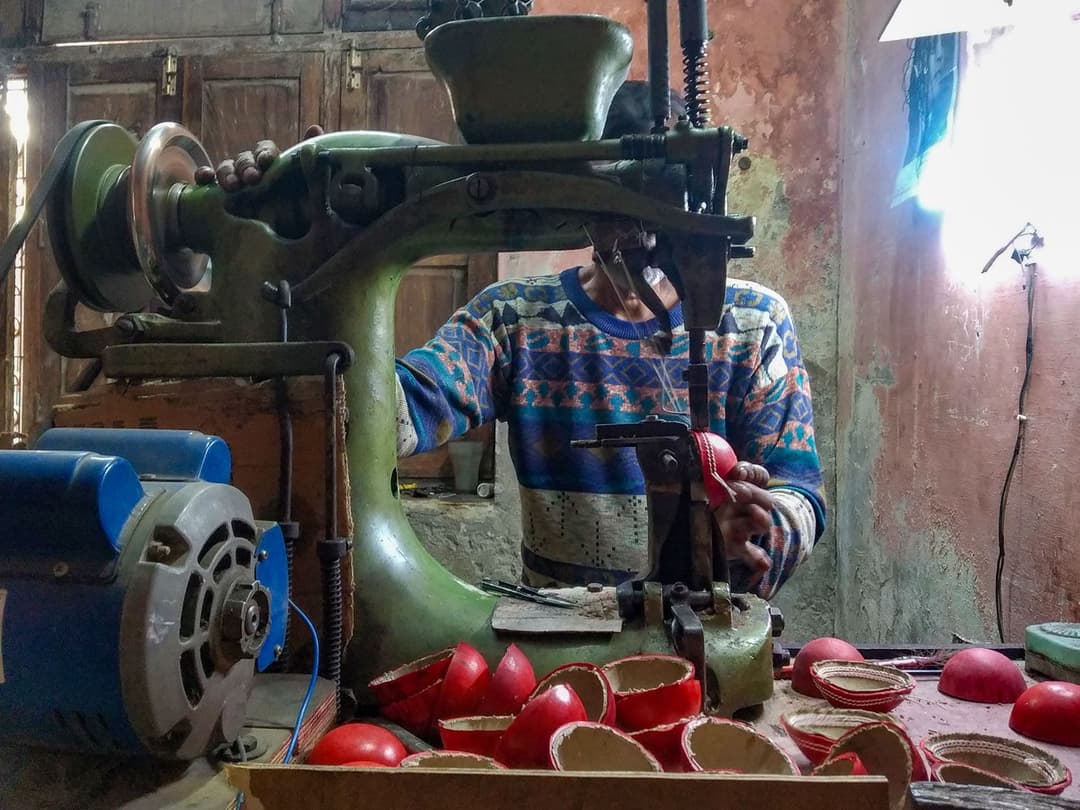
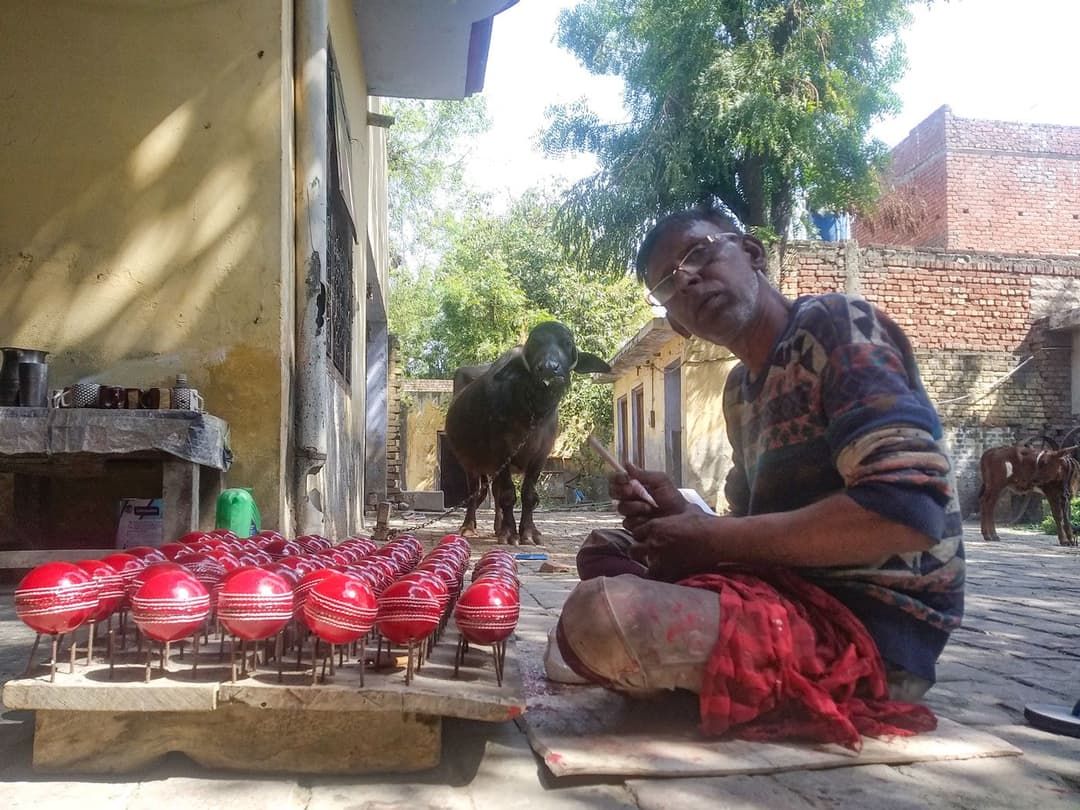
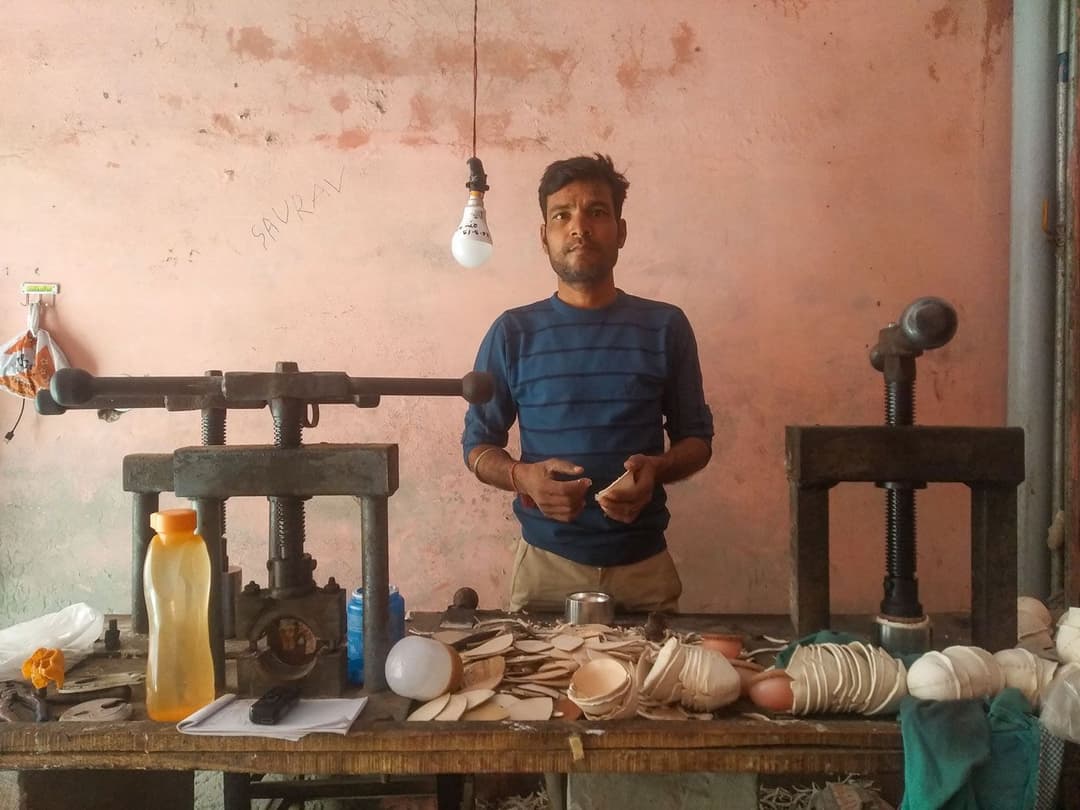
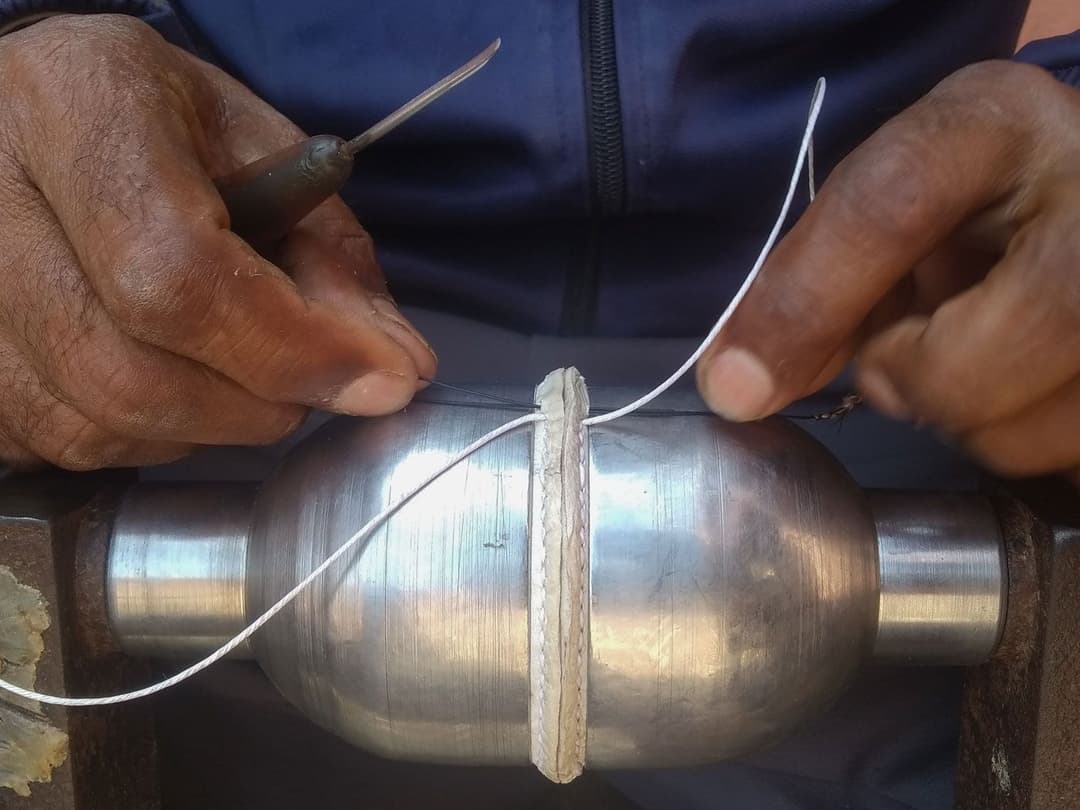
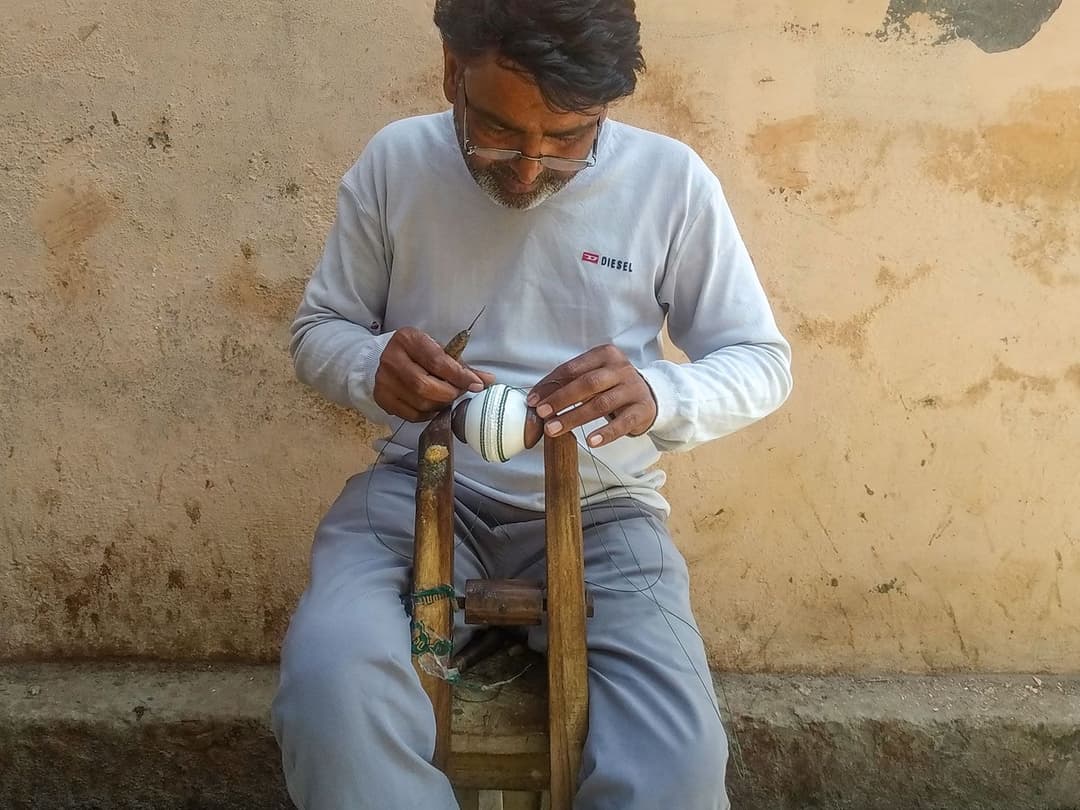
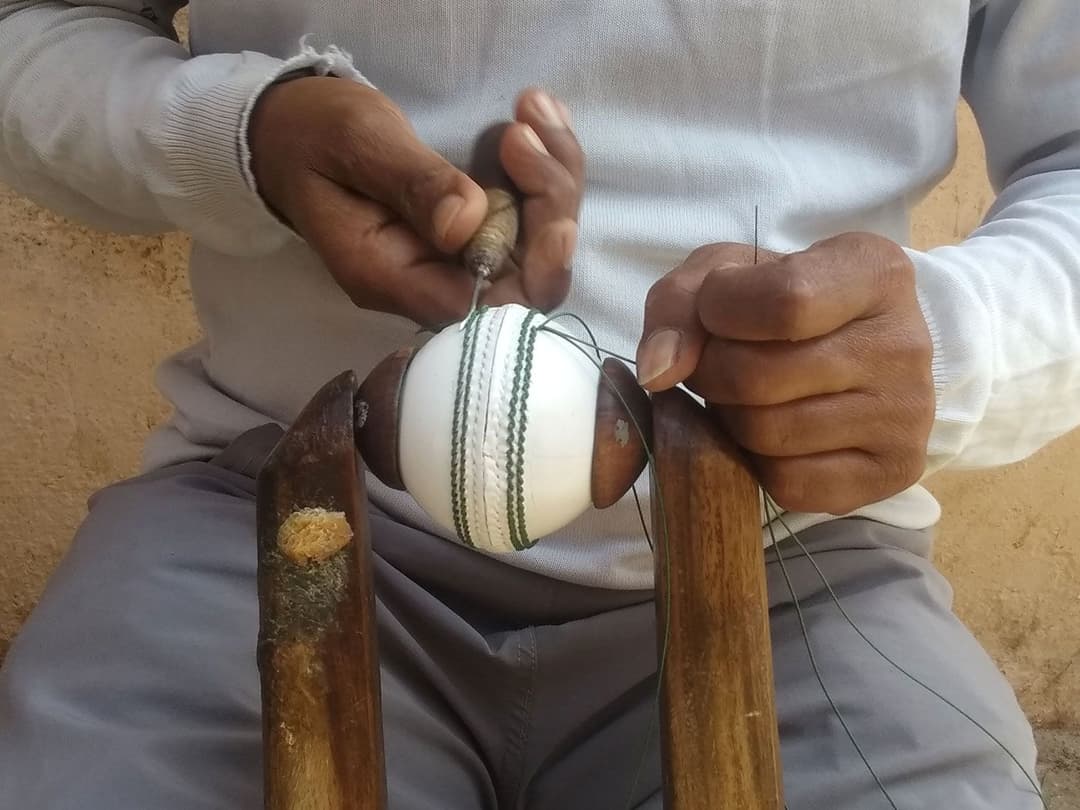
The District Industry Promotion and Entrepreneur Development Centre (DIPEDC) estimates that there are 347 working cricket-ball-making units in Meerut. The number includes large factories located in industrial areas; and smaller production units in urban and rural residential localities in Meerut district.
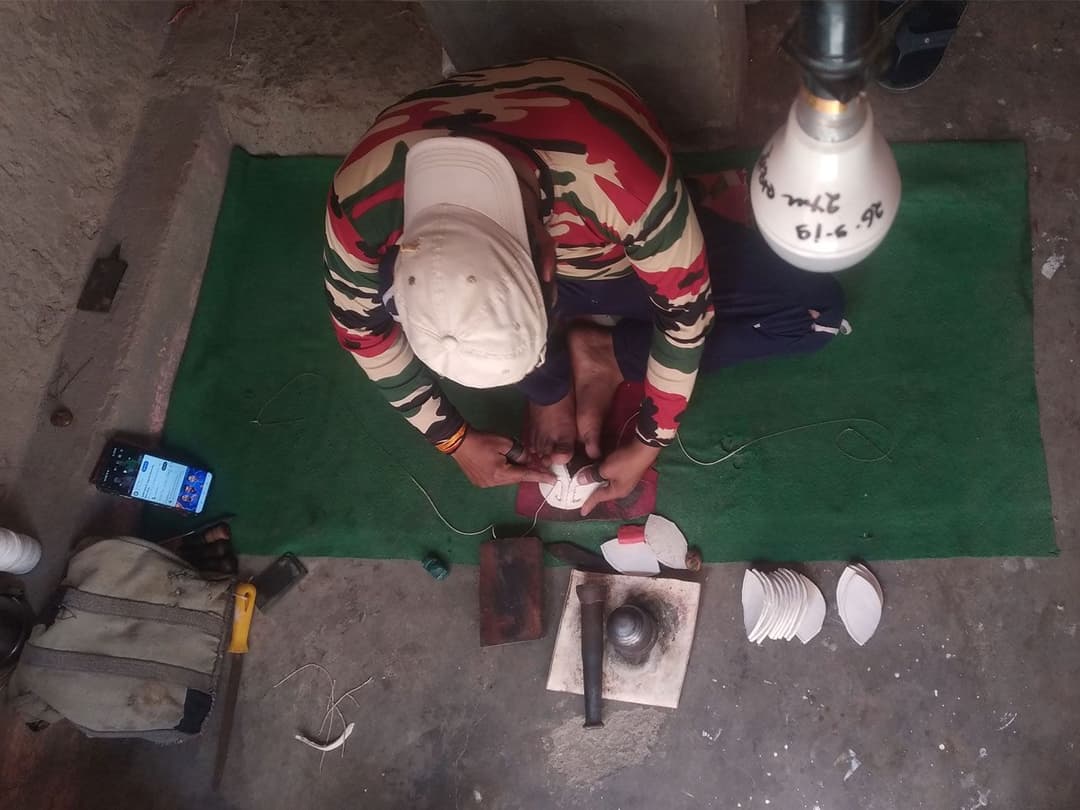
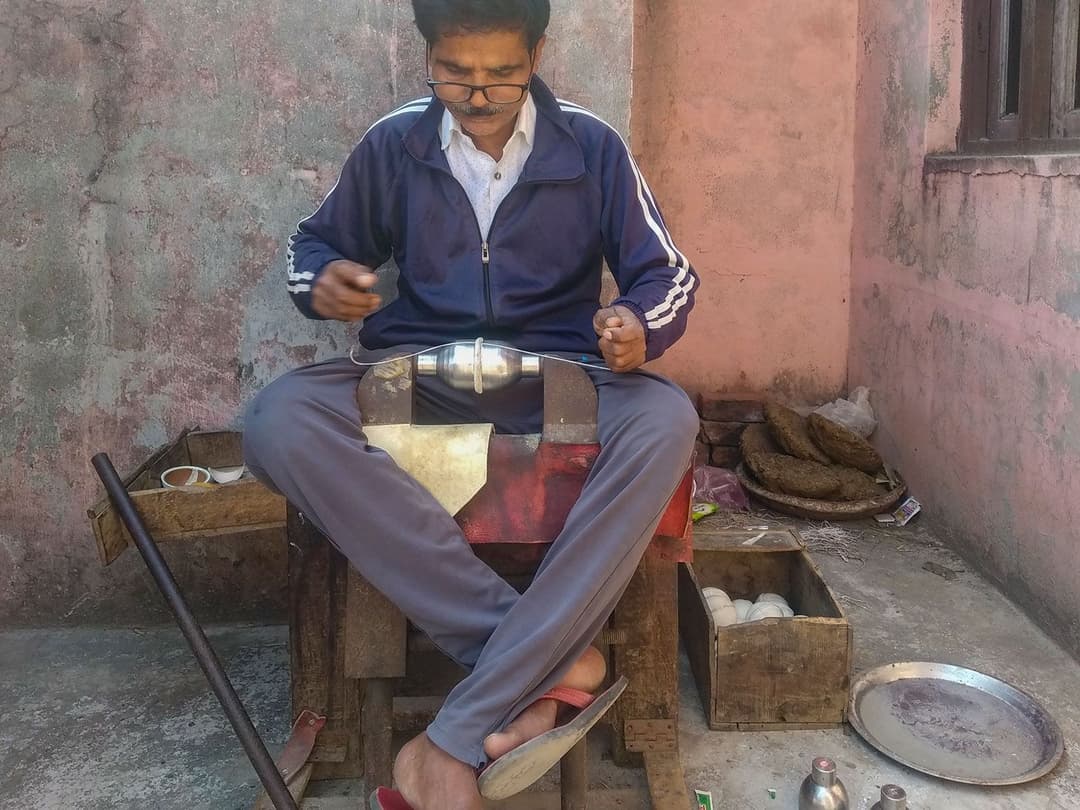
The estimate, however, does not include numerous dispersed unorganized production centres, and household units where entire balls are made or a singular task is outsourced. These include villages like Jangethi, Gagaul and Bhawanpur located across Meerut district. “Aaj gaanvon ke bina bilkul poorti nahi hogi Meerut mein [There will be absolutely no supply of cricket balls without the villages in Meerut today],” Madan says.
“A majority of karigars in villages and big factories in the city are Jatavas, as cricket balls are made of leather,” he explains. According to the 1904 District Gazetteer, the Jatava or Chamar community (listed as Scheduled Caste in UP) constituted the largest social group of workers in the leather industry in Meerut. “People do not have a problem with leather in the form of a cricket ball, but they do when it comes to working with it,” he adds.
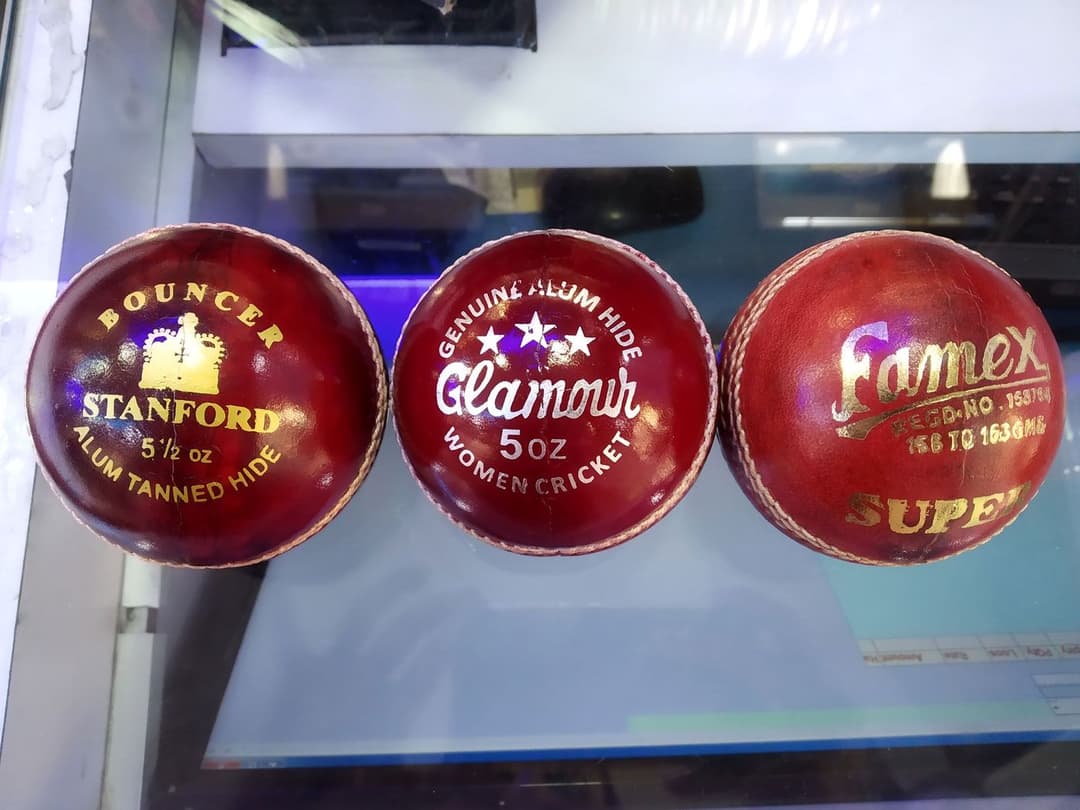
His family owns a tannery in Shobhapur as well, the only locality where rawhide is alum-tanned for the cricket ball industry (Read: Meerut's leather workers: not out, still batting). “Seeing the increasing demand for alum-tanned hides, I realised that the demand for cricket balls will never go down,” he says. The promising market led him to start M/s B.D. & Sons, 20 years ago – one of the two cricket-ball-making units in the locality.
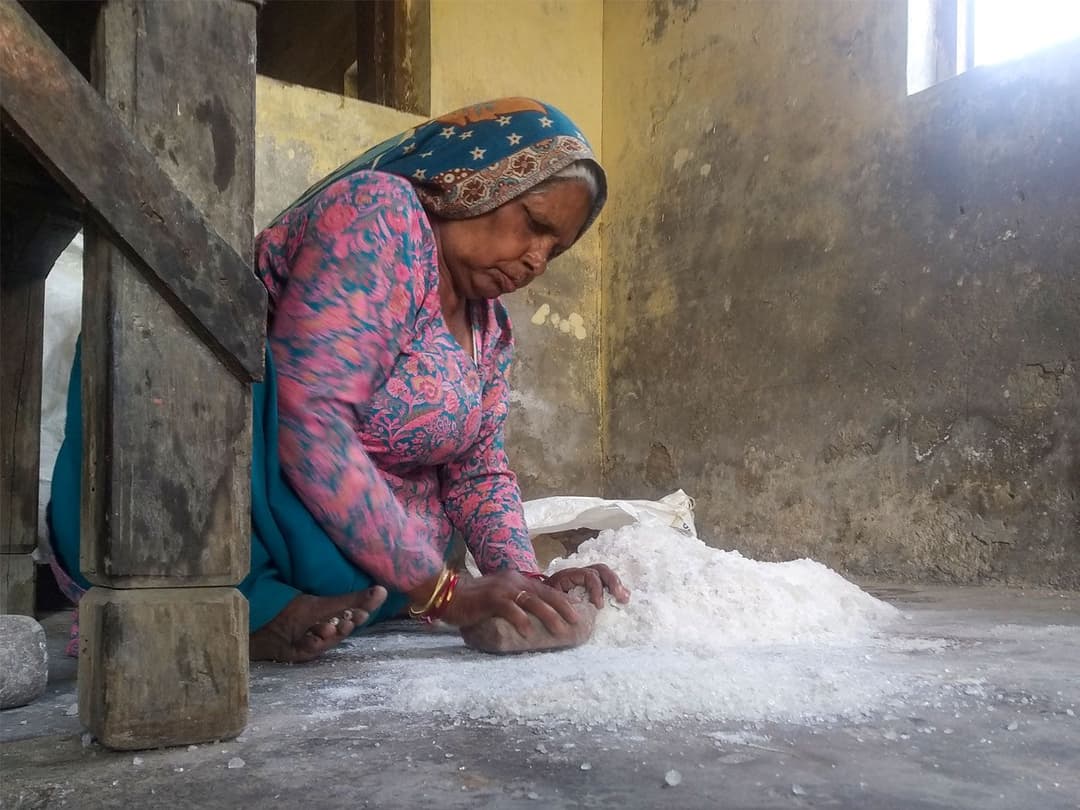
Madan says it’s difficult to accurately estimate the number of hours that go into making a single ball since the many processes are shared, and the season and quality of leather also impact the time it takes. “Do hafte lagte hain ek gend ko tayyar hone mein kam se kam [It takes upto two weeks to get a single ball ready],” he says.
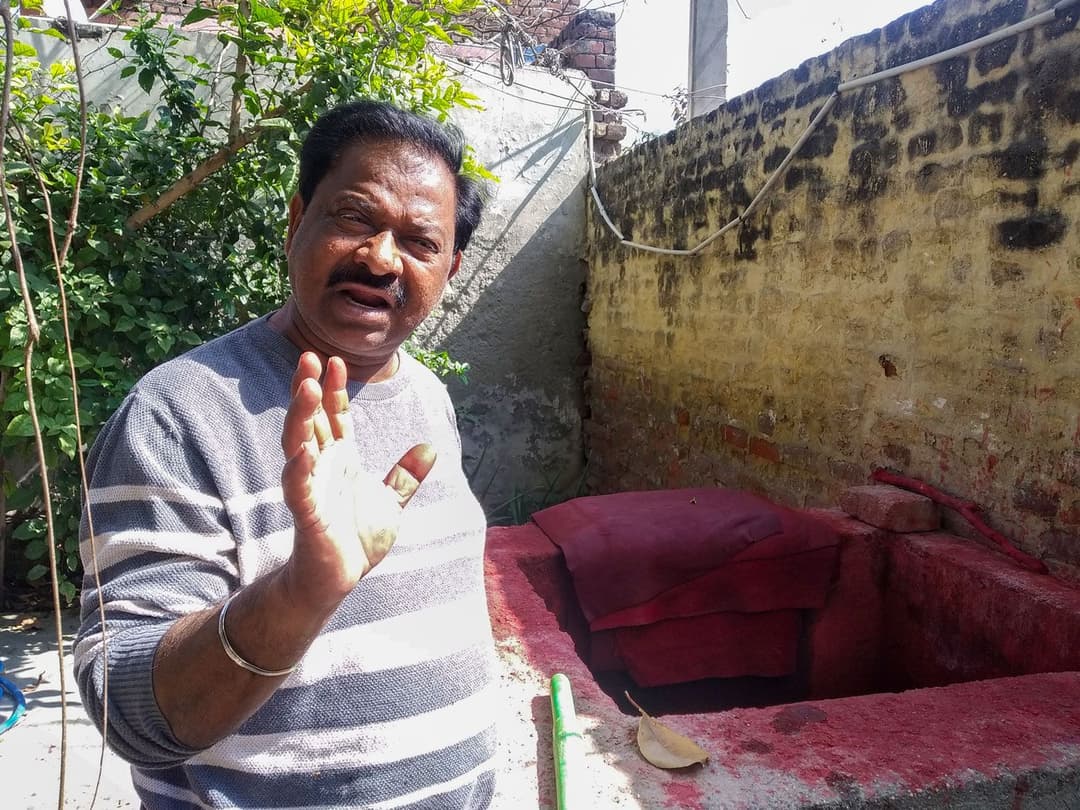
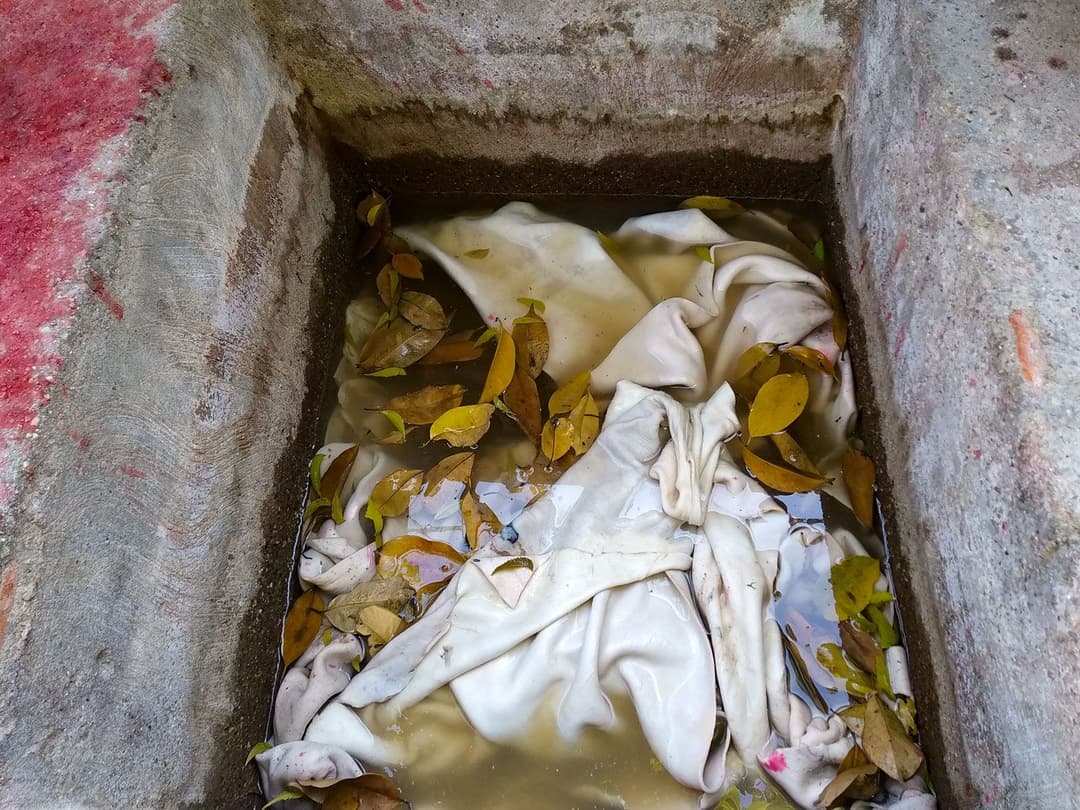
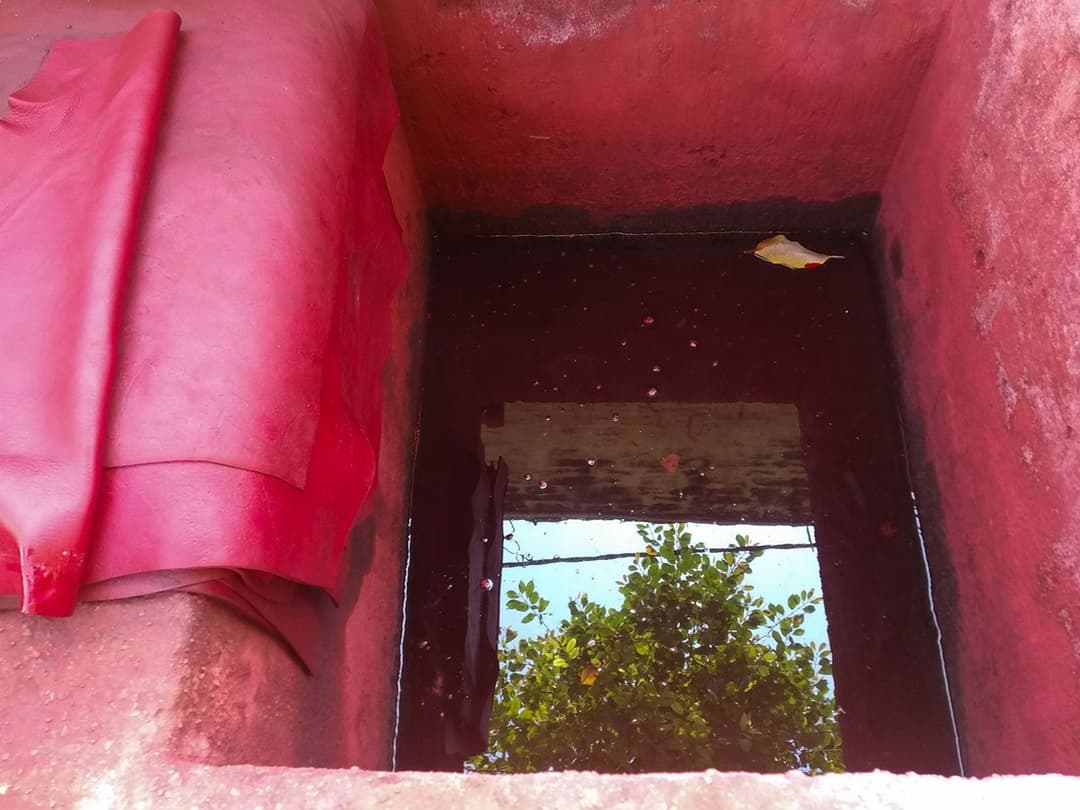
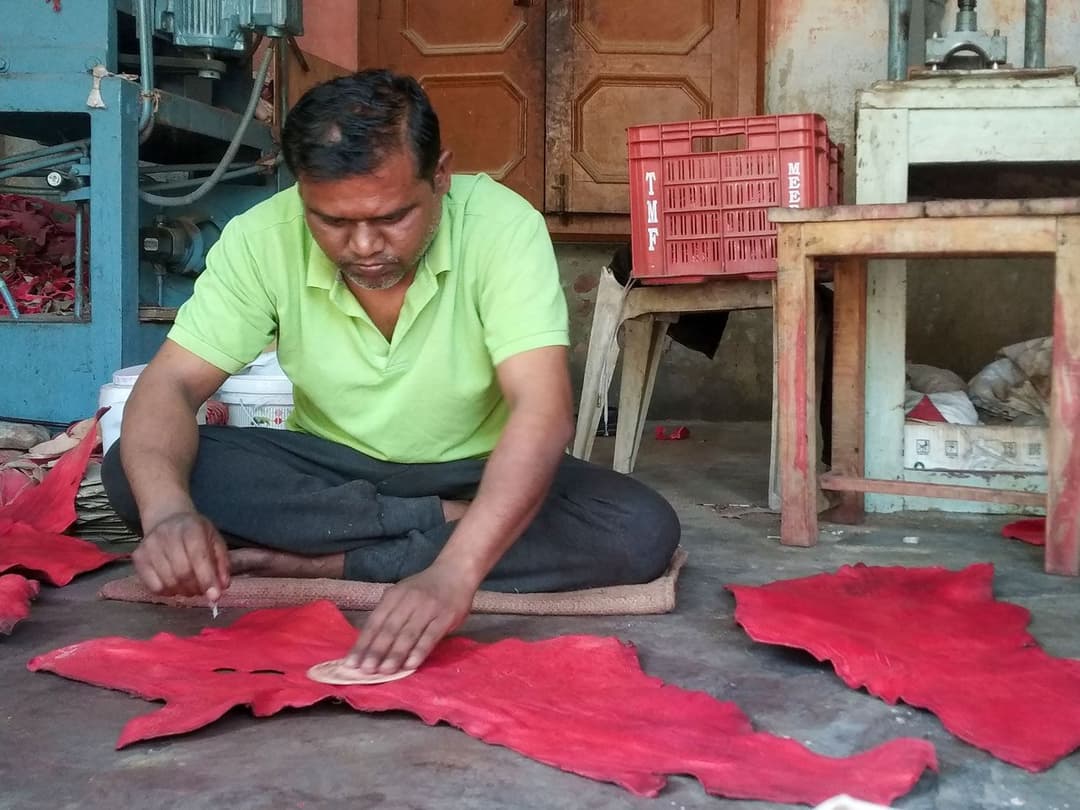
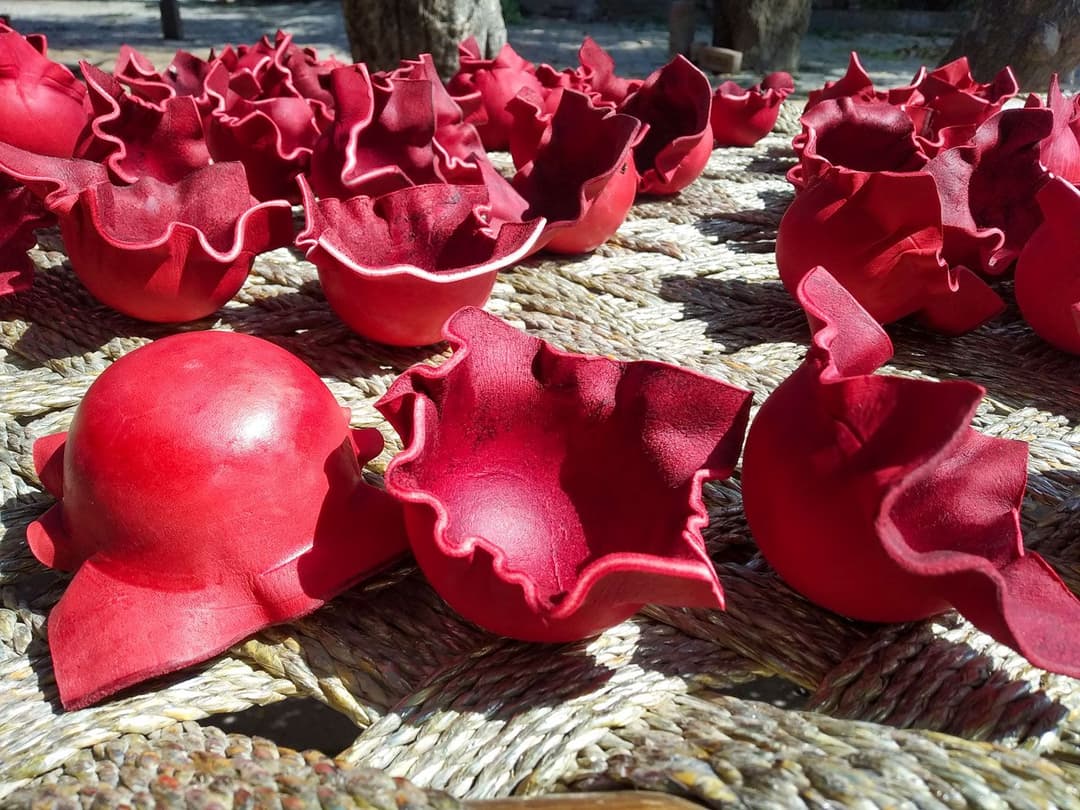
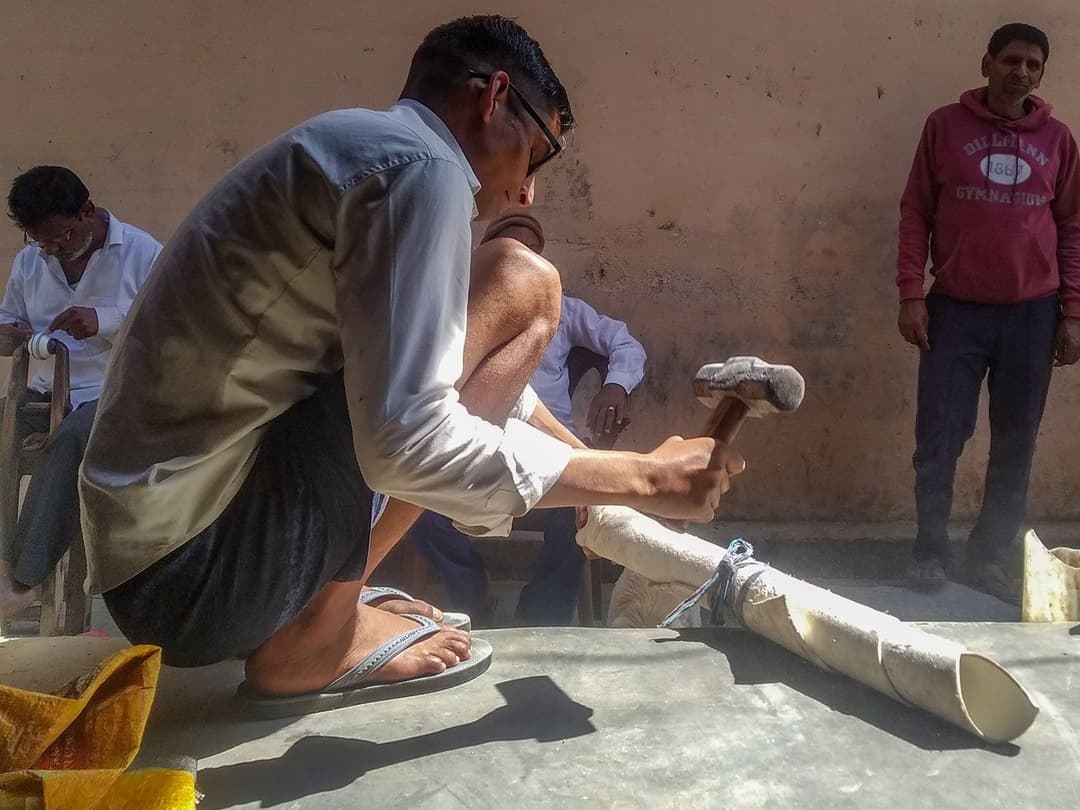
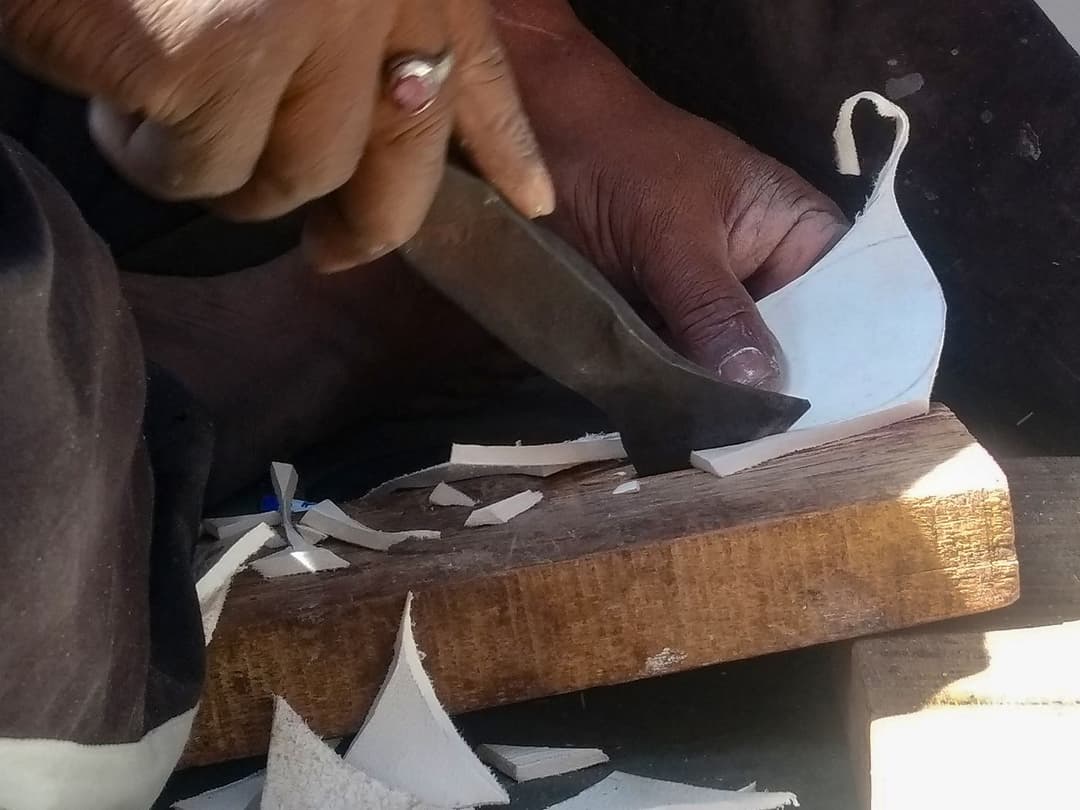
Workers at Madan’s unit first process the leather with alum, dye it red, dry it under the sun, grease it with tallow or animal fat and then stomp it with a wooden hammer to make it soft. “For white balls, no dyeing is required as alum-tanned hides are already white. Curd made of cow’s milk is used as grease for them,” says Madan.