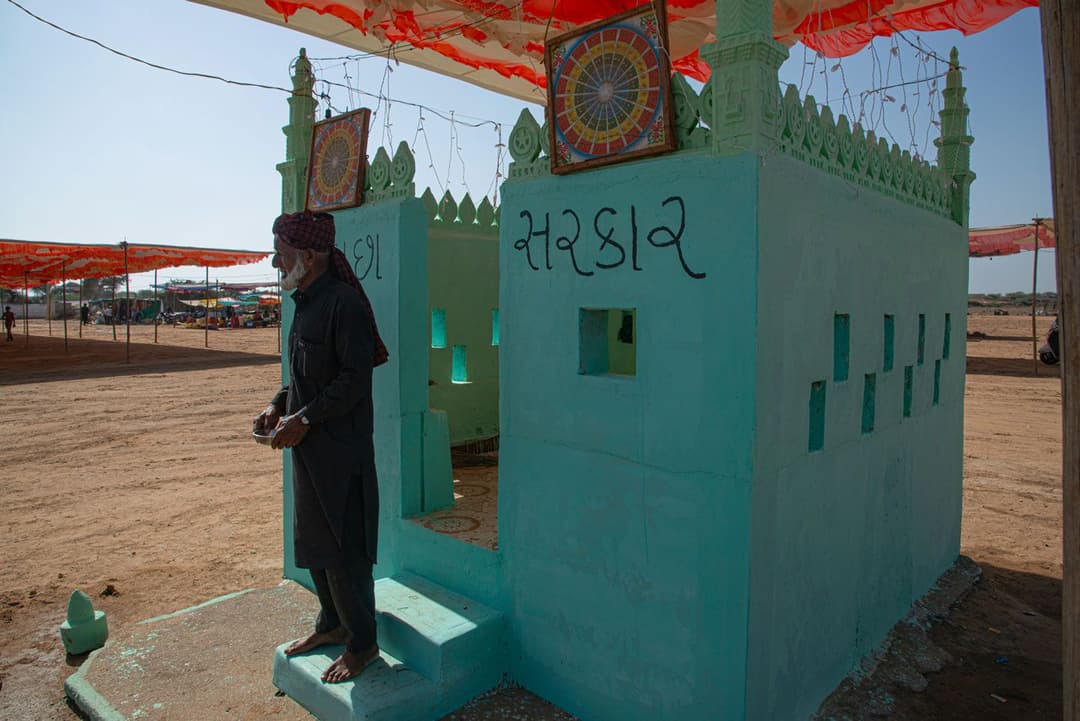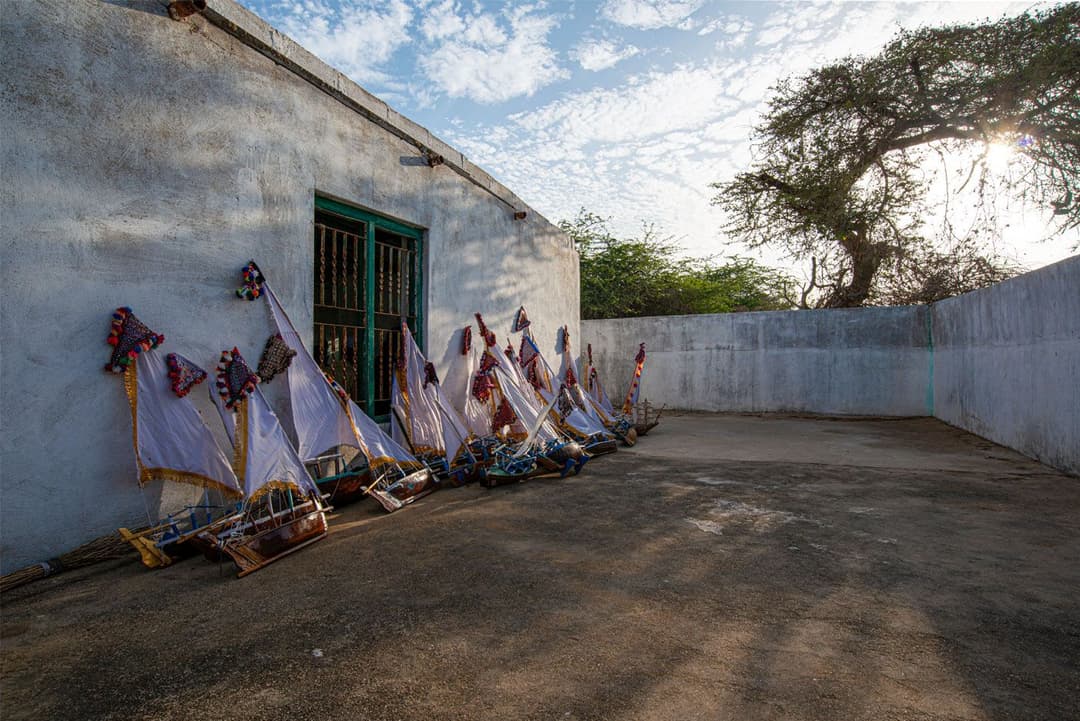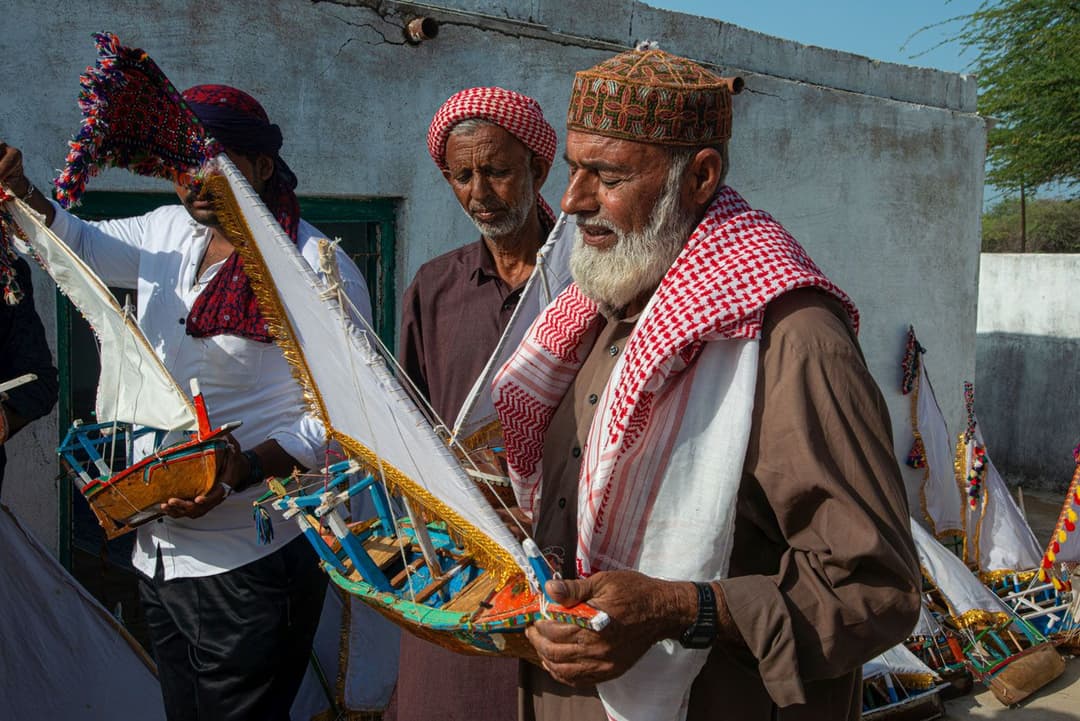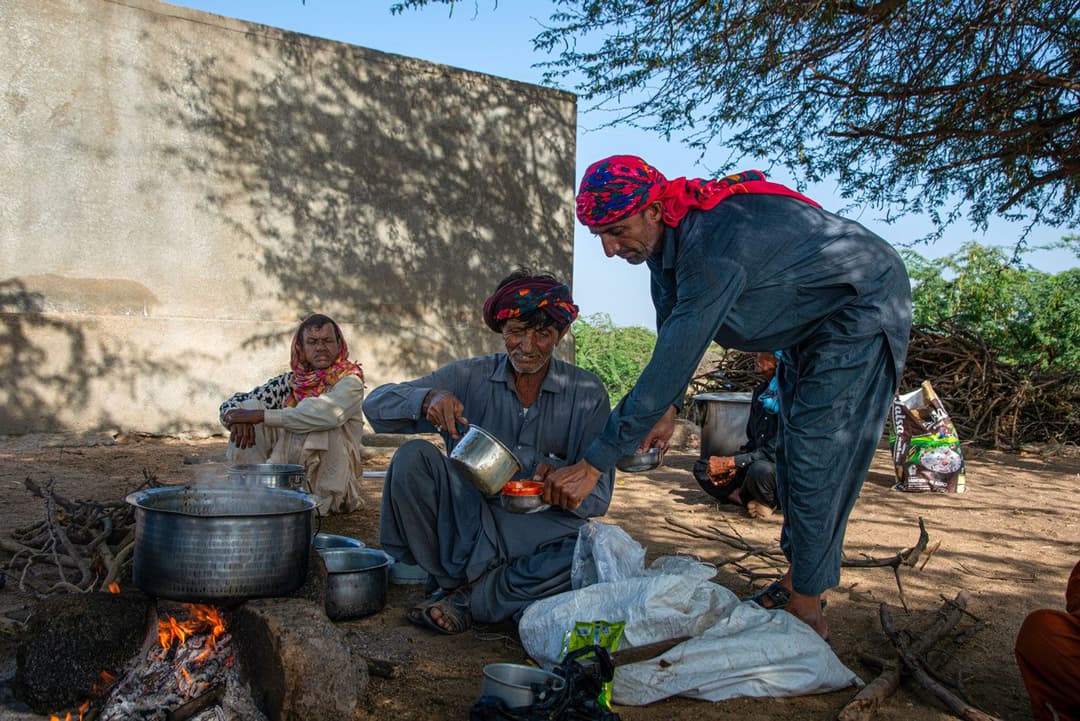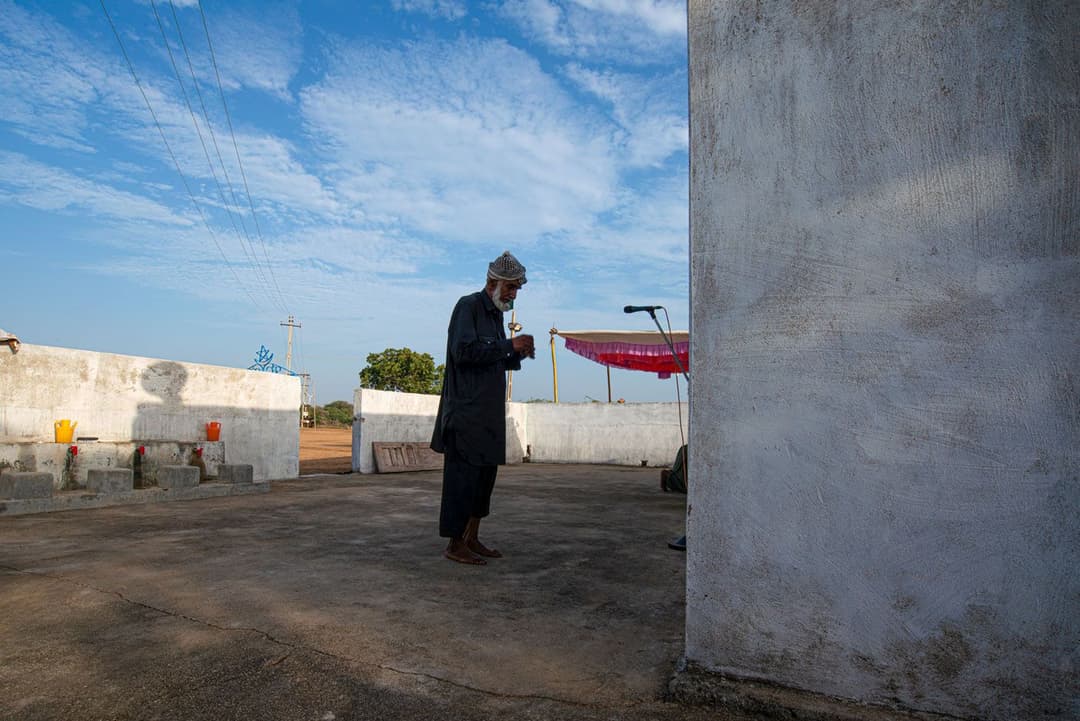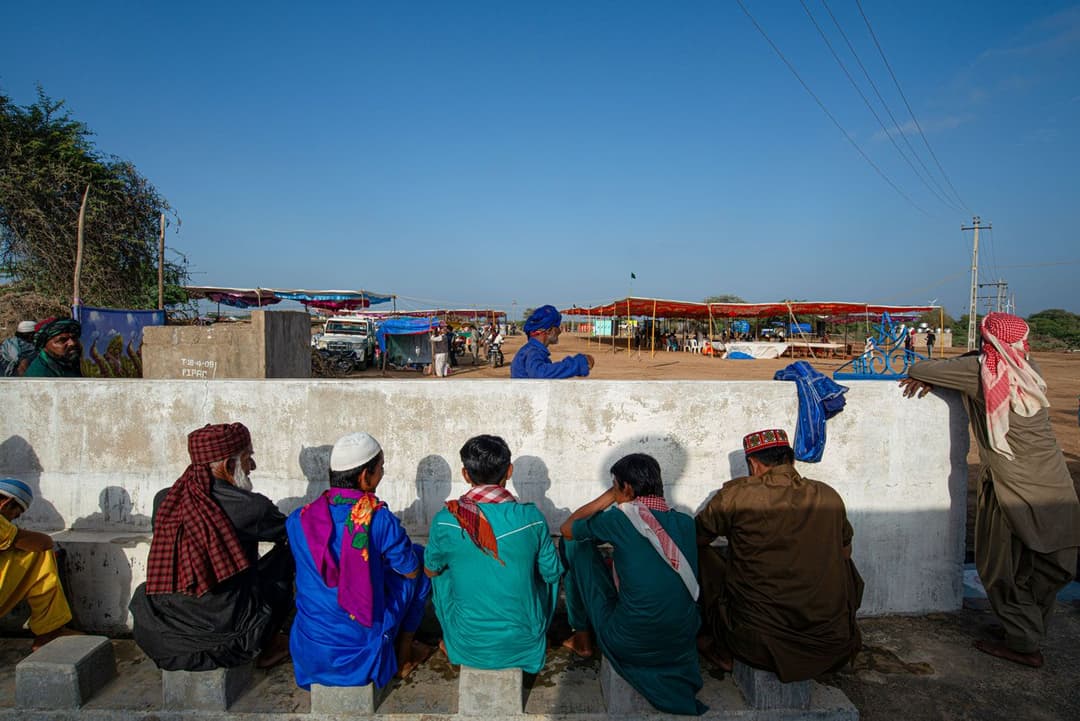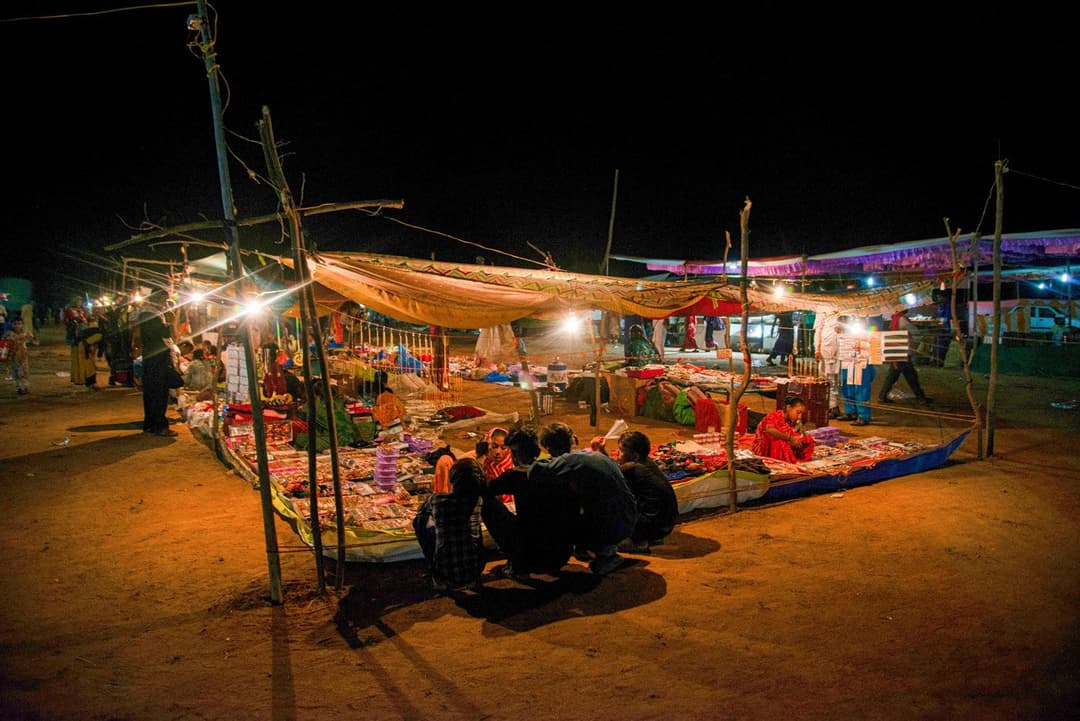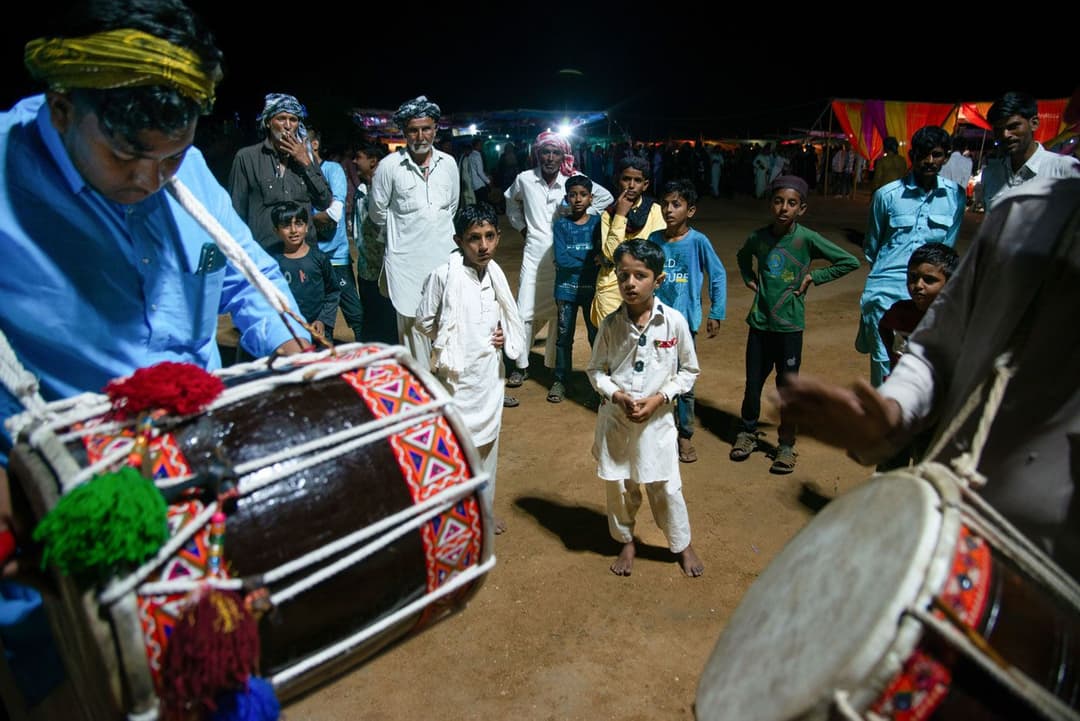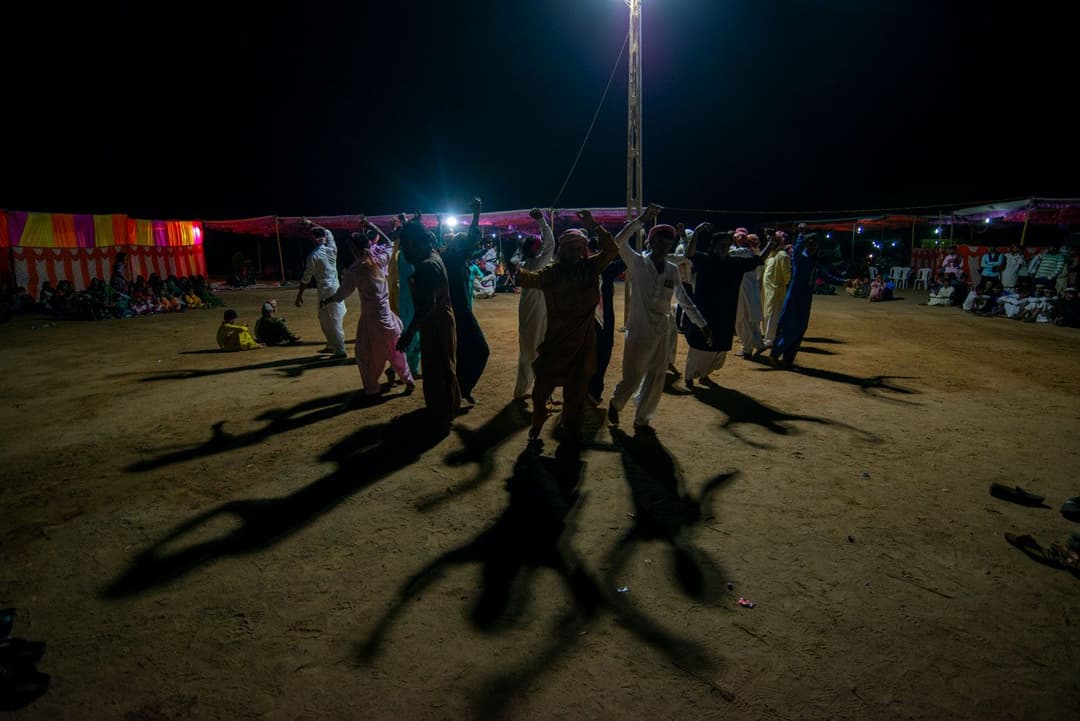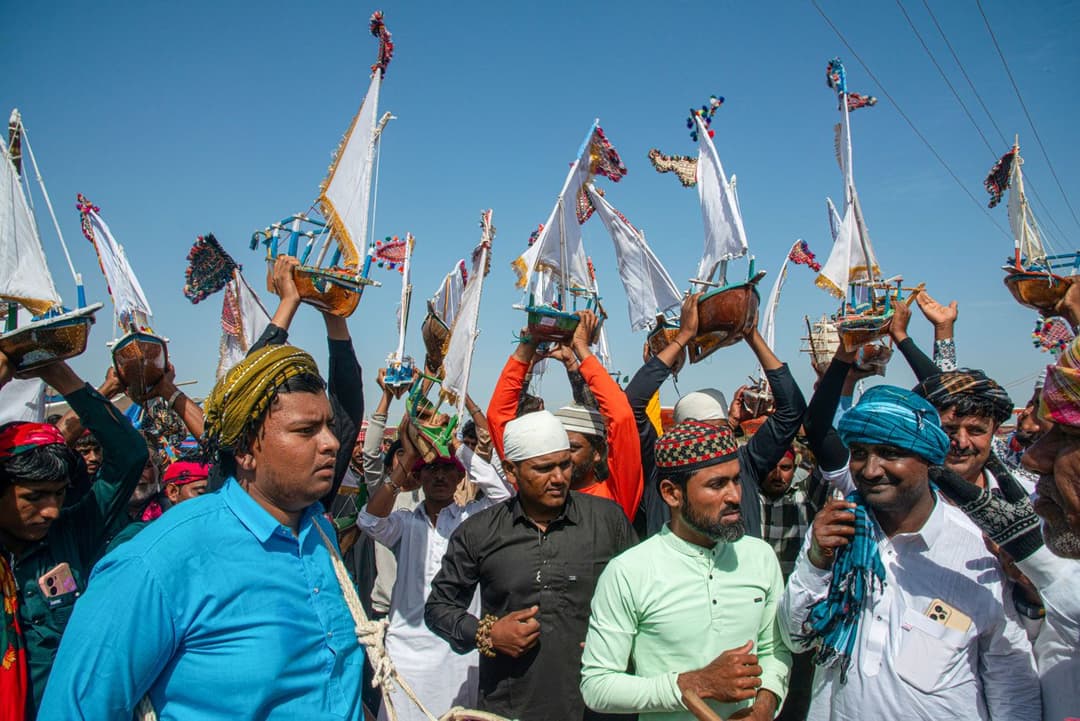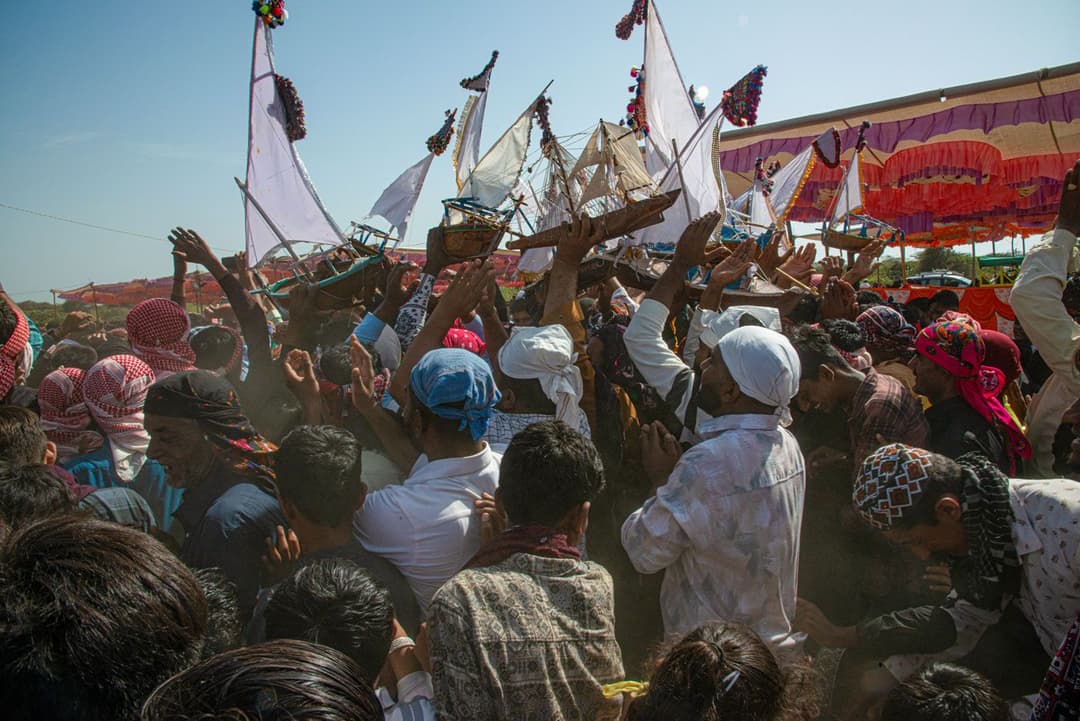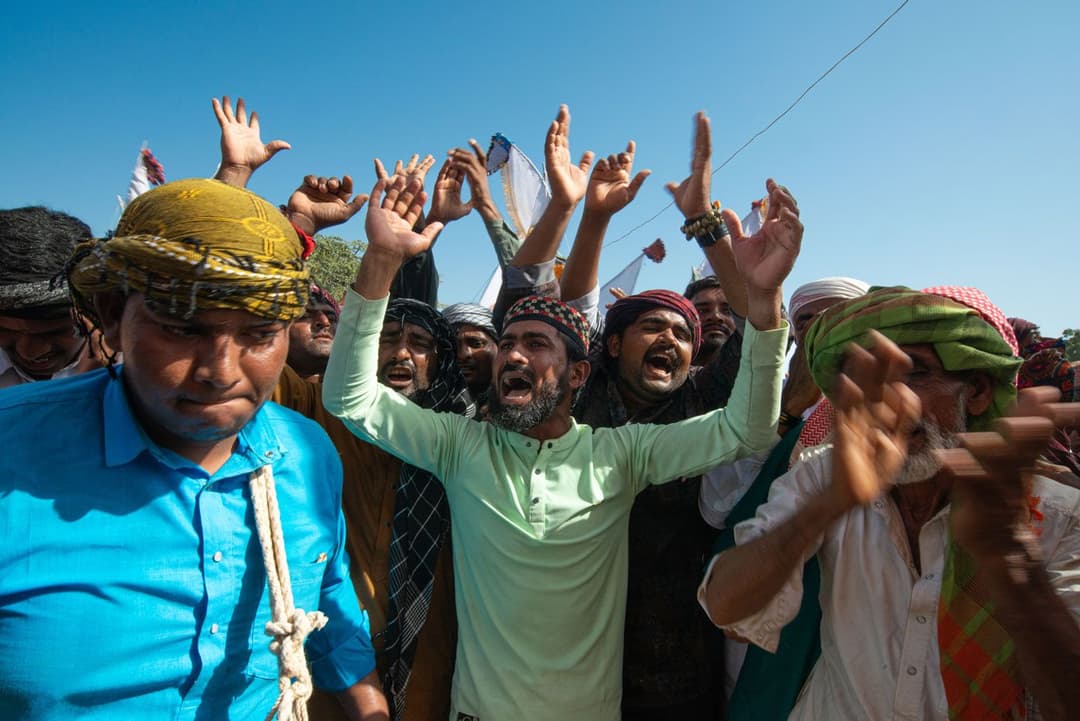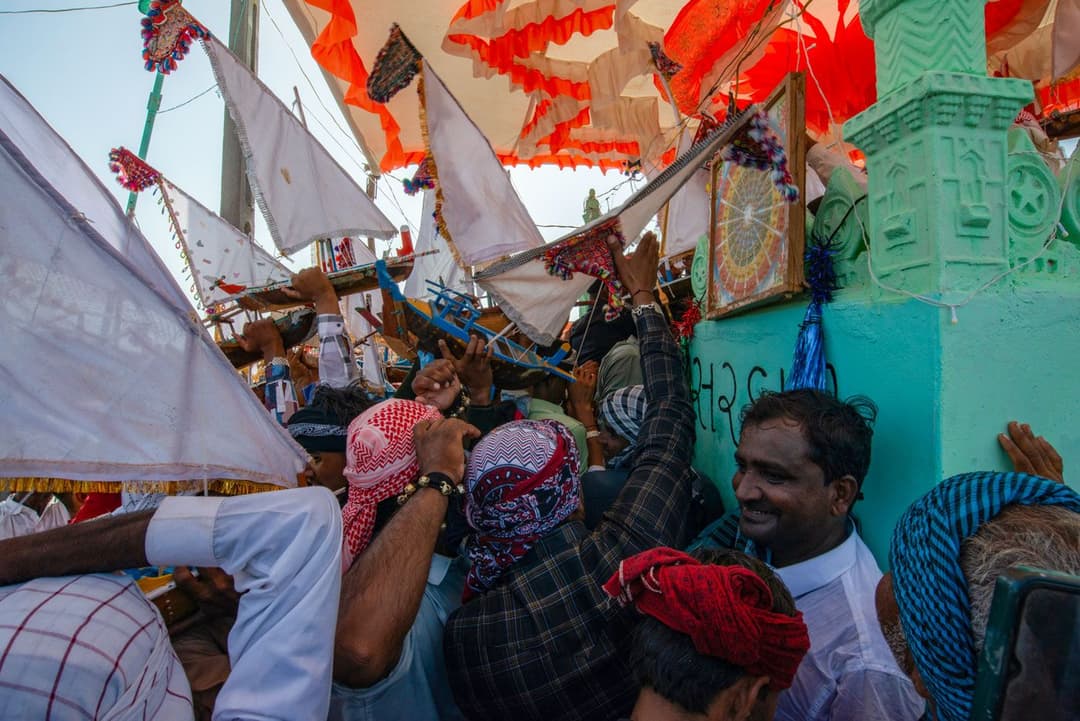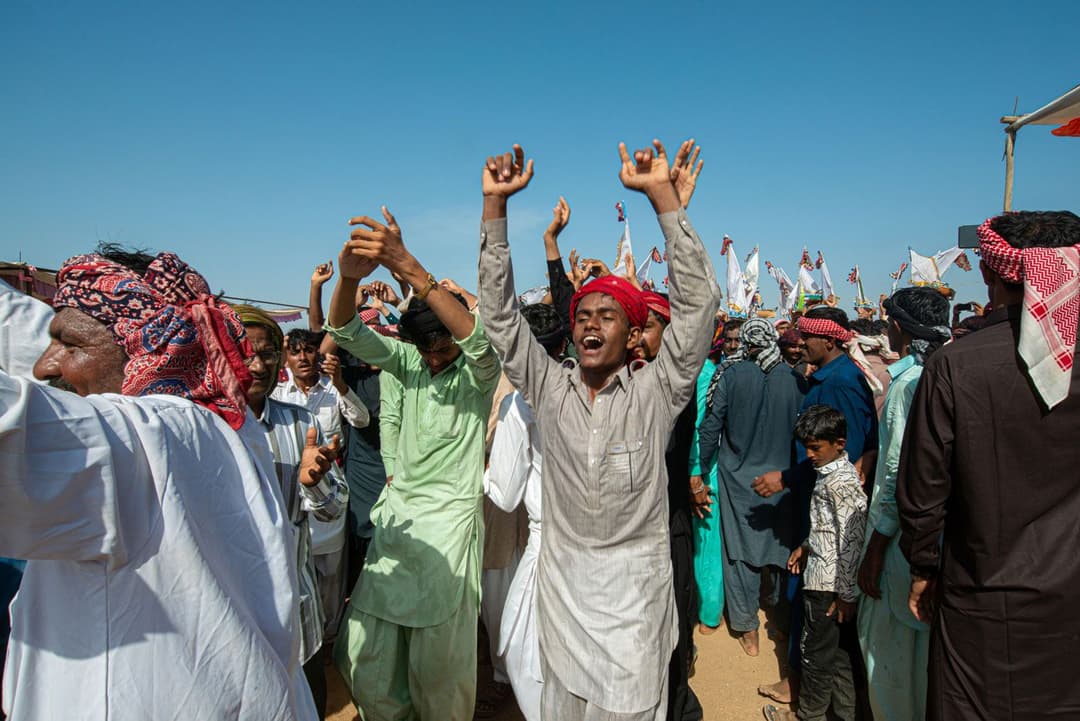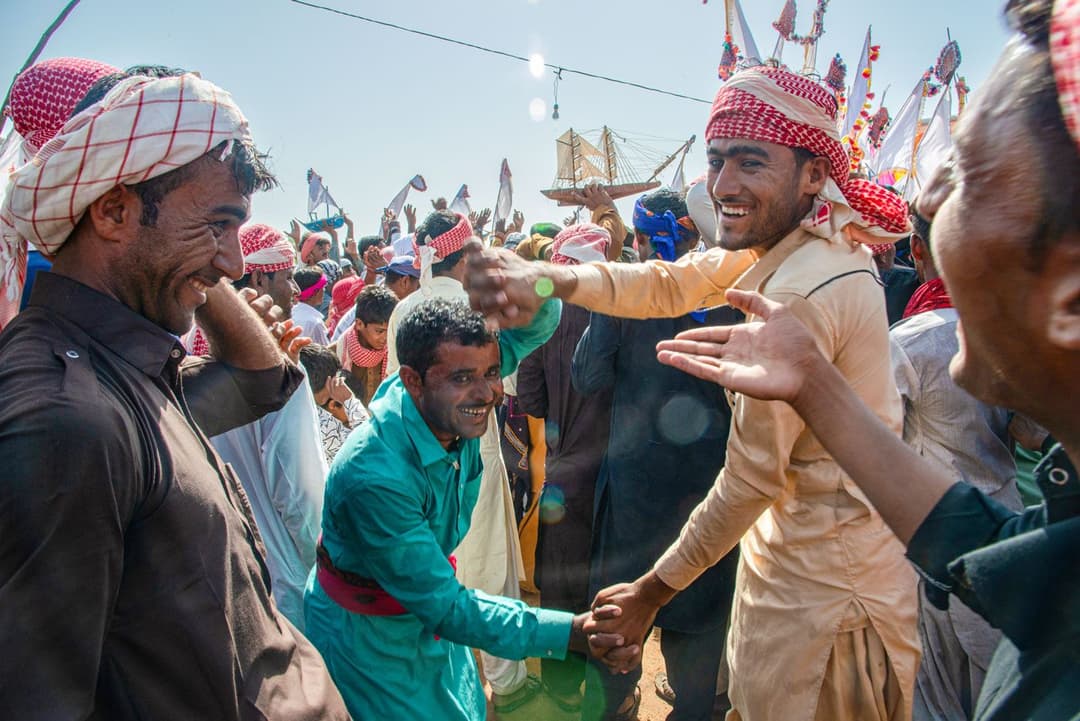
"This mazār [tomb] is a makeshift arrangement we built. The original shrine of Savla Pir is strategically placed on the Indo-Pak maritime border,” says 70-year-old spiritual leader of Fakirani Jats, Aga Khan Savlani. The provisional structure he is referring to is a small, lone, light-green, humble mausoleum standing in the middle of a huge open space near Pipar hamlet in Lakhpat taluka; in a few hours it will be bustling with people who have come to celebrate the Savla Pir festival.
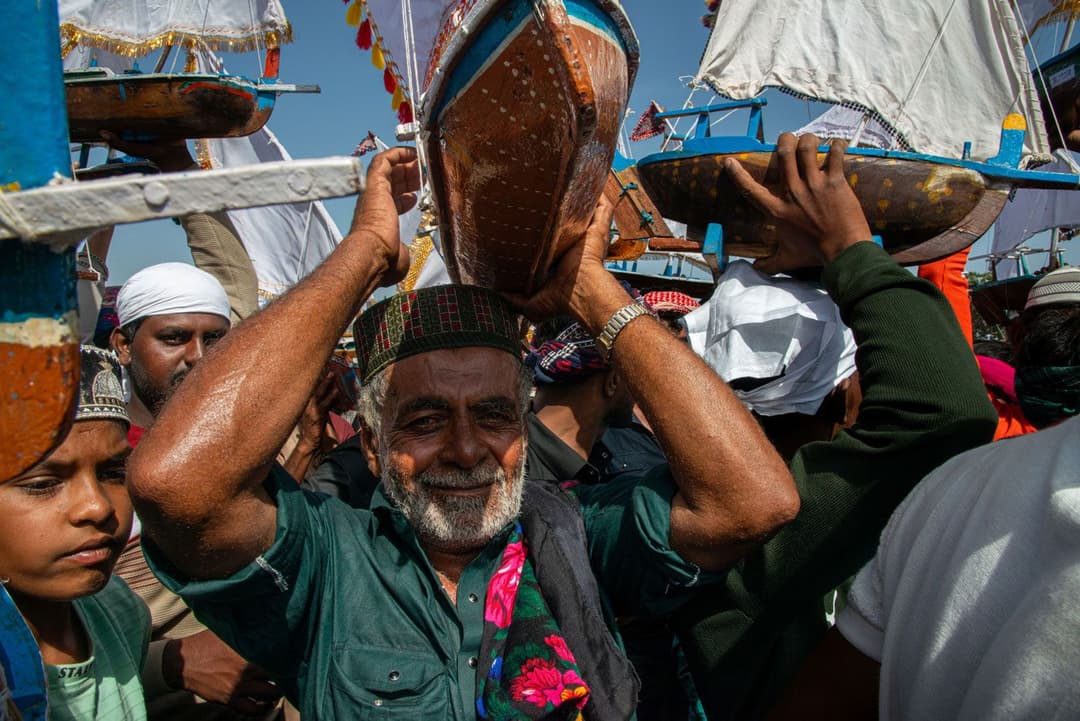
The original shrine is on an island that is closed for worship since 2019 due to security reasons. The Border Security Force (BSF) now has a post in that location. “Prior to Independence the fair was held at Savla Pir’s home on the island in Kori Creek across from Koteshwar. At that time, Jat breeders from Sindh in present-day Pakistan would travel by boat to attend and offer their prayers,” says a Biocultural Community Protocol.
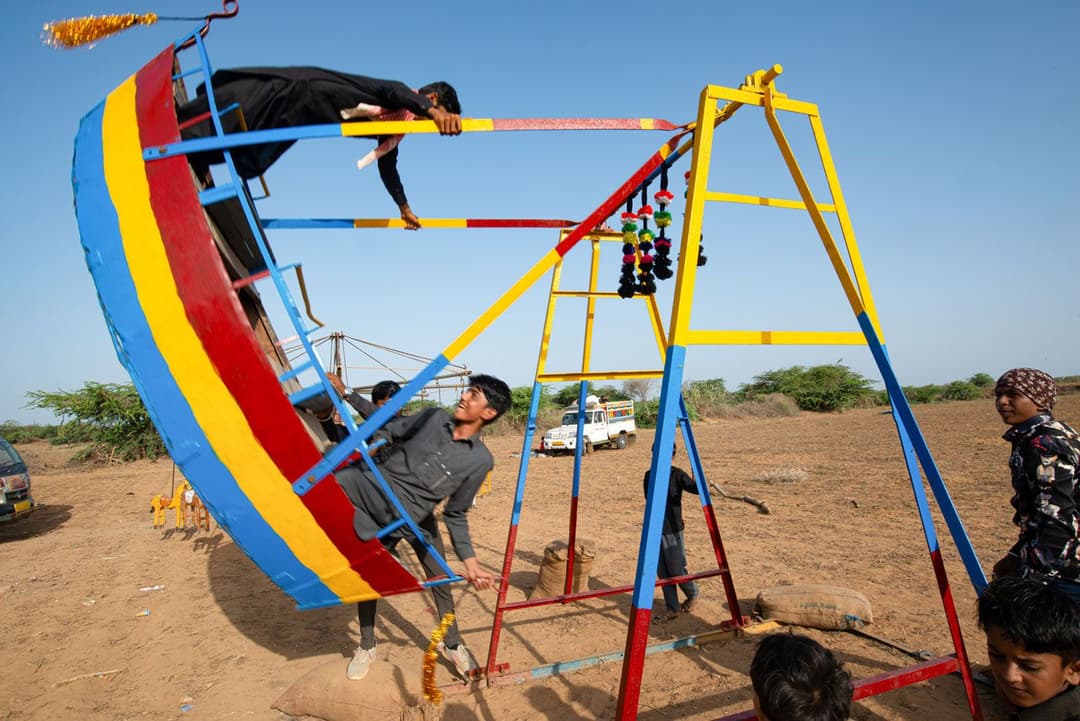
It has been the tradition in the region for both Hindu and Muslim families from all castes to attend the fair and offer prayers. The fair, organised by the community, is an annual event, taking place on the third or fourth day of the Chaitra Month of the Gujarati calendar, which is around March and April.
“At Savla Pir's shrine, everyone is welcome to pray; there is no bias. Anyone may come and ask for their well-being. You wait till late evening and see for yourself how the crowd is like," says Sonu Jat in his late 40s, a resident of Pipar hamlet in Kachchh. There are about 50 to 80 Fakirani Jat families living in the hamlet.