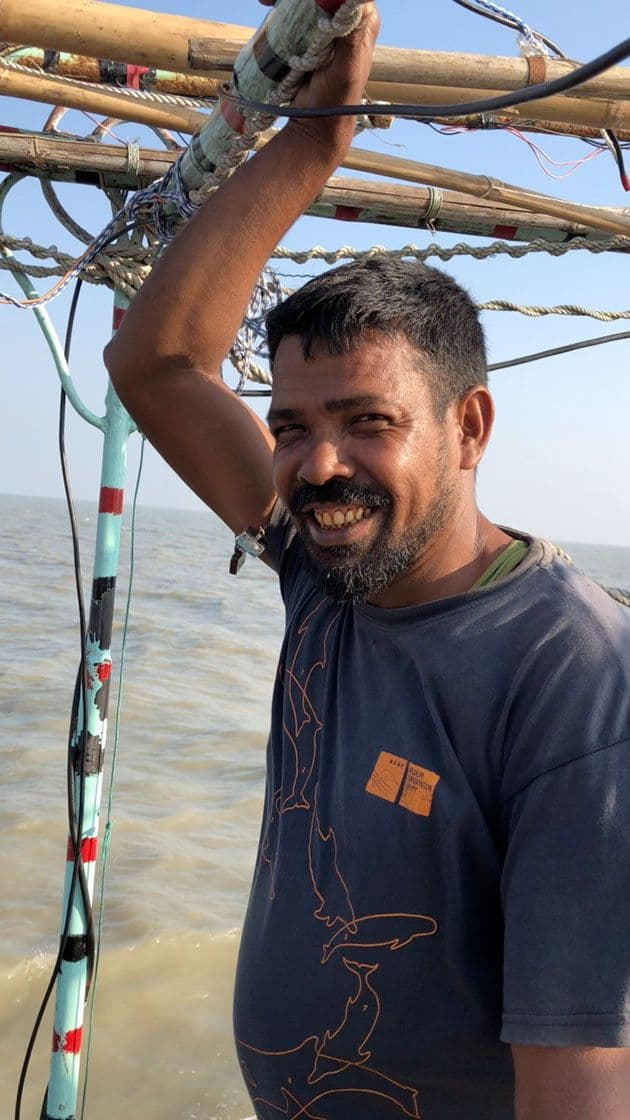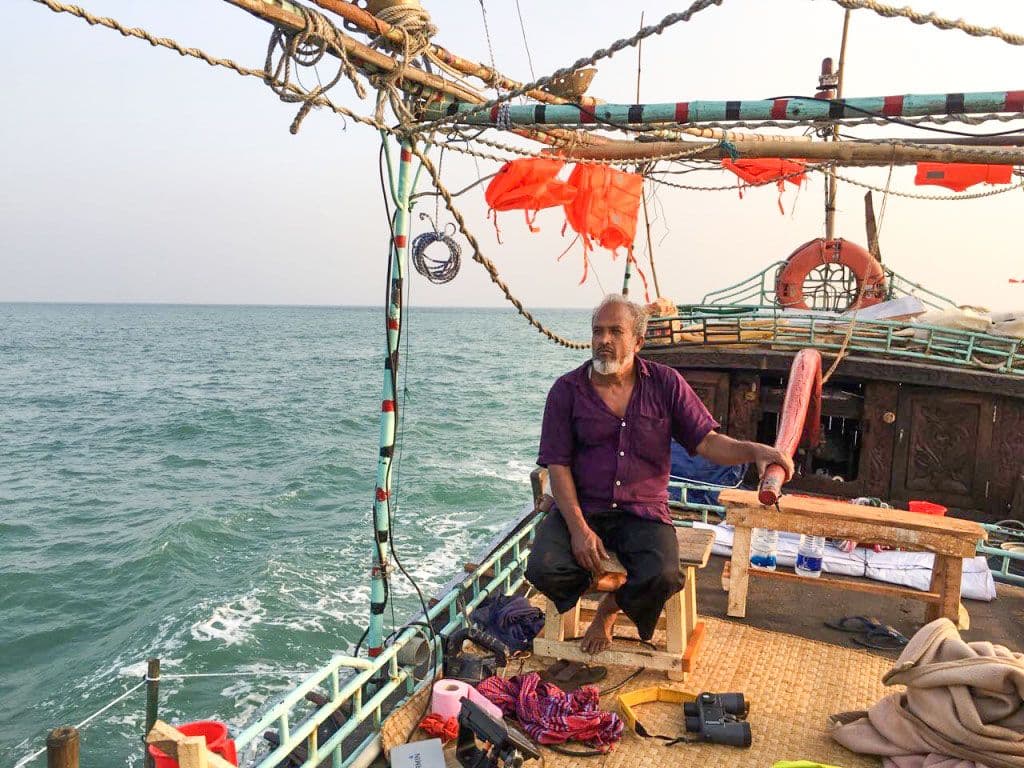


“Sab maach sesh [All the fish is over],” says Murali in broken Bengali, doleful but smiling. “Shob kichchu different [Everything has changed],” he adds, since we met two years ago at the Ramnagar fish market near Jaldha village. The fish in the Bay of Bengal, Murli has noticed, are disappearing.
He speaks of a ‘kalo jone’ in the middle of the ocean. In 2017, scientists had reported a ‘dead area’ or zone of around 60,000 square kilometres that is growing in this ocean. It has negligible amounts of oxygen, depleted nitrogen and almost no marine life. This is a result, reports say, of natural processes as well as human interventions.
Murali (his last name is not available), who belongs to the Bestha fishing community, grew up in Govundlapalem village (Gundlapalem in the Census) in Nellore district of Andhra Pradesh. For over two decades, he has been travelling to Jaldha village in Ramnagar block of Purba Medinipur district on the Bay of Bengal coast for the October-March fishing season. He has picked up some Bengali over the years, and speaks it mixed with Hindi and a bit of English.
Murali boasts of having family and friends in many ports along the Indian, Bangladeshi and Sri Lankan coasts. “From Jaffna to Jambudwip, everyone is family,” he brags cheerfully. He doesn’t tell me many details, but introduces me to his friend Swapan Das – “Ai amaar bhai” [He’s my brother],” says Murali, who is around 40.