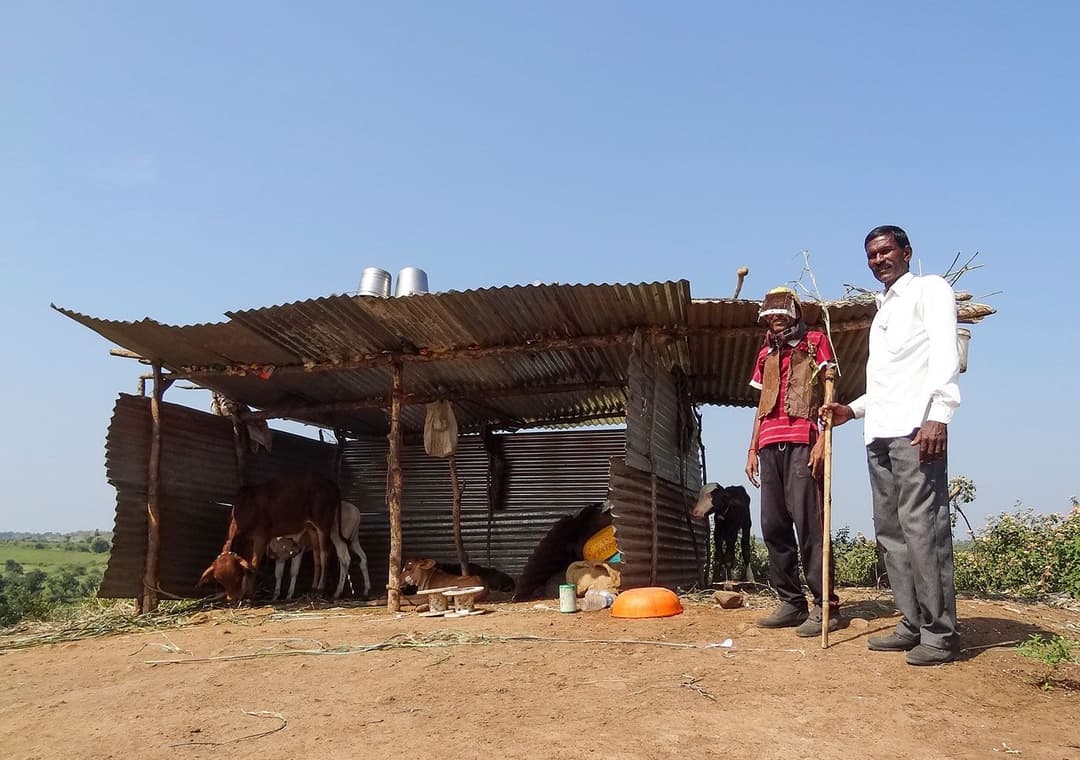
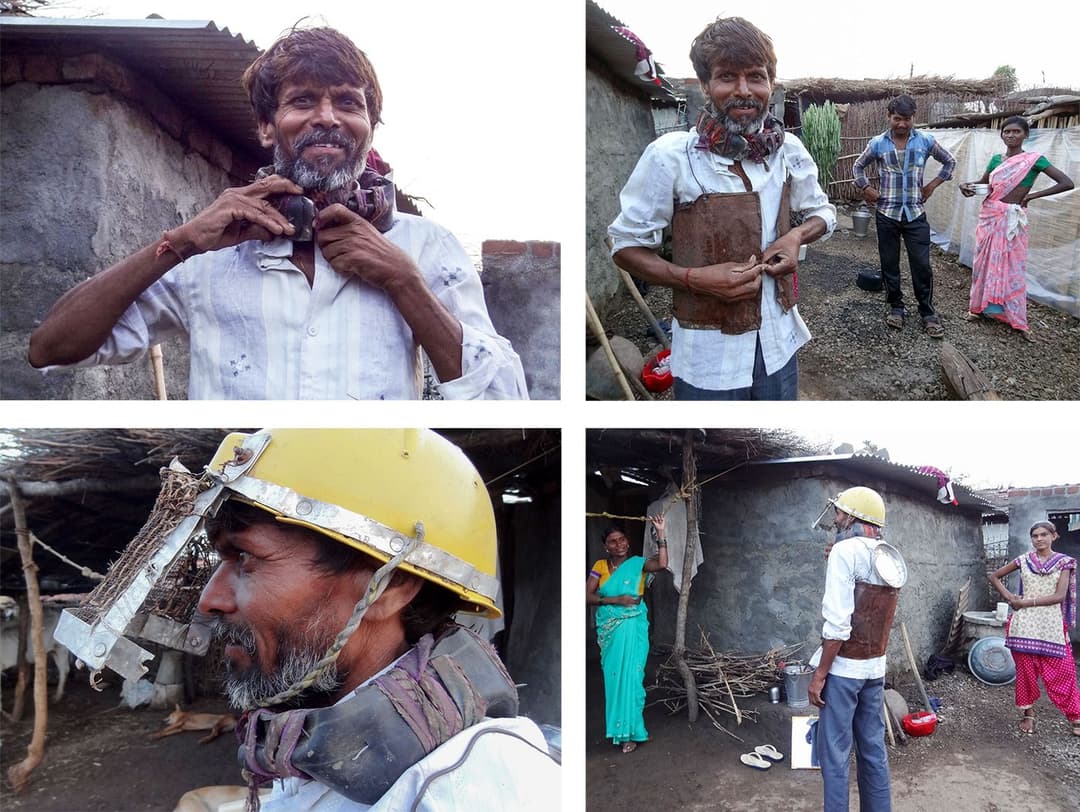
“I had never run so fast in my life as I did that day,” he recalls with a nervous smile, glancing at his wife Sulochana and their daughters, Disha, 18, and Vaishnavi, 15. They are smiling nervously too, aware that Atram had a brush with death that day. After reaching home, he says, he locked himself in his one-room hut that has a small covered porch to keep his cattle, and did not come out the entire night. He says he was trembling.
“Aji lagit mottha hota ji (it was a huge tiger),” he says in the Varhadi dialect of Marathi. There’s a tinge of humour in his tone, but not bravado. Was he frightened? “Mang ka ji! [Then what!].” His daughters giggle at him.
Intensifying human-tiger conflict
Atram’s encounter with the tiger is part of an intensifying human-tiger conflict in the jungles of Vidarbha, the far eastern region of Maharashtra.
It’s a recent phenomenon, says Siddharth Dudhe, a veteran farmer in Borati, who doubles up as a forest guard on daily wages. It’s likely that the tigers in this area have dispersed from small reserved forests such as the Tipeshwar Sanctuary, around 100 kilometres south-west of Borati village. “There is fear, there is anxiety, there is tension,” he says. (See Tigress T1’s trail of attacks and terror)
Yavatmal district’s shrub and deciduous forests are interspersed with densely-populated villages. The wandering new tiger population preys on herbivores and village bovines that are an easy kill, Meshram, the forest guard, tells us at Atram’s home. “Right now T1 is not seen in our village’s vicinity,” he says. “But we keep guard and alert villagers when we get to know its location.”
Two processes are at the heart of this conflict, says Ashok Kumar Misra, the Principal Chief Conservator of Forests (Wildlife), Maharashtra: “On the one hand, the tiger populations are on the rise due to recent conservation efforts that includes keeping a strong eye on organised poaching. On the other hand is the high level of anthropogenic pressures, including increased dependence on forests and rising human population.”
Besides, Vidarbha’s forests are getting increasingly fragmented due to various projects, including roads and highways. Misra says the tiger habitats have shrunk or fragmented, the animals’ traditional corridors broken, leaving them with no space to roam. What else do you expect but a conflict? Misra wonders. “It would be more intense if not for our efforts to curb it.”