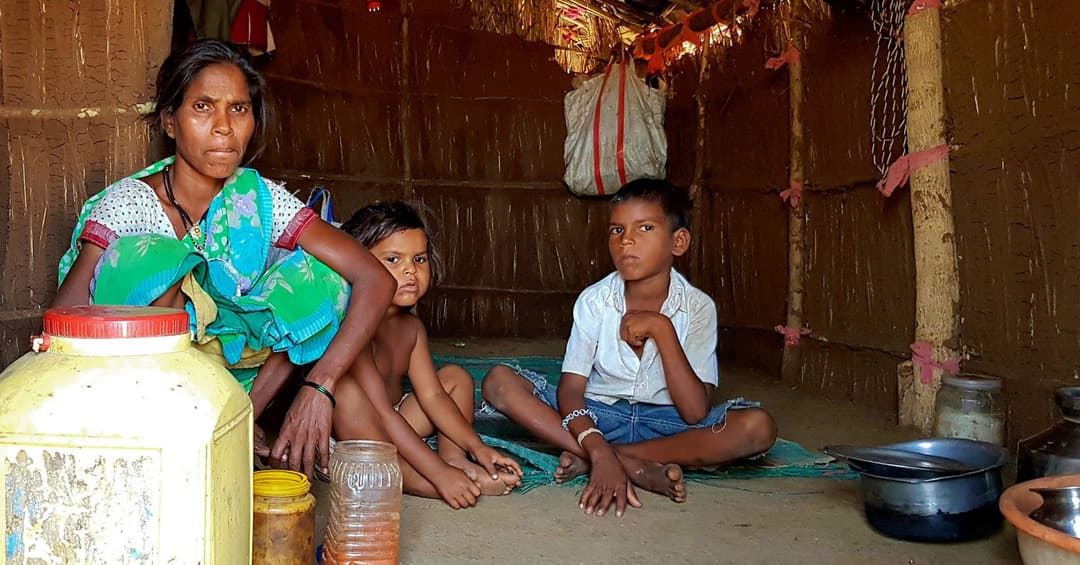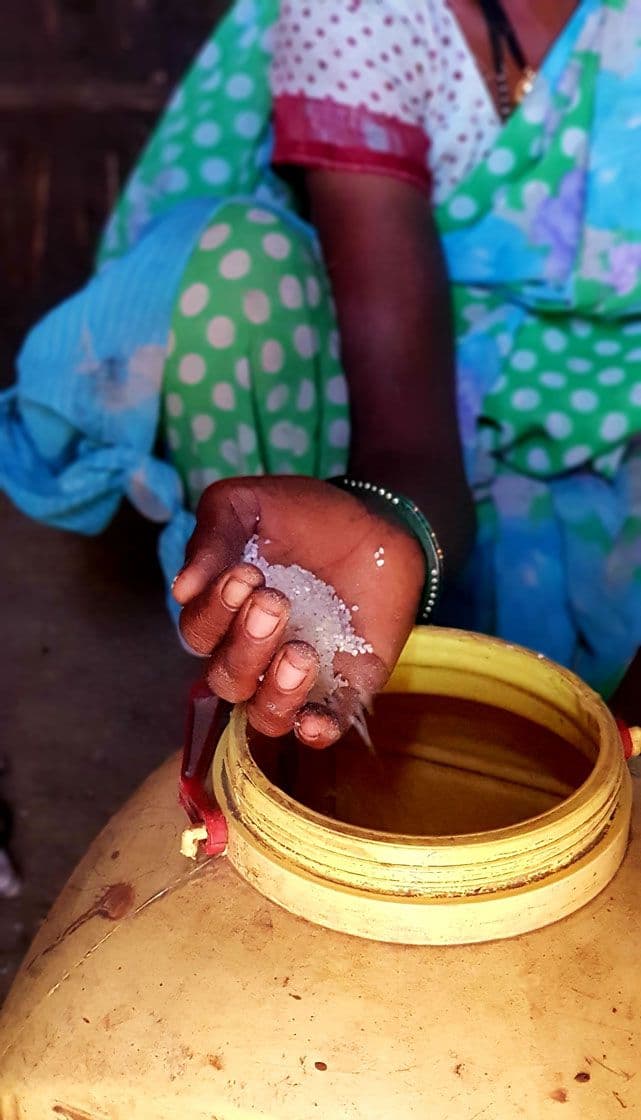

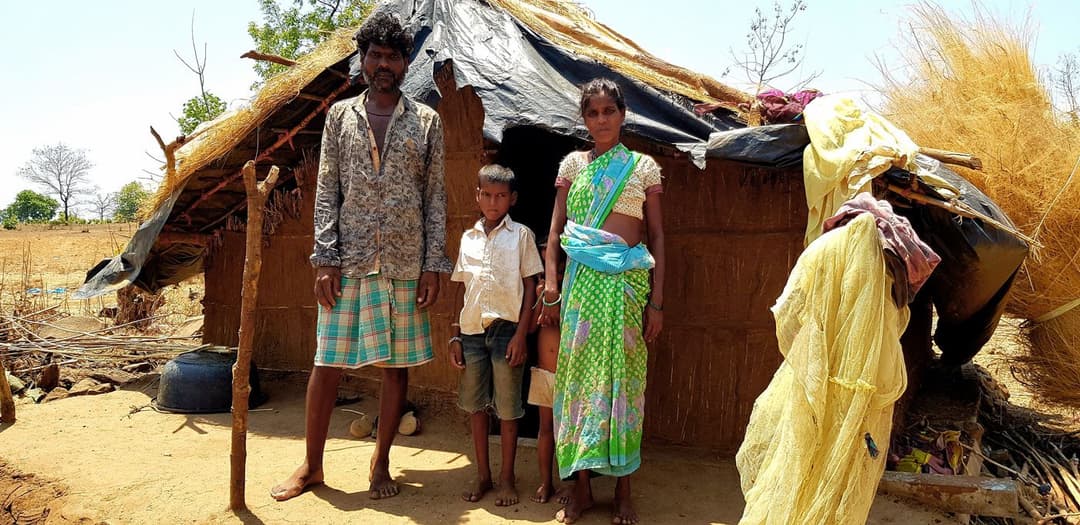
“My two eldest sons worked for two days for the patil [farm owner] and earned Rs. 150 each. They used that money to buy kanyaa from him,” said Vanita Bhoir. She opened a yellow plastic jar and took out a few rice fragments in her hand to show me. These are collected when the harvested paddy is threshed to separate the chaff, and are cheaper than the rice grain. Along with these kanyaa, there was a week’s stock of salt, chilli and turmeric powders, cooking oil and a few potatoes in 52-year-old Vanita’s straw-and mud hut. Even these had been given to the family by local social workers.
“Those who have ration cards, are given grains by the government. They also got rice for free [every month, since the lockdown started in March]. But I don’t have a ration card. What should my family do?” asks 55-year-old Navsu Bhoir, Vanita’s husband. “The government doesn’t help me. Our work has also stopped. What do we eat?”
Navsu never applied for a ration card because, he says, “We migrate every year in search of work. I don’t know how to apply for it.” He is uneducated; three of his and Vanita’s children have, over time, dropped out of school – Anand, 18 and Shiva, 12 after Class 3, and Ramdas, 16, after Class 4. Their two younger children are in school – Krishna, 8, in Class 2 and the youngest, Sangeeta, 4, goes to the local anganwadi.
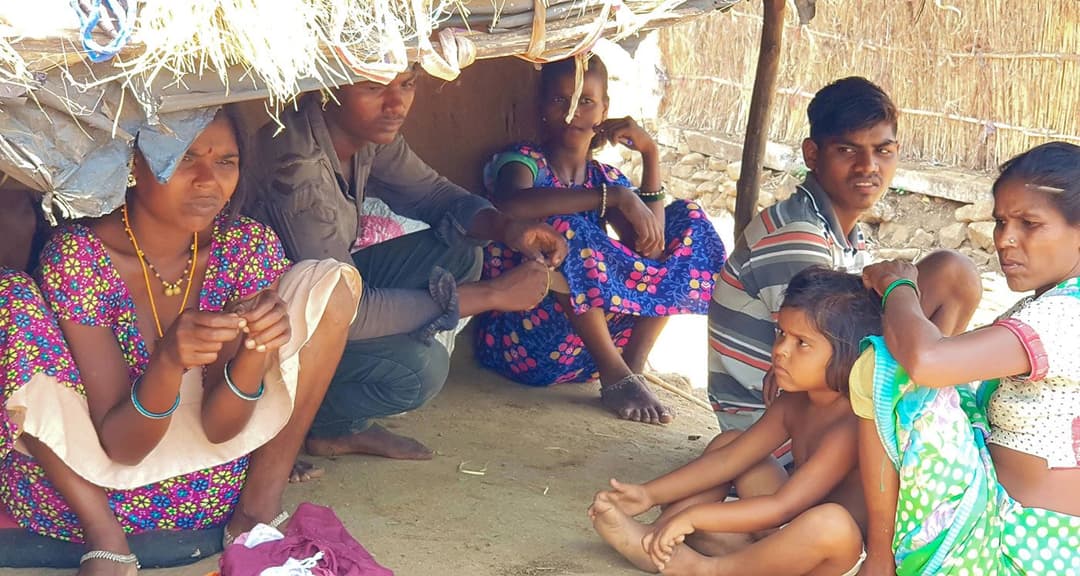
The Bhoir family lives in Boranda, a village around 20 kilometres from Vada town in Palghar district. They live in a cluster of roughly eight huts of the Katkari Adivasi community.
In November last year, the family of labourers migrated to Bhiwandi taluka to work at the brick kilns there. Work at a kiln means slogging through the day and night. Once a week, with Rs. 400-500 as kharchi (expenses) from the kiln owner, they used to buy rations and other essentials. At the end of the work months at the kiln, when their wages are calculated, these expenses are deducted from their total earnings. If the family does not have any debts, they get about Rs. 10,000-12,000 in hand after working for seven months, from November to May.