The panel is part of Visible Work, Invisible Women, a photo exhibition depicting the great range of work done by rural women. All the photographs were shot by P. Sainath across 10 Indian states between 1993 and 2002. Here, PARI has creatively digitised the original physical exhibition that toured most of the country for several years.
And getting a grip on things
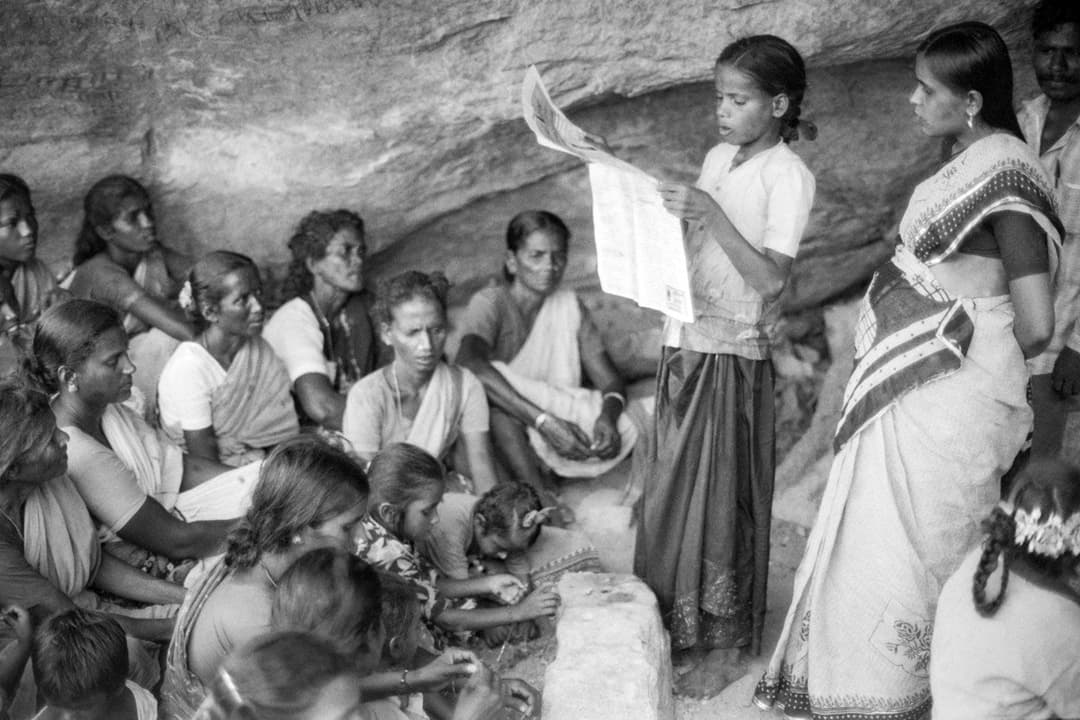
She had worn her best saree to come and learn cycling. At a ‘cycling training camp’ in Pudukkottai, Tamil Nadu. She was exuberant with good cause. Some 4,000 very poor women in her district had come to control the quarries where they were once bonded labourers. Their organised struggle, combined with a politically conscious literacy movement, made Pudukkottai a better place.
Ownership and control of resources was and remains central. If the lives of hundreds of millions of rural women are to improve, then so must these rights.
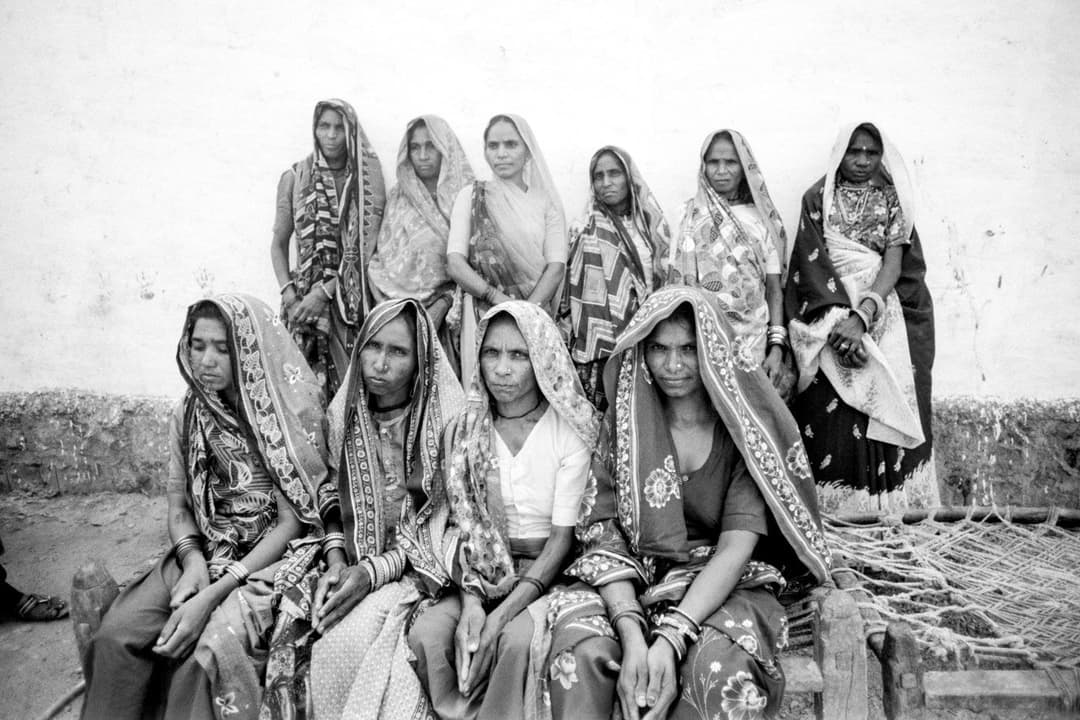
The group in Jhabua in Madhya Pradesh is an all-women panchayat. Sure, coming into local governance has bettered their status and self-esteem. But their influence in their own villages remains limited. They own and control very little. They have no rights to land, for instance. And there is no recognition of their rights in most spheres, even where these exist in law. What happens when a Dalit female sarpanch finds her landlord is the deputy? Does her seniority make him listen to her? Or does he behave as a landlord bullying his labourer? Or as a man asserting himself over a woman? Female sarpanchs and panchayat members have been stripped, beaten, raped, kidnapped and had false cases foisted on them. Yet women in panchayats have achieved astonishing things. What might they achieve if feudalism were abolished?