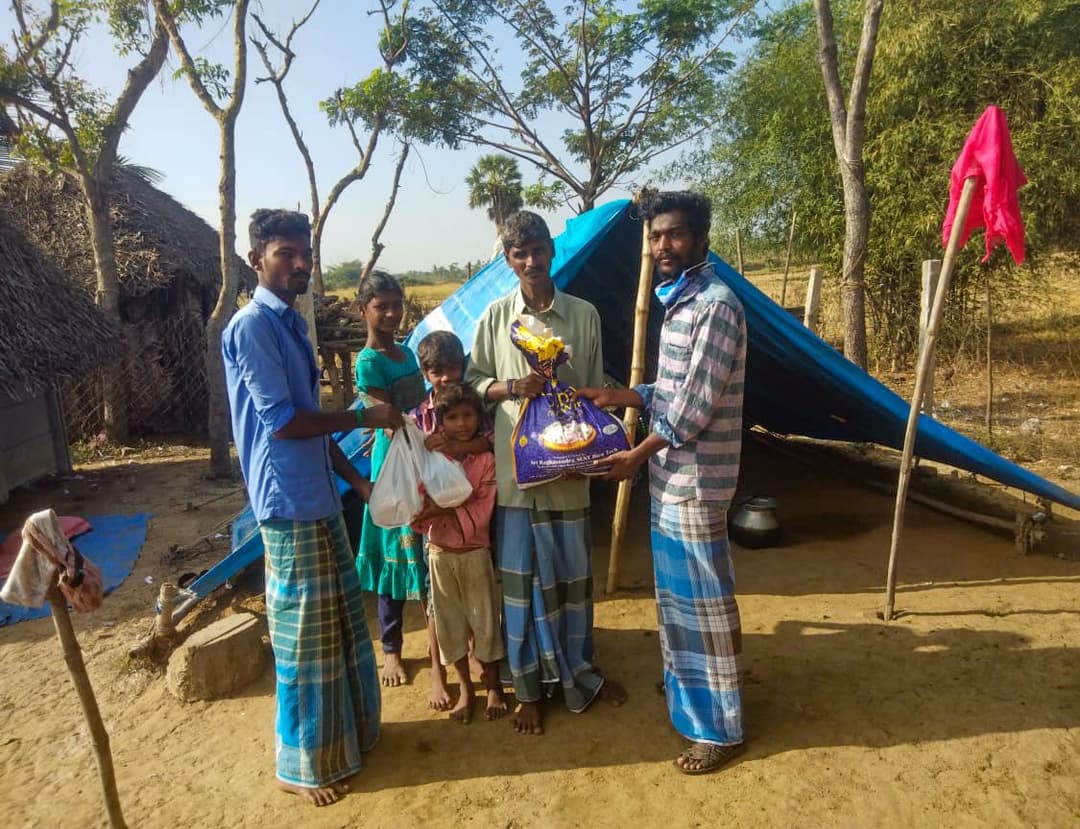


“On a normal day,” says A. Sivakumar, “I would ride my cycle 40-50 kilometres selling plastic items like buckets and pots. For this 33-year-old in Arasur – an Adivasi hamlet in Nagapattinam district – such a day would begin at 5 a.m. On a customised bicycle with colourful plastic goods, which he sells for a living, tied on all sides of it. On a normal day, he says, he’d make Rs. 300-400 – just enough to feed his six-member family.
These are not normal days.
Life under lockdown has ended that activity – and with it, his family’s source of income. But Sivakumar sees a ray of hope in the dark clouds of the Covid-19 crisis. “If not for Vanavil,” he says, “we would go hungry.”
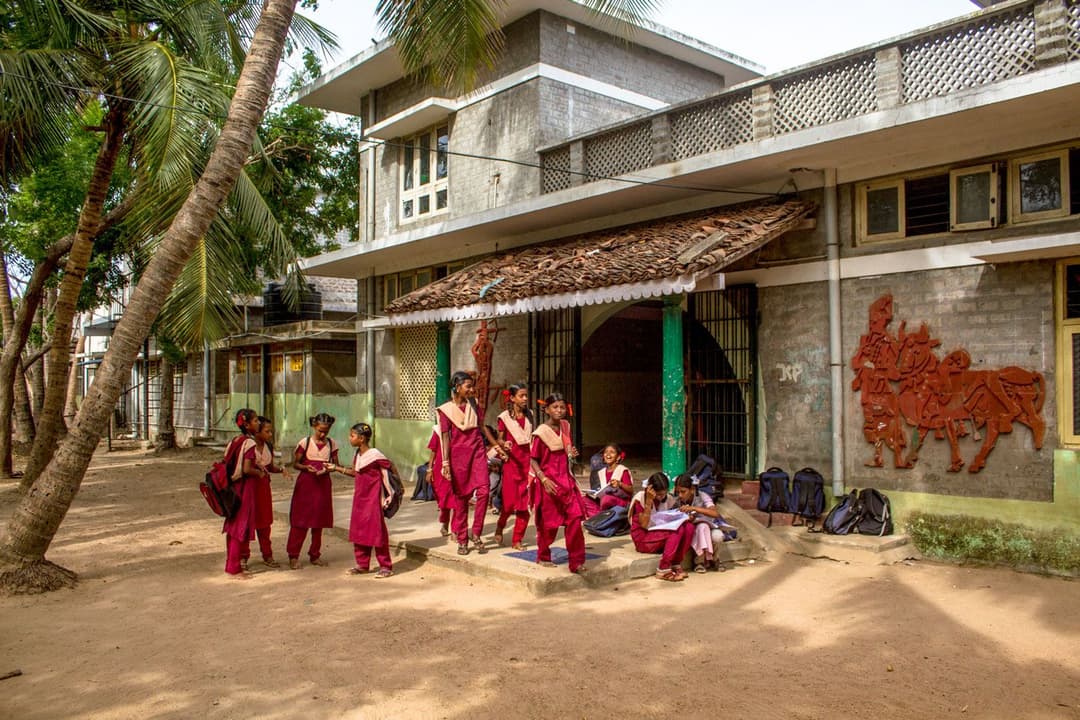
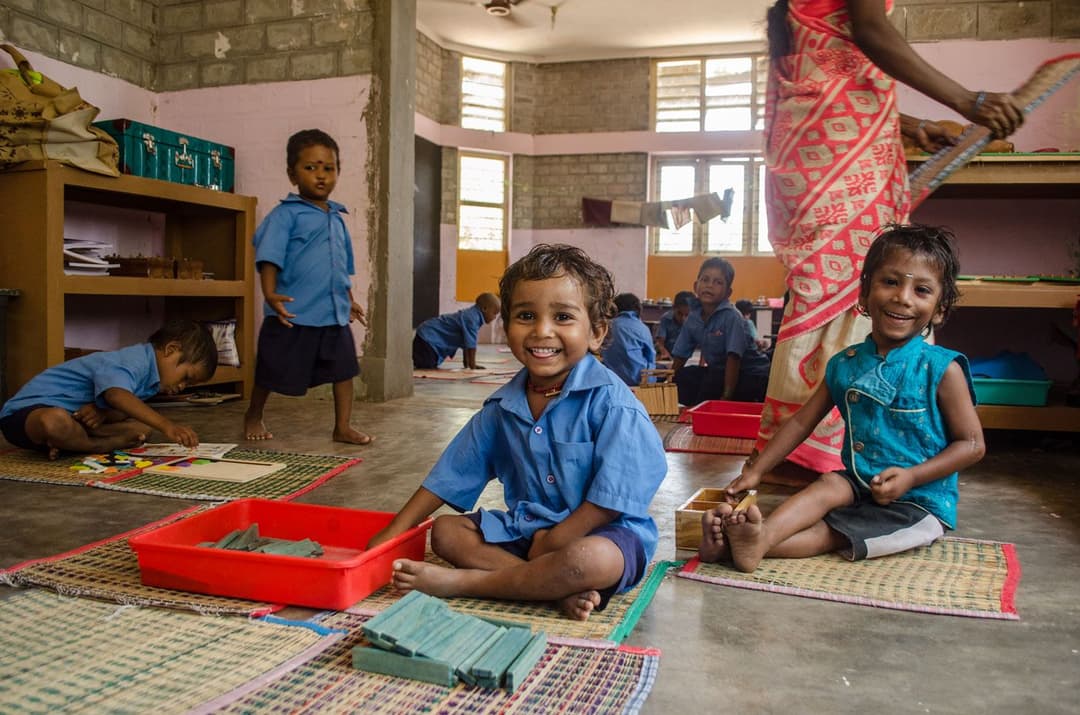
Vanavil is the Tamil word for ‘rainbow’. It is also the name of a primary school in Sikkal village in Nagapattinam block of this district. With 44 people testing positive for the coronavirus till April 21, Nagapattinam is one of the Tamil Nadu’s Covid-19 hotspots.
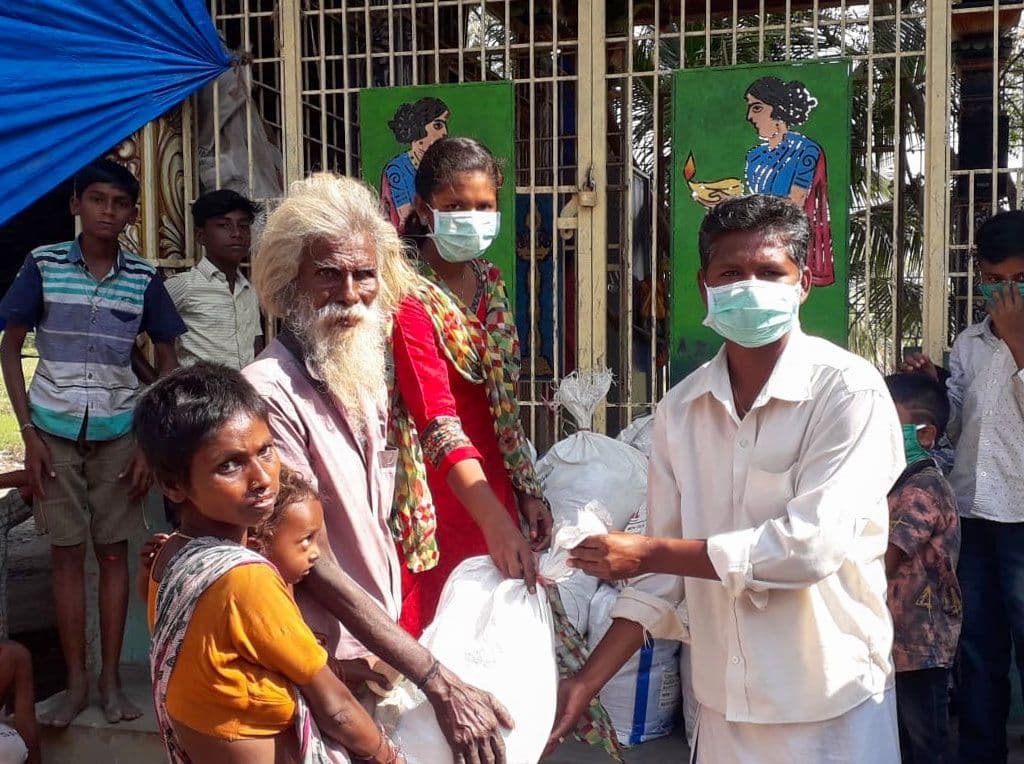
The school serves mainly students from nomadic tribes and has been – even while closed for classes – arranging groceries for families in Arasur and other villages. As the lockdown’s impact deepens, the number of families the school is assisting has grown to 1,228 – almost 1,000 of those from extremely marginalised groups. For thousands of poor people here, this school is now the pivot of their food security.