Even when the howling wind and torrential rain brought by Cyclone Amphan was causing havoc around her on May 20, Sabita Sardar was not afraid. “We are used to dealing with bad weather. I wasn’t feeling scared. In fact, those who live in concrete homes were more scared,” she said.
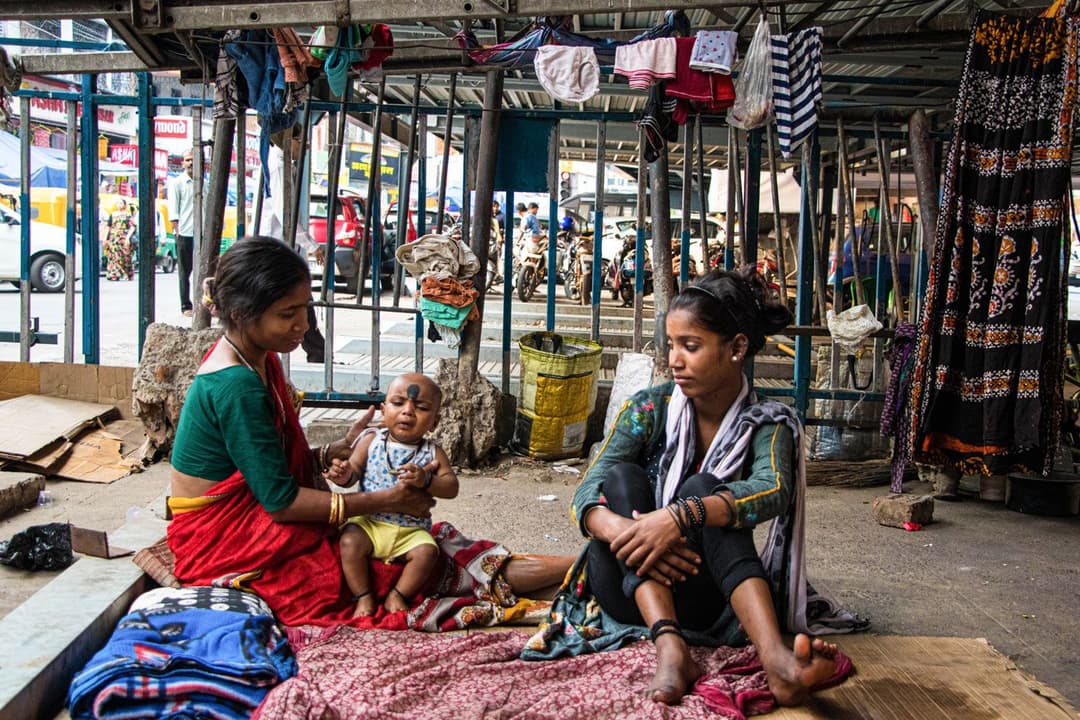
For 40 years now, Sabita has been living on the streets of Gariahat, a popular market area in south Kolkata.
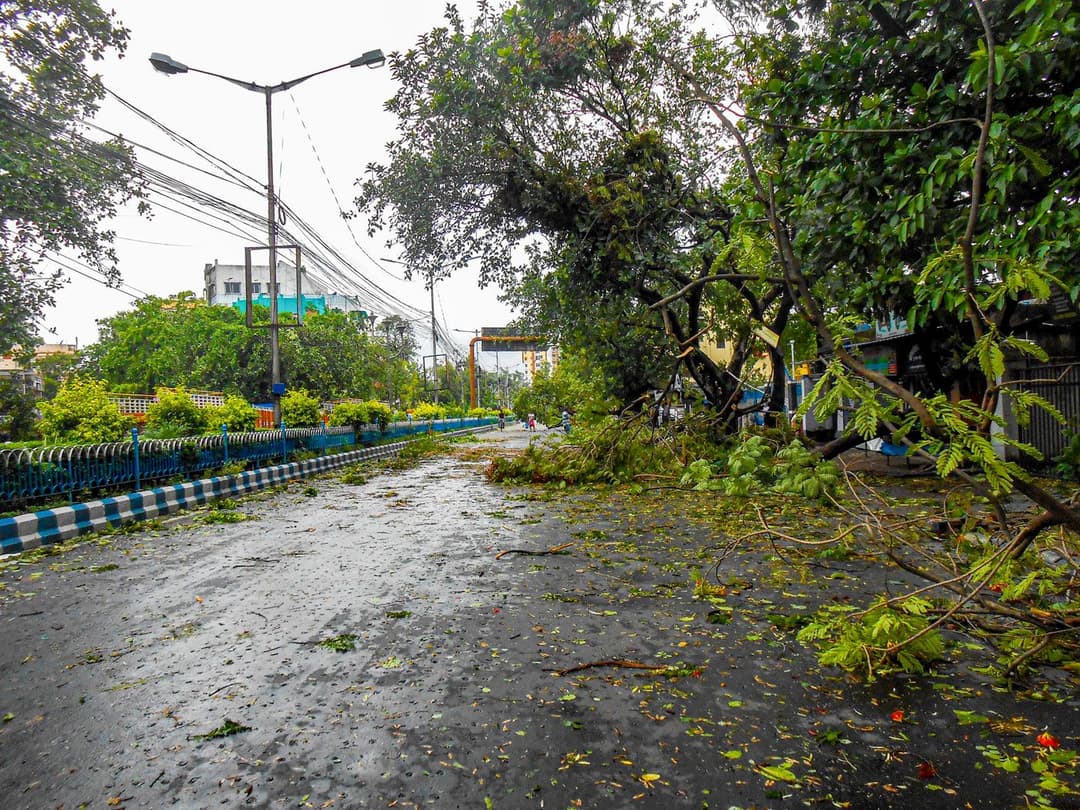
That day, when the super cyclonic storm passed through West Bengal’s capital city, Sabita and a few other homeless women sat huddled together in her tricycle cart under the Gariahat flyover. They spent the night like that. “We sat there while loose glass pieces flew around and trees fell. We got wet as the winds blew the rain towards us. We heard loud doom daam noises,” recalled Sabita.
She had returned to her spot under the flyover just the previous day. “I came back to Gariahat from my son’s house a day before Amphan. My utensils and clothes were lying scattered, as if someone has dug through them,” said Sabita, who is around 47 years old. She had walked back four kilometres from her son Raju Sardar’s rented room in the Jhaldar Math slum colony in Tollygunge, where Raju, 27, his wife Rupa, 25, their young children, and Rupa’s younger sister live.
She had gone to Jhaldar Math after leaving the shelter where Kolkata Police had taken Gariahat’s pavement residents on March 25, once the lockdown began. That night, police officials had approached Sabita and the others living under the flyover. “They told us we can’t stay on the streets due to the [corona] virus, and that we have to move to a shelter for now,” she said. They were taken to a community hall of Kolkata Municipal Corporation’s ward number 85.